

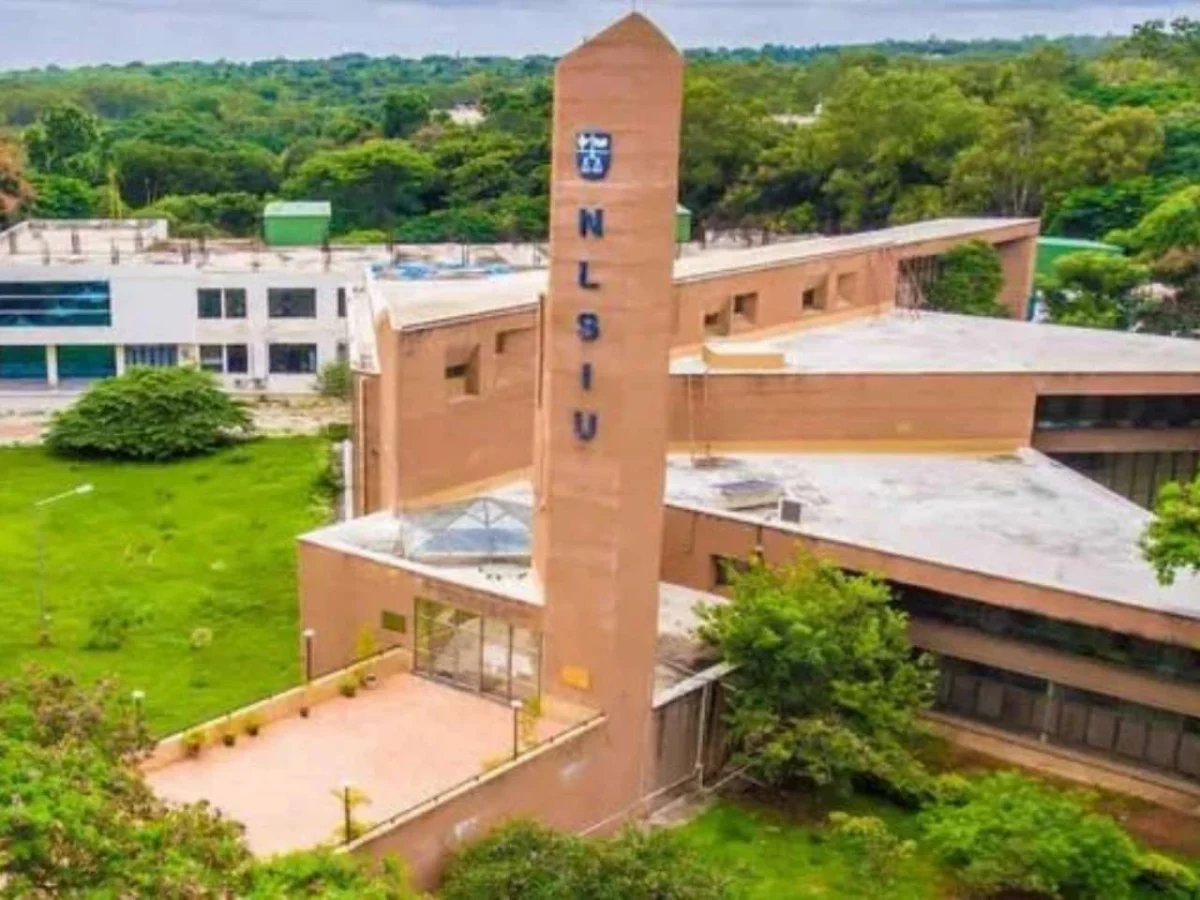
Bengaluru, India – August 27, 2026 – The prestigious National Law School of India University (NLSIU), Bengaluru, has taken the unprecedented step of cancelling its 34th Annual Convocation ceremony for the graduating batch of 2026. The abrupt decision, announced on August 27th, comes in the wake of significant student objections to the proposed presence of Chief Justice of India (CJI) Surya Kant and Bar Council of India (BCI) Chairman Manan Kumar Mishra as distinguished guests at the event. This development has sent ripples through the legal education fraternity, highlighting a growing tension between established institutional norms and the evolving concerns of the student body.
The university’s official notice cited "unavoidable circumstances" as the reason for the cancellation, expressing regret that despite collective efforts, the ceremony could not proceed as planned. This statement, however, offers little solace to the graduating students who had been anticipating this milestone event. Instead, NLSIU has announced that degrees will be conferred in absentia, with students having the option to receive their certificates via courier or by collecting them from the campus. Further details regarding this alternative process are expected to be communicated to the graduating batch in due course.
)
The Genesis of the Controversy: A Shadow Over the Convocation
The decision to cancel the convocation is directly linked to a burgeoning controversy that began with student dissent. Reports indicate that a significant segment of the graduating class voiced strong objections to the participation of CJI Surya Kant and BCI Chairman Manan Kumar Mishra. While the specific nature and breadth of these objections have not been fully detailed by the university, the timing of the cancellation strongly suggests they were a primary catalyst.

This situation at NLSIU is not an isolated incident. It appears to be part of a broader pattern of student activism and scrutiny directed towards the leadership of India’s apex legal bodies. The controversy echoes a similar uproar that recently shook NALSAR University of Law in Hyderabad. There, students had also expressed their reservations about CJI Surya Kant being the chief guest at their convocation. The NALSAR incident escalated to a point where the Bar Council of India initially issued an order to freeze the enrolment of NALSAR’s entire 2026 graduating batch with state bar councils, pending an inquiry into the matter. This move by the BCI was widely seen as a punitive measure against the protesting students.
)
However, in a subsequent development that offered some respite to the NALSAR students, the BCI ultimately withdrew its restrictive order. The council concluded that the majority of students had not intended to participate in any act of disrespect, leading to an amended order that permitted all graduating students to enrol with the state bar council of their choice. This earlier resolution at NALSAR, while resolving the immediate enrolment issue, likely set a precedent and perhaps emboldened students at other prominent law schools to voice similar concerns.
)
A Chronology of Escalation: From Invitation to Cancellation
The timeline of events leading to the cancellation of the NLSIU convocation appears to have been a rapid descent into controversy:
)
- Early August 2026: NLSIU Bengaluru, in preparation for its 34th Annual Convocation, likely extended invitations to distinguished guests, including Chief Justice of India Surya Kant and Bar Council of India Chairman Manan Kumar Mishra. This is a standard practice for prestigious academic institutions, aiming to lend gravitas and inspiration to the graduating ceremony.
- Mid-August 2026: Information regarding the proposed attendance of CJI Surya Kant and BCI Chairman Manan Kumar Mishra began circulating among the graduating batch of 2026. This likely triggered discussions and the formation of opinions within the student community.
- Late August 2026 (Specific Dates Unclear): Student objections to the presence of the two dignitaries began to surface. While the exact channels through which these objections were formally raised are not publicly detailed, it is understood that university administration was made aware of the discontent. The nature of these objections, though not explicitly stated, is believed to be linked to the broader concerns that also manifested at NALSAR.
- August 26, 2026 (Implied): The situation likely reached a critical point, with the university administration assessing the viability of holding the convocation as originally planned. The "unavoidable circumstances" mentioned in the cancellation notice may have stemmed from the inability to resolve the student dissent or the potential for further disruption.
- August 27, 2026: NLSIU Bengaluru officially announced the cancellation of its 34th Annual Convocation for the 2026 graduating batch through a formal notice. The degrees are to be conferred in absentia.
Supporting Data and Context: The NALSAR Precedent
The NLSIU situation cannot be viewed in isolation. The preceding events at NALSAR University of Law provide crucial context and suggest a pattern of student engagement with the highest echelons of legal governance.
)
- NALSAR’s Convocation Controversy: Students at NALSAR reportedly raised concerns about CJI Surya Kant’s proposed role as chief guest. While the specifics of these concerns are not publicly elaborated upon in the provided text, the fact that such objections were raised and met with a strong reaction from the BCI is significant.
- BCI’s Initial Response: The Bar Council of India’s swift action to freeze the enrolment of NALSAR’s entire graduating batch was a stark demonstration of its authority and its perceived stance on upholding the dignity of its invited dignitaries. This move was met with widespread debate, with many legal scholars and student bodies questioning the proportionality of the BCI’s response.
- BCI’s Reversal: The subsequent withdrawal of the BCI’s order, attributing it to the conclusion that most students did not intend disrespect, indicates a potential recalibration or a recognition of the negative publicity and student backlash generated by the initial decision. This reversal suggests that the BCI might be more sensitive to student sentiment than initially perceived, or that external pressure played a role.
- NLSIU’s Reaction: The direct cancellation by NLSIU, occurring shortly after the NALSAR incident and its resolution, strongly implies that the university administration chose to preemptively avoid a similar, potentially more damaging, confrontation. By cancelling the ceremony, NLSIU has effectively sidestepped the immediate conflict, albeit at the cost of a traditional graduation experience for its students.
Official Responses and Reactions: A Spectrum of Views
The cancellation has predictably drawn a range of reactions from various stakeholders:
)
- NLSIU Administration: The university’s official statement, citing "unavoidable circumstances," is a measured response aimed at maintaining institutional decorum while acknowledging the cancellation. The decision to confer degrees in absentia is an attempt to mitigate the impact on students’ academic progression.
- Student Body: While the specific objections are not detailed, the cancellation implies that the students’ concerns were significant enough to warrant such a drastic measure. The disappointment of not having a traditional convocation is likely palpable among the graduating class.
- Bar Council of India (BCI): The BCI has not yet issued a formal statement regarding the NLSIU cancellation. However, given its prominent role in the NALSAR controversy, its perspective will be keenly watched. The BCI’s previous actions suggest a strong emphasis on respect for its leadership and invited guests.
- Cockroach Janta Party: Saurav Das, co-convenor of the Cockroach Janta Party, offered a somewhat unconventional reaction. He expressed hope that the graduating students would organize their own ceremony, suggesting a "Gen-Z way" of celebrating their achievements and inviting a guest of their choosing. This sentiment reflects a broader generational shift in how such events are perceived and managed, emphasizing student agency and a departure from traditional hierarchical structures. His remark, while perhaps lighthearted, touches upon the underlying tension between institutional control and student autonomy.
Implications and Future Outlook: Navigating a New Landscape
The cancellation of the NLSIU convocation has several significant implications for legal education in India:
)
- Student Agency and Activism: This event underscores the growing assertiveness of students in legal academia. It suggests that students are no longer passive recipients of institutional decisions and are willing to voice their dissent on matters they deem important, even when it involves highly respected figures.
- Institutional Response to Dissent: Universities are now faced with the challenge of balancing the need to uphold institutional traditions and invite distinguished guests with the imperative to address and respect student concerns. The NLSIU’s decision, while decisive, raises questions about whether outright cancellation is the most constructive approach. Alternative conflict resolution mechanisms and open dialogue might be explored in the future.
- The Role of Dignitaries: The controversy highlights a potential need for a more nuanced approach to selecting and inviting chief guests for academic ceremonies. It raises questions about the expectations placed on these dignitaries and the potential impact of their presence on the student community.
- BCI’s Influence: The BCI’s assertive stance in the NALSAR incident and its implied influence on institutional decisions cannot be overlooked. Future interactions between the BCI and student bodies of law schools will likely be closely monitored.
- Evolving Traditions: The suggestion of students organizing their own ceremonies points towards a potential evolution of academic traditions. The traditional convocation, with its established protocols, might need to adapt to incorporate a greater degree of student participation and choice.
The NLSIU Bengaluru’s decision to cancel its 2026 convocation is a stark reminder of the complex dynamics at play within India’s premier legal institutions. As the legal fraternity grapples with this unprecedented development, it serves as a catalyst for a broader conversation about student rights, institutional responsibility, and the future of academic traditions in an era of increasing student engagement and activism. The "unavoidable circumstances" at NLSIU may well have paved the way for new norms and a more democratic approach to celebrating academic achievements.
