

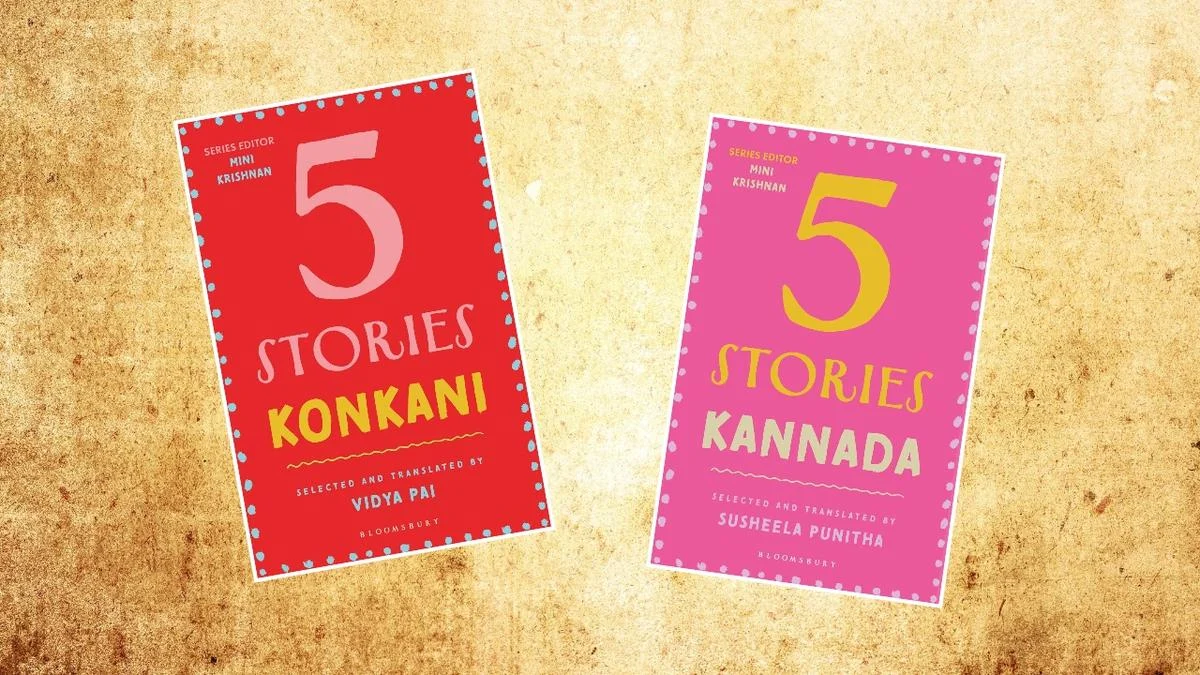
The landscape of Indian literature is a vast, polyphonic tapestry, yet for decades, the richness of regional voices remained largely inaccessible to the English-speaking world. This linguistic barrier is steadily being dismantled by a dedicated cadre of editors and translators who view translation not merely as a mechanical transfer of words, but as a vital act of cultural preservation. At the forefront of this movement is Mini Krishnan, a relentlessly formidable champion of Indian stories in English translation. Her latest endeavor, the 5 Stories series published by Bloomsbury, offers a curated window into the soul of regional India.
The two recent additions to this series—5 Stories: Konkani and 5 Stories: Kannada—represent a significant milestone in contemporary Indian publishing. Edited by Krishnan and translated by the seasoned Vidya Pai (Konkani) and Susheela Punitha (Kannada), these anthologies do more than just tell stories; they raise the bar for what translated fiction can achieve in capturing the "subterranean social history" of a people.
Main Facts: The Anatomy of the Anthologies
The 5 Stories series is designed to provide a concise yet profound introduction to the literary traditions of India’s various linguistic regions. Each volume focuses on five pivotal stories that encapsulate the socio-cultural, political, and emotional essence of the language’s territory.

Publication Details
- Series Editor: Mini Krishnan
- Konkani Volume: Translated by Vidya Pai; features works by Damodar Mauzo, Jayanti Naik, Mahabaleshwar Sail, Pundalik Naik, and Prakash Parienkar.
- Kannada Volume: Translated by Susheela Punitha; features works by Vaidehi, Mogalli Ganesh, Amaresh Nugadoni, Bolwar Kunhi, and Banu Mushtaq.
- Publisher: Bloomsbury India
- Price: ₹499 per volume
The selection of stories is not arbitrary. By sourcing material from influential regional magazines such as Jaag, Prajavaani, Patrike, and Kannada Prabha, the series underscores the historical and contemporary value of regional periodicals as incubators for high-quality fiction. These anthologies serve as a bridge, bringing the raw, unpretentious energy of the vernacular press to a global audience.
Chronology: The Evolution of Regional Narrative
To understand the weight of these collections, one must look at the chronological and thematic evolution they represent. The stories selected are not just snapshots in time; they are markers of a changing India, reflecting the transition from traditional, communal structures to the anxieties of the modern era.
From Tradition to Transition
In the Konkani collection, the works of Jayanti Naik (The Ceremonial Bull) and Mahabaleshwar Sail (The Potter’s Kiln) harken back to a well-ordered, albeit fragile, interdependent community. These stories depict a world entrenched in traditional employment structures—potters, farmers, and artisans—caught in the painful transition between honoring ancestral gods and the pragmatism of filling their stomachs in a capitalist economy.

The Modern Crisis
As we move toward the more contemporary entries, the focus shifts. Damodar Mauzo’s Cry, Now tackles the modern Goan diaspora and the tragic irony of the "Kuwait dream." Meanwhile, Prakash Parienkar’s Man of the Forest represents the most recent literary trend: a neutral, almost placeless environmentalism. This story, which echoes the work of Naga poet Easterine Kire, signals a growing erasure of specific regional identities in the face of global ecological crises—a "neutral space" that is both a warning and a reflection of current literary sensibilities.
Political and Social Flashpoints
The Kannada collection follows a similar trajectory, rooting its narratives in specific historical moments. Amaresh Nugadoni’s This Heart Longs For More is set against the volatile backdrop of the 1999 Kargil War and an India-Pakistan cricket World Cup final. It captures the exact moment when nationalistic fervor and communal rumors begin to seep into the mundane setting of a village tea stall, forever altering the social fabric.
Supporting Data: Thematic Depth and Linguistic Innovation
The strength of these anthologies lies in their refusal to sanitize the Indian experience for the "global" reader. Instead, the translators have "marauded through English" to find equivalents for Indian rhythms, sounds, and cultural nuances.

The Konkani Experience: Justice and Identity
The Konkani volume explores the complexities of Goan life beyond the tourist-friendly beaches.
- Resistance: Pundalik Naik’s Victory examines the moral cost of seeking justice. It offers a chillingly pragmatic lesson for youth resistance movements: "We have no right to snatch stale bread from someone’s hand unless we have arranged to give them fresh bread."
- The Twist: Damodar Mauzo, a Jnanpith Award winner, uses Cry, Now to subvert the "simple, honest couple" trope. The story of a son lost to an airplane crash on his way to Kuwait serves as a haunting commentary on parental indulgence and the fragility of the middle-class dream.
The Kannada Flavor: Caste, Gender, and Faith
The Kannada collection is particularly striking for its deep dive into the Shudra and Muslim experiences in Karnataka.
- The Dalit Narrative: Mogalli Ganesh’s The Spinning Top is a masterclass in symbolism. A child’s lost top becomes a metaphor for the Dalit community’s struggle for dignity. The closing image of a child asking to be taken back into his mother’s battered body—"Take me back into your tummy, Avva"—is one of the most visceral depictions of trauma in modern Indian fiction.
- The Muslim Experience: Bolwar Kunhi (Worship) and International Booker Prize winner Banu Mushtaq (Not a Woman) provide an unflinching look at the role of the jamaat, the Sharia traditions, and the misuse of triple talaaq. They portray these themes with a non-judgmental honesty that exposes the corrosive influence of money on faith.
- Character Studies: Vaidehi’s Worlds Within Worlds introduces Baluvate Narayana, a "freeloader" whose exploitation of hospitality is contrasted with his wife Mankaliyamma’s silent anguish. The reviewer compares her plight to Dorothea’s in George Eliot’s Middlemarch, highlighting the universal literary quality of these regional sketches.
Linguistic Onomatopoeia and Localisation
A standout feature of these translations is the retention of local sounds and "untranslatable" words. The scrubbing of dishes is pata pata; the pouring of well water is dala dala; a person grumbles gona gona; a pig falls with a daddakh; a cane thrashes with a chateer. By leaving words like marasinge (leaf), chaddi dost (childhood friend), and balpa (slate pencil) in the original, the translators maintain the "flavor of the soil."

Official Responses and Critical Reception
The reception of the 5 Stories series has been overwhelmingly positive among literary critics and translation scholars. The reviewer, himself a Sahitya Akademi translation award winner, notes that these collections have "raised the bar for translated stories."
The Importance of the Translator’s Note
Critical praise has been specifically directed at Vidya Pai’s comprehensive translator’s note in the Konkani volume. Scholars suggest this note should serve as a "blueprint" for other books in the series, as it provides essential context on the linguistic history of Konkani and the criteria for selection.
Recognition of Regional Journals
The literary community has also lauded Mini Krishnan’s decision to source stories from regional magazines. This move is seen as an "official response" to the centralization of Indian literature, validating the role of local publications as the true gatekeepers of authentic Indian storytelling.

Implications: Fiction as Social History
The release of these anthologies has several profound implications for the future of Indian letters and the global understanding of the subcontinent.
1. Countering the "Erasure of Identity"
As noted in the analysis of Prakash Parienkar’s work, there is a rising trend toward "neutral" writing that lacks regional specificity. This series acts as a vital counter-movement, re-asserting the importance of topography, local dialect, and specific communal histories. It argues that for a story to be universal, it must first be deeply, unapologetically local.
2. The Democratization of the Indian Canon
By placing Konkani and Kannada stories on the same platform as English-original Indian fiction, Bloomsbury and Mini Krishnan are democratizing the Indian literary canon. These stories prove that the most sophisticated psychological and social explorations are often happening in the "vernacular" languages, away from the gaze of metropolitan publishing hubs.

3. Translation as a Tool for Social Empathy
The "long-short" format of these stories allows for a depth of characterization that challenges stereotypes. Whether it is the nuanced portrayal of Muslim women navigating Sharia law or the Shudra community’s fight for survival, these stories force the reader to confront the "other" with empathy and complexity.
4. Subterranean Social History
Ultimately, the 5 Stories series establishes that fiction is indeed a subterranean social history. While textbooks provide the dates of the Kargil War or the statistics of the Goan diaspora, these stories provide the emotional truth of those events. They capture how a rumor travels through a tea stall or how a mother’s grief is shaped by the economic necessity of her son’s migration.
In conclusion, 5 Stories: Konkani and 5 Stories: Kannada are essential reading for anyone seeking to understand the real India. They are unpretentious, visceral, and expertly crafted. Through the vision of Mini Krishnan and the skill of translators like Vidya Pai and Susheela Punitha, the "silent" voices of the regions are finally being heard, loud and clear, in the global square.
