

In a world increasingly dominated by digital noise and the relentless pace of modern life, we often overlook the silent witnesses to our existence: the objects that furnish our homes and populate our routines. What if the alarm clock that rouses you from sleep, the mirror that catches your morning gaze, or the chair that bears the weight of your evening fatigue had a voice? What stories would they tell about the person they see when no one else is watching?
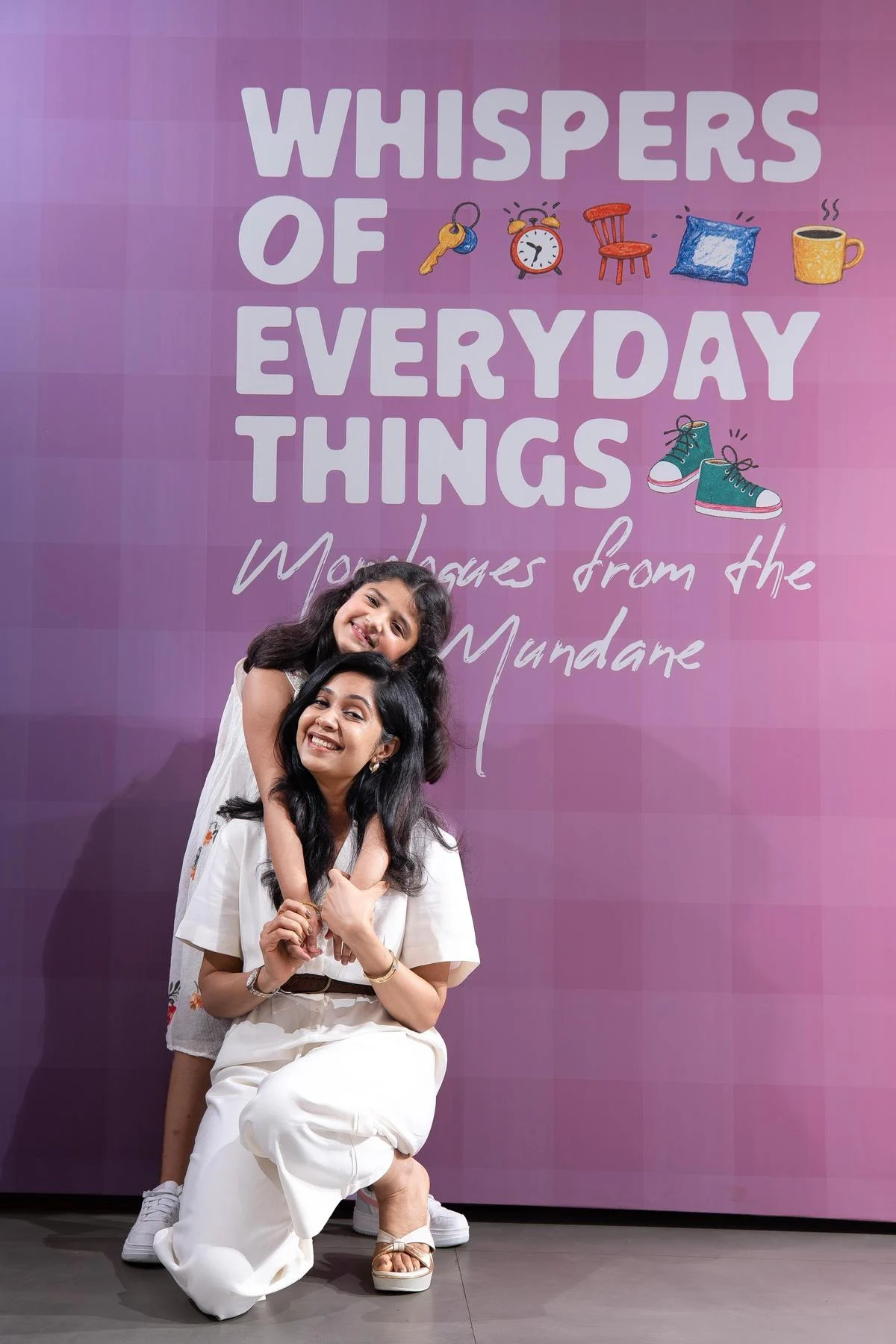
Reshma Elizabeth Thomas—an artist, writer, gender policy advisor, and the founder-cum-CEO of Equigit Solutions Pvt Ltd—delves into these evocative questions in her latest literary offering, Whispers of Everyday Things: Monologues from the Mundane. Published by Fabian Books, this collection of prose poetry serves as a poignant reminder that the most ordinary items in our lives often carry the most extraordinary emotional weight.
Main Facts: A Symphony of 21 Silent Voices
Whispers of Everyday Things is not a conventional narrative. Instead, it is a structured journey through the physical and emotional spaces we inhabit. The book is divided into five distinct parts, covering the bedroom, the kitchen, the living room, the world outside, and the internal world of the self. Within these sections, Thomas presents 21 short prose poems, each dedicated to a specific object.
The objects selected for these monologues are those we frequently take for granted:
- The Bedroom: Alarm clock, bed, pillow, mirror, and window.
- The Kitchen: Coffee mug, chai pan, and refrigerator.
- The Living Room: Television and chair.
- The Outside World: Shoes, car, mobile phone, and key.
- The Inside World: Notebook, pen, spectacles, and a childhood rocking swan.
Each entry follows a unique three-tiered structure: a monologue delivered by the object itself, a reflection from the author or an individual perspective, and a recollection of specific incidents that define the connection between the human and the item. Furthermore, every poem concludes with a "pause"—an introspective question designed to prompt the reader to examine their own relationship with the world around them.

Chronology: From Childhood Observation to Literary Realization
The genesis of Whispers of Everyday Things lies not in a sudden spark of adult inspiration, but in the fertile soil of childhood memory. Thomas recalls a recurring motif from her youth: her mother’s playful warning whenever she would rummage through the refrigerator after school. "If the fridge had a mouth, it would have shouted," her mother would say.
This personification of the inanimate stayed with Thomas for decades. As she navigated a diverse career path—ranging from the complexities of gender policy to the leadership of a solutions-based firm—she began to view her surroundings through a more philosophical lens. She started to contemplate the "lived experience" of objects. If a pillow could feel, it would know the dampness of tears shed in the dark; if a chair could think, it would calculate the literal and metaphorical weight of the person sitting upon it.
The book’s development also saw a significant stylistic evolution. Thomas initially drafted the work as a standard narrative. However, she found that the constraints of traditional prose failed to capture the ethereal, "whisper-like" quality of the thoughts she wished to convey.
"Initially I wrote it as narrative, but later felt that the prose poem style resonated better with me as a writer," Thomas explains. "It was easy for me to convey the thoughts to the reader without the need for a linear progression. Every object has a different perspective, and there is no ‘right’ way to read the book."
Supporting Data: Mapping the Geography of the Home
Thomas’s exploration is a meticulous mapping of domestic and psychological geography. By categorizing the objects by room, she creates a sense of intimacy that mirrors the way we actually live.

The Sanctuary of the Bedroom
In the bedroom, Thomas suggests that "the world arrives, quietly and sometimes without permission." Here, the pillow is described as the "keeper of secrets," an entity that provides comfort without demanding gratitude. The mirror offers a particularly striking monologue, stating: "I am not here to judge what you see / I am only here to show you that you keep looking." This highlights the mirror’s role as a silent witness to our aging, our vanity, and our vulnerabilities.
The Emotional Hearth of the Kitchen
The kitchen section is perhaps the most emotionally charged part of the book, particularly regarding the chai pan. For Thomas, this object is a vessel for "core memories." She recounts a poignant scene involving her mother, who passed away from cancer.
"I still have that photo of her making tea in the morning when the sun’s rays coming in through the window falls on her and the pan," Thomas shares. "As she was preparing tea, I was looking at her and wondering how to tell her that she has cancer. I am thinking whether it is the last tea that she was making for me." The chai pan, therefore, ceases to be a utensil and becomes a sacred relic of a final, quiet moment of connection.
The Living Room and the World Beyond
In the living room, the television is portrayed as a "storyteller" and a source of "noise" that we often engage with out of habit rather than choice. In contrast, the chair is the "sturdy supporter," an object that simply adjusts to whatever the user brings to it, whether it be physical weight or emotional baggage.
The "Outside World" section addresses our modern dependencies. The mobile phone‘s monologue—"You reach for me before you are fully awake"—strikes a chord in an era of digital saturation. Meanwhile, the shoes represent the journeys we take, often ignored until they fail us or cause discomfort.

Official Responses: The Philosophy of the Unfiltered Eye
One of the most distinctive features of the book is its visual component. Rather than hiring a professional graphic designer, Thomas sought out the talents of eight-year-old Nakshatra Vivek, the daughter of a close friend. This decision was a deliberate philosophical choice.
"I deliberately went for a child illustrator because children have an unfiltered view of seeing things," Thomas notes. "We adults tend to correct, beautify, or intellectualize things. I didn’t want sophisticated illustration. There is something raw about a child’s point of view."
This collaboration resulted in whimsical and "imperfect" depictions, such as an alarm clock shaped like a ladybird or a robotic clock. Thomas believes these illustrations create a unique dialogue between the adult reader’s complex emotions and the child’s visual simplicity, reinforcing the book’s theme of returning to a more primal, observant state of being.
The author’s intent is clear: she wants the objects to act as narrators that reveal the "people, habits, relationships, loneliness, memories, and emotions that make up life." By giving these objects a platform, she invites the reader to step outside their own ego and see their life reflected in the things they own.
Implications: A Call to Introspection and Mindfulness
Whispers of Everyday Things arrives at a time when the "Mindfulness" movement is seeking new ways to anchor individuals in the present moment. Thomas’s work suggests that mindfulness does not always require meditation or retreats; it can be found in the simple act of acknowledging the "extraordinary part of our lives" carried by ordinary things.

The book’s conclusion is as non-traditional as its beginning. Thomas has deliberately left several pages blank at the end. This is not a printing error but an "invitation." She encourages readers to use these pages to pen their own thoughts or to identify the object they connected with most deeply after closing the book.
Broader Literary and Social Impact
The implications of Thomas’s work extend beyond the realm of poetry:
- Redefining Materialism: The book encourages a shift from "consumerist materialism" (owning things for status) to "sentimental materialism" (valuing things for the memories and stability they provide).
- Therapeutic Writing: The structure of the book—monologue followed by an introspective question—serves as a template for journaling and self-reflection, potentially offering a therapeutic tool for readers dealing with grief or loneliness.
- Intergenerational Connection: By pairing her adult reflections with Nakshatra Vivek’s childhood art, Thomas bridges the gap between the cynicism of adulthood and the wonder of youth.
In a final reflection on the project, Thomas encapsulates the essence of her journey: "Most ordinary things carry an extraordinary part of our lives." Whispers of Everyday Things is more than a book of poems; it is a mirror held up to the domestic soul, asking us to listen to the silence and find the stories hidden in plain sight.
Publication Details:
- Whispers of Everyday Things: Monologues from the Mundane
- Author: Reshma Elizabeth Thomas
- Illustrator: Nakshatra Vivek
- Publisher: Fabian Books
- Price: ₹499
