

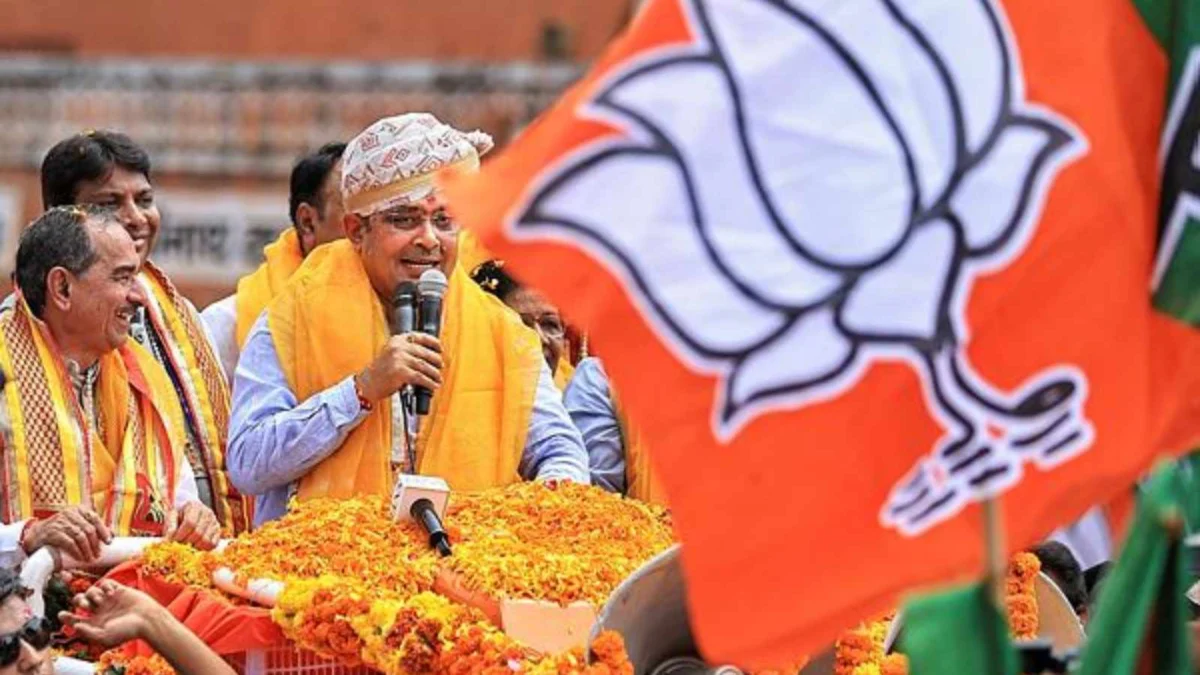
Jaipur, Rajasthan – September 14, 2026 – In a significant political development, the Bharatiya Janata Party (BJP) has emerged victorious in a majority of Rajasthan’s urban local bodies, securing a robust mandate that provides a crucial "shot in the arm" for the ruling party midway through its tenure. The results, declared on Monday afternoon, September 14, 2026, have solidified the BJP’s urban stronghold and offered a resounding endorsement of the state government led by Chief Minister Bhajan Lal Sharma and the organizational prowess of State President Madan Rathore. This triumph comes despite a backdrop of considerable criticism and widespread perception that the government was struggling to maintain public confidence.
The BJP’s impressive performance saw it leading in at least six municipal corporations, 21 municipal councils, and 110 municipalities across the state. This outcome is particularly noteworthy given the prevailing sentiment just weeks prior, which suggested the BJP government was delaying these crucial local elections due to fears of a potential defeat. The opposition Congress had actively capitalized on this narrative, citing repeated criticism from the High Court regarding the delays and portraying the first-time MLA Chief Minister, Bhajan Lal Sharma, as inexperienced and "not up to the task."
The urban local body elections, encompassing 309 civic bodies – comprising 10 Nagar Nigams (Municipal Corporations), 47 Nagar Parishads (Municipal Councils), and 252 Nagar Palikas (Municipalities) – were widely seen as a crucial litmus test for the Sharma government. The results not only validate the BJP’s strategic planning and grassroots mobilization but also serve as a significant morale booster ahead of the 2028 Assembly polls, while simultaneously delivering a stern warning to a disunited Congress.
The Road to Victory: A Chronology of Challenges and Campaign
The journey to these urban local body elections has been fraught with political challenges and strategic maneuvering. For months leading up to the polls, the Bhajan Lal Sharma government faced a barrage of criticism on multiple fronts, creating an atmosphere of apprehension within its own ranks and fueling the opposition’s narrative.
Pre-election Environment and Government Scrutiny:
The state government, which assumed power roughly two and a half years ago, was navigating the challenging mid-term phase, often considered a referendum on the administration’s performance. Several high-profile issues had recently dominated public discourse, seemingly eroding public trust and inviting sharp attacks from the Congress:
- NEET Paper Leak Scandal: Earlier this year, Rajasthan was rocked by a major NEET paper leak. This incident was particularly damaging for the BJP, as it directly contradicted the carefully cultivated image that the party had successfully curbed paper leaks in the state under its rule. The scandal sparked widespread outrage among students and parents, raising questions about administrative efficiency and integrity.
- Karni Sena and Upper Caste Protests: The government also contended with protests from the Karni Sena and other upper caste outfits. These groups demanded a rollback of specific University Grants Commission (UGC) regulations, linking their grievances directly to the upcoming local body polls. While the protests were fervent, their ultimate impact on the electoral outcome appears to have been limited, suggesting the BJP effectively managed to contain or neutralize their broader political implications.
- Environmental and Law and Order Concerns: Further dissent emerged from protests demanding the protection of the sacred Khejri tree, a significant cultural and ecological symbol in Rajasthan. Coupled with ongoing concerns over the general law and order situation, and more recently, protests by the ‘Cockroach Janta Party’ highlighting the deplorable condition of schools across Rajasthan, the government seemed beleaguered. These diverse protest movements collectively painted a picture of an administration under pressure, struggling to address a myriad of public grievances.
- Perceived Poll Delays and High Court Intervention: Perhaps the most potent weapon in the Congress’s arsenal was the accusation that the BJP government was deliberately delaying the local body elections out of fear of defeat. The High Court’s repeated criticism of the government for these delays lent credibility to the opposition’s claims. The Congress consistently framed this as a sign of the Sharma government’s inadequacy, emphasizing that a first-time MLA at the helm was proving "not up to the task" of effective governance. This narrative sought to undermine Chief Minister Sharma’s authority and leadership credentials.
The Campaign Trail:
Despite these challenges, the BJP launched an aggressive campaign. The photograph from September 9, 2026, depicting Chief Minister Bhajan Lal Sharma and BJP state president Madan Rathore participating in a vibrant roadshow from Sanganeri Gate to Tripolia Gate in Jaipur, encapsulated the party’s hands-on approach. Sharma, shedding the image of a novice, actively engaged with voters, while Rathore leveraged his organizational acumen to mobilize party cadres. Their message, as highlighted by Rathore in a rally, was clear and direct: voting for a BJP candidate would ensure access to funds from the Chief Minister for local development, implying potential hesitancy if a Congress councillor were elected. This pragmatic appeal to local development and funding, combined with a strong organizational backbone, appears to have resonated deeply with the urban electorate.
Unpacking the Numbers: Supporting Data and Key Battlegrounds
The counting trends on Monday afternoon painted a clear picture of BJP’s dominance, though the significant role of independent candidates in several key corporations underscored the nuanced nature of the mandate.
Overall Tally (as of Monday afternoon trends):
-
Total Urban Local Bodies: 309
- Nagar Nigam (Municipal Corporations): 10
- Nagar Parishad (Municipal Councils): 47
- Nagar Palika (Municipalities): 252
-
BJP Leading In:
- Municipal Corporations: At least 6
- Municipal Councils: 21
- Municipalities: 110
-
Congress Leading In:
- Municipal Corporations: Ajmer, Bikaner, and Pali Nagar Nigams (3 total)
- Municipal Councils: 16
- Municipalities: 95
-
Independents Holding the Key In: Jodhpur, Pali, Bharatpur, Ajmer, Alwar, and Bikaner municipal corporations. This trend suggests that while voters largely favored the ruling party, a significant portion also opted for independent voices, creating a complex post-election scenario in several major urban centers.
Detailed City-wise Breakdown:
-
Jodhpur Nagar Nigam:
- BJP: 46 wards
- Congress: 43 wards
- Independents: 11 wards
- Analysis: While BJP held a slight lead, the 11 independent winners were crucial in determining who would form the board. This scenario often leads to intense negotiations and potential political instability.
-
Alwar Nagar Nigam:
- BJP: 28 wards
- Congress: 23 wards
- Independents: 14 wards
- Analysis: Similar to Jodhpur, Alwar saw BJP in the lead but needing the support of independents to cross the majority threshold. The strong performance of independents here suggests a localized dissatisfaction with both major parties or a preference for local, non-partisan representation.
-
Pali Nagar Nigam (Home Turf of BJP State President Madan Rathore):
- Congress: 29 wards
- BJP: 21 wards
- Independents: 15 wards
- Analysis: Despite being the home turf of State President Rathore, Congress surprisingly led here. However, both major parties fell short of a clear majority, making the 15 independents the ultimate kingmakers. This result indicates that even top leadership strongholds are not immune to local dynamics and independent surges.
-
Bharatpur Nagar Nigam (Home Turf of CM Bhajan Lal Sharma):
- Independents: 38 wards
- BJP: 20 wards
- Congress: 7 wards
- Analysis: This was a particularly striking outcome, with independents winning an outright majority. For the Chief Minister’s home turf to deliver such a fragmented mandate, with both major parties trailing significantly behind independents, suggests deep-seated local issues or strong anti-establishment sentiment at play. This necessitates a careful introspection for both BJP and Congress in the region.
-
Ajmer Nagar Nigam:
- Congress: 37 wards
- BJP: 32 wards
- Independents: 11 wards
- Analysis: Congress took a strong lead in Ajmer, but like other corporations, still required the support of independents to form the board. This highlights the pervasive influence of independent candidates in shaping local governance.
-
Bikaner Nagar Nigam:
- Congress: 35 wards
- BJP: 21 wards
- Independents: 8 wards
- Analysis: Bikaner also saw Congress in a leading position, yet dependent on independents for a stable majority.
-
Jhalawar Municipal Council (Home Turf of Former CM Vasundhara Raje):
- Congress: Leading in nearly 30 of 45 wards
- BJP: Ahead in 13 wards
- Analysis: The strong performance of Congress in Jhalawar, the traditional stronghold of former Chief Minister Vasundhara Raje, is a notable outlier. It could signal a shift in local dynamics, specific anti-incumbency factors at play against local BJP representatives, or perhaps a waning of Raje’s direct influence in her erstwhile domain.
Official Responses and Political Attribution
The victory has undeniably been met with jubilation within the BJP ranks. While specific official statements were not detailed in the original report, the immediate credit for this success is being widely attributed to the two principal architects of the state unit: Chief Minister Bhajan Lal Sharma and State President Madan Rathore.
Chief Minister Sharma’s active involvement in the campaign, dispelling notions of his inexperience, has been lauded. His ability to connect with the electorate and project a capable leadership image, especially after initial criticism, has paid dividends. Rathore, on his part, is being commended for his astute organizational skills. The meticulous planning, cadre mobilization, and effective communication strategy implemented under his leadership are seen as pivotal in turning the tide against a seemingly adverse pre-election environment. The BJP’s ability to maintain internal cohesion and present a united front, particularly during the campaign, stands in stark contrast to the challenges faced by its primary opponent.
The explicit statement made by the BJP state chief during the campaign – that voting for a BJP candidate would ensure funds from the Chief Minister, while a Congress councillor might face "second thoughts" – underscores a pragmatic, results-oriented appeal. This direct linkage of local representation to state-level funding is a powerful incentive in local body polls, where residents often prioritize tangible development and infrastructure improvements for their wards. The election results suggest this message resonated effectively with the urban voters.
Implications: A Glimpse into Rajasthan’s Political Future
The outcome of the urban local body elections carries profound implications for Rajasthan’s political landscape, impacting both the ruling BJP and the opposition Congress, and setting the stage for future electoral battles.
For the BJP:
- Strengthened Leadership: The victory significantly bolsters the positions of Chief Minister Bhajan Lal Sharma and State President Madan Rathore. It effectively quashes the narrative of Sharma’s inexperience and affirms Rathore’s organizational capabilities. This win provides them with renewed authority and confidence within the party and vis-à-vis the state’s political dynamics.
- Validation of Governance: Despite the criticisms on issues like the NEET paper leak, Karni Sena protests, and law and order, the results indicate that these concerns did not translate into a widespread electoral backlash in urban areas. This provides a validation, at least in the short term, of the government’s policies and its handling of public issues.
- Momentum for Future Elections: This success generates significant momentum for the BJP heading into the crucial 2028 Assembly polls. It allows the party to project an image of a winning, effective administration and organization, which can be leveraged to motivate cadres and attract voters.
- Reinforced Urban Stronghold: The BJP has historically performed well in urban areas, and these results reinforce that trend. This electoral base is crucial for the party’s overall strategy in the state.
For the Congress:
- Major Setback and Call for Introspection: The results represent a significant setback for the Congress. It confirms the party’s struggle to connect with urban voters and convert public discontent into electoral gains. This should serve as a major wake-up call and necessitate a thorough introspection of its strategies and internal dynamics.
- Deep-seated Factionalism: Political analyst Tribhuvan’s observations highlight the Congress’s Achilles’ heel: deep-seated factionalism. He notes the party is "divided into 3-4 factions," with "factions within these factions." This internal disunity, manifesting as a lack of unified rallies or shared platforms for leaders, severely hampers its ability to present a cohesive message and mount an effective challenge. The absence of a strong, unified leadership voice likely contributed to its poor performance.
- Leadership Vacuum: The analyst also points to the absence of the Congress party’s state in-charge, Sukhjinder Singh Randhawa, who was preoccupied with polls in Punjab. This created a critical leadership vacuum at a crucial time, leaving the state unit without clear strategic direction and coordination.
- Challenges Ahead for 2028 Assembly Polls: The dismal performance in urban local bodies is a "major concern" for the Congress looking ahead to the 2028 Assembly polls. Without addressing its internal divisions, strengthening its organizational structure, and developing a compelling narrative that resonates with a broader electorate, the party faces an uphill battle in regaining power.
The Role of Independents:
The significant number of independent candidates holding the key in several municipal corporations points to an evolving electoral landscape. While the ruling party typically benefits from the ‘local councillor fund access’ narrative, the voters in some areas clearly sought alternatives beyond the two dominant parties. This trend could lead to more fragmented governance at the local level, requiring coalition-building and potentially leading to less stable boards. It also suggests that local issues and individual candidate appeal sometimes override party affiliations.
Broader Political Dynamics:
The results also reaffirm a long-standing trend in Rajasthan politics: the ruling party typically enjoys an advantage in local body polls, primarily because a local councillor from the ruling party is perceived to have easier access to state funds for their ward. The BJP skillfully leveraged this perception, as evidenced by Rathore’s direct appeal. Furthermore, the analyst Tribhuvan correctly identifies the BJP’s stronger presence in urban areas versus the Congress’s traditional strength in rural areas. However, he emphasizes that the BJP managed to overcome earlier predictions of a major loss through its superior organizational expertise, a critical factor in local elections where grassroots mobilization is paramount.
In conclusion, the BJP’s decisive victory in the Rajasthan urban local body elections is a multi-faceted triumph. It not only provides a much-needed boost to the Bhajan Lal Sharma government, validating its leadership and policies, but also underscores the enduring strength of the BJP’s organizational machinery in urban centers. For the Congress, these results serve as a stark reminder of the urgent need for internal cohesion, strong leadership, and a clear vision to effectively challenge the ruling party in the upcoming electoral cycles. The stage is now set for intensified political maneuvering, with both parties meticulously recalibrating their strategies for the ultimate prize: the 2028 Assembly elections.
