

The global automotive industry has long looked toward Asia as its primary engine of growth, but the sales data from August 2026 reveals a profound and widening "decoupling" between the world’s two most populous nations. While China has effectively crossed the Rubicon into a post-internal combustion engine (ICE) era, India remains anchored in a hybrid reality where traditional powertrains still dictate market volume.
The August 2026 sales charts serve as a historical marker. In China, the transition to Battery Electric Vehicles (BEVs) has reached a point of near-total saturation at the top of the leaderboards. Conversely, India’s market continues to prioritize versatility and cost-efficiency through a mix of petrol, CNG, and "EV-ready" platforms. This report explores the nuances of these two markets, the vehicles driving the change, and the long-term implications for global manufacturers.
Main Facts: The Death of the ICE Top 10 in China
In August 2026, the Chinese passenger vehicle market achieved a milestone that many analysts predicted would not occur until the end of the decade. For the second time that year, pure petrol-powered vehicles were entirely absent from the top 10 best-sellers list.
China’s Dominant Leaders
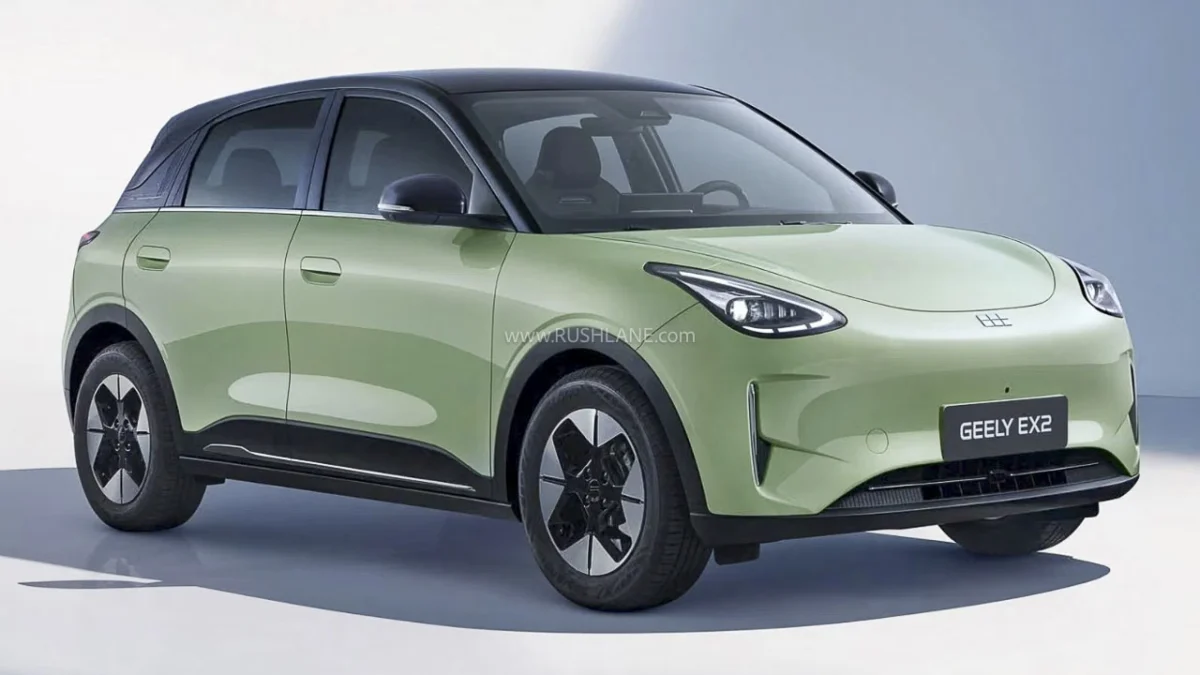
The Geely EX2 emerged as the undisputed champion of the Chinese market, clocking 39,651 units. Positioned as an accessible yet high-tech electric crossover, the EX2’s price range of 64,800 to 94,800 yuan (approximately ₹9.2 lakh to ₹13.5 lakh) has hit the "sweet spot" for China’s massive middle-class demographic.
Following closely was the Leapmotor A10, securing the second spot with 30,652 units. Like the Geely, the A10 focuses on the "value-electric" segment, priced between 66,000 and 87,000 yuan. The success of these two models highlights a critical shift: the Chinese market is no longer driven solely by premium EV aspirations but by mass-market affordability.
Tesla and the Domestic Surge
Despite the onslaught of domestic competition, Tesla remains a formidable force. The Model Y secured third place with 29,260 units, a remarkable feat considering its significantly higher price point (₹37.5 lakh to ₹44.6 lakh) compared to its domestic rivals. The Tesla Model 3 also maintained its relevance, ranking sixth with 20,787 units.

The top 10 was rounded out by a mix of established giants and tech-driven newcomers:
- Fang Cheng Bao Ti7 (No. 4): A unique entry available in both BEV and PHEV forms, though BEVs accounted for 55% of its 23,471 units.
- BYD Atto 2 (No. 5): A staple of the BYD lineup, moving 22,958 units.
- Changan Nevo Q05 (No. 7): 17,349 units.
- Li Auto i6 (No. 8): 16,979 units.
- BYD Dolphin (No. 9): 16,829 units.
- Xiaomi SU7 (No. 10): The tech giant’s flagship sedan continues to hold its ground with 16,518 units.
In total, the top 10 models in China accounted for 234,454 sales in August, with nine out of ten being pure BEVs.
Chronology: The Road to August 2026
To understand the August 2026 figures, one must look at the preceding five years of policy and infrastructure development in both nations.
The Chinese Acceleration (2021–2026)
China’s journey to an ICE-free top 10 was catalyzed by the "New Energy Vehicle Industry Development Plan (2021–2035)." The government’s decision to transition from direct subsidies to a "dual-credit" system forced manufacturers to prioritize EV production. By 2024, the price parity between EVs and ICE vehicles in the budget segment was achieved, thanks to localized battery supply chains (CATL, BYD). By early 2026, the charging infrastructure in Tier 1 through Tier 4 cities had reached a density that eliminated "range anxiety" for the average consumer.
The Indian Evolution (2021–2026)
India’s path has been more measured. The FAME-II and subsequent PLI (Production Linked Incentive) schemes encouraged local manufacturing, but the high initial cost of battery cells and a developing charging grid meant that ICE remained the pragmatic choice. Between 2023 and 2025, Indian manufacturers like Tata Motors and Mahindra & Mahindra adopted a "multi-powertrain" strategy, offering the same vehicle nameplates in petrol, diesel, and electric variants to hedge their bets.
Supporting Data: A Tale of Two Top Tens
The contrast between the two markets becomes stark when examining India’s August 2026 performance. While China has abandoned the internal combustion engine at the top of the charts, India’s volume is still driven by it.

India’s Sales Breakdown
India’s top-selling vehicle for August 2026 was the Tata Punch (including Punch EV), with 21,320 units. This reflects a key difference in data reporting: Indian charts often combine ICE and EV sales under a single nameplate, whereas Chinese charts often distinguish between them or feature BEV-only models.
The Indian Top 10:
- Tata Punch / EV: 21,320 units
- Maruti WagonR: 20,180 units (Primarily Petrol/CNG)
- Maruti Swift: 19,832 units (Petrol)
- Maruti Fronx: (High volume crossover)
- Maruti Ertiga: (The MPV leader)
- Tata Nexon / EV: (A dual-powertrain success)
- Maruti Dzire: (The sedan staple)
- Hyundai Creta / EV: (The mid-size SUV benchmark)
- Maruti Baleno: (Premium hatchback)
- Mahindra Scorpio / N: (The rugged SUV choice)
Comparative Analysis: Powertrain Composition
In China, the first pure ICE vehicle—the Toyota Corolla—did not appear until the 13th position, with 14,675 units. In India, however, if one were to strip away the EV variants of the Punch, Nexon, and Creta, the top 10 would likely remain 80% to 90% ICE-dependent.
The pricing also tells a story. The average price of a top-10 car in China (excluding Tesla) hovers around 80,000 to 120,000 yuan (₹9.5 lakh to ₹14 lakh). In India, the volume is concentrated in the ₹6 lakh to ₹12 lakh bracket, but the technology under the hood is vastly different.
Official Responses and Industry Perspectives
The View from Beijing
Analysts from the China Passenger Car Association (CPCA) have noted that the August 2026 data confirms the "irreversible eclipse" of the traditional petrol car. In a recent briefing, industry experts suggested that legacy foreign brands (Volkswagen, Toyota, Honda) are facing an existential crisis in China. "The consumer no longer asks if they should buy an EV, but which EV offers the best software integration," noted a lead analyst at a Shanghai-based firm. The success of the Xiaomi SU7, a car built by a smartphone company, underscores this shift toward "software-defined vehicles."
The View from New Delhi
In India, the Society of Indian Automobile Manufacturers (SIAM) remains optimistic but cautious. Official statements emphasize a "balanced transition." Government representatives have reiterated that while the goal is 30% EV penetration by 2030, the immediate focus remains on reducing crude oil imports through a mix of ethanol blending, CNG adoption, and the gradual scaling of the EV ecosystem. "India is a unique market where ‘value’ is measured by total cost of ownership over a decade, not just the tech features," an industry spokesperson stated.

Implications: The Global Aftermath
The divergence between China and India in August 2026 has significant implications for the global automotive supply chain and environmental policy.
1. The Marginalization of Global Legacy Brands
Companies like Toyota and Volkswagen, which once dominated the Chinese market with ICE sedans, are being pushed to the periphery. Their inability to match the price-to-feature ratio of the Geely EX2 or Leapmotor A10 has resulted in a loss of market share that may never be recovered. These brands are now pivoting to India and Southeast Asia as their "last bastions" for ICE and hybrid technology.
2. The "EV-Ready" Platform Strategy
India’s success with models like the Tata Punch and Hyundai Creta suggests that for emerging markets, the "converted platform" (ICE platforms modified for EVs) is a successful transitional tool. However, as Chinese brands begin to export their dedicated EV platforms (like Geely’s SEA architecture) at aggressive price points, Indian manufacturers will face immense pressure to move away from multi-powertrain platforms toward dedicated EV designs.
3. Environmental Trajectories
China’s rapid adoption of BEVs is expected to lead to a significant drop in urban tailpipe emissions by 2028. However, the environmental benefit remains tied to the greening of their power grid. India’s slower transition means that while tailpipe emissions will persist longer, the country has more time to integrate renewable energy into its charging infrastructure, potentially leading to a more "well-to-wheel" sustainable model in the long run.
4. The Tech vs. Mechanical Divide
The August data confirms that the Chinese car has become a consumer electronic product. With Xiaomi in the top 10, the car is now an extension of the digital ecosystem. In India, the car remains a mechanical asset—a symbol of mobility and status that must withstand diverse terrains and climatic extremes.
Conclusion
The sales figures of August 2026 provide a glimpse into two different futures. China is the blueprint for a fully electrified, tech-integrated society where the internal combustion engine is a relic of the past. India represents a pragmatic, multi-pathway approach where the ICE engine, bolstered by CNG and hybridization, continues to provide the mobility needed for a developing giant. For global automakers, the message is clear: a "one-size-fits-all" global strategy is officially dead. To win in 2026 and beyond, they must navigate the electric sprint of China and the marathon transition of India simultaneously.
