

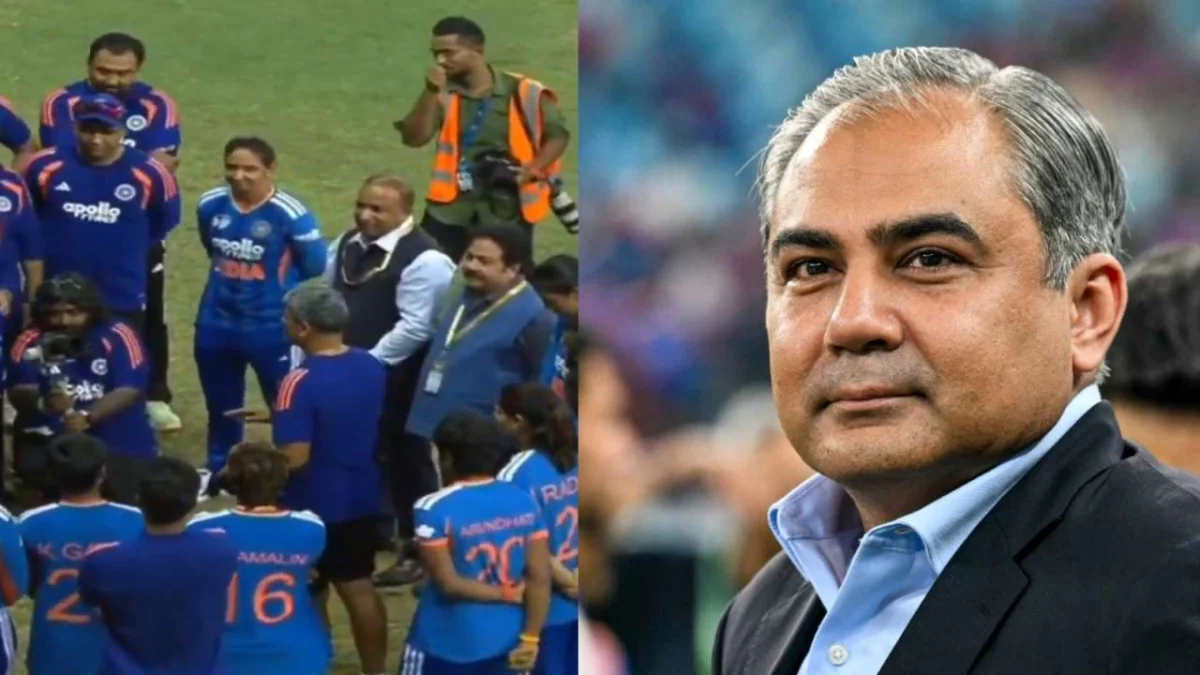
Dubai, UAE – September 14, 2026 – A significant diplomatic and sporting incident unfolded in Dubai on Sunday, as the Indian women’s cricket team, fresh off their record eighth Women’s Asia Cup title victory against Sri Lanka, notably refused to accept their trophy from Asian Cricket Council (ACC) chief Mohsin Naqvi. The unprecedented move, which saw the presentation ceremony delayed by nearly an hour and Naqvi leaving the podium abruptly, was later clarified by the Board of Control for Cricket in India (BCCI) as a demonstration of solidarity with the men’s team’s similar stand taken last year.
The incident has reignited discussions about the complex interplay between sports, national sentiment, and geopolitical tensions, particularly between India and Pakistan. Mohsin Naqvi, who holds the dual roles of Pakistan Cricket Board (PCB) chief and Pakistan’s interior minister, found himself at the centre of a diplomatic cricketing storm, mirroring an almost identical scenario that played out at the same venue last September when the Indian men’s team, led by Suryakumar Yadav, also declined to accept the Asia Cup trophy from him.
Main Facts of the Standoff
The core of the matter revolves around India’s principled refusal to engage in ceremonial acts with a representative perceived to be linked to actions against India’s national interests. Following their dominant 72-run victory over Sri Lanka, securing their record eighth Women’s Asia Cup title, Harmanpreet Kaur’s side bypassed the official presentation ceremony involving Mohsin Naqvi.
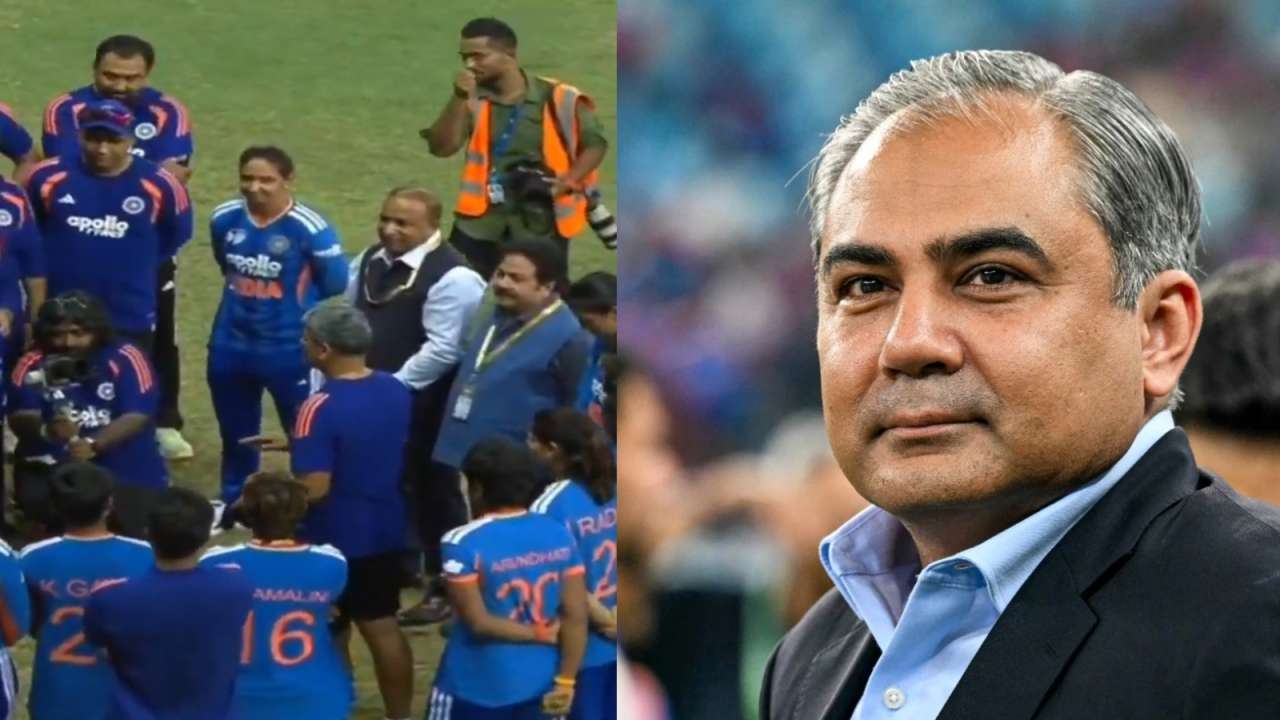
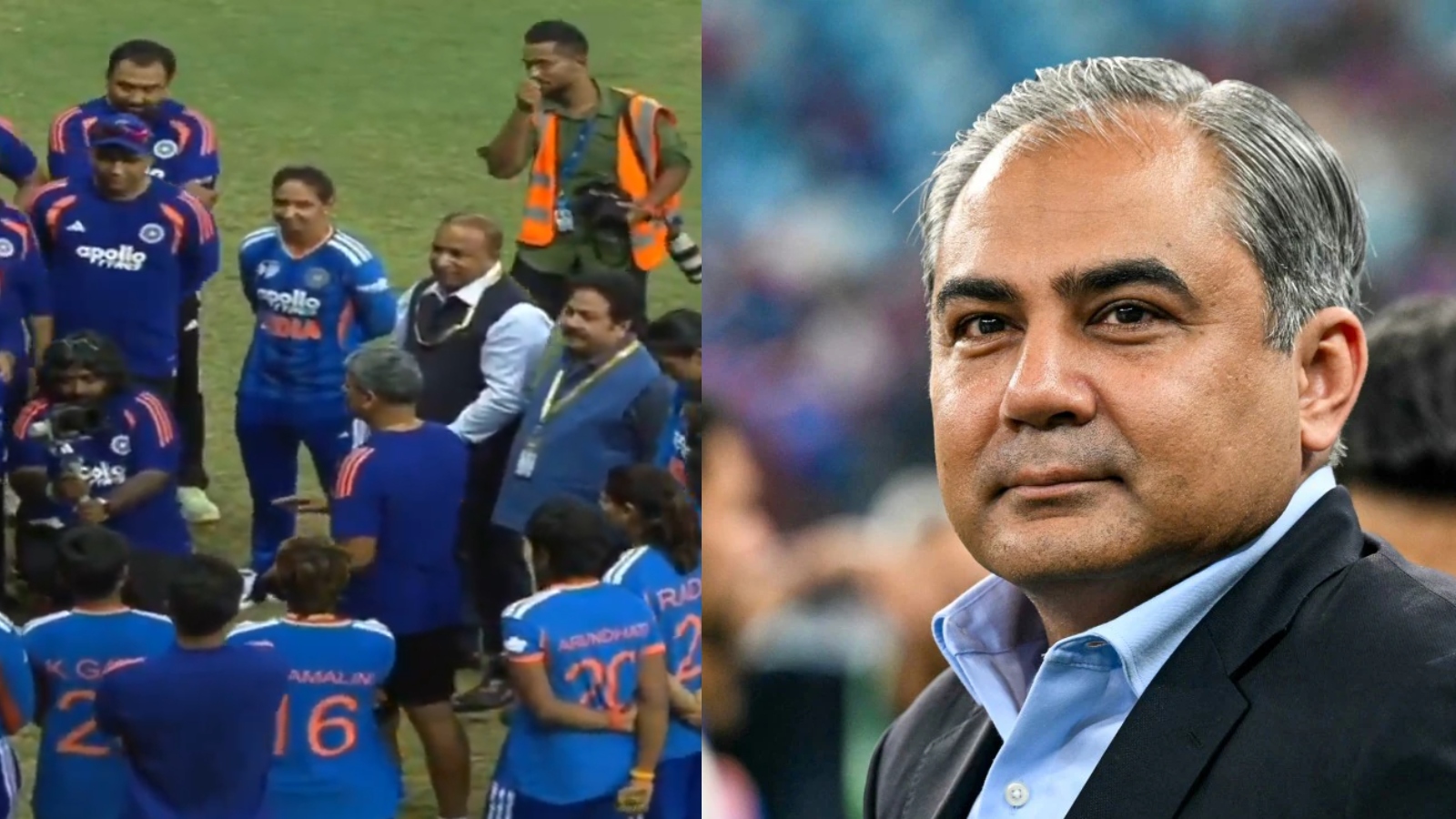
The presentation was notably delayed, with Naqvi left waiting on the podium for an extended period. While he did proceed to hand over the runners-up cheque to Sri Lankan captain Chamari Athapaththu, the Indian team conducted a separate medal presentation on the sidelines, notably in the presence of BCCI secretary Devajit Saikia and vice-president Rajeev Shukla. Naqvi ultimately exited the stadium without presenting the trophy to the victorious Indian squad, although, unlike last year’s men’s final where the trophy reportedly left with him, the trophy remained on site.
)
The BCCI’s stance, articulated by Secretary Devajit Saikia, unequivocally stated that this action was not a slight against the tournament’s integrity or the team’s performance, but a clear message rooted in national policy and sentiment. The decision was directly linked to heightened tensions between India and Pakistan following the "Pahalgam incident" in April 2025, which, according to the BCCI, significantly altered the dynamics of relations between the two nations, impacting sporting interactions.
Chronology of Events and Precedents
The sequence of events on Sunday in Dubai unfolded as follows:

- Dominant Victory: The Indian women’s team delivered a commanding performance, defeating Sri Lanka by a substantial margin of 72 runs to clinch the Asia Cup title. This marked their eighth triumph in the tournament, underscoring their consistent prowess in Asian women’s cricket.
- Presentation Delay: Following the conclusion of the match, an unusual delay gripped the presentation ceremony. Spectators and media noted the absence of the Indian team from the main stage, where ACC chief Mohsin Naqvi was poised to present the trophy.
- Naqvi’s Departure: After an extended wait, Mohsin Naqvi proceeded to present the runners-up cheque to the Sri Lankan team. However, with the Indian team still not present to receive their accolades from him, he eventually departed the podium and the stadium, leaving the trophy unpresented to the champions.
- Separate Ceremony: In a clear display of their chosen course of action, the Indian team held its own medal ceremony on the sidelines, with BCCI secretary Devajit Saikia and vice-president Rajeev Shukla overseeing the distribution of medals to the victorious squad. This distinct ceremony underscored their deliberate avoidance of the official presentation involving Naqvi.
This incident was not an isolated event but a continuation of a pattern established previously. A near-identical scenario had unfolded at the very same venue just "last September" (September 2025, based on the article’s timeline) during the men’s Asia Cup final. On that occasion, after Suryakumar Yadav’s men secured the title, they too refused to accept the trophy from Mohsin Naqvi, who was then also the ACC chief. This precedent set by the men’s team provided a clear framework for the women’s team’s actions on Sunday. The article notes that the women’s team has consistently followed suit in subsequent tournaments, including the ODI World Cup, demonstrating a unified stance across Indian cricket.
The root of this persistent refusal, as explained by the BCCI, traces back to the "Pahalgam terror attack in April 2025." This incident, described as having "escalated tensions between India and Pakistan," became a pivotal moment that reshaped India’s approach to sporting engagements with its neighbour, particularly concerning ceremonial interactions with Pakistani officials.
)
Supporting Data and Contextual Background
The BCCI’s firm stance is deeply embedded in the geopolitical realities and public sentiment following the aforementioned Pahalgam incident. Devajit Saikia’s statements provide crucial insights into the rationale behind the decision:
"Our men’s team won the Asia Cup a year and a half ago. And our whole situation, since the April 2025 Pahalgam incident, changed after that. So, after that, there was pressure on us from our citizens that we shouldn’t keep any relations with our neighbouring country and not play cricket with them. But our government has a policy that we must play against every country in multinational tournaments," Saikia told IANS, as quoted by Sportstar.
)
This statement highlights a delicate balancing act for the BCCI: adhering to the government’s policy of participating in multilateral tournaments, while simultaneously responding to domestic pressure to limit direct engagement and ceremonial interactions with Pakistan. The distinction drawn between playing matches and participating in specific presentation ceremonies is central to this strategy.
Saikia further elaborated on the specific objection to Mohsin Naqvi’s role: "But that doesn’t mean we will follow every condition laid out for us. Our military conflict is still ongoing. One of the main leaders who is working against the interests of our country; we can’t receive the trophy from him. The Women’s team has expressed solidarity with the decision taken by the men’s team last year."
)
The reference to "military conflict" and Naqvi as "one of the main leaders who is working against the interests of our country" underscores the highly politicized nature of the refusal. Naqvi’s roles as Pakistan’s interior minister, alongside his position as PCB chief and ACC chief, undeniably place him at the intersection of sports and state affairs, making him a contentious figure for India in such a sensitive context.
The Pahalgam terror attack in April 2025 is presented as the catalyst that fundamentally altered India’s cricketing diplomacy. While specific details of the attack are not provided in the source, its stated impact — "escalated tensions between India and Pakistan" — is crucial. It led to India’s men’s team refusing to shake hands with their Pakistani counterparts during last year’s Asia Cup, in addition to declining the trophy. The women’s team’s consistent replication of this stance in subsequent tournaments reinforces the unified and enduring nature of this policy across Indian cricket.
)
Official Responses and BCCI’s Clarifications
BCCI Secretary Devajit Saikia emerged as the primary voice clarifying India’s position, providing detailed explanations to the media. His statements were consistent and resolute, emphasizing that the decision was a deliberate and principled one.
Addressing the immediate controversy, Saikia stated, "Not accepting the trophy is a separate matter; winning the tournament is what truly matters." He reiterated that the team’s performance remained paramount and should not be overshadowed by the presentation dispute. "It doesn’t diminish the performances of our team. We have won all our matches in a one-sided manner. Women’s cricket has been growing so well in India and there’s no bigger evidence of that than this. Our whole planning is geared towards the 2026 ICC T20 World Cup." This highlights the BCCI’s effort to manage the narrative, ensuring the focus remains on the team’s sporting achievement while upholding its nationalistic stance.
)
Saikia also revealed that the BCCI had attempted to find an alternative solution to avoid the standoff. He disclosed that the Indian women’s team was prepared to receive the trophy from ACC Deputy Chairman Khalid Al Zarooni. This proposal, however, was rejected by Mohsin Naqvi, leading to the BCCI’s ultimate decision to withdraw from the official presentation ceremony.
"We did not want to be part of the presentation in line with our previous stand from a year and a half ago (men’s Asia Cup). We are yet to receive our men’s Asia Cup. But we want to keep our position intact by giving respect to a lot of our people who have given their lives at the hands of some foreign mercenaries," Saikia was quoted by Hindustan Times, further underscoring the gravity and emotional weight behind their decision. "We did request that the deputy chairperson of ACC hand over the trophy but it was not accepted. So we decided that we have no other option but to not be a part of the presentation ceremony." This illuminates the BCCI’s attempt at a diplomatic workaround and the ACC’s (or Naqvi’s) rejection of it, pushing India into the current position.
)
Saikia also addressed visuals of him conversing with Rajeev Shukla and Mohsin Naqvi in the Royal Box in Dubai, clarifying that such interactions were routine and did not imply a softening of their stance. "It’s not as if we wouldn’t meet anyone. I was sitting outside in the Royal Box from the toss until the end of the game. Everyone who came met me during the match; someone sat next to me, then Shukla came and sat with me. The person you mentioned also came and sat alongside Deputy Chairman Khalid (Khalid Al Zarooni) sahib," Saikia explained.
He concluded by asserting that despite the efforts to resolve the situation, the outcome was not regretted. "That’s just a normal tradition – whenever anyone comes, we meet and talk with everyone. We tried to solve today’s situation, but our efforts were not successful. We don’t have any regrets. Our ultimate priority and ambition was not to focus on who would give the trophy. We wanted the Indian team to win and we’ve achieved that." He also mentioned that his conversation during the match was about the Asian Games, not the trophy presentation itself, further segmenting routine interactions from official protocol.
)
Regarding the fate of the trophies, Saikia expressed confidence that the BCCI would eventually receive them, stating that "the BCCI will get the trophies eventually at some stage."
Implications and Future Outlook
The refusal by the Indian women’s team to accept the Asia Cup trophy from Mohsin Naqvi carries significant implications for regional cricket diplomacy and the broader political landscape between India and Pakistan.
)
1. Reinforcement of a Consistent Stance: This incident solidifies the BCCI’s principled and consistent stance regarding interactions with Pakistani officials in a ceremonial capacity, particularly after sensitive geopolitical events. It demonstrates that the policy is not limited to the men’s team but is a unified directive across Indian cricket, impacting both men’s and women’s international engagements. This consistency sends a strong message about the non-negotiable nature of India’s position on matters of national interest.
2. Pressure on the Asian Cricket Council (ACC): The ACC, headed by Mohsin Naqvi, finds itself in a challenging position. As an organization responsible for promoting cricket across Asia, it must navigate the intricate political dynamics between its most influential members, India and Pakistan. The repeated boycotts of its presentation ceremonies by the reigning champions could undermine the ACC’s authority and the ceremonial prestige of its tournaments. The rejection of the BCCI’s proposal to have the Deputy Chairman present the trophy indicates a lack of flexibility or perhaps an insistence on protocol that ultimately led to an awkward situation.
)
3. Future of India-Pakistan Cricketing Relations: While the Indian government’s policy dictates participation in multinational tournaments, direct bilateral cricket series between India and Pakistan have been suspended for years due to political tensions. This incident further underscores the deep chasm that exists, suggesting that a resumption of bilateral ties, even in a sporting context, remains a distant prospect. The ceremonial boycott acts as a symbolic refusal to normalize relations through sporting gestures when political grievances persist.
4. Public Sentiment and National Identity: The BCCI’s actions are clearly aimed at resonating with domestic public sentiment, particularly after events like the Pahalgam incident. By linking the refusal to the sacrifices of "our people who have given their lives at the hands of some foreign mercenaries," the BCCI taps into a powerful narrative of national pride and security. This approach ensures that while Indian teams compete and excel on the field, they also uphold a perceived national honour off it.
)
5. Impact on Players: While the focus remains on the BCCI’s political stance, the players themselves are placed in a unique situation. They are celebrated for their on-field achievements but also become unwitting participants in diplomatic statements. The clarity provided by the BCCI secretary helps the players understand and align with the organizational directive, ensuring solidarity.
6. Diplomatic Communication through Sport: This event serves as a stark reminder of how sports, often seen as a unifying force, can also become a powerful medium for diplomatic communication, or indeed, the expression of diplomatic deadlock. The absence of handshakes and trophy exchanges speaks volumes, perhaps more loudly than official communiqués, about the state of relations between the two nations.
)
In conclusion, India’s women’s team’s refusal to accept the Asia Cup trophy from Mohsin Naqvi is more than just a procedural deviation; it is a meticulously calculated statement rooted in national policy and historical precedent. While it highlights the challenges faced by cricketing bodies in managing geopolitical tensions, it also unequivocally asserts India’s stance on sensitive bilateral issues, ensuring that sporting victories, however glorious, are framed within a broader context of national interest and solidarity. The resolution of receiving the trophies at a later, unspecified stage, suggests a pragmatic approach to securing the deserved accolades while maintaining a firm diplomatic posture.
