

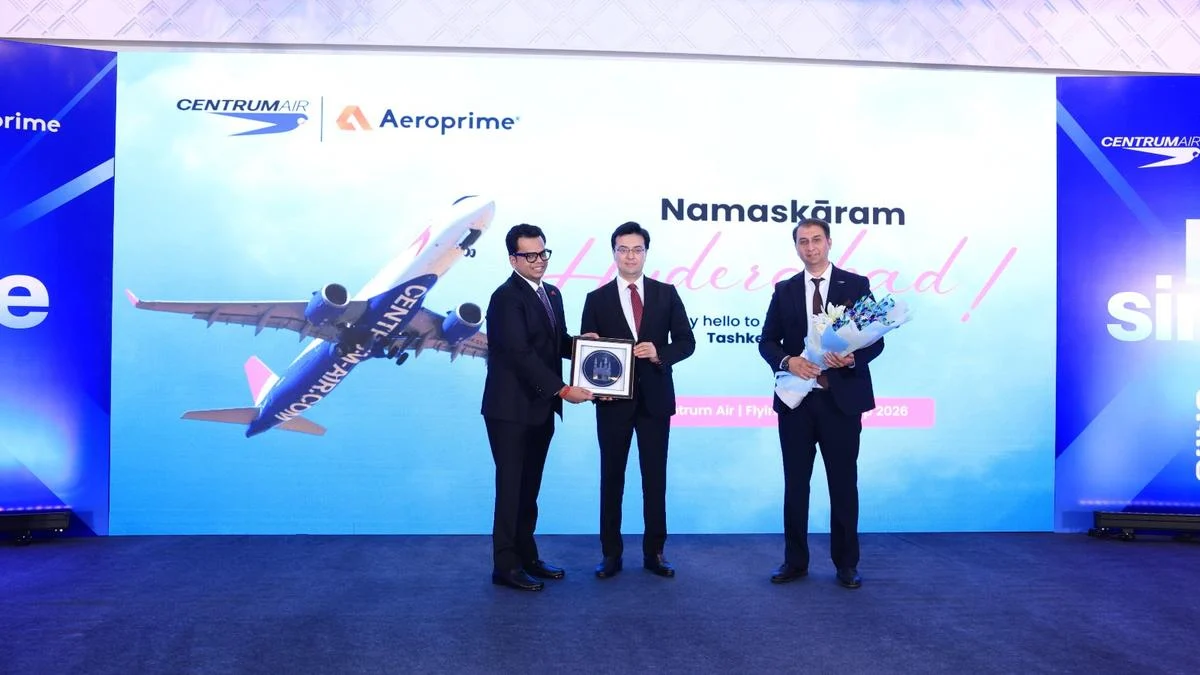
In a move that signals a significant deepening of bilateral ties between India and Central Asia, Uzbekistan-based private carrier Centrum Air has announced the commencement of direct flight services between Hyderabad and Tashkent. Scheduled to take flight on September 28, this new route is being hailed not merely as a commercial expansion but as a strategic "air bridge" designed to facilitate a multifaceted exchange of trade, talent, and technology between the Deccan plateau and the heart of the ancient Silk Road.
The announcement comes at a pivotal moment in Indo-Uzbek relations, following high-level diplomatic engagements and a renewed focus on regional connectivity. As Uzbekistan undergoes a rapid period of economic liberalization and digital transformation, the link to Hyderabad—India’s pharmaceutical and IT powerhouse—is expected to serve as a primary catalyst for growth in both nations.
Main Facts: A Strategic Flight Schedule
Centrum Air’s entry into the Indian market via Hyderabad is a calculated move to tap into the burgeoning demand for direct connectivity from Southern India. The airline has structured its operations to cater to both business travelers and the growing segment of medical and leisure tourists.
Flight Frequency and Logistics
The service will operate on a bi-weekly basis, ensuring a consistent flow of traffic between the two cities:
- From Hyderabad (RGIA): Flights will depart every Monday and Thursday.
- From Tashkent (TAS): Return flights will operate on Tuesdays and Fridays.
This schedule is designed to accommodate the typical work-week requirements of business professionals while providing flexible options for short-term medical visitors and tourists. By utilizing Tashkent as a central node, Centrum Air is positioning itself as a competitive alternative to traditional hubs in the Middle East for travelers heading toward the Commonwealth of Independent States (CIS) and parts of Europe.
The Gateway Concept
A critical component of this launch is the "Gateway Strategy." Centrum Air is not viewing Hyderabad as a standalone market but as a collection point for passengers from across the southern and western corridors of India. This includes significant catchment areas in Andhra Pradesh, Kerala, and Maharashtra. By providing a direct route to Tashkent, the airline offers a more efficient path for travelers who previously had to transit through New Delhi or international hubs like Dubai or Istanbul.
Chronology: The Evolution of Indo-Uzbek Connectivity
The launch of the Hyderabad-Tashkent flight is the culmination of several years of intensifying diplomatic and economic cooperation. To understand the significance of this route, one must look at the timeline of events that paved the way for this "air bridge."
The Diplomatic Foundation (2015–2022)
The seeds for this connectivity were sown during Prime Minister Narendra Modi’s visit to Tashkent in 2015, which was followed by reciprocal visits by Uzbek leadership. The relationship was further elevated to a "Strategic Partnership" in 2020. During the Shanghai Cooperation Organization (SCO) summit held in Samarkand in 2022, discussions heavily focused on creating a "connectivity corridor" that bypasses traditional geographical hurdles.
Economic Liberalization in Uzbekistan
Under the leadership of President Shavkat Mirziyoyev, Uzbekistan has pursued an "Open Doors" policy since 2017. This period saw the dismantling of many state monopolies, including in the aviation sector, which allowed private players like Centrum Air to emerge. The airline’s decision to target Hyderabad is a direct result of this liberalization, seeking to match private enterprise with the geopolitical goals of the state.
The 2024 Push
The specific focus on Hyderabad intensified in early 2024, following a series of trade delegations that identified the city’s pharmaceutical and IT sectors as vital to Uzbekistan’s "Strategy 2030." The formalization of the flight route in September 2024 represents the first "tangible outcome" of these high-level discussions, moving from policy frameworks to operational reality.
Supporting Data: The Economic Pillars of the Route
The viability of the Hyderabad-Tashkent route is underpinned by robust data across three primary sectors: Pharmaceuticals, Education, and Tourism.
The Pharmaceutical Powerhouse
Hyderabad, often referred to as the "Genome Valley" of India, is the backbone of the country’s pharmaceutical exports. The data regarding trade with Uzbekistan is particularly striking:
- Market Share: Indian medical products currently account for approximately 50% of Uzbekistan’s total pharmaceutical market.
- Hyderabad’s Contribution: Of that 50%, nearly 30% to 40% of the supply originates from the pharmaceutical clusters in and around Hyderabad.
- Cargo Potential: The direct flight is expected to significantly reduce the lead time and logistics costs for temperature-sensitive medical shipments, which previously relied on multi-leg transit routes.
Education and Student Mobility
Uzbekistan has emerged as an increasingly popular destination for Indian students, particularly those pursuing MBBS (Bachelor of Medicine, Bachelor of Surgery) and engineering degrees.

- Student Population: There are currently over 5,000 Indian students enrolled in various Uzbek universities.
- Growth Rate: The number of students from Southern India choosing Uzbekistan has seen a 20% year-on-year increase due to the affordable cost of living and the high standard of medical education which is recognized by the National Medical Commission (NMC) of India.
Transit and Onward Connectivity
Centrum Air is leveraging Tashkent’s geographical advantage as a natural crossroads. The airline has highlighted its network capabilities, offering seamless connections to:
- Central Asia: Almaty (Kazakhstan) and Bishkek (Kyrgyzstan).
- The Caucasus: Tbilisi (Georgia) and Baku (Azerbaijan).
- Europe and Beyond: Frankfurt (Germany) and various cities in Russia and the Middle East.
Official Responses: Diplomatic and Corporate Perspectives
The launch event featured high-ranking officials who articulated the broader vision behind the new flight service.
The Ambassador’s Vision
Sardor Mirzayusupovich Rustambaev, Uzbekistan’s Ambassador to India, emphasized that the flight is more than a commercial venture. "This route represents an ‘air bridge’ between Uzbekistan and South India," Rustambaev stated. He noted that the timing is perfect, following the recent strengthening of ties during Prime Minister Modi’s diplomatic engagements.
The Ambassador highlighted five key areas of cooperation that the flight would facilitate:
- High Technology: Tapping into Hyderabad’s IT ecosystem.
- Pharmaceuticals: Ensuring a steady supply of essential medicines.
- Digitalization: Learning from India’s "Digital India" success.
- Renewable Energy: Collaborative projects in solar and wind power.
- Critical Minerals: Exploring Uzbekistan’s vast mineral wealth for India’s green energy transition.
The Airline’s Strategy
Adil Mirza, Head of the Agents Division at Centrum Air, focused on the logistical and commercial benefits. He urged travel agencies across Southern and Western India—specifically mentioning Kerala and Maharashtra—to view Hyderabad as the primary departure point for Central Asia.
"Tashkent is not just a destination; it is a hub," Mirza explained. "We are offering the Indian traveler a faster, more affordable way to reach Moscow, Frankfurt, or Dubai, while simultaneously opening up the historical wonders of Samarkand and Bukhara to a new demographic of Indian tourists."
Implications: A Transformative Shift in Regional Dynamics
The introduction of direct flights between Hyderabad and Tashkent carries profound implications for the socio-economic landscape of both regions.
1. Revolutionizing Medical Tourism
Hyderabad is a global destination for advanced medical procedures, including organ transplants, oncology, and robotic surgery. For Uzbek citizens, the lack of direct connectivity was previously a major barrier to accessing this care. The new flight removes this hurdle, allowing patients to reach world-class hospitals like Apollo, Yashoda, and AIG in under four hours. This is expected to trigger a significant uptick in "medical arrivals," benefiting the local hospitality and healthcare economy in Hyderabad.
2. Strengthening the "Tech Corridor"
Uzbekistan is currently in the midst of a massive digital transformation, aiming to increase its IT exports to $5 billion by 2030. By connecting directly to Hyderabad—India’s "Cyberabad"—Uzbekistan is positioning itself to attract Indian tech giants and startups. We can expect to see an increase in joint ventures, IT outsourcing to Tashkent, and the establishment of Indian satellite campuses or training centers in Uzbekistan to bridge the skill gap.
3. Cultural and Tourism Renaissance
For the Indian traveler, Uzbekistan offers a rich tapestry of history that resonates with Indian heritage. The Silk Road cities of Samarkand, Bukhara, and Khiva are UNESCO World Heritage sites that have long been on the bucket lists of history enthusiasts. The direct flight, combined with Uzbekistan’s simplified e-visa process for Indian citizens, is likely to make Central Asia a top-tier destination for Indian outbound tourism, rivaling traditional spots like Southeast Asia or the UAE.
4. Strategic Energy and Mineral Security
As India pushes toward its Net-Zero goals, Uzbekistan’s reserves of uranium and critical minerals (such as copper and lithium) become vital. Facilitating the movement of experts and business delegations via this new flight route is a subtle but essential step in securing the supply chains necessary for India’s renewable energy future.
5. Geopolitical Significance
In the broader context of the "Great Game" of the 21st century, India’s presence in Central Asia is a strategic necessity. By establishing firm commercial and civil aviation links, India strengthens its "Connect Central Asia" policy. This route provides a reliable alternative for trade and movement, fostering a sense of regional stability and mutual prosperity that transcends the complexities of land-based transit through volatile territories.
Conclusion
The launch of the Centrum Air flight between Hyderabad and Tashkent on September 28 is a landmark event in the annals of Indo-Uzbek relations. It is a testament to the fact that in the modern era, connectivity is the currency of diplomacy. By linking the pharmaceutical and technological heart of India with the historic and evolving capital of Uzbekistan, both nations are setting the stage for a future defined by shared growth, innovation, and a revived spirit of the Silk Road. As the first aircraft departs from Rajiv Gandhi International Airport, it carries with it not just passengers, but the aspirations of two ancient civilizations looking to reclaim their place at the center of global commerce.
