

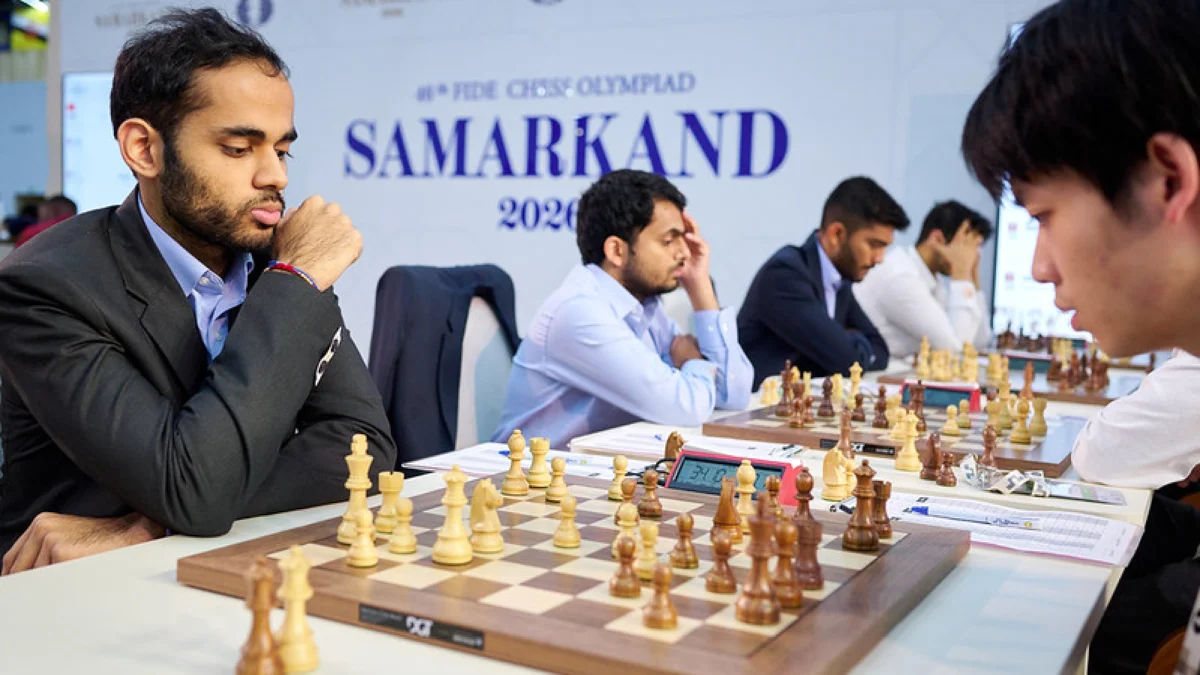
Samarkand, Uzbekistan – September 16, 2026 – India’s ambitious quest to defend its titles at the 2026 Chess Olympiad in Samarkand, Uzbekistan, commenced with a mixed bag of results on Wednesday night, leaving fans and analysts with plenty to ponder. While the top-seeded Indian women’s team delivered a flawless 4.0-0.0 sweep against the Dominican Republic, the men’s team, despite securing an overall victory against Thailand, experienced an unforeseen and startling upset on their top board.
The most significant headline from the opening round emerged from the men’s section, where India’s No. 2, Grandmaster Arjun Erigaisi, suffered a crushing defeat at the hands of Thailand’s International Master Prin Laohawirapap. The loss was particularly shocking given the nearly 400-rating point disparity between the two players in classical chess, casting an early shadow over India’s title defense aspirations, even as the team ultimately triumphed 3-1. Adding to the intrigue was the strategic decision to field reigning World Champion D Gukesh on Board 3 (originally slated for Board 4), a move that has ignited considerable debate within the global chess community.
A Shaky Start for the Defending Champions: Arjun Erigaisi’s Unforeseen Defeat
The path to title defense was always acknowledged as challenging, but few anticipated such a dramatic stumble in the very first round. Arjun Erigaisi, stepping up to Board 1 in the absence of R Praggnanandhaa, who was rested for the opening encounter, found himself on the receiving end of a stunning upset. His loss to IM Prin Laohawirapap, rated 2363 compared to Erigaisi’s elite 2700+ classical rating, sent ripples of surprise across the playing hall.
The Shock on Board 1
The magnitude of Erigaisi’s defeat cannot be overstated. In classical chess, a rating difference of 400 points typically signifies a vast gulf in skill and experience, making such an upset a rarity, especially at the elite level of an Olympiad. Erigaisi, known for his aggressive and precise play, was expected to dispatch his lower-rated opponent with relative ease. The unexpected outcome immediately became the primary talking point of the tournament’s opening day.
Playing with the white pieces, Erigaisi employed the Colle System, a solid and flexible opening known for its potential to generate attacks on the kingside. Early in the game, he successfully built a strong position, creating significant winning chances against Laohawirapap. The Thai IM, while playing commendably, was under considerable pressure, and the expectation was that Erigaisi would convert his positional advantage into a decisive win.
A Battle Against Fatigue and Form
However, as the game progressed, it became apparent that Erigaisi was not operating at his usual peak. Sources close to the team suggested that the relentless schedule of continuous high-stakes events might be catching up with the young Indian prodigy. Erigaisi had recently participated in the demanding Esports World Cup and the high-intensity Global Chess League, both of which require immense mental fortitude and stamina. The cumulative exhaustion from these tournaments appeared to manifest in his play, particularly in the critical phases of the game.
His decision-making, usually sharp and incisive, seemed hampered by a lack of clarity. Instead of pressing his advantage, Erigaisi began to make inaccuracies. By the 29th move, a crucial turning point arrived when he miscalculated in the endgame, trading his light-squared bishop and a rook for Black’s knight and rook pair. This exchange significantly diminished his positional edge, allowing Laohawirapap to equalize and inject newfound hope into his game.
The Critical Endgame Blunders
Despite squandering his initial advantage, Erigaisi still had opportunities to recover. Laohawirapap’s own inaccurate play later in the game allowed the Indian Grandmaster to exchange his dark-squared bishop and activate his queen on the kingside, momentarily regaining an edge. Yet, Erigaisi’s form remained elusive. He once again let his advantage slip, even while holding a superior position on the clock.
The climax of the game arrived with a devastating blunder. With better drawing odds and even a plausible path to play for a win with an extra pawn, Erigaisi inexplicably trapped his own queen. This egregious error presented Laohawirapap with a clear and undeniable path to victory. The Thai IM, seizing the moment with composure, wasted no time in converting his advantage, forcing Erigaisi to resign in a mate-in-two position. The sight of India’s second-highest-rated player resigning to an opponent rated nearly 400 points lower was a stark reminder of the unpredictable nature of elite chess and the immense pressure of the Olympiad stage.
India Men’s Team: Overall Victory Amidst Individual Drama
Fortunately for the Indian men’s team, Arjun Erigaisi’s individual setback did not derail the overall match outcome. By the time Erigaisi’s game concluded, India had already secured the match victory against Thailand with a commanding 3-1 score. This cushion provided a degree of relief, preventing the upset from translating into a catastrophic team loss in the opening round.
Swift Victories Pave the Way
The foundation for India’s overall win was laid by the impressive performances of Nihal Sarin and Vidit Gujrathi. Nihal Sarin, playing on Board 2 with the black pieces, struck the first blow for India. Employing the Symmetrical version of the English Opening against FM Thanadon Kulpruethanon, Sarin displayed his characteristic tactical prowess and efficient play. He systematically dismantled his opponent’s position, concluding the game in a mere 28 moves. His decisive victory set a positive tone for the team.
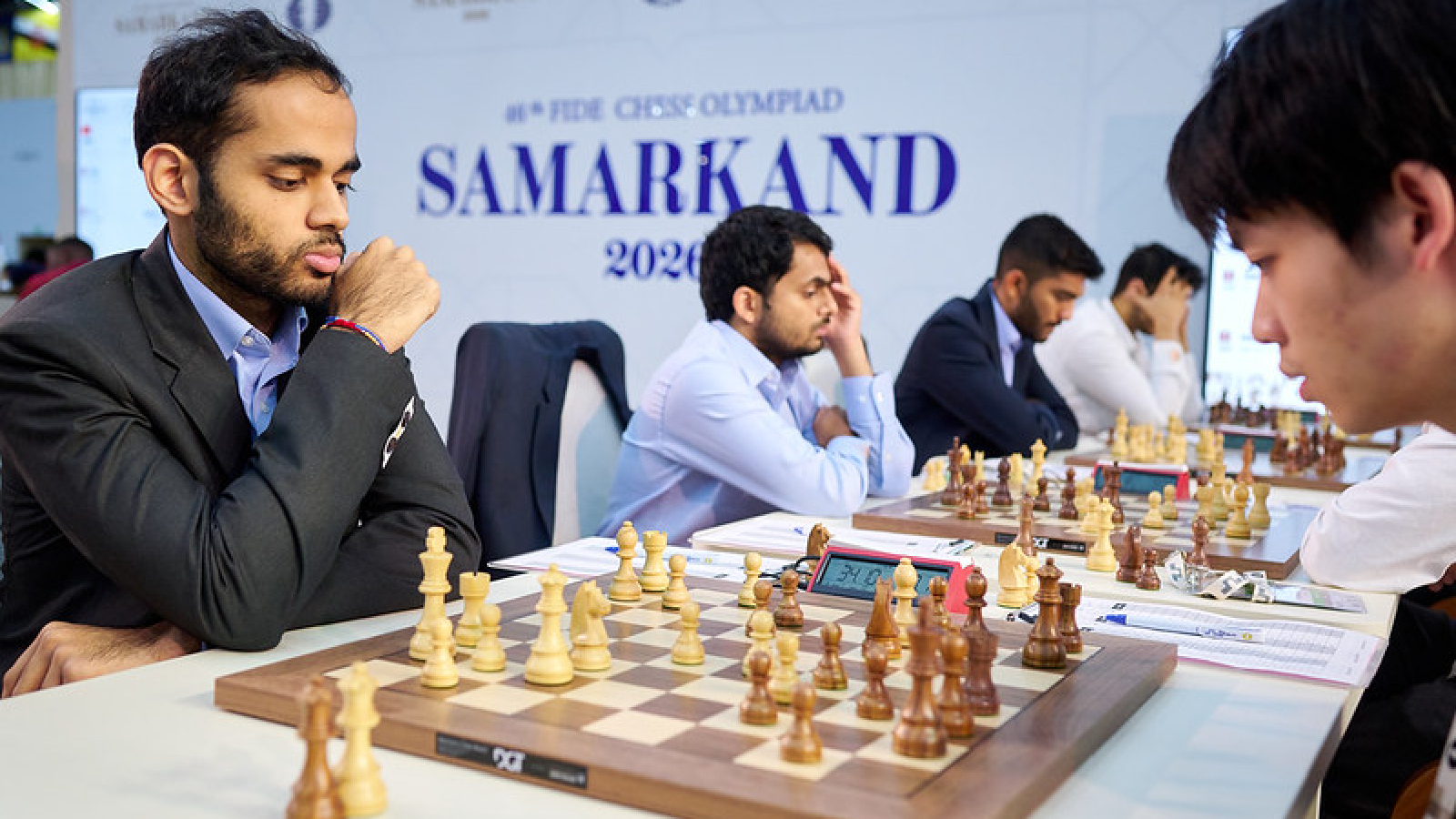
Following Sarin’s lead, Vidit Gujrathi quickly extended India’s advantage to 2.0-0.0. Playing with the dark pieces, Gujrathi delivered a professional and dominant performance against Tupfah Khumnorkaew, securing his win and putting India firmly in the driver’s seat. These two swift victories ensured that even with Arjun’s eventual loss, the team match was beyond Thailand’s reach.
The Gukesh Conundrum: World Champion on Board Three
Perhaps the biggest talking point preceding the 2026 Olympiad had nothing to do with India’s opponents, but rather with the unprecedented board placement of their reigning World Champion, D Gukesh. A pivotal figure in India’s strong showings in 2022 and 2024, Gukesh was initially slated for Board 4 by captain Srinath Narayanan. Due to Praggnanandhaa’s absence, Gukesh ended up playing on Board 3 in the opening round.
This decision sent shockwaves through the chess world. Historically, reigning World Champions have almost invariably occupied the top board since fixed board orders were introduced in 1931. The notion of a World Champion playing on a lower board is virtually unheard of, prompting widespread debate and speculation about Narayanan’s strategy.
However, Gukesh himself seemed unperturbed by the arrangement. Known for his focused and pragmatic approach, the young World Champion appears to view the board placement as secondary to his performance. Indeed, some analysts suggest that the reduced pressure of a lower board might be precisely what Gukesh needs. With the monumental World Championship title clash against Javokhir Sindarov looming on the horizon, minimizing extraneous pressure during the Olympiad could be a strategic masterstroke, allowing him to conserve mental energy and fine-tune his game without the added burden of leading the team from the top board.
For Gukesh, facing an untitled player rated nearly 800 points below him (Faris Rashid Alriyami, rated 1909) was never expected to pose a significant challenge. Playing with the white pieces in the Queen’s Indian Defense, Gukesh showcased his formidable skill, systematically bulldozing Alriyami’s defenses. He forced a resignation from his opponent in a mate-in-five position, demonstrating his class and maintaining his impeccable form. His comfortable victory underscored that regardless of his board number, Gukesh remains a formidable and decisive asset for the Indian team.
Indian Women’s Team: A Flawless Opening Statement
In stark contrast to the men’s team’s dramatic start, the top-seeded Indian women’s team enjoyed a remarkably smoother opening round. Facing the Dominican Republic, the Indian women delivered a dominant 4.0-0.0 clean sweep, signaling their strong intentions for the tournament.
Dominant Performance Against Dominican Republic
The match against the Dominican Republic unfolded with clinical efficiency. In a span of just six minutes, less than three hours from the start of the round, R Vaishali, Koneru Humpy, and Savitha Shri B all secured decisive victories, giving India an unassailable lead. This rapid succession of wins highlighted the team’s depth, preparation, and individual strength.
R Vaishali, playing on Board 2 with the black pieces against the 1792-rated Miguelina De La Rosa Martinez, produced a swift and decisive performance, winning her game in just 31 moves. Her quick victory set the tone for the rest of the team.
Veteran Grandmaster Koneru Humpy, the backbone of the Indian women’s team and a former World Rapid Champion, followed suit on the top board. Facing 1832-rated Franchesca Ramirez, Humpy demonstrated her superior skill and experience, securing a win in an equally concise number of moves. Her steady presence and ability to deliver under pressure are invaluable to the team.
Savitha Shri B, playing on Board 4, continued the winning streak. Her game against Karla Mya Nunez Diaz lasted 38 moves before the Dominican player resigned, completing a trio of decisive victories that firmly established India’s dominance in the match.
Individual Brilliance and Team Synergy
The final point for India came from Vantika Agrawal, who stepped in for Divya Deshmukh, rested for the round. Vantika faced Mary Gonzalez in what proved to be a harder-fought encounter. Vantika struggled with time management for much of the game, and the position remained relatively equal for an extended period. However, her perseverance eventually paid off. It wasn’t until the 45th move that Vantika found significant inroads into Gonzalez’s position. Ultimately, the inexperience of her opponent told, as Gonzalez blundered in what was an otherwise equal position, leading to her loss in the subsequent five moves. Vantika’s hard-fought win completed the clean sweep, showcasing the team’s ability to win even when facing resistance.
The comprehensive victory sends a clear message about the Indian women’s team’s ambitions. With a blend of seasoned veterans like Humpy and talented rising stars like Vaishali, Savitha, and Vantika, their strong start positions them well for a deep run in the tournament.
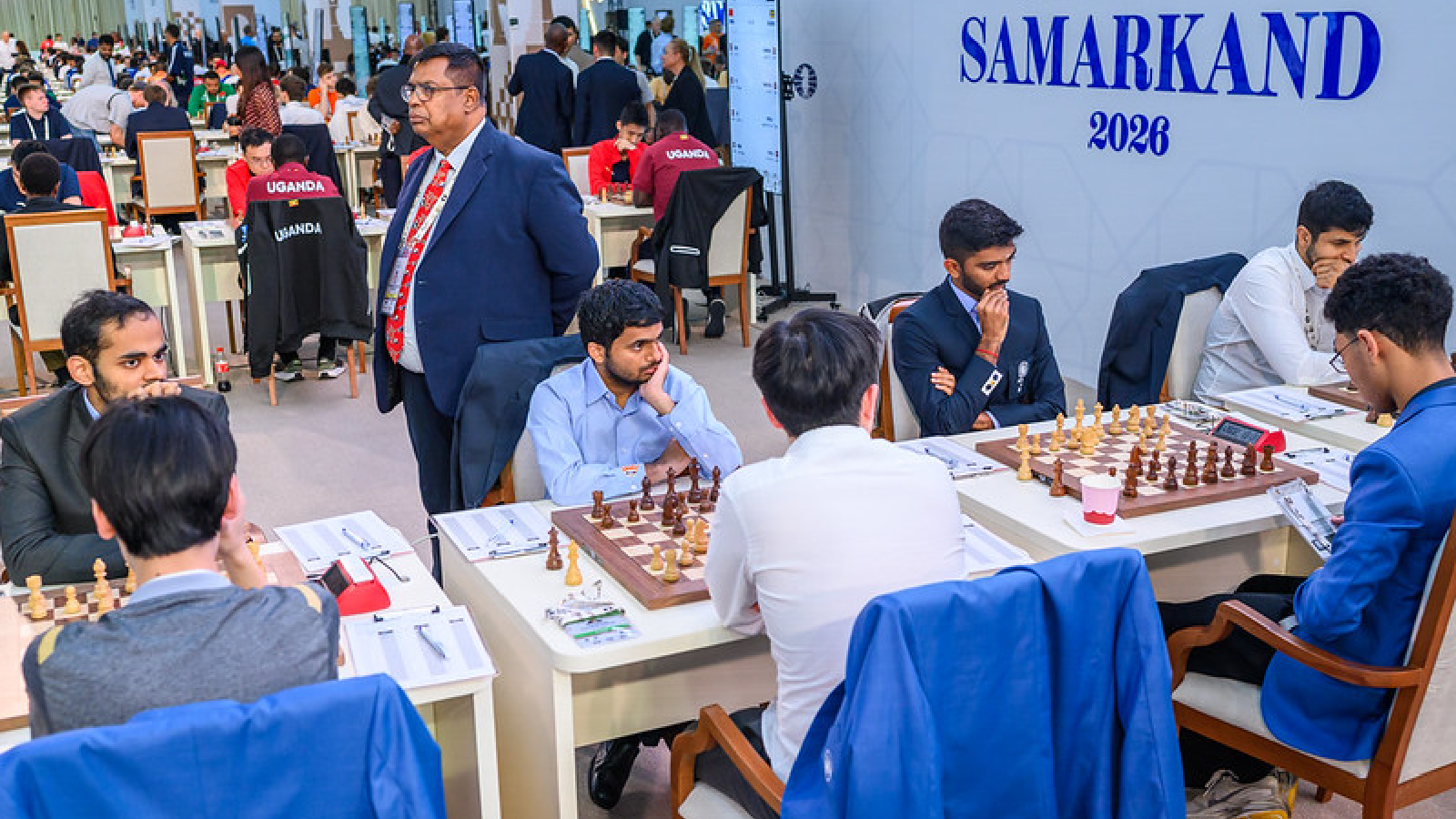
Expert Analysis and Future Implications
The opening round of the 2026 Chess Olympiad for India presented a microcosm of the challenges and opportunities that lie ahead. The men’s team’s overall victory was overshadowed by a significant individual upset, while the women’s team made a powerful statement with a flawless performance.
The Weight of Expectations and Player Fatigue
Arjun Erigaisi’s loss serves as a stark reminder of the immense pressure and demanding schedule faced by elite chess players. The "exhaustion of continuous events" cited as a factor in his performance underscores a growing concern in professional chess. Players are often required to compete in multiple high-stakes tournaments in quick succession, pushing their mental and physical limits. While Erigaisi’s talent is undeniable, managing fatigue and maintaining peak form throughout a grueling Olympiad will be crucial for him and the entire Indian squad. This early setback could either galvanize him to perform better or add further pressure. The team management will need to carefully monitor his well-being and confidence in the coming rounds.
For the Indian men’s team, this upset is a wake-up call. While they secured the match win, dropping a full point on the top board against a much lower-rated opponent highlights potential vulnerabilities. It emphasizes that no victory is guaranteed, and every player must be at their best, regardless of the opponent’s rating. The team’s ability to absorb this shock and maintain focus will be key to their title defense.
What Lies Ahead for India’s Title Aspirations
India’s ambition to defend its titles is a formidable one. The men’s team, with its constellation of young Grandmasters, is widely considered one of the strongest contenders. However, an early individual upset like Erigaisi’s could impact team morale if not managed carefully. The depth of the squad, demonstrated by Nihal, Vidit, and Gukesh’s wins, provides reassurance, but consistency will be paramount in the long, arduous tournament.
The women’s team, on the other hand, has set an exemplary standard. Their clean sweep against the Dominican Republic establishes them as clear favorites. Their confident start and the individual brilliance displayed by all players indicate a well-oiled machine ready to contend for gold. Their journey appears smoother, but they must maintain this momentum against progressively tougher opponents.
Gukesh’s Path to the World Championship
The decision to place D Gukesh on a lower board remains a fascinating strategic gambit. While unorthodox for a reigning World Champion, it might prove to be a stroke of genius. The Olympiad precedes Gukesh’s highly anticipated World Championship title clash against Javokhir Sindarov. By reducing his exposure to the most challenging opponents in the early rounds and potentially alleviating the immense pressure associated with Board 1, Captain Narayanan might be aiming to conserve Gukesh’s energy and allow him to fine-tune his game without the added stress. If Gukesh can cruise through the Olympiad without undue mental strain, it could provide him with an ideal preparation platform for his upcoming championship match. His composed victory in Round 1 suggests he is handling the situation with maturity and focus.
Official Reactions and Team Outlook
Following the mixed results, Captain Srinath Narayanan addressed the media, acknowledging the unexpected turn of events on Board 1. "Naturally, Arjun’s loss was a surprise, given his caliber and the rating difference," Narayanan stated. "However, these things happen in chess, especially in an intense tournament like the Olympiad. We have analyzed the game, and Arjun himself is very critical of his performance, which shows his determination. The key is that the team secured the win, and we must learn from this and move forward."
Regarding Gukesh’s board placement, Narayanan reiterated his strategic rationale. "Gukesh is a World Champion, and his talent is undeniable, regardless of the board he plays on. My decision was made with the long-term vision in mind, considering the upcoming World Championship match. We believe this arrangement allows him to contribute effectively to the team while managing his personal preparation. He is fully focused, as his game today showed."
From the women’s camp, the mood was one of quiet confidence. The team coach, speaking anonymously, expressed satisfaction with the comprehensive victory. "The girls played exceptionally well. A 4-0 start is exactly what we aimed for. It builds great momentum and confidence. We know the road ahead is tough, but this team has the talent and the unity to go all the way."
Conclusion
The opening round of the 2026 Chess Olympiad has certainly delivered its share of drama and talking points for India. The men’s team demonstrated its resilience by securing a team victory despite an individual upset that will undoubtedly be scrutinized. Arjun Erigaisi’s loss serves as a stark reminder of the unforgiving nature of top-tier chess and the ever-present challenge of managing player fatigue. Meanwhile, the strategic deployment of World Champion D Gukesh on a lower board adds a layer of intrigue to India’s campaign. On the women’s front, a dominant and flawless start underscores their status as formidable contenders. As the tournament progresses, all eyes will be on how India navigates these early challenges and builds upon its mixed, yet ultimately winning, start in Samarkand. The journey to title defense promises to be anything but straightforward.
