

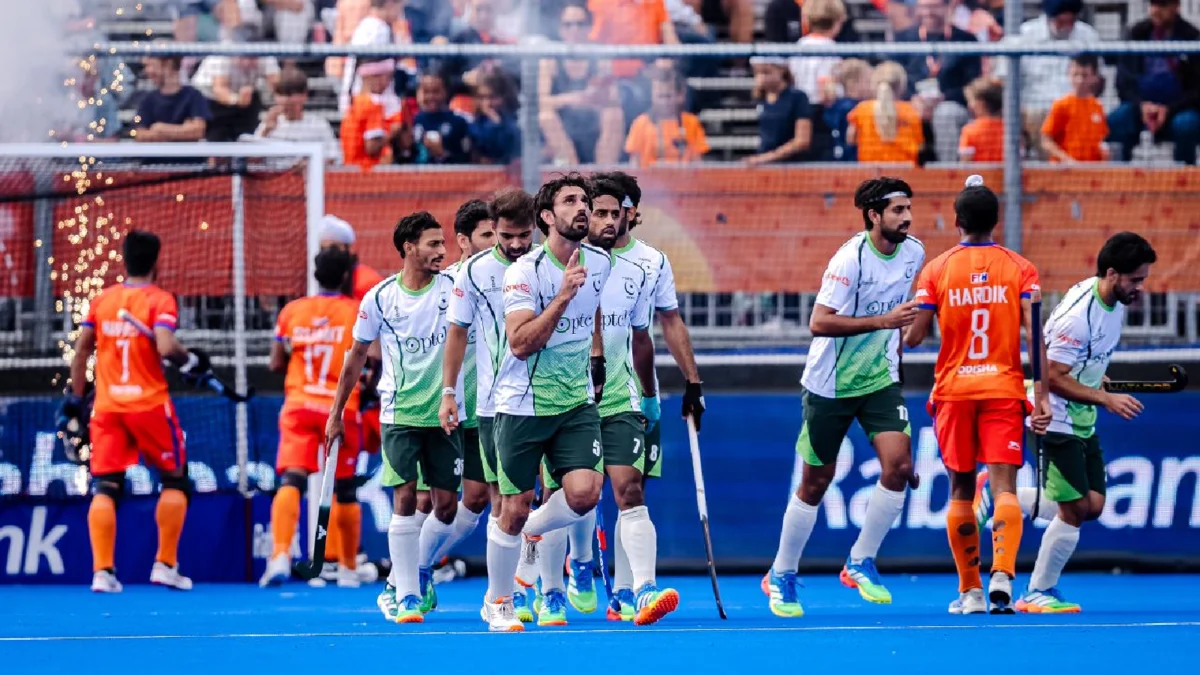
Jalandhar/Mohali, India – September 16, 2026 – The eagerly anticipated Asian Champions Trophy in hockey, slated to ignite the pitches of Mohali and Jalandhar from October 27 to November 5, finds itself ensnared in a familiar web of geopolitical friction. In a move that mirrors a recurring theme in India-Pakistan sporting relations, the Pakistan Hockey Federation (PHF) has formally requested the continental body to relocate the tournament, or at least Pakistan’s matches, to a neutral country. Citing the "sensitive bilateral situation" and "prevailing security conditions" between the two nuclear-armed neighbours, the PHF’s appeal threatens to disrupt one of Asia’s premier hockey events and underscores the pervasive influence of politics on regional sport.
The core of the dispute revolves around Pakistan’s apprehension regarding the safety and dignity of its players and officials on Indian soil. This demand comes just weeks before a highly anticipated clash between India and Pakistan, scheduled for November 1 in Jalandhar – a fixture that traditionally draws immense crowds and global attention. However, Hockey India has swiftly and unequivocally rejected the plea, asserting that no change in venue will be entertained, and Pakistan’s participation hinges solely on their willingness to travel to India.
This latest development adds another chapter to the increasingly complex and often contentious narrative of sporting exchanges between India and Pakistan, a dynamic that has long been characterised by suspensions, boycotts, and last-minute interventions. The shadow of geopolitics, once predominantly cast over cricket, now extends its full length over hockey, raising serious questions about the future of sporting camaraderie in the subcontinent.
Main Facts: A Familiar Impasse Emerges
The crux of the current controversy lies in the Pakistan Hockey Federation’s (PHF) formal communication to the Asian Hockey Federation (AHF), expressing profound reservations about sending its national team to India for the upcoming Asian Champions Trophy. The tournament, a significant fixture in the continental hockey calendar, is scheduled to be co-hosted by the Indian cities of Mohali and Jalandhar between October 27 and November 5, 2026.
PHF’s Stated Concerns: Interim PHF president Mohyuddin Ahmed Wani articulated the federation’s position in a statement released on Wednesday. Wani explicitly requested the relocation of the entire tournament or, at the very least, the specific matches involving the Pakistani national team, to a neutral venue. The rationale provided by the PHF hinges on two critical points:
- "Sensitive bilateral situation": This refers to the historically strained diplomatic and political relations between India and Pakistan, which frequently experience periods of heightened tension and minimal official engagement. The PHF implies that the current political climate is not conducive to sporting interaction.
- "Prevailing security conditions": While not specifying particular threats, the PHF’s statement broadly references security concerns as a primary deterrent. This concern, often invoked in past sporting disputes, suggests an environment perceived as potentially unsafe or hostile for Pakistani athletes and support staff.
Wani further elaborated that the PHF’s objective is to ensure "a safe, dignified and conducive environment for the national players and officials." This phrasing suggests a desire not only for physical security but also for an atmosphere free from potential political demonstrations, harassment, or undue pressure.
The Marquee Match at Stake: Central to the tournament’s draw is the high-octane encounter between arch-rivals India and Pakistan. This much-anticipated match is slated for November 1 in Jalandhar, a city renowned for its deep connection to field hockey. The potential absence of Pakistan, or the relocation of this specific game, would undoubtedly diminish the spectacle and competitive integrity of the event.
Hockey India’s Resolute Response: In a swift and unambiguous counter-statement, Hockey India (HI) has firmly rejected the PHF’s request. Bhola Nath Singh, the secretary general of Hockey India and concurrently a vice-president of the Asian Hockey Federation, made it clear that "No such request would be entertained. There will be no change in venue. If they (Pakistan) want to play in the Asian Champions Trophy, they will have to come to India." This uncompromising stance signals Hockey India’s determination to proceed with the tournament as planned, irrespective of Pakistan’s concerns. Singh also outlined a contingency plan, stating that if Pakistan ultimately withdraws, the organisers retain the option of inviting either Bangladesh or Oman as a replacement team. Besides India and Pakistan, Malaysia, China, Korea, and Japan are confirmed participants, making for a formidable line-up.
This immediate deadlock sets the stage for a tense period of negotiations, or perhaps, a definitive withdrawal, highlighting the deep-seated challenges in fostering cross-border sporting ties.
Chronology: A Pattern of Disengagement and Diplomatic Strain
The current impasse over the Asian Champions Trophy is far from an isolated incident; it represents a recurring symptom of the broader, often tumultuous, relationship between India and Pakistan. Sporting exchanges, once a significant avenue for people-to-people contact and diplomatic goodwill, have increasingly become casualties of geopolitical tensions, particularly over the last decade.
Hockey’s Recent Setbacks:
The immediate precedents for Pakistan’s current stance are rooted in their recent withdrawals from major international hockey tournaments hosted in India.
- 2025 FIH Junior World Cup, Tamil Nadu: Last year, Pakistan controversially pulled out of the Junior World Cup scheduled to be held in India. While official reasons often cited administrative hurdles or visa delays, the underlying sentiment of security and political discomfort was palpable. Such withdrawals deprive young athletes of crucial international exposure and hinder their development on the global stage.
- 2025 Asia Cup, Rajgir, Bihar: Similarly, Pakistan opted out of the Asia Cup, an important continental championship, held in Rajgir, Bihar, in the same year. This consecutive withdrawal underscored a growing reluctance to participate in events hosted by India, setting a worrying trend for regional hockey. These decisions are particularly impactful for a sport like hockey, which relies heavily on international competitive opportunities to maintain and elevate standards.
Cricket: The Blueprint for Disruption:
The most prominent and long-standing example of political interference in sports between the two nations is undoubtedly cricket.
- Suspension of Bilateral Cricket: Bilateral cricket series between India and Pakistan have remained suspended for well over a decade, a direct consequence of escalating political tensions and cross-border security concerns. The last bilateral series took place in India in 2012-13. This prolonged hiatus has robbed fans of some of cricket’s most iconic rivalries and has deprived both boards of significant revenue.
- The "Hybrid Model" for ICC Events: The unprecedented political stalemate has necessitated creative solutions for multilateral tournaments hosted by either country. A notable arrangement, termed the "hybrid model," has emerged for major ICC (International Cricket Council) events. Under this model, whenever India or Pakistan is the designated host for an ICC tournament over the next few years, matches involving the other side are played at a neutral venue. This was famously implemented during the 2023 Asia Cup (co-hosted by Pakistan and Sri Lanka) and is expected to be a template for future global tournaments where one of the two nations is the primary host. While it allows tournaments to proceed, it fundamentally alters the spirit of hosting and participation.
- Trophy Refusal Incidents: Recent events further highlight the depth of the political chasm. Just days before the current hockey controversy surfaced, the Indian women’s cricket team notably refused to accept their Asia Cup trophy from Mohsin Naqvi, who serves as both the Chairman of the Pakistan Cricket Board (PCB) and Pakistan’s Interior Minister. A similar incident occurred last year when the Indian men’s team, after clinching the corresponding tournament, also refrained from accepting the trophy from Naqvi. These actions, while symbolic, underscore the profound discomfort and diplomatic froideur that permeates interactions at even the most ceremonial levels, directly influencing sporting decorum.
This detailed chronology illustrates a clear pattern: political and security considerations frequently override sporting aspirations and agreements. The current hockey dispute is not an anomaly but a continuation of a deeply entrenched narrative, threatening to further isolate Pakistan from key regional sporting engagements.
Supporting Data: The Broader Context of Geopolitics and Sporting Integrity
The PHF’s request to relocate the Asian Champions Trophy, citing a "sensitive bilateral situation" and "prevailing security conditions," is deeply embedded in the complex and often volatile geopolitical landscape that characterises India-Pakistan relations. Understanding this broader context is crucial to comprehending the recurring nature of such sporting impasses.
The Enduring Diplomatic Chill:
India and Pakistan have a history marked by intermittent conflict and a persistent diplomatic chill. Issues such as cross-border terrorism, the Kashmir dispute, and a general lack of high-level dialogue have kept bilateral relations strained for decades. This tension often spills over into cultural and sporting exchanges, which are frequently seen through a political lens rather than purely as athletic competitions. Any major event involving both nations inevitably becomes a subject of intense scrutiny from both governments and public opinion. The "sensitive bilateral situation" is, therefore, a euphemism for a deeply entrenched political mistrust that makes direct, unimpeded sporting interactions exceedingly rare and difficult.
Security Perceptions vs. Reality:
While the PHF cites "prevailing security conditions," the specificity of these concerns is often left vague. India, like any large nation, has its security challenges, but it regularly hosts major international sporting events, including World Cups in cricket and hockey, with robust security protocols. Punjab, the state where Mohali and Jalandhar are located, is generally considered safe for such events, with state authorities historically providing comprehensive security cover for international visitors.
- Punjab Government’s Stance: Punjab Chief Minister Bhagwant Mann had previously affirmed that Pakistan would be welcome to travel to the state for the Asian Champions Trophy. Mann highlighted that India’s sports policy does not object to athletes from neighbouring countries participating in multilateral events. This statement from the host state’s highest authority suggests that official Indian government policy is conducive to Pakistan’s participation.
- PHF’s Government Clearance Requirement: However, the PHF’s subsequent statement that Pakistan’s trip across the border was "subject to its government’s clearance" indicates that the decision is not solely within the PHF’s purview. This suggests that the "security conditions" cited by the PHF might be more aligned with their own government’s assessment or political directive rather than an objective evaluation of the ground situation in India. Such governmental clearances often become points of leverage or delay, reflecting political will rather than purely logistical or security assessments.
Impact on Sporting Development and Fan Engagement:
The persistent political interference in sporting ties has profound implications for both the development of the respective sports and the millions of fans who eagerly await these encounters.
- Diminished Competition: The absence of one of the strongest teams in Asia, particularly in a high-stakes tournament, inevitably diminishes the competitive quality and excitement of the event. Pakistan’s historical prowess in hockey means their participation is crucial for maintaining the tournament’s prestige and competitive edge.
- Player Development: Young players from both nations are deprived of invaluable opportunities to compete against top-tier rivals, hindering their growth and exposure to diverse playing styles. For Pakistan, repeatedly missing international tournaments in India means fewer chances for their players to compete at the highest level.
- Fan Disappointment: The India-Pakistan rivalry transcends sport; it’s a cultural phenomenon. Millions of fans on both sides of the border, and globally, are denied the thrill of watching these contests, which often produce legendary moments. The economic impact, in terms of ticket sales, broadcasting rights, and tourism, also suffers significantly.
- Integrity of Asian Hockey: The Asian Hockey Federation (AHF) faces a delicate balancing act. While it aims to promote and develop hockey across the continent, it is frequently caught in the crossfire of political disputes. Allowing host nations to be dictated by political concerns of visiting teams could set a precedent that undermines the integrity of its events and the principle of sporting universality.
The current situation therefore is not merely a logistical challenge but a manifestation of deeper political fissures, forcing sporting bodies to navigate treacherous diplomatic waters while striving to uphold the spirit of competition. The contrast between India’s open-door sports policy and Pakistan’s government-contingent participation highlights the asymmetry in how sports are perceived and managed in the two nations.
Official Responses: A Firm Standoff
The official responses from both the Pakistan Hockey Federation (PHF) and Hockey India (HI), along with insights from governmental figures, paint a picture of a firm standoff, with neither side appearing willing to concede ground. This rigid adherence to their respective positions threatens to escalate the dispute and potentially lead to Pakistan’s withdrawal from the Asian Champions Trophy.
Pakistan Hockey Federation’s Plea for a "Conducive Environment":
Interim PHF president Mohyuddin Ahmed Wani’s statement on Wednesday was the initial catalyst for the controversy. His call for a relocation or a neutral venue for Pakistan’s matches was rooted in a desire to ensure "a safe, dignified and conducive environment for the national players and officials." This statement carries multiple layers of meaning:
- Safety: While specific threats were not outlined, the general reference to "prevailing security conditions" indicates an underlying anxiety about the physical safety of the contingent. This could stem from past incidents, perceived anti-Pakistan sentiment in India, or general governmental advisories.
- Dignity: The term "dignified" suggests a concern beyond mere physical safety. It implies a desire for respect, fair treatment, and an environment free from potential political demonstrations, media harassment, or any form of perceived hostility that could impact the players’ mental well-being and focus. In the context of India-Pakistan relations, even small gestures can be magnified into diplomatic incidents.
- Conducive Environment: This holistic term encapsulates the PHF’s aspiration for an atmosphere where players can focus solely on their sport, free from external pressures. The PHF’s move indicates that they believe such an environment cannot be guaranteed if they travel to India. It is plausible that this stance is influenced by directives from the Pakistani government, which often dictates participation in events hosted by India, especially given the history of bilateral tensions.
Hockey India’s Unwavering Resolve:
Hockey India’s response, delivered by its Secretary General Bhola Nath Singh, who also holds the position of vice-president in the Asian Hockey Federation, was direct, unequivocal, and left no room for negotiation.
- "No Such Request Would Be Entertained": This statement immediately shut down any possibility of considering the PHF’s plea. It signifies Hockey India’s firm conviction in its ability to host the tournament successfully and securely, and its refusal to yield to external pressures that could disrupt its meticulously planned event.
- "There Will Be No Change in Venue": This reinforces the host nation’s prerogative. India has invested significant resources and planning into hosting the tournament in Mohali and Jalandhar. Altering venues at such a late stage would entail immense logistical, financial, and reputational costs, which Hockey India is clearly unwilling to bear.
- "If They (Pakistan) Want to Play… They Will Have to Come to India": This is the ultimate ultimatum. It places the onus squarely on Pakistan to make the decision to participate under the stipulated conditions. It underscores Hockey India’s position that the rules of engagement are clear, and any deviation is not on the table.
- Contingency Plan: Singh’s mention of replacing Pakistan with either Bangladesh or Oman demonstrates Hockey India’s preparedness for a potential withdrawal. This move serves two purposes: it ensures the tournament proceeds with six teams, maintaining its competitive structure, and it signals to Pakistan that their participation, while valued, is not indispensable to the event’s continuity. This firm stance by Hockey India reflects a broader confidence in India’s capacity to host major international events and a reluctance to allow political considerations from a participating nation to dictate hosting arrangements.
Governmental Echoes:
While not directly issuing a statement on this specific hockey dispute, the earlier remarks by Punjab Chief Minister Bhagwant Mann provide an important governmental backdrop. Mann’s assurance that Pakistan would be welcome in Punjab for the tournament, based on India’s inclusive sports policy, highlights a dissonance between India’s official stance of openness and Pakistan’s PHF’s insistence on government clearance. This indicates that decisions regarding participation are often made at a higher political level in Pakistan, thereby intertwining sporting autonomy with state foreign policy. The refusal of Indian cricketers to accept trophies from Pakistan’s Interior Minister further illustrates the deep-seated governmental influence and the prevailing mood of diplomatic distance, even in ceremonial sporting contexts.
In essence, the official responses highlight a diplomatic deadlock. Hockey India is determined to uphold its hosting rights and the sanctity of the tournament schedule, while the PHF, seemingly guided by broader governmental concerns, prioritises perceived security and dignity. The stage is thus set for either a reluctant participation or a definitive withdrawal, with significant implications for Asian hockey.
Implications: A Future of Uncertainty for India-Pakistan Sporting Ties
The ongoing dispute surrounding Pakistan’s participation in the Asian Champions Trophy carries profound implications, not just for the tournament itself, but for the broader landscape of India-Pakistan sporting relations and the future of regional sports. The standoff portends a future characterised by heightened uncertainty, political interventions, and potentially diminished competitive quality.
For Pakistan Hockey:
- Loss of Competitive Exposure: A withdrawal would mean Pakistan’s national team misses out on a crucial international tournament, depriving players of invaluable match practice against top Asian teams. This is particularly detrimental for a team striving to regain its past glory in world hockey.
- Impact on Rankings and Development: Consistent participation in high-level tournaments is vital for maintaining and improving world rankings. Missing such events can lead to a stagnation or decline in performance, impacting player morale and the overall development trajectory of the sport in Pakistan.
- Financial Repercussions: Participation in international tournaments often brings financial benefits through prize money, sponsorships, and exposure. A withdrawal could lead to a loss of these potential revenues, further straining the resources of the PHF, which often faces financial challenges.
- Potential Sanctions: While not explicitly stated, repeated withdrawals from international competitions could, in extreme cases, lead to sanctions or reprimands from the Asian Hockey Federation (AHF) or the International Hockey Federation (FIH), impacting future participation rights or funding.
For Asian Hockey and the Tournament:
- Diminished Competitive Quality: While Hockey India has a contingency plan to replace Pakistan with Bangladesh or Oman, the absence of a strong and historically significant team like Pakistan would undoubtedly diminish the overall competitive standard and historical rivalry that defines the Asian Champions Trophy.
- Precedent Setting: If Pakistan successfully forces a relocation or a hybrid model for its matches, it could set a challenging precedent for future tournaments hosted in politically sensitive regions. This could make it harder for the AHF to ensure consistency and fairness in hosting rights.
- Logistical Headaches for AHF: The Asian Hockey Federation is placed in an unenviable position, tasked with balancing sporting integrity, national sensitivities, and the smooth conduct of its events. Navigating such political disputes diverts resources and attention from core developmental goals.
- Loss of Fan Engagement: The India-Pakistan hockey clash is a marquee event, drawing immense viewership. Its absence would be a significant blow to fan engagement and the commercial appeal of the tournament across the subcontinent and beyond.
For India-Pakistan Sporting Relations:
- Further Entrenchment of Political Interference: This dispute reinforces the perception that sports between India and Pakistan cannot exist independently of political relations. It entrenches the "new normal" where governmental approval and security concerns overshadow sporting merit and goodwill.
- Erosion of Bilateral Ties: Each cancelled series or withdrawn participation further erodes the already fragile bilateral sporting ties. The hope that sports could act as a bridge for peace and understanding becomes increasingly dim.
- The "Hybrid Model" as a Default: The success (or necessity) of the "hybrid model" in cricket suggests that this might become the default approach for all major multilateral tournaments involving India and Pakistan, irrespective of the sport. While it offers a pragmatic solution to ensure participation, it comes at the cost of genuine bilateral interaction and the spirit of home-and-away competition.
- Uncertainty for Future Events: The current standoff creates significant uncertainty for any future sporting events planned between the two nations or those hosted by either country involving the other. Organisers will have to factor in political variables as much as, if not more than, sporting logistics.
The Path Forward:
The resolution to this impasse remains uncertain.
- Pakistan’s Concession: The PHF could eventually yield to Hockey India’s firm stance, securing the necessary government clearance and travelling to India. This would signify a pragmatic decision to prioritise sporting participation.
- Pakistan’s Withdrawal: If the PHF maintains its position and fails to secure government clearance, a withdrawal is highly likely. This would lead to their replacement by Bangladesh or Oman, and a tournament proceeding without one of its key rivals.
- AHF Intervention (Unlikely to be decisive): While the AHF is involved, its ability to override a host nation’s firm stance or a participating nation’s governmental directive is limited. It primarily facilitates communication and ensures adherence to regulations.
Ultimately, the Asian Champions Trophy controversy is a stark reminder of how deeply intertwined politics and sport remain in the Indian subcontinent. Until there is a significant thawing in diplomatic relations, the shadow of geopolitics will continue to loom large over every sporting encounter, dimming the prospects for genuine cross-border camaraderie and competitive exchange. The hockey world watches, hoping for a resolution that prioritises the game, but bracing for the familiar outcome of political will overriding sporting aspirations.
