

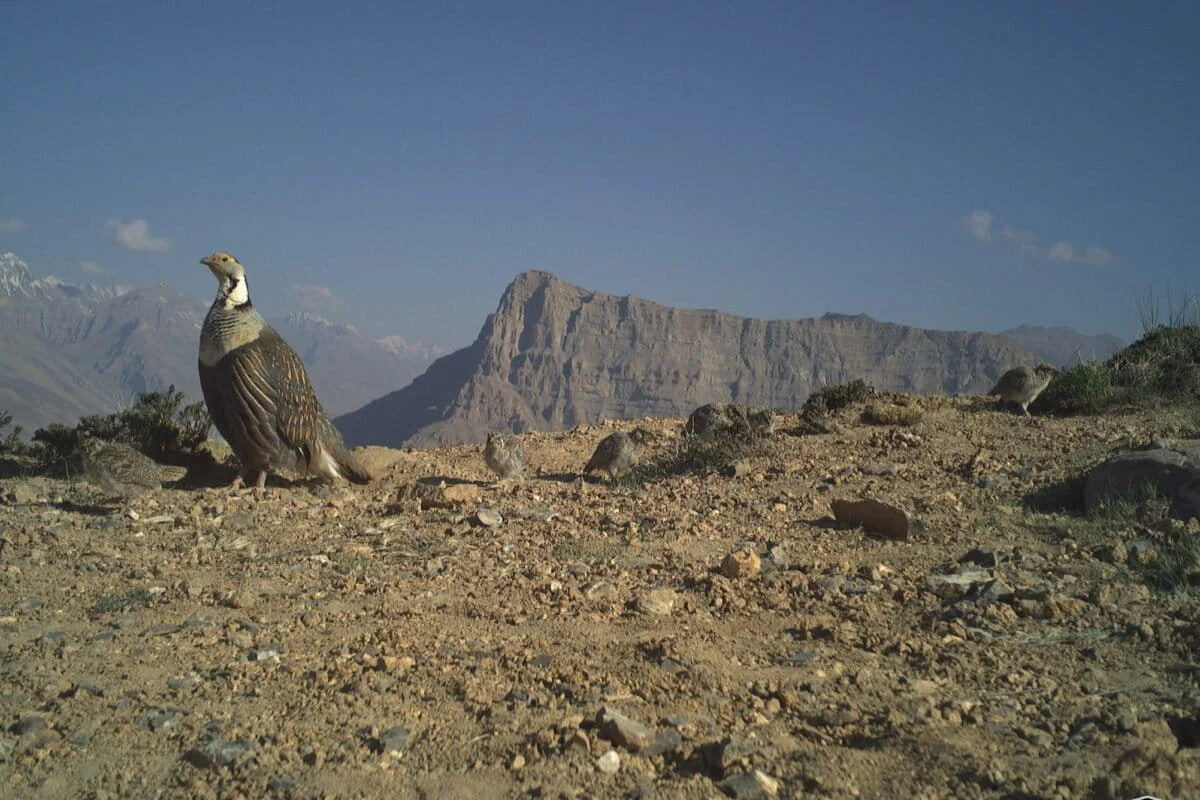
In the jagged, oxygen-thin reaches of the Himachal Pradesh Himalayas, conservation has long been dominated by a single, enigmatic figure: the snow leopard (Panthera uncia). Known as the "Ghost of the Mountains," this charismatic predator has commanded the lion’s share of funding, research, and protected-area designation for decades. The prevailing logic has been that by protecting the snow leopard—a classic "umbrella species"—the entire ecosystem and all its inhabitants would thrive under its protection.
However, a groundbreaking new study suggests that this top-down conservation model is leaving some of the region’s most ecologically vital residents out in the cold. A comprehensive analysis led by the Nature Conservation Foundation (NCF) has revealed a startling "conservation gap," showing that the habitats of high-altitude Galliformes—heavy-bodied, ground-dwelling birds including pheasants and partridges—remain largely outside the state’s network of Protected Areas (PAs).
The study, which mapped over 26,000 square kilometers of rugged terrain, found that only 12.5% of areas with high Galliformes species richness and a mere 8.8% of areas with high concentrations of endemic species are currently protected. These findings suggest that the "umbrella" of the snow leopard is not wide enough to cover the complex needs of the region’s avian biodiversity.
Main Facts: The Mismatch in Mountain Conservation
The research, published in the journal In Practice in Conservation, highlights a significant disconnect between the current protected area network and the biological hotspots for Himalayan birds. Galliformes are often considered "ecosystem engineers" of the high-altitude undergrowth, yet their survival is being treated as a secondary benefit of feline conservation rather than a primary goal.
Key findings from the report include:

- Spatial Incongruity: The most diverse habitats for birds do not perfectly overlap with the territories most frequented by snow leopards.
- The Transition Zone Paradox: The highest bird diversity occurs in the transition zones between the Greater and Trans-Himalaya—areas that are frequently excluded from strict wildlife sanctuaries.
- Ecological Importance: Unlike the snow leopard, which acts as a top-down regulator, Galliformes act from the bottom up, influencing seed dynamics, soil aeration, and insect populations.
- Data Underutilization: The study demonstrates that "bycatch" data from mammal-focused camera trap surveys can be a goldmine for under-studied species if analyzed correctly.
Chronology: From Felines to Pheasants
The genesis of this study was not a bird-watching expedition, but a massive effort to count cats. Between 2016 and 2019, scientists from the Nature Conservation Foundation and partner institutions embarked on an ambitious survey of Himachal Pradesh’s snow leopard population.
2016–2019: The Primary Survey
Researchers deployed nearly 300 camera traps across 10 high-altitude sites. The primary objective was to estimate the density and distribution of snow leopards to inform the state’s conservation strategy.
2020–2021: The Realization
As the snow leopard data was processed and published, senior scientist Kulbhushansingh Suryawanshi and his team noticed a secondary treasure trove of information. The camera traps, designed to capture the movement of stealthy predators, had inadvertently recorded thousands of images of ground-dwelling birds.
"We completed the snow leopard work and published those results. That is when we realized that while studying these charismatic species, our camera traps had detected many other animals," Suryawanshi explained.
2022–2024: The Re-Analysis
The team revisited the dataset, specifically looking at Galliformes. They utilized 284 camera trap locations to identify six specific species. By applying statistical modeling to the sightings of the Chukar partridge, Himalayan monal, and Himalayan snowcock, they were able to map species richness across the state for the first time at such a granular scale.

Supporting Data: Mapping the "Chicken of the Mountains"
The study’s data paints a vivid picture of where these birds live and why they are struggling. The researchers focused on the order Galliformes, specifically the family Phasianidae.
Species Distribution and Modeling
Of the six species detected, three provided enough data for robust statistical modeling:
- Chukar Partridge (Alectoris chukar): Found to prefer greener, more vegetated slopes.
- Himalayan Monal (Lophophorus impejanus): The state bird of Himachal Pradesh, also tied strongly to vegetation cover.
- Himalayan Snowcock (Tetraogallus himalayensis): Unlike the others, this bird thrives at extreme elevations in the Trans-Himalaya, influenced more by temperature stability than by green cover.
Three other species—the Koklass pheasant, the Cheer pheasant, and the Snow partridge—were detected but in numbers too low for a "stacked model," indicating either their rarity or their highly specific habitat requirements.
The Importance of the Transition Zone
One of the study’s most significant geographic findings is the importance of the "Transition Zone." This is where the monsoon-influenced, lush Greater Himalaya meets the rain-shadowed, arid Trans-Himalaya.
In regions like Hangrang, Tabo, Bharmour, and Kullu, species from both ecosystems overlap. This creates a "biodiversity peak." However, because these areas are often corridors of human movement or traditional grazing, they are rarely designated as National Parks, which typically favor remote, uninhabited wilderness.

Ecological Contributions
The study emphasizes that Galliformes are far more than just "mountain chickens." Their ecological roles are multifaceted:
- Soil Health: By raking through leaf litter in search of insects, they aerate the forest floor, facilitating nutrient cycling.
- Seed Dispersal: Research has shown that species like the Chukar partridge are vital for dispersing seeds of forest products like pistachios.
- Prey Base: Their high biomass makes them a critical food source for golden eagles, Tibetan wolves, and martens.
Official Responses and Expert Perspectives
The findings have sparked a dialogue among conservationists and forest officials about the future of management in the Himalayas.
The Specialist’s View:
Rahul Kaul, Chair of the IUCN Species Survival Commission’s Galliformes Specialist Group for South Asia, notes that the threats to these birds are evolving. While poaching for meat was the historical driver of decline, a new, more pervasive threat has emerged: fire.
"Forest fires usually occur during summer, around April, which coincides with the nesting season," Kaul noted. "Most Galliformes nest on the ground, so fires destroy nests and eggs. Adult birds can escape, but the nests are lost. I think fire may now be a much bigger driver of population decline than habitat destruction."
The Management Perspective:
Mandar Jadhav, a former Deputy Conservator of Forests (Wildlife) in the Spiti Forest Division, argues that the solution lies in moving away from the "fortress conservation" model of National Parks.

"The participatory approach gives local communities a sense of attachment and belonging," Jadhav said. He advocates for "Community Reserves," which allow for traditional land use while giving locals the authority—and the responsibility—to manage habitats for specific species like pheasants.
Implications: A New Paradigm for Biodiversity
The study’s implications reach far beyond the borders of Himachal Pradesh. It serves as a critique of the global "flagship species" strategy, suggesting that while such icons are excellent for fundraising and public relations, they can create blind spots in ecological protection.
1. Moving Toward "Assemblage-Level" Conservation
The researchers argue for an "assemblage-level" approach. Instead of asking "Where does the snow leopard live?", planners should ask "Where do the most species coexist?" By mapping several co-occurring species, conservationists can identify "multispecies hotspots" that provide the highest return on investment for biodiversity.
2. The Power of "Bycatch" Science
In resource-limited countries like India, conducting separate, large-scale surveys for every species is financially impossible. The NCF study proves that data collected for one species can—and should—be recycled to protect others. This requires a shift in how wildlife departments and NGOs share and store camera trap data.
3. Climate Change and Elevational Shifts
As the climate warms, species like the Indian Peafowl are moving to higher altitudes, potentially competing with native Himalayan Galliformes. A multi-species monitoring system would catch these shifts early, allowing for proactive management of human-wildlife conflict as new species enter agricultural zones.

4. Redefining "Protected"
The fact that less than 10% of endemic bird hotspots are protected is a wake-up call. The study suggests that Himachal Pradesh must look beyond its current PA boundaries. This doesn’t necessarily mean banning humans from more land, but rather integrating bird-friendly practices into the 87.5% of the landscape that currently lacks formal protection.
As the "Ghost of the Mountains" continues to haunt the high ridges, the NCF study serves as a reminder that the health of the Himalayas depends not just on the silent predator on the peak, but on the busy, ground-dwelling birds in the undergrowth. For conservation to truly succeed, the umbrella must be opened wider.
