

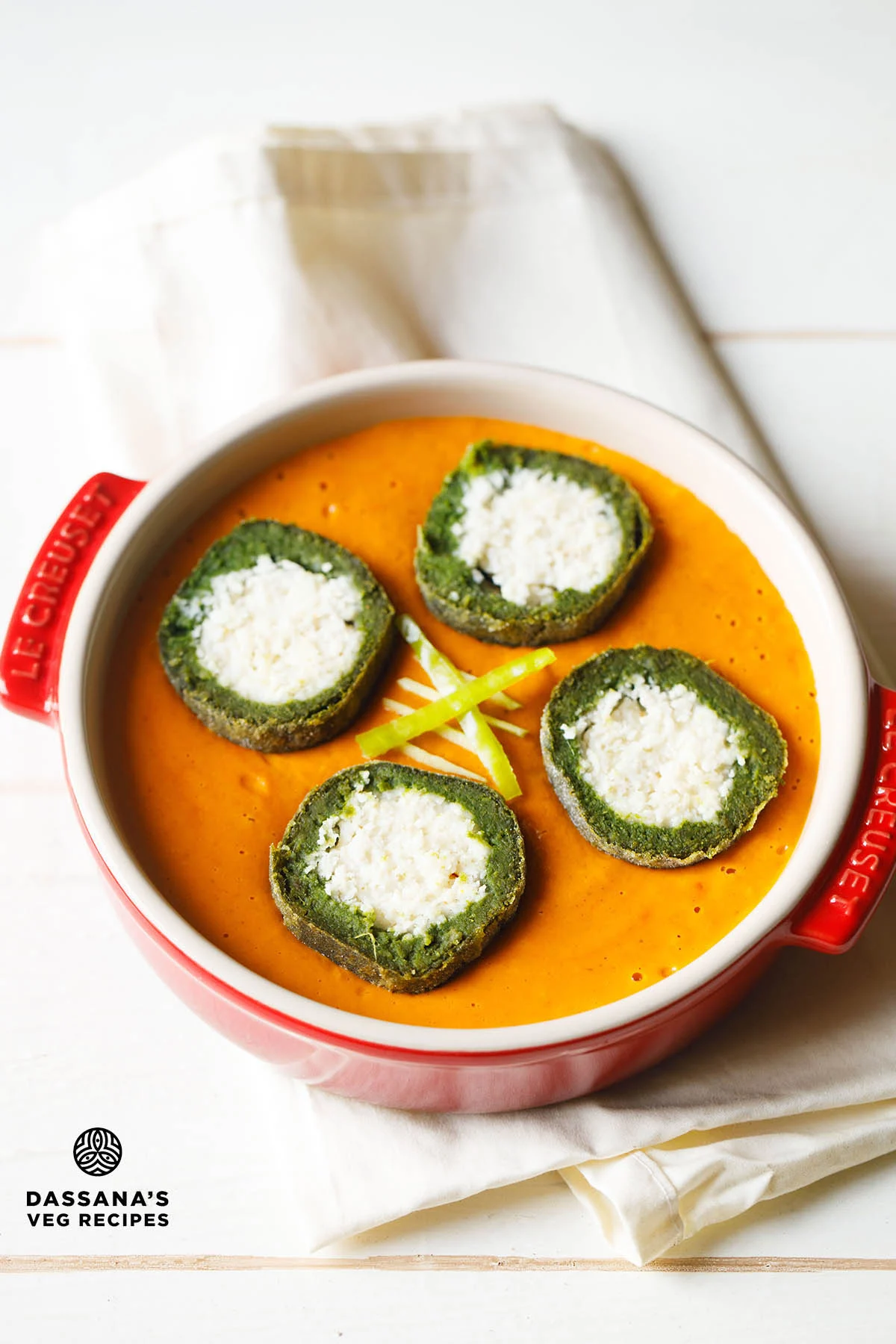
NEW DELHI – In the vast and colorful landscape of North Indian gastronomy, few dishes capture the imagination and the palate quite like Palak Kofta, colloquially and more poetically known as Shaam Savera. Translated literally as "Evening and Morning," this dish is more than a mere curry; it is a masterclass in culinary contrast, technical precision, and the evolution of modern Indian vegetarian cooking.

Originally the signature creation of India’s first celebrity chef, Sanjeev Kapoor, Shaam Savera has transitioned from the high-gloss sets of 1990s television to become a staple of festive home cooking and Home Science curricula across the subcontinent. Today, we examine the anatomy of this iconic dish, its cultural significance, and the meticulous techniques required to achieve its signature "dusk and dawn" aesthetic.

I. Main Facts: The Aesthetic and Culinary Philosophy of Shaam Savera
At its core, Shaam Savera is a dish of stuffed dumplings (koftas) served in a vibrant, velvety gravy. However, its identity is inextricably linked to its visual presentation. The kofta features a dark, earthy exterior made of finely processed spinach (Palak), representing the "Shaam" or evening. When sliced open, it reveals a bright, snow-white center of pressed cottage cheese (Paneer), representing the "Savera" or morning.

This dualistic nature extends to its flavor profile. The spinach casing offers a slightly bitter, mineral depth, while the paneer core provides a mild, creamy counterpoint. These elements are unified by a "Makhani-style" gravy—an orange-hued, aromatic sauce that is traditionally rich with butter and cream, though modern homestyle adaptations have found innovative ways to maintain this luxury while prioritizing health.

The dish occupies a unique space in the North Indian menu, bridging the gap between two other favorites: Palak Paneer (for its ingredient base) and Malai Kofta (for its structural format). It represents a sophisticated evolution of the vegetarian repertoire, demanding a level of craftsmanship that elevates it above standard daily fare.

II. Chronology: The Lifecycle of a Masterpiece
The creation of a perfect Shaam Savera is a chronological journey that requires patience and temperature management. Unlike quick stir-fries, this dish is built in distinct phases.

Phase 1: The Foundation of the "Evening"
The process begins with the preparation of the spinach. High-quality spinach leaves (approximately 200 grams) must be meticulously rinsed and pureed without the addition of water. This is a critical technical requirement; any excess moisture at this stage will compromise the structural integrity of the kofta during the frying process. The puree is then integrated with roasted gram flour (besan). The roasting of the flour is a vital step, as it removes the raw, leguminous scent and replaces it with a nutty aroma that complements the earthy greens.

Phase 2: The Core of the "Morning"
Simultaneously, the paneer core is engineered. Grated paneer is seasoned with delicate aromatics—saffron for a hint of royal fragrance, and a binding agent such as rice flour or cornstarch. This mixture is rolled into uniform spheres.

Phase 3: The Integration and Stabilization
The most delicate stage involves "enveloping" the paneer within the spinach. This requires a steady hand to ensure the outer layer is of even thickness and entirely seals the core. Once shaped, these spheres are not immediately cooked. A crucial chronological "pause" occurs here: the koftas must be refrigerated for 20 to 30 minutes. This chilling period allows the binders to set, preventing the dumplings from disintegrating when they hit the hot oil.

Phase 4: The Gastronomic Finish
The final stages involve the multi-step creation of the gravy—sautéing whole spices, softening aromatics like onions and tomatoes, and blending them into a silk-like consistency. Only at the moment of serving are the koftas sliced and placed atop the hot gravy, ensuring the textures remain distinct.

III. Supporting Data: The Nutritional and Technical Blueprint
While often perceived as an indulgent "restaurant dish," a nutritional analysis of homestyle Palak Kofta reveals a surprisingly balanced profile, especially when prepared without heavy dairy fats.

Nutritional Breakdown (Per Serving)
Based on standardized homestyle preparations, a single serving (approximately one-fifth of a standard recipe) contains:

- Calories: 291 kcal
- Proteins: 6g (primarily from paneer and gram flour)
- Total Fat: 25g (including healthy fats from cashews)
- Vitamin A: 4,356 IU (87% of Daily Value, primarily from spinach)
- Vitamin K: 199 mcg (over 100% of Daily Value)
- Minerals: Significant amounts of Calcium (149mg) and Magnesium (52mg).
Technical Specifications
The success of the dish relies on specific culinary ratios and temperatures:

- Spinach to Flour Ratio: For 200g of spinach, approximately ½ cup of roasted besan is required to achieve the necessary "dough" consistency.
- Frying Temperature: The oil must be "moderately hot" (approx. 175°C/350°F). If the oil is too cool, the koftas absorb excess fat; if too hot, the spinach exterior burns before the paneer core can warm through.
- The Cashew Substitute: In the absence of cream, 12 large cashews blended into the gravy provide the necessary emulsification and "mouthfeel" that characterizes the dish.
IV. Official Responses and Expert Insights: The Chef’s Perspective
Culinary experts and home science professionals have long lauded Shaam Savera for its pedagogical value. In many Indian culinary institutes, the dish is used to teach students about texture layering and moisture control.

The Sanjeev Kapoor Legacy:
Chef Sanjeev Kapoor’s original vision for the dish was to create a "vegetarian trophy"—a dish that could stand as a centerpiece at a wedding or a high-end banquet. His various iterations of the recipe, shared via Zee TV’s Khana Khazana and later on his FoodFood channel, emphasize the importance of "dryness" in the spinach mixture.

The Homestyle Adaptation:
Modern culinary writers, such as those documenting "Veg Recipes of India," have modified the "official" restaurant version for the domestic kitchen. Their "official stance" on the recipe emphasizes accessibility:

- Elimination of Heavy Dairy: By removing butter and cream, the dish becomes a viable weekend meal rather than a once-a-year indulgence.
- The "Make-Ahead" Strategy: Experts suggest that the labor-intensive nature of the dish can be managed by preparing the gravy and the uncooked koftas a day in advance, a strategy that aligns with the fast-paced lifestyle of modern urban households.
V. Implications: The Cultural and Dietary Shift
The enduring popularity of Shaam Savera carries significant implications for the future of Indian vegetarianism and the global perception of "curry."

1. Aesthetic Elevation
Shaam Savera has played a pivotal role in moving Indian vegetarian food away from the "brown mush" stereotype. By prioritizing the visual contrast of green, white, and orange, it aligns with global "fine dining" standards where the visual appeal is as important as the flavor profile.

2. Dietary Innovation
The shift toward using cashews and poppy seeds for creaminess, rather than heavy saturated fats like commercial cream, reflects a broader trend in the Indian middle class toward "heart-healthy" traditionalism. This allows for the preservation of cultural heritage without the associated health risks of high-calorie restaurant food.

3. Versatility and Global Appeal
Because it is naturally gluten-free (when using besan and rice flour) and can easily be made vegan (by substituting paneer with extra-firm tofu), Shaam Savera is well-positioned for international markets. Its name—evocative and poetic—gives it a "brand identity" that many other generic vegetable curries lack.

4. Domestic Empowerment
The transition of this dish from a "chef-only" secret to a documented homestyle recipe represents the democratization of gourmet cooking. It empowers home cooks to replicate high-end dining experiences, fostering a deeper appreciation for the technical nuances of Indian spices and textures.

Conclusion: More Than a Meal
Shaam Savera remains a shining example of how traditional ingredients—spinach, cheese, and tomatoes—can be reimagined through the lens of art. It is a dish that requires the cook to be part-engineer and part-artist. As we look to the future of Indian cuisine, the "Evening and Morning" kofta stands as a reminder that the most successful dishes are those that satisfy the eyes, the soul, and the body in equal measure. Whether served with a buttery naan or a simple bowl of steamed basmati, it remains an undisputed crown jewel of the North Indian table.
