

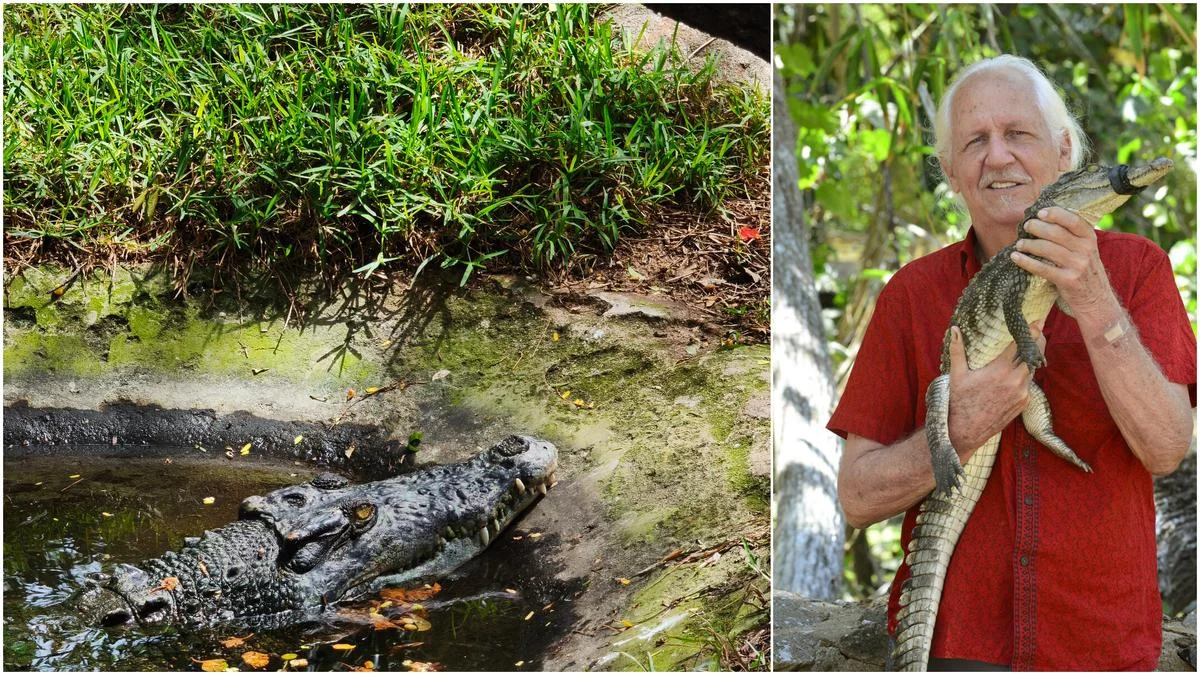
In the late 1980s, on a then-desolate stretch of the East Coast Road in Tamil Nadu, a wooden crate arrived at a fledgling reptile sanctuary. Inside was a gharial—one of the rarest and most critically endangered crocodilians on the planet. For Zai Whitaker, co-founder of the Madras Crocodile Bank Trust (MCBT), the memory remains vivid. The animal, a "river guardian" displaced from the freshwater systems of North India, was released into a hand-dug pen.
"We were all standing around it," Whitaker recalls. "When the animal is released from the box, you don’t know what it’s going to do. We were waiting and watching. Fortunately, it was very well behaved. It ran straight into the water, and since then there has been no looking back."
That single gharial was a harbinger of what would become one of the world’s premier herpetological institutions. As the Madras Crocodile Bank Trust celebrates its 50th anniversary, it stands not merely as a zoo, but as a bastion of conservation, research, and social enterprise that has fundamentally altered India’s relationship with its reptilian inhabitants.

Main Facts: A Sanctuary Born of Necessity
Founded in 1976, the Madras Crocodile Bank Trust (MCBT) was established to address the rapid decline of India’s three crocodilian species: the mugger (Crocodylus palustris), the saltwater crocodile (Crocodylus porosus), and the gharial (Gavialis gangeticus). Today, the eight-and-a-half-acre campus in Vadanamelli village is home to over 395 crocodiles, including 47 gharials, alongside 32 other species of reptiles, including turtles, snakes, and lizards.
The institution’s impact extends far beyond its physical boundaries. It has pioneered the Snake Bite Mitigation Project, established the Andaman and Nicobar Environmental Team (ANET), and facilitated the Irula Snake Catchers’ Industrial Cooperative Society. These initiatives have turned the "Croc Bank" into a multidisciplinary hub for reptilian research and community-based conservation.
Chronology: From a Truck Ride to a Global Institution
The 1960s: A Crisis of Extinction
The genesis of the Croc Bank lies in a period of ecological crisis. By the 1960s, unregulated hunting for the skins trade had pushed India’s crocodiles to the brink of extinction. The Indian government responded by protecting these species under the Wildlife Protection Act of 1972, but legal protection alone could not restore dwindling populations.

1972: The Visionary’s Letter
Romulus ‘Rom’ Whitaker, already a prominent herpetologist who had established the Snake Park at Guindy, saw the need for a dedicated breeding facility. The idea took shape during a 1972 crocodile survey in Odisha. Running low on funds, Rom hitched a free ride back to Chennai on a truck. During that long journey, he wrote a letter to Zai, proposing a facility that would breed crocodiles for rewilding while educating the public.
1976: The Founding
On August 26, 1976, the Madras Crocodile Bank was formally established. The initial funding was as grassroots as the project itself, sourced from wedding gifts and the sale of personal possessions, including a prized tape recorder. Support came from a lineage of conservation royalty: Zai’s father, Zafar Rashid Futehally (founder of WWF-India), and her uncle, the legendary ornithologist Salim Ali. The first plot of land was purchased for approximately ₹5,000 per acre—a price slightly inflated by the owner after seeing the founders’ unbridled enthusiasm.
1990s and Beyond: Expansion and Diversification
As the crocodile populations stabilized, the Bank expanded its remit. In 1990, it established ANET to study the fragile ecosystems of the Andaman and Nicobar Islands. Simultaneously, it addressed the plight of the Irula tribe. After the 1972 Wildlife Act banned the snakeskin trade, the Irulas lost their primary livelihood. The Croc Bank helped form a cooperative where Irulas could use their traditional skills to extract snake venom for life-saving anti-venom production, providing both economic stability and a public health service.

Supporting Data: The Science of Husbandry and Education
The operation of a specialized reptile zoo requires a sophisticated blend of brute strength and scientific precision. The MCBT employs a dedicated team of animal handlers, researchers, and educators who manage the daily needs of thousands of animals.
The Art of Handling
Second-generation animal handler G. Gowrishankar, 38, demonstrates the deep bond between the staff and the animals. He is known to "herd" mugger crocodiles with the ease of a shepherd, recognizing individual temperaments and health markers. Maintenance involves entering pits to feed specific animals, assessing their physical condition, and quarantining those showing signs of illness.
Detection and Care
Reptiles are notoriously difficult patients. "Illness is hard to detect among reptiles because they’re very good at masking anything that’s wrong—it’s a survival instinct," explains Vaibhavi Bhardwaj, a zoo educator at MCBT. To counter this, keepers are trained to observe minute behavioral abnormalities every morning. The facility’s veterinary team constantly adjusts dietary supplements and conducts regular screenings of fecal matter to monitor for parasites like worms.

Educational Outreach
The Bank’s volunteer program serves as a gateway for aspiring conservationists. Education staff work to "break the barrier" between the visitor and the animal. Through feeding demonstrations and awareness programs, they debunk myths and emphasize the role of reptiles as "keystone species" essential for maintaining balanced ecosystems.
Official Responses: Reflections on a Half-Century
For Zai Whitaker, the 50-year journey has been defined by the people who shared the vision. She remembers researchers like the late Jagannathan Vijaya, Satish Bhaskar, and D. Basu, who braved dacoits and harsh environments to study turtles and gharials.
"We would tell them, ‘There are dacoits there, and you’ll spend the night sleeping on the sand banks with pythons,’" Whitaker says. "Their response was always, ‘Oh yeah, that’s great, I would love to do that.’ These were the people who created the space in India to conserve sea turtles and freshwater turtles."

Ganesh Muthiah, a trustee at MCBT who began his journey as a volunteer, views the Bank’s legacy through a lens of perpetual motion. To mark the 50th year, Muthiah is embarking on a 15,000-kilometer journey across 20 Indian states over 120 days to launch the "Save the Reptiles Campaign."
"Rom is like our Indiana Jones," Muthiah says, referring to the founder’s enduring influence on the project even as he enters his senior years.
Implications: The Future of Reptile Conservation in India
The success of the Madras Crocodile Bank Trust offers several critical implications for the future of wildlife management in India:

1. From Breeding to Mitigation
The initial goal of the Bank was to breed crocodiles to prevent extinction. Having succeeded in that, the focus has shifted to "Crocodile-Human Conflict" (CHC). As populations grow and habitats shrink, the Bank’s research into managing these interactions is becoming vital for the safety of both humans and reptiles.
2. Public Health and the Snakebite Crisis
India remains a global hotspot for snakebite deaths. The Croc Bank’s Snake Bite Mitigation Project and its work with the Irula cooperative are essential components of India’s national health strategy. By improving venom collection standards and educating rural communities, the Bank is directly saving human lives.
3. The Value of Niche Institutions
The MCBT demonstrates that specialized, private-public conservation models can be more agile and effective than broad-spectrum state zoos. Its ability to focus deeply on herpetology has made it a global reference point for reptile husbandry.

4. Changing the Narrative
Perhaps the most significant implication is the shift in public perception. By transforming "scary" reptiles into fascinating subjects of study, the Croc Bank has fostered a generation of Indians who view crocodiles and snakes not as pests to be eradicated, but as integral parts of the nation’s natural heritage.
As the Madras Crocodile Bank Trust enters its sixth decade, its mission remains as urgent as it was in 1976. While the "desolate" East Coast Road is now a bustling highway and the gharials are no longer arriving in boxes, the core philosophy of Whitaker and her team remains unchanged: a quiet, persistent enthusiasm for the wild, the scaled, and the misunderstood.
Visitor Information:
- Location: 4, East Coast Road, Vadanamelli Village, Mahabalipuram, Tamil Nadu.
- Hours: Closed on Mondays.
- Admission: ₹110 for adults; ₹50 for children.
- Safety Note: Visitors are reminded that despite their stillness, these are wild creatures; strictly no crossing of safety barriers is permitted.
