

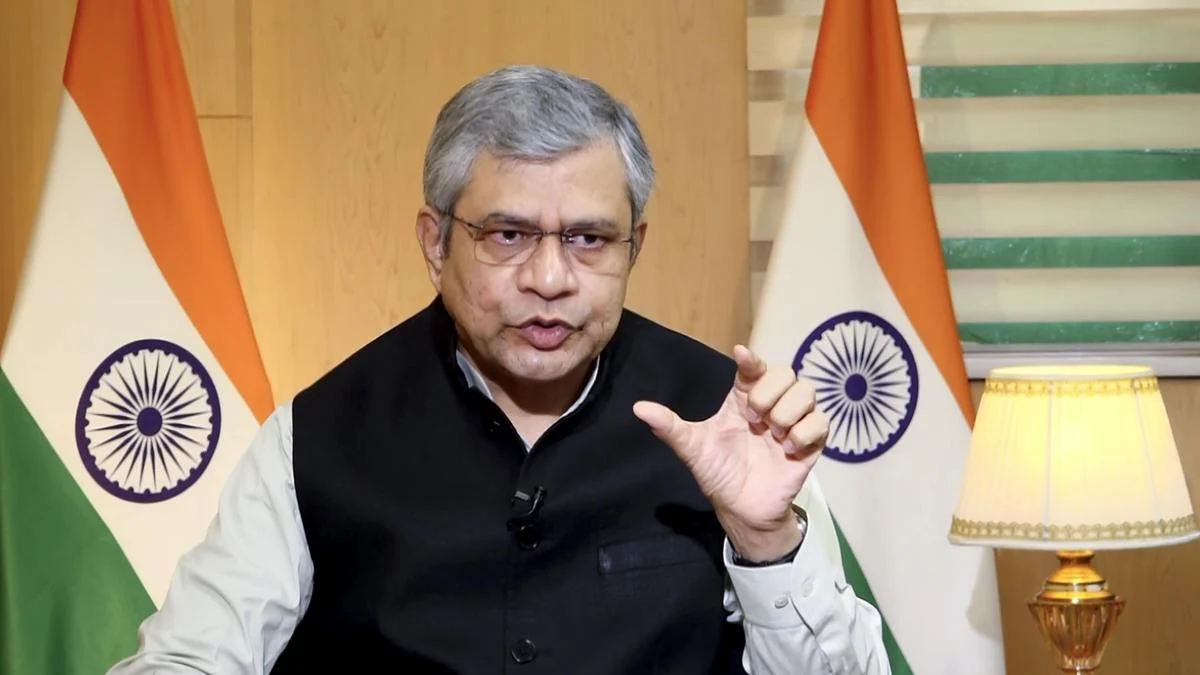
NEW DELHI, September 20, 2026 – India’s audacious and rapidly accelerating journey to become a formidable player in the global semiconductor value chain is drawing the attention, and potentially the ire, of established industry titans. Union Minister for Electronics and Information Technology, Ashwini Vaishnaw, has issued a stark warning to the domestic semiconductor industry, urging a heightened state of vigilance against potential cyberattacks and other disruptive tactics from global interests who may perceive India’s rise as a direct threat.
In a candid interview with PTI on Saturday, September 19, 2026, Minister Vaishnaw underscored the geopolitical realities accompanying India’s growing semiconductor prowess. "India is now emerging as a country that has the capability to design and manufacture chips, a position that will obviously be seen as a threat by many other established interests," he stated, emphasizing the need for constant watchfulness. This caution comes as India consolidates its position as a trusted partner for global technology giants, attracting significant investments and positioning itself as a crucial node in a re-globalized supply chain.
The Looming Shadow of Competition: A Call for Vigilance
Minister Vaishnaw’s warning is not merely a precautionary measure but a recognition of the high stakes involved in the fiercely competitive and strategically vital semiconductor industry. For decades, the global chip value chain has been dominated by a handful of regions and nations – primarily the United States, Taiwan, South Korea, Japan, and parts of Europe. These established players have built intricate ecosystems of design houses, fabrication plants (fabs), equipment manufacturers, and material suppliers, representing trillions of dollars in market capitalization and decades of technological leadership.
India’s ambition to move beyond its traditional role in chip design services to encompass manufacturing, advanced packaging, and a broader indigenous supply chain represents a significant shift in the global landscape. Such a shift inevitably disrupts existing power dynamics and market shares. The Minister elaborated on this perspective, stating, "We have to continuously be watchful of the potential geopolitical risks which will arise because India is now emerging as a country which can design and manufacture chips. Obviously that will be seen as a threat by many other established players."
He went further, explicitly instructing the industry to brace for potential adversaries. "But we should not take it lightly. We should be cognizant of the risks and challenges which will come from other players. So I have very candidly told the entire industry that be prepared for cyber attacks, be prepared for any other kinds of threats and any other kinds of disruptions that might get created by the countries who don’t like India to come up in the semiconductor value chain," Vaishnaw asserted. This directness highlights the government’s perception of the competitive landscape and its commitment to safeguarding India’s burgeoning semiconductor ecosystem. The Minister expressed confidence that the industry, having received this frank assessment, is now "cognizant and they would certainly take the right measures."

A Strategic Imperative: India’s Semiconductor Vision
India’s aggressive push into semiconductors is not merely an economic endeavor but a strategic imperative, deeply intertwined with its broader goals of technological sovereignty, economic resilience, and national security. The COVID-19 pandemic and subsequent geopolitical tensions exposed the extreme fragility of global supply chains, particularly for critical components like semiconductors. Nations worldwide realized the perils of over-reliance on a few geographical hubs, leading to a global race to onshore and friend-shore chip manufacturing capabilities.
For India, this initiative aligns perfectly with its ‘Make in India’ and ‘Digital India’ visions. A robust domestic semiconductor industry promises to:
- Enhance Self-Reliance: Reduce dependence on foreign imports for essential electronic components, bolstering economic stability and national security.
- Drive Economic Growth: Create high-value jobs, attract foreign direct investment, and stimulate ancillary industries.
- Foster Innovation: Establish a vibrant R&D ecosystem, nurturing indigenous talent and cutting-edge technologies.
- Secure Critical Infrastructure: Ensure a secure supply of chips for defense, telecommunications, and other strategic sectors, free from potential external interference.
- Position India as a Global Hub: Leverage its vast talent pool and growing market to become a key player in the re-globalized supply chain, offering a diversified and reliable alternative.
The government’s commitment to this vision is evident in its substantial financial backing and policy frameworks.
Chronology of Ambition: Building the Foundation
India’s journey towards semiconductor self-reliance has seen several significant milestones, culminating in the current momentum. While earlier attempts to establish fabs faced various hurdles, the current push, initiated in late 2021 with the initial India Semiconductor Mission (ISM) and subsequently reinforced, demonstrates a more comprehensive and determined approach.
- December 2021: The Union Cabinet approved the first phase of the Semicon India program with an outlay of ₹76,000 crore (approximately $10 billion at the time), signaling a serious commitment to attracting investments across the semiconductor value chain. This phase focused on providing financial incentives for setting up semiconductor fabs, display fabs, and compound semiconductor facilities, along with design-linked incentives.
- Mid-2022 to Early 2023: Initial expressions of interest were received, and the government engaged in extensive dialogues with global players to understand their requirements and refine incentive structures. The focus was on creating an attractive investment environment, including land, utilities, and a skilled workforce.
- July 2023: The Union Cabinet approved Semicon 2.0, significantly expanding the program with an outlay of ₹1,27,500 crore. This second phase built upon the lessons learned and broadened the scope to support chip design, semiconductor equipment and materials, fabs, advanced packaging, research and development, and talent development. This comprehensive approach acknowledged that a successful semiconductor ecosystem requires more than just fabrication plants; it needs a holistic chain of interconnected industries.
- Late 2023 to Early 2024: The first major breakthroughs began to materialize. Micron Technology, a leading American memory chip manufacturer, announced its plans to set up an advanced semiconductor assembly and test (ATMP) facility in Sanand, Gujarat. This marked a crucial first step, bringing advanced packaging capabilities to India.
- 2025-2026: Further projects gained traction, with companies like Kaynes Technology and CG Semi initiating production or significantly progressing their plans. The pipeline of approved projects steadily grew, demonstrating the efficacy of the government’s incentive schemes and its proactive engagement with industry.
Supporting Data and Investment Momentum
The financial commitments and project approvals under the Semicon India programs paint a clear picture of the scale of India’s ambition and the growing investor confidence.

- Total Program Outlay: The combined outlay across both phases of the Semicon India program exceeds ₹2 lakh crore (approximately $24 billion), underscoring the government’s significant financial backing.
- Approved Projects: As of late 2026, 12 semiconductor manufacturing projects with total investments exceeding ₹1.64 lakh crore have received government approval. These projects span various segments of the value chain, from assembly and testing to specialized compound semiconductor fabs.
- Commercial Production: Crucially, five of these approved projects are already in commercial production. This includes the pioneering efforts of companies like Micron, Kaynes Technology, and CG Semi, demonstrating tangible progress beyond mere announcements. These early successes are vital in building confidence and attracting further investment.
- Phase 2 Investment Commitments: The government recently announced that it had received approximately ₹1 lakh crore in fresh investment commitments under the second phase of the semiconductor scheme, indicating robust and sustained investor interest.
The recently concluded SEMICON India event, a mega showcase of the nation’s chip-making prowess, served as a powerful testament to this momentum. The event witnessed a flurry of high-profile announcements that further cemented India’s position on the global semiconductor map:
- Applied Materials’ $5 Billion India Plan: The leading American semiconductor equipment manufacturer committed a massive $5 billion investment in India through 2035. This long-term commitment is pivotal, as equipment manufacturers are the bedrock of any fabrication ecosystem, providing the sophisticated machinery needed for chip production. Applied Materials’ investment is expected to establish a significant R&D and engineering presence, contributing to indigenous innovation and talent development.
- Lam Research’s ₹10,000 Crore Investment: Another major player in semiconductor manufacturing equipment, Lam Research, proposed a ₹10,000 crore investment. This further strengthens India’s equipment ecosystem, crucial for the long-term sustainability and technological advancement of its fabs.
- Tata Electronics’ Dholera Vendor Park: Tata Electronics, a key Indian conglomerate, announced plans for a 363-acre vendor park at Dholera. This strategic move aims to create a localized supply chain hub, attracting ancillary industries and material suppliers to support its own semiconductor ventures, thereby fostering a comprehensive ecosystem.
- Fujifilm’s ₹800 Crore Semiconductor Materials Plant: Fujifilm’s commitment to establish an ₹800 crore semiconductor materials plant is another critical piece of the puzzle. The availability of high-quality, locally sourced materials is essential for reducing supply chain risks and improving the cost-effectiveness of domestic chip production.
These investments are not just about capital; they represent the transfer of advanced technology, the creation of highly skilled jobs, and the integration of India into the most sophisticated manufacturing processes globally.
Official Responses and Industry Dynamics
Minister Vaishnaw’s candid discussion with the industry reflects a pragmatic approach by the Indian government. It acknowledges the complex geopolitical landscape and prepares stakeholders for potential challenges rather than downplaying them. The emphasis on cybersecurity is particularly pertinent in an industry where intellectual property is paramount and operational continuity is critical. Cyberattacks could range from espionage aimed at stealing design blueprints to disruptive attacks targeting manufacturing processes or supply chain logistics.
The industry’s response to the Minister’s warning has been largely positive, indicating a shared understanding of the risks. Leading industry figures have privately acknowledged the need for robust security protocols and strategic partnerships. The influx of global companies, while competitive, also brings expertise in navigating such challenges. They are accustomed to operating in a highly sensitive and competitive environment and can contribute to building India’s resilience.
Furthermore, India’s positioning as a "trusted partner" in the global semiconductor supply chain is a significant diplomatic and strategic advantage. In an era of increasing geopolitical fragmentation and de-risking strategies, many countries and corporations are looking for alternatives to regions perceived as high-risk. India, with its democratic institutions, growing economy, and a strong track record in IT services, presents an attractive proposition. This trust factor can help mitigate some of the "threat" perception by fostering collaborative growth rather than purely adversarial competition.

Geopolitical Implications and Future Outlook
The implications of India’s semiconductor ascent extend far beyond its borders, reshaping global economic and strategic calculations.
- Rebalancing Global Supply Chains: India’s successful entry will contribute significantly to diversifying the global semiconductor supply chain, reducing over-concentration risks. This is a welcome development for many nations seeking more resilient supply lines.
- Increased Competition and Innovation: While established players may view India as a threat to their market share, the increased competition could also spur further innovation and efficiency across the industry.
- Strategic Partnerships and Alliances: India’s semiconductor ambitions are likely to strengthen its strategic alliances, particularly with countries like the US, Japan, and European nations that are also keen on diversifying their supply chains and collaborating on advanced technologies. This could lead to greater technological exchange and joint R&D initiatives.
- Talent Migration and Development: India’s vast pool of engineering talent, combined with new investments, is set to become a major force in global semiconductor R&D and manufacturing. This could potentially reverse some of the brain drain and attract global talent.
- Cybersecurity as a Geopolitical Battleground: As Minister Vaishnaw highlighted, cybersecurity will become an increasingly critical domain. Nations and corporations will invest heavily in protecting their intellectual property and operational networks, turning this into a new arena of geopolitical competition.
However, India’s path is not without significant challenges:
- Massive Capital Investment: Semiconductor manufacturing is one of the most capital-intensive industries globally. Sustaining multi-billion-dollar investments over decades will require continued government support and a stable policy environment.
- Technological Catch-up: While India is strong in design, bridging the technology gap in advanced fabrication (e.g., sub-5nm nodes) will be a monumental task, requiring sustained R&D and deep technological partnerships.
- Infrastructure Development: Ensuring reliable, high-quality power, ultra-pure water, and advanced logistics infrastructure is critical for chip manufacturing and needs continuous investment.
- Skilled Workforce: Developing a specialized workforce beyond design, including process engineers, equipment technicians, and fab operators, is crucial and requires dedicated educational and training programs.
- Global Subsidy Race: Countries worldwide are offering massive subsidies to attract semiconductor investments. India must maintain competitive incentives without distorting market dynamics.
Despite these hurdles, the current trajectory suggests that India is firmly committed to carving out a significant niche in the global semiconductor ecosystem. The candid warnings from Minister Vaishnaw serve as a necessary reminder that this journey, while promising, will be fraught with challenges from those who wish to maintain the status quo. By acknowledging these potential threats proactively and preparing the industry for vigilance, India aims to safeguard its strategic ambitions and solidify its position as a trusted and formidable player in the future of technology. The coming years will undoubtedly witness India’s semiconductor saga unfold, with profound implications for its economy, security, and global technological leadership.
