

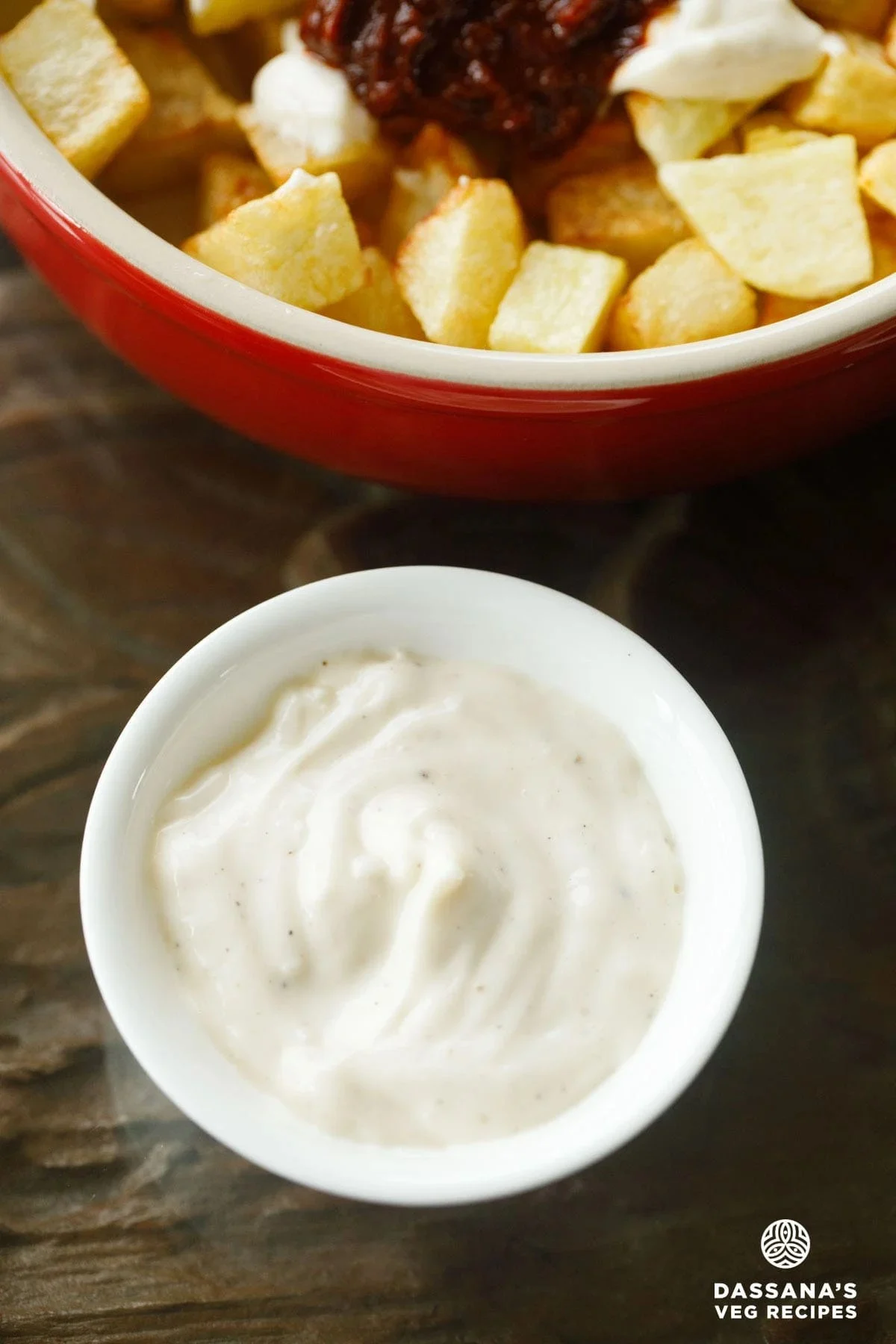
NEW DELHI — In an era where culinary complexity often intimidates the home cook, Dassana Amit, a classically trained pastry chef and the creative force behind the globally recognized "Dassana’s Veg Recipes," has unveiled a streamlined approach to one of the Mediterranean’s most venerable condiments: Garlic Aioli. By pivoting away from the traditionally temperamental garlic-and-oil emulsion and toward a sophisticated, mayonnaise-based construction, Amit is signaling a broader shift in modern gastronomy—one that prioritizes accessibility and flavor balance without sacrificing professional-grade quality.

Main Facts: A Simplified Masterclass in Flavor
The newly released formulation focuses on a four-ingredient core: high-quality mayonnaise, fresh minced garlic, cracked black pepper, and freshly squeezed lemon juice. While purists might argue that "true" aioli (historically a labor-intensive paste of garlic and olive oil) remains the gold standard, Amit’s version addresses the practicalities of the 21st-century kitchen.
The recipe eschews the need for specialized equipment such as a mortar and pestle or high-speed blenders, instead utilizing a simple bowl-and-spoon technique. The "mayonnaise-hack" method serves as a stable base, providing a rich, creamy texture that mimics a perfectly executed emulsion while eliminating the risk of "breaking" the sauce—a common frustration for amateur cooks.

Key to this specific iteration is the deliberate omission of extra virgin olive oil. Amit posits that because modern mayonnaise already possesses a high fat content and luxurious mouthfeel, additional oil is redundant and can occasionally lead to an overly greasy profile. This streamlined philosophy is designed to highlight the "balanced garlic flavor," supported by the bright acidity of citrus and the warmth of black pepper.
Chronology: From Ancient Mortars to Contemporary Bowls
The history of aioli is as rich and dense as the sauce itself. To understand the significance of Amit’s modern interpretation, one must look back at the sauce’s Mediterranean lineage.

- The Roman and Iberian Roots: The name "aioli" is derived from the Occitan words alh (garlic) and òli (oil). For centuries, across the coastal regions of Spain (particularly Catalonia and Valencia) and Southern France (Provence), the sauce was a test of a chef’s patience. It required the slow, drop-by-drop incorporation of oil into crushed garlic until a thick, gravity-defying peak was achieved.
- The 20th Century Shift: As global trade expanded and mayonnaise became a commercial staple, the lines between traditional aioli and "garlic mayo" began to blur. In many high-end bistros during the late 1900s, chefs began using egg yolks as a stabilizing agent—essentially turning aioli into a garlic-heavy mayonnaise.
- The Digital Culinary Era (2009–Present): Dassana Amit entered the culinary scene in 2009, a period marked by the democratization of cooking through the internet. Having trained at Le Cordon Bleu in Plant-Based Patisserie and holding professional certifications in Indian and Continental cuisine, Amit spent over a decade refining vegetarian staples. Her latest aioli recipe represents the culmination of this timeline: a return to simplicity that respects the flavor profile of the past while utilizing the convenience of the present.
Supporting Data: Nutritional Analysis and Chemical Infusion
From a nutritional and chemical standpoint, the recipe is engineered for maximum impact. According to data provided by the chef’s test kitchen, a standard serving of this garlic aioli carries the following profile:
- Caloric Load: 242 kcal per serving.
- Lipid Profile: 24g of total fat, with only 3g being saturated, reflecting the use of vegetable-oil-based mayonnaise.
- Sodium Content: 213mg, largely derived from the pre-existing seasoning in the mayonnaise base.
- Micronutrients: Trace amounts of Vitamin C (1mg) and Vitamin K, primarily from the fresh lemon juice and garlic components.
Beyond the numbers, the "resting period" emphasized in the recipe is backed by food science. When fresh garlic is minced, it releases allicin, the compound responsible for its pungent aroma and flavor. By allowing the mixture to rest for 10 to 15 minutes before service, the allicin has time to permeate the fat molecules of the mayonnaise. This process, known as infusion, rounds out the sharp "bite" of raw garlic, resulting in a more cohesive and mellow flavor profile that does not overwhelm the palate.

Furthermore, the insistence on fresh lemon juice over bottled alternatives is a matter of enzymatic integrity. Bottled juices often contain preservatives and have undergone pasteurization, which can mute the bright, top-note acidity required to cut through the heavy fats of the mayonnaise.
Official Responses: The Expert Perspective
Dassana Amit’s approach to this recipe reflects her broader culinary philosophy. As a trained pastry chef with a background in the rigorous standards of Le Cordon Bleu, her endorsement of a "simple" sauce carries significant weight in the vegetarian community.

"Whenever I need a quick dipping sauce or sandwich spread, this is the garlic aioli I make," Amit stated in her release. "Since the mayonnaise already provides a rich and creamy texture, I find [extra virgin olive oil] unnecessary and prefer to keep the recipe simple."
Her professional background in Indian and Continental cooking provides a unique lens. While aioli is European in origin, Amit’s version is presented as a "global condiment," recommended for everything from Spanish Patatas Bravas to Middle Eastern Shawarma and Indian-inspired vegetable cutlets. This versatility is a hallmark of her "tested recipe" promise, which has been a cornerstone of her platform since its inception in 2009.

Culinary educators often note that the mark of a professional is knowing when not to overcomplicate a dish. By focusing on the "balanced garlic flavor" and the "15-minute rest," Amit provides a framework that prioritizes the organoleptic experience—the sensory perception of food—over the rigid adherence to ancient techniques.
Implications: The Democratization of Gourmet Flavors
The release of this recipe has broader implications for the food industry and the "home chef" movement.

- The Rise of "Hybrid" Cooking: Amit’s recipe sits at the intersection of "from-scratch" cooking and "semi-homemade" assembly. This reflects a growing trend where consumers use high-quality store-bought bases (like premium mayo) and enhance them with fresh, artisanal ingredients (like hand-minced garlic). This allows for a gourmet experience on a weeknight timeline.
- Sustainability and Storage: The recipe’s small-batch focus and 48-hour shelf life in the refrigerator encourage a "cook what you need" mentality. This reduces food waste, a significant concern in modern domestic science.
- Culinary Versatility as a Value Prop: By suggesting pairings that range from French fries and roasted vegetables to burgers and falafel, the recipe positions aioli not just as a dip, but as a "mother sauce" for the vegetarian kitchen. It serves as a bridge between different cuisines, proving that a well-made garlic sauce is a universal language.
- The Professionalization of the Blogosphere: As experts like Amit—who hold prestigious certifications—continue to dominate the digital space, the line between "blogging" and "professional culinary publishing" continues to disappear. Detailed nutritional data, stepwise photography, and science-based tips are now the expected standard for recipe development.
In conclusion, Dassana Amit’s Garlic Aioli is more than just a condiment; it is a case study in the evolution of home cooking. It honors the pungent, soulful roots of Mediterranean garlic culture while embracing the efficiency and precision of modern culinary training. For the home cook, it offers a foolproof path to a professional-grade result; for the culinary world, it serves as a reminder that sometimes, the most sophisticated solution is the simplest one.
