

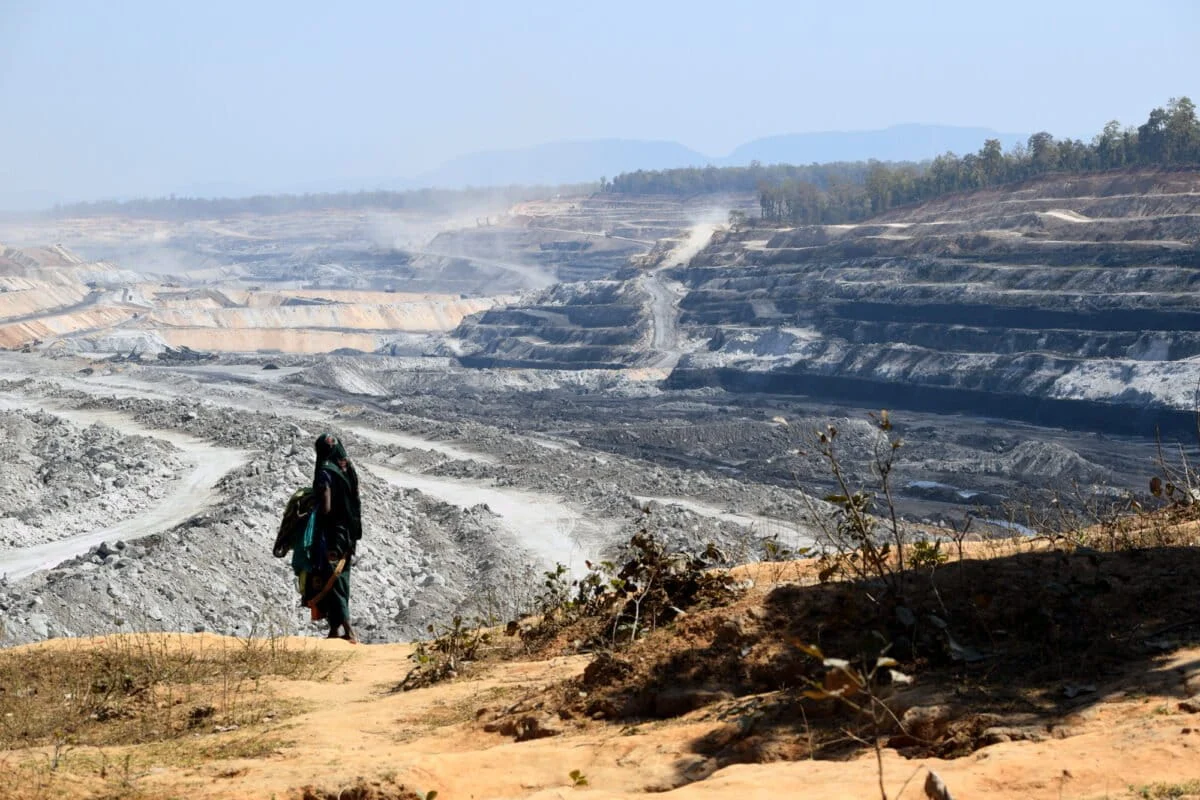
The landscape of Indian mining and the delicate balance of Centre-State relations underwent a seismic shift during the 2026 Monsoon Session of Parliament. Among the dozen legislative pieces cleared during the session, none has sparked as much controversy or as many allegations of "federal overreach" as the Mines and Minerals (Development and Regulation) Amendment Bill, 2026 (MMDR Amendment Bill).
By centralizing the authority over mineral-bearing land and stripping states of their recently reaffirmed power to levy taxes and cesses, the Bill has set the stage for a protracted legal and political battle. While the Union Government argues that the move is essential for "fiscal stability" and "national interest," mineral-rich states—many of which grapple with high poverty despite their natural wealth—decry it as a direct assault on their economic sovereignty.
1. Main Facts: The Centralization of Mineral Authority
The MMDR Amendment Bill, 2026, fundamentally alters the Mines and Minerals (Development and Regulation) Act of 1957. At its core, the amendment shifts the regulatory and fiscal authority over mineral-bearing land from the State Governments to the Union Government.
Key Provisions of the 2026 Amendment:
- Assumption of Control: Invoking Section 2 of the 1957 Act, the Centre has assumed control over the regulation of mines and mineral development, citing "larger public interest."
- Taxation Bar: States are now prohibited from imposing any independent tax, cess, or levy on mineral-bearing land. This includes any charges based on the quantity of minerals, market prices, or royalty rates, unless specifically permitted by the Central Government.
- Uniformity Mandate: The Bill aims to create a uniform mineral taxation regime across India, ostensibly to prevent "unbalanced" taxation that might drive industries toward importing minerals rather than sourcing them domestically.
- Leasing Authority: Concerns have been raised by opposition lawmakers that the amendment paves the way for the Centre to take over the granting of mining leases—a function that has historically resided with the states.
The immediate fallout of this legislation is the effective nullification of a landmark 2024 Supreme Court ruling that had granted states the right to tax mineral rights and land.

2. Chronology: From Legal Victory to Legislative Reversal
The path to the 2026 Amendment is marked by decades of legal ambiguity and a high-stakes judicial seesaw between the rights of the Union and the States.
- 1957: The original MMDR Act is passed, establishing the framework for mineral regulation in independent India.
- 1989 (India Cement Ltd. v. State of Tamil Nadu): A seven-judge bench of the Supreme Court rules that "royalty is tax" and that the power to regulate mines and minerals rests solely with the Centre. This significantly limited states’ ability to generate revenue from their own resources.
- July 2024: In a historic reversal, a nine-judge Constitution Bench of the Supreme Court rules 8-1 that the 1989 judgment was "wrongly decided." The Court clarifies that "royalty" is not a tax and, crucially, that "land" under Entry 49 of the State List (List II) includes mineral-bearing land. This gave states the green light to levy taxes and cesses on mining activities.
- August 10, 2026: The MMDR Amendment Bill is introduced in the Lok Sabha.
- August 12, 2026: Despite its far-reaching implications, the Bill is passed in the Lok Sabha via a voice vote within just two minutes, according to parliamentary records.
- Late August 2026: The Rajya Sabha passes the Bill on the final day of the session. The session was marked by protests and the suspension of Question Hour, with the Opposition alleging that the Bill was "bulldozed" through without adequate scrutiny.
3. Supporting Data: The Economic Toll on Mineral-Rich States
The financial implications of the 2026 Amendment are staggering, particularly for states like Jharkhand, Odisha, and Chhattisgarh, where mining is the backbone of the non-tax revenue stream.
Estimated Revenue Losses
The primary grievance of the states involves "past dues"—revenues they were entitled to collect following the 2024 Supreme Court ruling, which the new Bill effectively blocks.
- Jharkhand: State Finance Minister Radha Krishna Kishore estimates a total loss of ₹1.36 trillion in outstanding dues. Furthermore, the state expects to lose approximately ₹130 billion annually from the cessation of mineral-bearing land cesses.
- Odisha: The Biju Janata Dal (BJD) claims the state stands to lose roughly ₹1 trillion in past dues. Currently, mineral royalties account for over 75% of Odisha’s non-tax revenue, totaling approximately ₹600 billion.
- Chhattisgarh: The state is projected to earn ₹150 billion in mineral revenue in the 2026–27 fiscal year, a figure that is now under threat of stagnation or decline due to central caps on levies.
The Growth Paradox
Union Minister G. Kishan Reddy has pointed to the massive growth in state mining revenues over the last decade to justify the Centre’s intervention. According to Ministry data:

- Jharkhand’s mining revenue grew by 618% over the last 11 years.
- Odisha’s mining revenue surged by 1,051% in the same period.
- Between 2015 and 2026, mineral-rich states collectively received over ₹5 trillion, while the Centre’s share was only ₹820 billion.
However, state leaders argue that this growth is commensurate with the environmental and social costs they bear. Jharkhand Chief Minister Hemant Soren noted that these funds are vital for social welfare schemes such as the Maiya Samman (women’s empowerment) and Birsa Awas (housing).
4. Official Responses: A House Divided
The debate over the Bill has created a sharp divide between the Union Government and state leadership, crossing even alliance lines.
The Union Government’s Defense
The Ministry of Mines maintains that the amendment does not "abolish" state rights but rather "rationalizes" them. Minister G. Kishan Reddy argued on social media that the Bill is necessary to bring "uniformity, predictability, and fiscal stability" to the sector. The Centre’s primary fear is that if states are allowed to levy high, localized taxes, the cost of Indian minerals will become uncompetitive, forcing the industry to rely on imports and draining the national exchequer.
The Opposition’s Outcry
Opposition MPs have been vocal about the "undemocratic" nature of the Bill’s passage.

- Mahua Maji (JMM): Accused the government of haste, noting that "Question Hour and Zero Hour were suspended to push this bill through" while the Opposition was protesting other issues.
- N.K. Premachandran (RSP): Expressed fears that the Centre is orchestrating a total takeover of mining leases, effectively turning state governments into "mere observers" on their own land.
- Tiruchi Siva (DMK): Led the demand in the Rajya Sabha to refer the Bill to a Select Committee for comprehensive discussion—a proposal that was ultimately rejected.
Dissent Within the NDA
Significantly, the Bill has faced pushback from within the ruling National Democratic Alliance (NDA). Sudesh Mahto, chief of the All Jharkhand Students Union (AJSU), wrote to the Union Mining Minister stating that any decision depriving the people of Jharkhand of their mineral rights is "unacceptable" and that the state must be permitted to levy its own cess.
5. Implications: The Future of Federalism and Welfare
The 2026 MMDR Amendment Bill carries profound implications for the future of Indian governance, the economy, and the welfare of mining-impacted communities.
Impact on Social Welfare and the DMF
One of the most sensitive areas is the District Mineral Foundation (DMF). The DMF is a trust funded by mining royalties intended for the welfare of local communities affected by mining operations. While the Centre claims the DMF will remain untouched, experts warn that because the Centre will now determine royalty rates, they effectively control the "valve" for DMF funding. If the Centre lowers royalties to boost industrial competitiveness, the funds available for local schools, hospitals, and clean water in mining zones will dwindle.
Erosion of Subnational Autonomy
Chinmayi Shalya, a senior fellow at the Swaniti Initiative, highlights a critical disconnect: "States are responsible for land, environment, and communities… the impacts are felt on the ground." By centralizing decision-making, the Centre risks creating a "one-size-fits-all" policy that ignores the specific environmental and social costs borne by individual states.

The "GST for Minerals" Alternative
Some experts, including former mining official Anurag Diwan, suggest a middle path: a system similar to the Goods and Services Tax (GST). By consolidating all taxes and cesses into a single, shared pool, the Centre could achieve its goal of uniform pricing while ensuring states receive a guaranteed and fair share of the revenue.
Legal Challenges Ahead
The battle is far from over. Several states, including Jharkhand and Congress-ruled states, have announced their intention to challenge the MMDR Amendment Bill in the Supreme Court. Legal experts like Karthik Bansal of CSEP suggest that if the Court finds the Bill violates the "basic structure" of federalism or contradicts its own 2024 ruling without sufficient constitutional grounds, it may suspend the amendments.
Conclusion
The MMDR Amendment Bill 2026 represents a pivotal moment in India’s legislative history. It pits the Union’s vision of a streamlined, globally competitive mineral sector against the States’ need for fiscal autonomy to support their most vulnerable populations. As the dispute moves from the floor of Parliament to the halls of the Supreme Court, the outcome will likely redefine the meaning of "cooperative federalism" for decades to come.
