

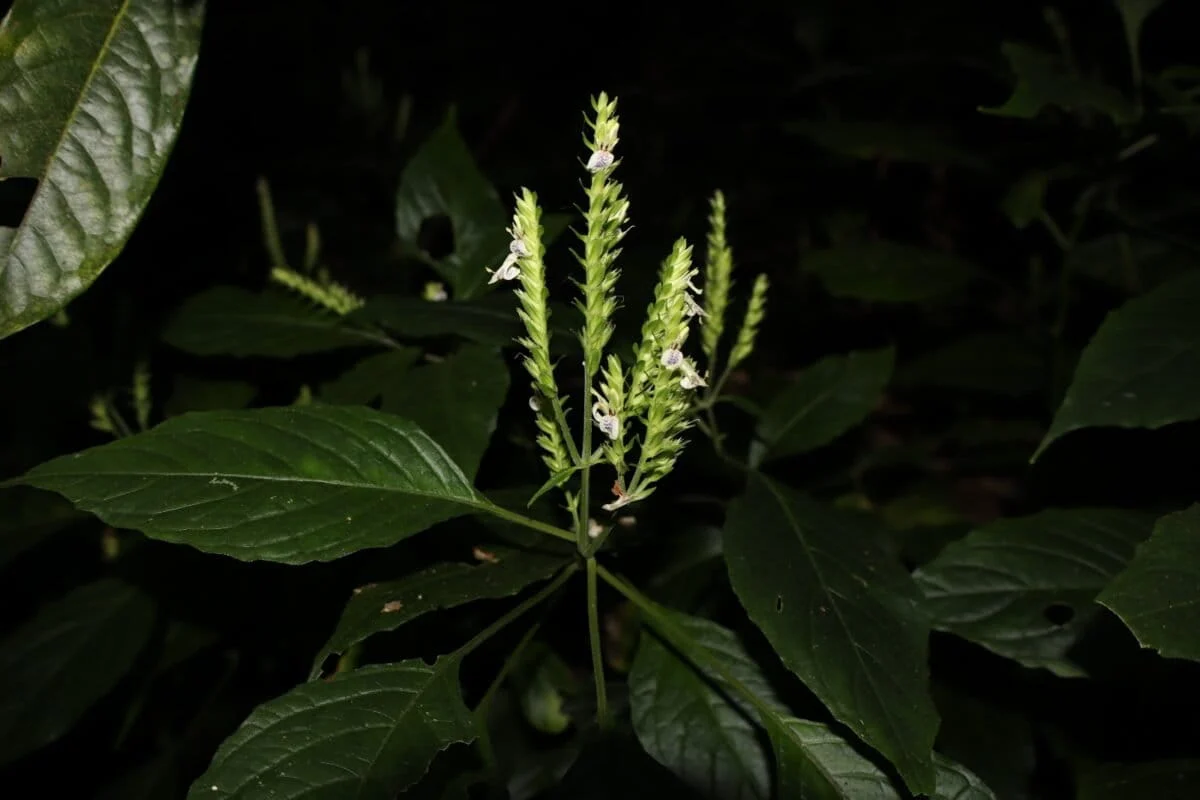
In the dense, mist-shrouded corridors of the Jatinga Hills, tucked within the rugged Dima Hasao district of Assam, a botanical ghost has reappeared. After nearly two centuries of absence from the scientific record, Rungia mastersii, a plant species endemic to the region and long feared extinct, has been rediscovered. The find, which bridges a 180-year gap in botanical history, highlights both the incredible resilience of Northeast India’s biodiversity and the precarious thinness of the thread by which some species hang.
The rediscovery was spearheaded by Kangkan Kumar Das, a doctoral researcher, and Professor Debjyoti Bhattacharyya from the Department of Life Science and Bioinformatics at Assam University, Silchar. Their findings, recently published in a scientific study in July 2026, have sent ripples through the international botanical community, marking the first time the plant has been seen in the wild since the mid-19th century.
Main Facts: A Botanical Resurrection
The story of Rungia mastersii is one of extreme rarity. Belonging to the Acanthaceae family—a diverse group of flowering plants often found in tropical regions—this specific herb was last documented in 1845. For 18 decades, it existed only as a single, fading specimen on a herbarium sheet at the Central National Herbarium (CNH) in Howrah, West Bengal.
The rediscovery occurred during an intensive field survey conducted by Kangkan Kumar Das as part of his doctoral research on the Acanthaceae family. While traversing the difficult terrain of the Jatinga Hills, Das encountered a "rare shrubby herb" growing in the moist, shaded rock crevices adjacent to a mountain stream.
Identifying a species that has not been seen for nearly 200 years is a meticulous process. Following the collection of specimens, Das and Bhattacharyya conducted a detailed morphological investigation. To ensure the accuracy of their find, they consulted with Professor Yunfei Deng, a world-renowned specialist in the Acanthaceae family from the South China Botanical Garden. Professor Deng’s confirmation solidified the discovery: the "lost" plant of Assam had finally been found.
Chronology: From the British Raj to the 21st Century
The history of Rungia mastersii begins in 1845, during the height of the British colonial era’s botanical explorations in India. J.W. Masters, a British botanist known for his extensive work on the flora of Assam, first discovered the plant. Masters’ original notes placed the discovery along the banks of the Sundar River, though the exact location remained somewhat ambiguous in historical records. In honor of his contribution to Indian botany, the species was named after him.

Following that initial discovery, the plant vanished. Despite numerous botanical expeditions through the Northeast during the 20th century, Rungia mastersii was never sighted. It became a "taxonomic ghost," a species that exists in literature and herbaria but is absent from the living world.
The timeline of its return is as follows:
- 1845: J.W. Masters discovers the species near the Sundar River, Assam.
- 1845–2024: Zero recorded sightings globally. The species is preserved only as a single herbarium specimen in Howrah.
- Late 2024–Early 2025: Kangkan Kumar Das begins field surveys in the Dima Hasao district for his PhD.
- 2025: Discovery of the population in the Jatinga Hills.
- July 2026: Formal publication of the rediscovery in a peer-reviewed study, confirming the plant’s continued existence.
Supporting Data: Anatomy of a Rare Shrub
The study published by Das and Bhattacharyya provides the most comprehensive description of Rungia mastersii to date. Standing between 60 to 110 centimeters tall, the plant is classified as a "shrubby herb." It is specialized for a very specific niche: moist, shaded environments at elevations ranging from 900 to 1,250 meters.
Morphological Characteristics:
- Flowers: The flowers are described as pale green to whitish, uniquely marked with delicate purple streaks that serve as a diagnostic feature for the species.
- Habitat: It thrives in rock crevices beside streams, requiring high humidity and protection from direct, harsh sunlight.
- Taxonomy: The genus Rungia (subtribe Justicinae) comprises 88 species globally, distributed across tropical Africa, Asia, and the Arabian Peninsula. Rungia mastersii, however, remains unique to the specific micro-climates of Assam.
The researchers noted that the plant’s isolated location is likely what allowed it to survive undetected for so long. The Jatinga Hills, while famous for the mysterious "bird suicide" phenomenon, possess a rugged topography that makes botanical exploration exceptionally difficult.
Official Responses: A Call for Urgent Conservation
While the rediscovery is a cause for celebration, the researchers’ reports are tempered by a sense of extreme urgency. Speaking to Mongabay-India, Kangkan Kumar Das expressed deep concern regarding the size and location of the surviving population.
"During my field visit, I found only 40-42 individuals in the wild," Das stated. "What worries me is that the population is very concentrated. All the specimens I found are exactly located in the same place."

This concentration makes the species hyper-vulnerable. Because the entire known population exists in a single, small cluster, a single localized disaster could lead to the total extinction of the species. Das pointed out that the Jatinga Hills are notorious for landslides, particularly during the heavy monsoon seasons characteristic of Northeast India.
"The worrisome thing is that the place is landslide prone," Das warned. "If something untoward happens, like a landslide or forest fire, the entire population might get decimated at once."
Furthermore, the site where the plant was discovered currently lacks formal protection. "The location where I found the plant is not even a reserve forest at the moment," Das noted. While the area is near the Barail Wildlife Sanctuary—home to diverse fauna like leopards, black bears, and deer—the specific stream-side habitat of Rungia mastersii remains outside the official boundaries of protected zones.
Implications: The Future of Rungia mastersii
The rediscovery of Rungia mastersii carries significant implications for both regional conservation policy and global botanical science.
1. IUCN Status and "Red Listing"
Currently, the species is listed as "Not Evaluated" under the International Union for Conservation of Nature (IUCN) Red List criteria. However, based on Das’s findings of fewer than 50 individuals in a single location, the species likely meets the criteria for "Critically Endangered." Formalizing this status is a priority for the research team to unlock international conservation funding and attention.
2. Assisted Migration and Habitat Scouting
The research paper concludes that "intensive surveys are urgently needed." Das suggested that because the current population is so localized, conservationists should scout for other ecologically similar locations within the Barail range. If suitable habitats are found, "assisted migration"—planting seeds or cuttings in new, protected locations—might be necessary to ensure the species’ long-term survival.

3. Biological Research
Das plans to return to the Jatinga Hills after the monsoon season to study the plant’s fruit morphology and seed dispersal techniques. Understanding how the plant reproduces and spreads is vital for any cultivation or conservation efforts. "The flowering season starts from around September-October," he noted, indicating that the coming months will be critical for gathering more biological data.
4. Protecting the Indo-Burma Hotspot
The rediscovery serves as a reminder of the "Indo-Burma Biodiversity Hotspot’s" untapped potential. Northeast India remains one of the most biologically diverse yet under-studied regions in the world. The fact that a species could remain hidden for 180 years suggests that other "extinct" or unknown species may still be thriving in the remote folds of the Himalayas and the Patkai range.
Conclusion
The return of Rungia mastersii from the brink of historical oblivion is a testament to the importance of field-based taxonomic research. In an era where much of biological science has shifted toward the laboratory, the work of Das and Bhattacharyya reinforces the necessity of "boots on the ground" exploration.
However, the clock is ticking. With only 42 known individuals living in a landslide-prone, unprotected area, the rediscovery of Rungia mastersii is not the end of the story—it is the beginning of a race against time. Protecting this delicate, purple-streaked herb will require a concerted effort from the Assam Forest Department, local communities (such as the Khasi people residing nearby), and the global scientific community. Having waited 180 years to be seen again, Rungia mastersii deserves more than a brief appearance before vanishing forever.
