

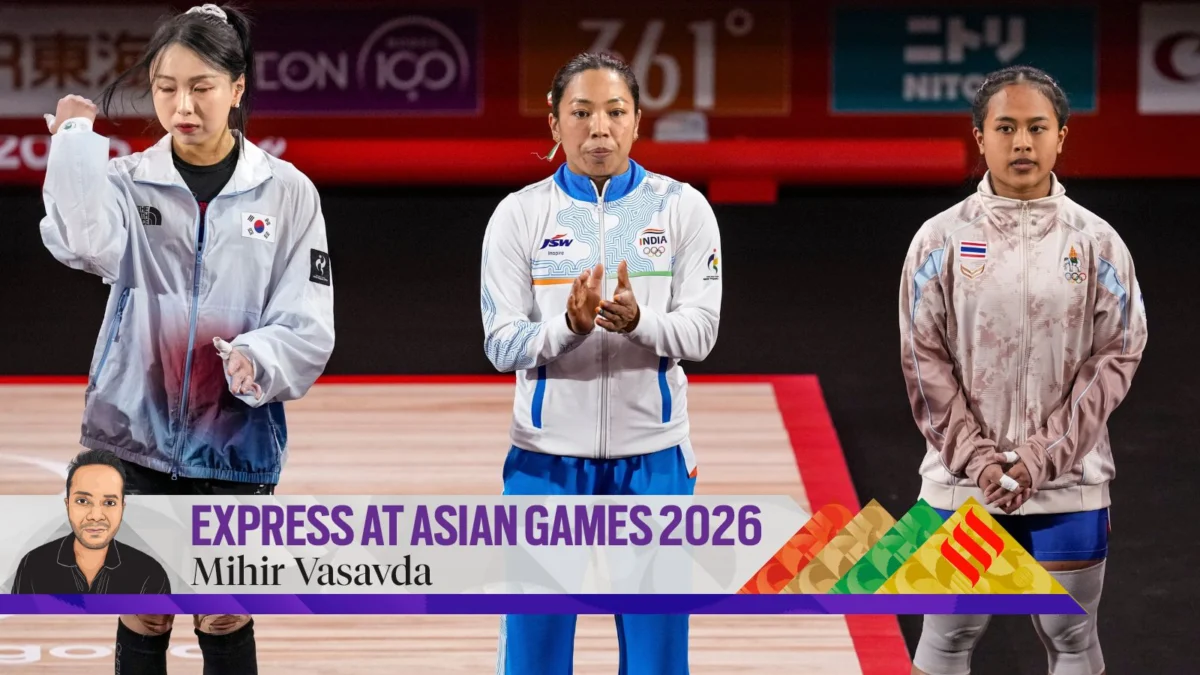
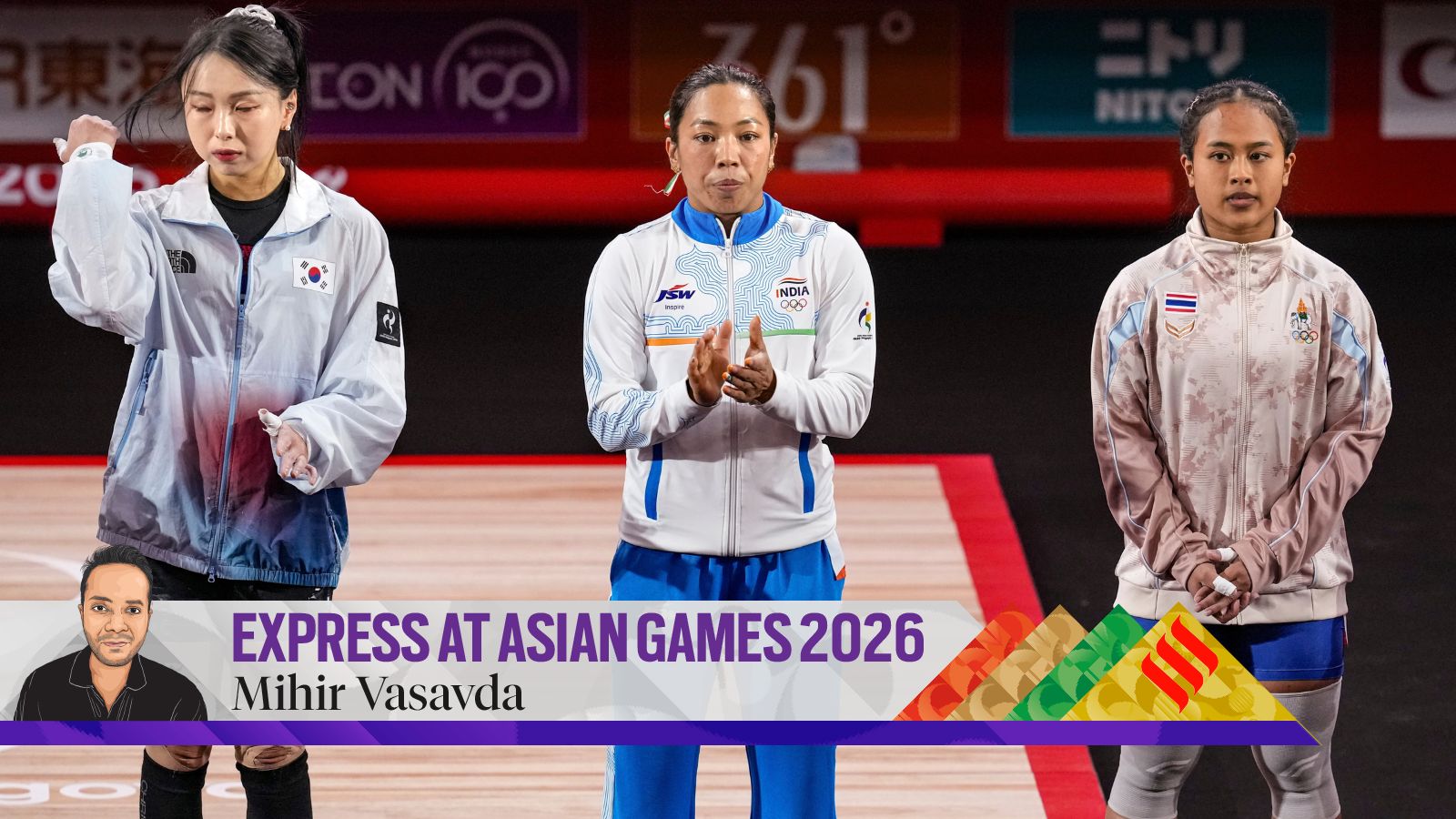
Nagoya, Japan – September 23, 2026 – In a display of sheer grit, unwavering determination, and a relentless pursuit of sporting excellence, India’s weightlifting icon, Saikhom Mirabai Chanu, etched her name deeper into the annals of history today. The 32-year-old secured a hard-fought silver medal in the women’s 49kg category at the 20th Asian Games in Nagoya, Japan, finally claiming the one major international honour that had eluded her illustrious career. This monumental achievement not only completes her glittering collection of medals but also marks India’s first weightlifting medal at the Asian Games since the legendary Karnam Malleswari’s silver in Bangkok in 1998, a gap of 28 years.
For years, the Asian Games medal had remained an conspicuous void in Chanu’s otherwise impeccable resume. She had already scaled the Olympic heights, clinching a historic silver at the Tokyo Games. Her mantlepiece proudly displayed a World Championship gold, a testament to her global supremacy. Multiple Commonwealth Games golds underscored her dominance within the Commonwealth. Yet, the prestigious continental championship, often regarded as one of the toughest competitions outside the Olympics due to the formidable Asian powerhouses in weightlifting, had stubbornly remained out of reach. Today, that narrative changed definitively, transformed into a triumphant saga of perseverance.
The atmosphere at the Aichi Prefectural Gymnasium was electric, charged with the weight of expectation as seven of Asia’s finest lifters converged for the women’s 49kg Group A final. Chanu, the oldest competitor in the field, carried the hopes of a nation, and perhaps, the quiet burden of her own unfulfilled quest. With steely resolve, she lifted a total of 198 kg – comprising 87 kg in the snatch and an impressive 111 kg in the clean and jerk – to secure the silver. The gold medal was claimed by North Korea’s Ri Song-gum, who achieved a remarkable Asian Games golden hat-trick, solidifying her status as a continental force. Indonesia’s Wijayana Luluk Diani Tri rounded off the podium, taking home the bronze with a total lift of 191 kg (87 kg snatch, 103 kg clean and jerk).
This medal is more than just another piece of hardware; it is a profound testament to Chanu’s indomitable spirit. Her career, while punctuated by breathtaking highs, has also been a crucible of trials, injuries, and heartbreaks. Through it all, a singular quality has shone brightest: persistence. It is this unwavering commitment to her craft, her ability to rise stronger from every setback, that truly defines the athlete Mirabai Chanu is.
A Chronology of Perseverance: The Unfinished Sentence Completed
Mirabai Chanu’s journey to this moment has been a captivating narrative of highs and lows, a testament to the fact that true greatness often emerges from the crucible of adversity. Born in Nongpok Kakching, a village in Manipur, her humble beginnings instilled in her a resilience that would become her hallmark. From carrying firewood as a child, she transitioned to lifting weights, quickly demonstrating a prodigious talent that set her apart.
Her initial forays onto the international stage hinted at the star she was destined to become. Commonwealth Games golds in Glasgow (2014) and Gold Coast (2018) established her as a dominant force. The pinnacle of early success arrived in 2017 when she stunned the world by clinching gold at the World Weightlifting Championships in Anaheim, California, a historic feat for Indian weightlifting. These triumphs solidified her position as one of India’s most dependable athletes, a face of hope and strength for a sport that often struggles for mainstream recognition.
The Rio Heartbreak and the Tokyo Redemption
The Olympic stage, however, presented a different kind of challenge. Rio 2016 was meant to be her grand Olympic debut, her moment to shine. Instead, it turned into a nightmare. Under immense pressure, Chanu failed to register a single valid lift in the clean and jerk section, resulting in a "Did Not Finish" (DNF) result. The images of a tearful Chanu leaving the platform were heartbreaking, a stark reminder of the brutal realities of elite sport. It was a crushing blow, a public failure that could have ended a lesser athlete’s career.
Yet, Chanu is not a lesser athlete. The Rio setback became a catalyst for introspection, a period of intense physical and mental rebuilding. She emerged from that disappointment with renewed resolve, meticulously refining her technique and fortifying her mental game. Five years later, at the delayed Tokyo 2020 Olympics in 2021, she returned to the Olympic arena a changed lifter. With a breathtaking performance, she secured a silver medal, becoming only the second Indian weightlifter, after Karnam Malleswari, to win an Olympic medal. It was a powerful act of redemption, a definitive statement that her story was far from over. The unfinished sentence of Rio had found its glorious continuation.
The Elusive Asian Games Medal: A Lingering Quest
Even with Olympic and World Championship medals adorning her collection, the Asian Games medal remained the missing piece. The continental championships are notoriously competitive, with powerhouses like China, North Korea, and other Central Asian nations consistently producing world-class lifters. Chanu had participated in previous editions, but the podium had always seemed just out of reach.
The Hangzhou 2022 Asian Games, held in 2023 due to the pandemic, was supposed to be her moment. After her Olympic triumph, expectations were sky-high. Chanu, battling minor injuries, gave her all, but the podium place agonizingly slipped away. She finished fourth, a mere whisker from a medal, leaving her and a nation of fans heartbroken once more. It was another cruel twist, another chapter in her story that seemed to end without the desired resolution.
Many wondered if this would be her last attempt, if the physical and mental toll of chasing this particular medal would prove too much. But Chanu, true to her nature, found a way to write a new chapter. She returned to Japan, this time to Nagoya for the 2026 edition, with a singular focus. The pain of Hangzhou fuelled her training, the memory of that fourth-place finish a constant reminder of the prize she was still chasing. Her presence in Nagoya, despite being the oldest in a competitive field, spoke volumes of her enduring passion and unyielding spirit.
The Nagoya Performance: A Masterclass in Strategy and Strength
The 49kg category at the Asian Games is always fiercely contested, and Nagoya 2026 was no exception. Chanu faced a formidable challenge from her North Korean rival, Ri Song-gum, a known quantity and a formidable champion in her own right, alongside a strong contingent of lifters from across Asia.
In the snatch, Chanu opened confidently, successfully lifting 84 kg on her first attempt. She then increased the weight to 87 kg, clearing it with precision on her second lift. Her third attempt at 89 kg, however, proved unsuccessful, demonstrating the fine margins at play in elite weightlifting. She finished the snatch round with 87 kg, putting her in a strong position, but trailing Ri Song-gum, who had secured a powerful 91 kg.
The clean and jerk, Chanu’s stronger suit, was where she truly aimed to make up ground. She began with a solid 108 kg, executing the lift with her characteristic explosive power. Sensing the need to push, her coaches called for 111 kg on her second attempt. Chanu, with every sinew strained, lifted the weight overhead, holding it firmly for the judges’ approval. It was a crucial lift, solidifying her silver medal position. With the gold out of reach due to Ri Song-gum’s exceptional performance (who completed a 118 kg clean and jerk for a total of 209 kg), Chanu prudently decided not to attempt a third lift, ensuring she avoided any unnecessary risk of injury and conserved her energy after a grueling competition.
Her total of 198 kg (87 kg snatch + 111 kg clean and jerk) was a testament to her consistent performance under pressure. While Ri Song-gum’s total of 209 kg was a class apart, Chanu’s battle for silver against the Indonesian lifter, Wijayana Luluk Diani Tri (who lifted 87 kg snatch and 103 kg clean and jerk for 191 kg total), was a compelling demonstration of strategic lifting and unwavering focus. Chanu’s experience and mental fortitude played a significant role in navigating the pressure of the final, especially given her age relative to her younger, equally hungry competitors.
Supporting Data and Historical Significance
Mirabai Chanu’s silver medal is not just a personal triumph; it’s a significant milestone for Indian weightlifting. The long gap since Karnam Malleswari’s silver in 1998 underscores the difficulty of medaling at the Asian Games in this sport. Malleswari, an Olympic bronze medalist herself, remains an icon, and Chanu now stands shoulder-to-shoulder with her as the only other Indian female weightlifter to achieve this continental honour. This achievement firmly places Chanu in the pantheon of India’s greatest sporting legends, transcending the boundaries of her sport.
Her performance also highlights the meticulous planning and dedication of her support staff, including coaches and sports scientists, who have worked tirelessly to manage her fitness, technique, and recovery, especially considering her age and past injury concerns. The fact that she could compete at such a high level at 32, an age where many lifters consider retirement, speaks volumes about her discipline and the advanced sports science support she receives.
Official Responses and Widespread Acclaim
While official statements from sports bodies are expected to follow, the immediate sentiment across the Indian sporting landscape is one of immense pride and jubilation. The President of the Indian Weightlifting Federation (IWF), along with top officials from the Sports Authority of India (SAI) and the Indian Olympic Association (IOA), are expected to issue congratulatory messages, acknowledging Chanu’s historic feat.
Coaches and former athletes who have followed Chanu’s career closely have lauded her unparalleled resilience. "Mirabai Chanu embodies the true spirit of a champion," remarked a veteran weightlifting coach, who preferred anonymity due to protocol. "After the Hangzhou disappointment, many would have considered stepping back. But she came back stronger, proving that age is just a number when you have that kind of heart and determination."
Social media platforms are already abuzz with congratulatory messages from fellow athletes, politicians, and millions of fans across India. The Prime Minister is expected to lead the nation in celebrating her achievement, highlighting her as an inspiration for aspiring athletes. This medal is being hailed not just as a personal victory, but as a triumph of the human spirit, a beacon of hope and a testament to the power of perseverance. The narrative of her journey, from the depths of Olympic failure to the pinnacle of continental success, resonates deeply with a nation that cherishes stories of overcoming adversity.
Implications: A Legacy Cemented and a Path Forward
This silver medal at the Asian Games firmly cements Mirabai Chanu’s legacy as one of India’s all-time greatest athletes, not just in weightlifting, but across all sports. By completing her collection of major international medals – Olympic, World, Commonwealth, and now Asian – she has achieved a rare quadfecta, a feat few athletes in any discipline can boast. This achievement places her in an elite category, showcasing her consistent excellence across different competitive landscapes.
For Indian weightlifting, this medal provides a much-needed shot in the arm. It reignites interest in the sport, inspiring a new generation of lifters, particularly young girls, to pursue their dreams. The historical significance of ending a nearly three-decade-long medal drought at the Asian Games cannot be overstated. It proves that with dedication, proper training, and unwavering support, Indian weightlifters can compete and excel against the best in Asia and the world.
Looking ahead, the question will naturally arise about Chanu’s future plans. At 32, and having achieved virtually everything there is to achieve in her sport, she has the option to consider retirement at the peak of her powers. However, given her history of defying expectations and her evident passion for the sport, it would not be surprising if she continues to compete, perhaps setting her sights on another Olympic cycle or mentoring younger talent. Regardless of her decision, her place in sporting history is secure.
The story of Mirabai Chanu is one that transcends mere sporting achievement. It is a powerful narrative about resilience, about the courage to face setbacks head-on, and the relentless pursuit of a dream. Today, in Nagoya, the unfinished sentence of her career found its glorious, shimmering silver lining, a testament to a champion who refused to be defined by anything less than the complete picture of success. Her journey serves as an enduring inspiration, proving that with enough heart, grit, and persistence, every challenge can be transformed into a stepping stone towards greatness.
