

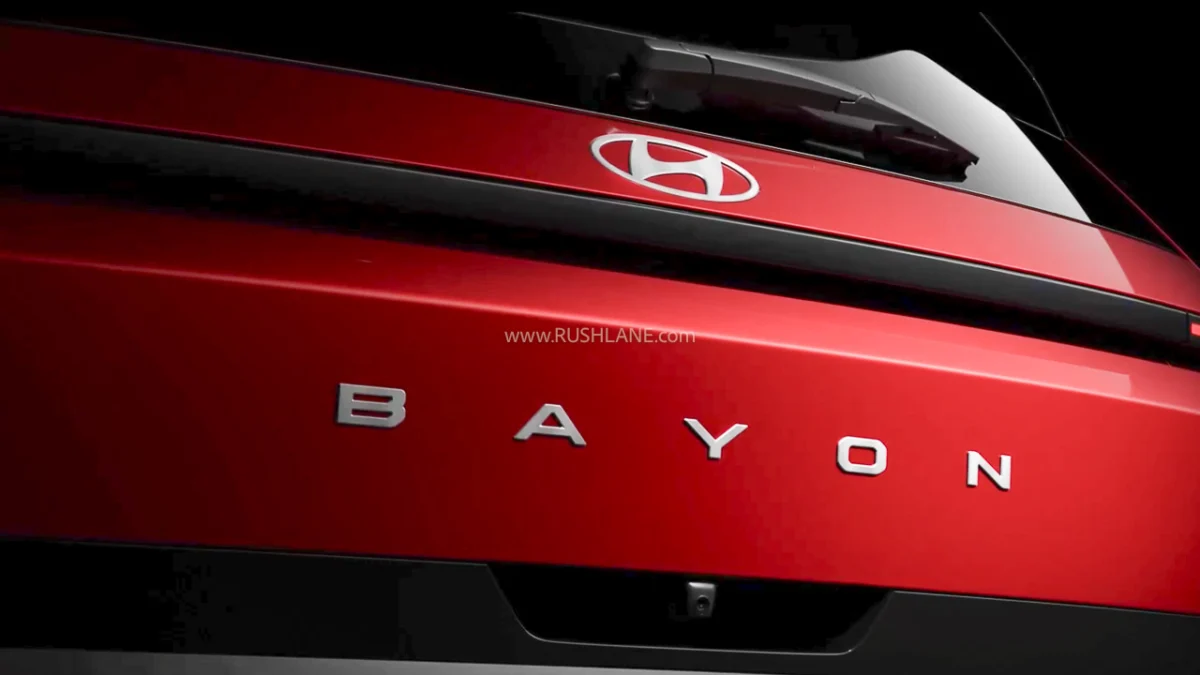
The automotive world is bracing for a significant addition to the compact SUV segment as Hyundai Europe officially confirms the global debut of the new Bayon. Scheduled to take place at the prestigious Paris Motor Show on October 12, 2026, the unveiling marks a pivotal moment for Hyundai’s crossover lineup. While the European market prepares for its first full look at the production model, the Indian automotive landscape is equally abuzz. Hyundai India has initiated a strategic teaser campaign for a localized version of the Bayon, signaling a dual-market approach that highlights the brand’s commitment to catering to regional preferences through distinct design and mechanical configurations.
Main Facts: A Dual-Pronged Global Strategy
The new Hyundai Bayon represents the latest evolution of the brand’s "Sensuous Sportiness" design philosophy. The primary headline remains the October 12 debut in Paris, which will serve as the first official platform to showcase the SUV’s finalized European specifications. However, for the Indian market, the Bayon is expected to play a more transformative role.
In India, the Bayon is positioned to fill a critical white space in Hyundai’s portfolio. Currently, the brand has a gap between the sub-four-meter Venue and the mid-size Creta. The India-spec Bayon is widely expected to exceed the four-meter mark, placing it in direct competition with premium compact SUVs and entry-level mid-size crossovers.
Key highlights revealed through official teasers include:
- H-Edge Lighting: A signature design element featuring a sophisticated LED arrangement at both the front and rear.
- Geometric Alloy Wheels: The SUV will feature 17-inch diamond-cut alloys with a 215/55 R17 tire profile, suggesting a focus on both aesthetics and road presence.
- Premium Interior: Spy shots and sketches confirm a dual-screen digital cockpit, a four-dot Morse code steering wheel (representing the letter ‘H’), and a suite of high-tech features including a 360-degree camera and a sunroof.
Chronology: From Concept to the Paris Stage
The journey of the new Hyundai Bayon has been one of calculated reveals and strategic leaks. Understanding the timeline of its development provides insight into Hyundai’s meticulous planning for this global product.

Early 2026: The First Sightings
The initial buzz began in early 2026 when heavily camouflaged test mules were spotted on European roads and near Hyundai’s manufacturing facilities in India. While early rumors suggested a mere facelift of the existing European Bayon, it soon became clear that Hyundai was working on a more substantial overhaul, particularly for the Indian market where the nameplate is a fresh introduction.
Mid-2026: Design Sketches and Interior Leaks
By mid-year, design sketches began to circulate, hinting at a more aggressive stance and a "wrap-around" dashboard design. Shortly thereafter, interior spy shots emerged from India, showing a cabin that borrowed heavily from the global IONIQ and Kona lines, featuring integrated dual screens that signaled a move toward a more premium positioning.
September 2026: The Teaser Campaign Commences
In early September, Hyundai India released the first set of official teasers. These focused on the "H-Edge" lighting signature, a move that successfully shifted public attention from speculative renders to concrete design elements. This was followed by a teaser of the geometric alloy wheels, confirming the tire specifications and the inclusion of front parking sensors.
Late September 2026: The Paris Announcement
The final piece of the pre-launch puzzle fell into place when Hyundai Europe officially announced the October 12 debut date for the Paris Motor Show. This announcement set the stage for a global reveal, even as Indian enthusiasts await a specific date for the local launch, which is rumored to follow shortly after the European unveiling.
Supporting Data: Technical Specifications and Design Nuances
The Bayon is not merely a styling exercise; it is a platform designed to maximize efficiency and cabin space. While full technical data remains under embargo until the Paris debut, several key data points have emerged from the teaser campaign and regulatory filings.

Exterior Dimensions and Design
The European Bayon has traditionally been a sub-compact crossover based on the i20 platform. However, the Indian version is expected to feature a longer wheelbase and increased rear overhang. This "plus-sized" approach is a response to the Indian consumer’s preference for "more car per car."
The "H-Edge" lighting is a standout feature. At the front, it consists of a slim horizontal DRL (Daytime Running Light) strip that connects to a vertical LED element at the edges. This creates a wide, planted look. The rear follows a similar logic, with boomerang-shaped LED lamps connected by a black garnish, though it remains to be seen if the connecting strip is fully illuminated or purely decorative.
Wheels and Tires
The teaser confirmed the use of 215/55 R17 tires. For a vehicle in this segment, a 215-section tire is relatively wide, promising better grip and a more muscular stance. The 17-inch geometric alloys feature a complex multi-spoke design with a dual-tone finish, aimed at a youthful, tech-savvy demographic.
Interior and Features
Inside, the Bayon is expected to raise the bar for the segment. Data from test vehicles indicates:
- Screens: Dual 10.25-inch displays (one for instrumentation and one for infotainment).
- Safety: The inclusion of front parking sensors and a 360-degree camera suggests that higher trims will feature a comprehensive ADAS (Advanced Driver Assistance System) suite.
- Convenience: A factory-fitted sunroof, wireless charging, and ventilated seats are expected to be part of the package for the Indian market.
Official Responses: What the Stakeholders are Saying
While Hyundai has been careful not to reveal too much before the October 12 deadline, official communications from Hyundai Europe and Hyundai India offer a glimpse into the brand’s confidence.

A spokesperson for Hyundai Europe noted, "The Paris Motor Show is the perfect venue to showcase the evolution of our SUV range. The new Bayon reflects our commitment to bringing avant-garde design and sustainable mobility solutions to the heart of the European market."
In India, the messaging has been more focused on "style and substance." Marketing materials emphasize the SUV’s "edgy" design, clearly targeting a younger audience that finds the Venue too small and the Creta perhaps too mainstream or expensive. While Hyundai India has not officially confirmed the "Bayon" name for the local market—often referring to it as a "New SUV"—the visual similarities between the global teasers and Indian test mules make the connection undeniable.
Industry analysts suggest that Hyundai’s decision to reveal the car in Paris first is a strategic move to establish the model’s global credentials before tailoring the narrative for the high-volume Indian market.
Implications: Reshaping the Competitive Landscape
The introduction of the Bayon has far-reaching implications for both Hyundai and the broader automotive industry, particularly in India.
Filling the "Goldilocks" Gap
For years, there has been a significant price and size gap between the Venue (approx. ₹8-13 lakh) and the Creta (approx. ₹11-20 lakh). Rivals like the Tata Nexon, Maruti Suzuki Brezza, and Mahindra XUV 3XO have successfully occupied various niches within this space. By introducing the Bayon, Hyundai is creating a "Goldilocks" option—a car that is "just right" for buyers who want more prestige than a sub-4m SUV but aren’t ready to jump to the mid-size segment.

The Powertrain Pivot
In Europe, the Bayon is expected to lean heavily into mild-hybrid and turbocharged petrol engines. In India, the strategy will likely be more diverse. While the 1.0L Turbo GDi engine will likely be the performance flagship, a 1.2L naturally aspirated petrol engine could serve as the entry point to keep prices competitive. Furthermore, the potential for a factory-fitted CNG option could be a masterstroke, appealing to the growing segment of buyers looking for lower running costs without sacrificing SUV styling.
Global Design Trends
The Bayon’s design language confirms a trend toward "split lighting" and "pixel-inspired" elements across the Hyundai range. If the Bayon is a success, expect to see even more radical interpretations of the "H-Edge" lighting on future updates to the Tucson and Santa Fe.
Strategic Competition
The Bayon will put immense pressure on competitors. Specifically, it targets the Maruti Suzuki Fronx and the Toyota Taisor, which have proven that there is a massive market for "SUV-styled" crossovers that offer premium interiors and modern tech. Hyundai’s advantage lies in its reputation for high-quality cabins and a robust service network.
Conclusion: A High-Stakes Debut
As the clock ticks down to October 12, the new Hyundai Bayon stands as one of the most anticipated reveals of the year. For the European market, it is a refinement of a successful formula. For the Indian market, it is a strategic entry into a high-stakes battleground.
The Paris Motor Show will provide the first clear look at the vehicle’s DNA, but the real story will unfold in the weeks following, as Hyundai India reveals the local specifications. If Hyundai can strike the right balance between the Bayon’s futuristic design, a feature-rich interior, and a competitive pricing strategy, it may well have another bestseller on its hands, further solidifying its position as a dominant force in the global SUV market. Enthusiasts and competitors alike will be watching closely as the "H-Edge" lighting finally cuts through the darkness on the Paris stage.
