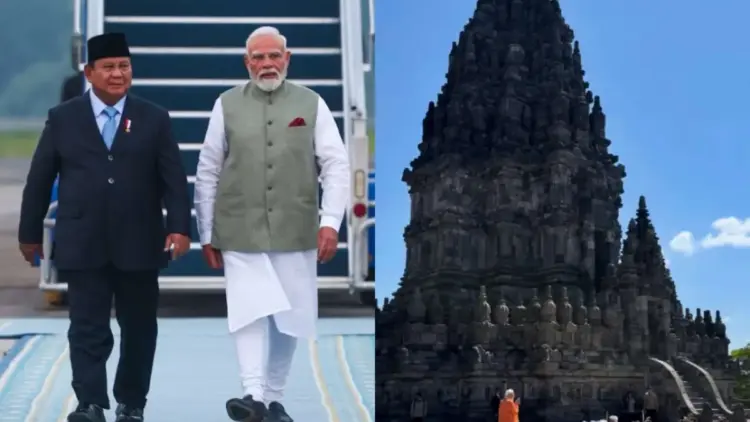
Yogyakarta, Indonesia – In a powerful symbol of enduring cultural kinship, Prime Minister Narendra Modi’s recent state visit to Indonesia saw him grace the hallowed grounds of the Prambanan Temple Complex, a UNESCO World Heritage Site that stands as a testament to the deep-rooted historical and spiritual ties between India and Indonesia. The visit, occurring amidst a backdrop of burgeoning diplomatic and economic engagement, underscored the shared civilizational heritage that transcends geographical boundaries and continues to shape the contemporary relationship between the two nations.
A Beacon of Shared History: The Significance of Prambanan
Prambanan, located near the cultural heartland of Yogyakarta in Central Java, is not merely an architectural marvel; it is a living embodiment of Indonesia’s rich Hindu past. As the largest Hindu temple complex in Indonesia and one of the most significant in Southeast Asia, its grandeur and historical import resonate deeply with India’s own civilizational narrative. The temple’s construction, dating back to the 9th and 10th centuries under the Sanjaya dynasty of the ancient Mataram Kingdom, coincided with periods of significant cultural exchange between the Indian subcontinent and the Indonesian archipelago.
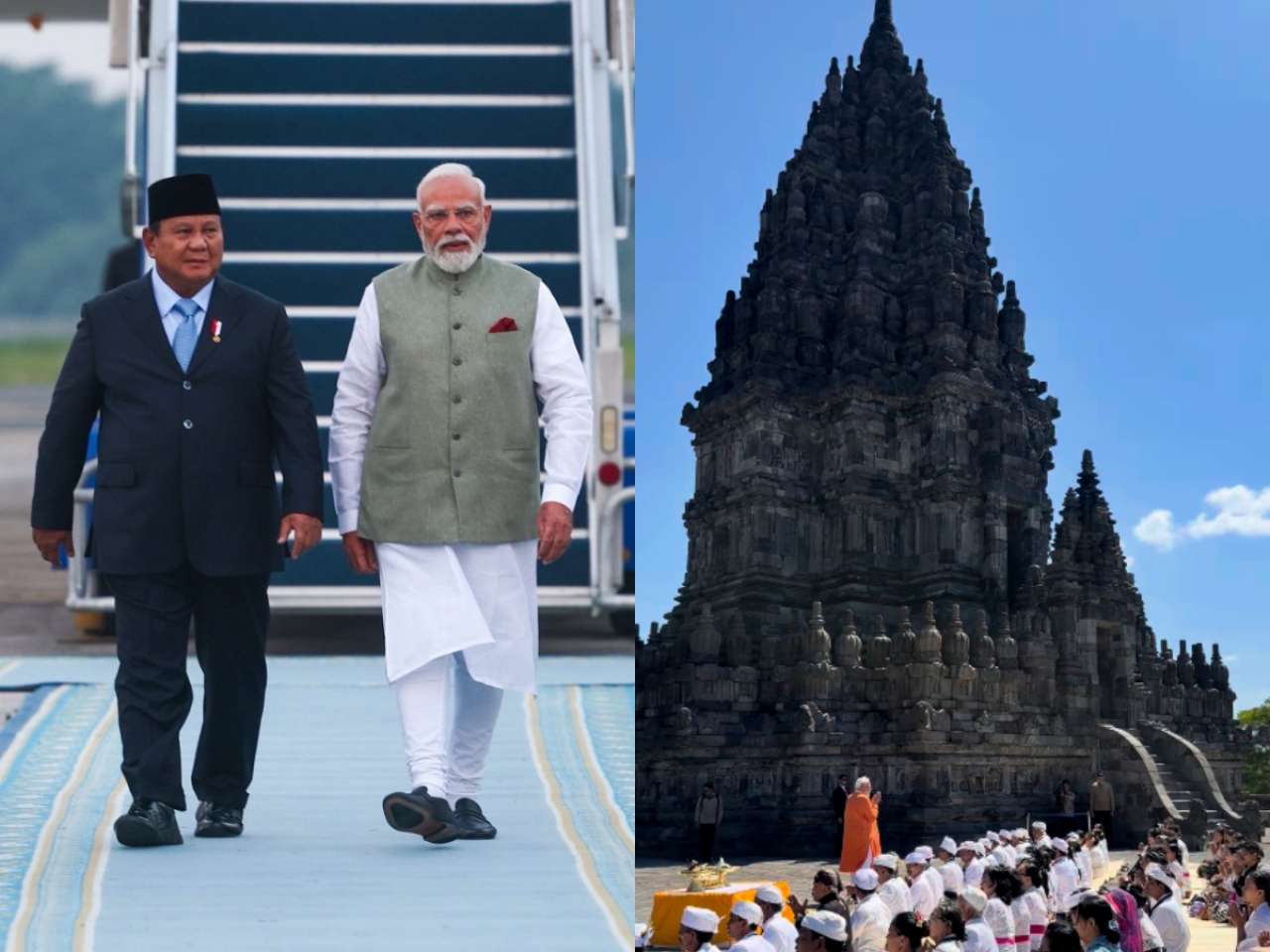
Prime Minister Modi’s pilgrimage to this ancient site served as a poignant reminder of these millennia-old connections, highlighting how trade, religion, and philosophy traveled along ancient maritime routes, leaving an indelible mark on the cultural landscapes of both nations. The visit also carries implications for future collaboration, with both countries expressing a shared commitment to the conservation and preservation of this invaluable World Heritage Site.
A Chronicle of Faith and Power: The Genesis of Prambanan
The origins of the magnificent Prambanan Temple Complex are steeped in the history of ancient Javanese kingdoms. Constructed primarily between the 8th and 10th centuries AD, it was a period when Hinduism and Buddhism flourished across the Indonesian archipelago, heavily influenced by Indian spiritual traditions. The Mataram Kingdom, particularly during the rule of the Sanjaya dynasty, was a significant patron of these faiths, and Prambanan stands as their most ambitious and enduring architectural legacy.

Humble Beginnings to Grandeur: The initial impetus for constructing such a monumental complex likely stemmed from a desire to honor the Hindu Trimurti – Brahma the Creator, Vishnu the Preserver, and Shiva the Destroyer. While historical records are not as exhaustive as some Indian epics, inscriptions and architectural styles point to a deliberate effort to create a spiritual epicenter. The Sanjaya rulers, it is believed, sought to solidify their divine right to rule and project their kingdom’s power and piety through such magnificent religious structures.
A Rivalry of Faiths: It is crucial to note that Prambanan did not exist in isolation. Its proximity to the equally awe-inspiring Borobudur Temple, a monument to Buddhist heritage, offers a fascinating glimpse into the religious pluralism and sometimes, the subtle rivalry, that characterized ancient Java. While both faiths coexisted and often influenced each other, the distinct architectural styles and dedications of Prambanan and Borobudur reflect the evolving religious landscape and the patronage of different royal dynasties.

The Shivaite Ascendancy: The primary focus of Prambanan is undeniably Lord Shiva. The central and tallest temple is dedicated to him, housing statues of Shiva himself, along with his consort Durga, their son Ganesha, and the sage Agastya. The flanking temples are dedicated to Lord Vishnu and Lord Brahma, completing the sacred trinity. This emphasis on Shivaism suggests a period where its influence was particularly strong within the Mataram Kingdom.
Architectural Prowess: The construction of Prambanan was a feat of engineering and artistry. The complex is characterized by its towering spires, intricate carvings, and a meticulously planned layout that reflects Hindu cosmological beliefs. The main temples are arranged in a mandala-like pattern, symbolizing the cosmic order. The sheer scale of the original complex, believed to have comprised around 240 temples, speaks volumes about the resources and organizational capabilities of the ancient Mataram Kingdom.

An Epic Etched in Stone: The Ramayana Narratives at Prambanan
One of the most captivating aspects of Prambanan is its intricate bas-relief carvings that adorn the temple walls, narrating the epic tale of the Ramayana. These stone-etched narratives serve as a visual testament to the profound influence of Indian literature and mythology on Indonesian culture.
The Journey of Rama: Visitors to Prambanan are guided through a clockwise procession around the main temples, mirroring the narrative flow of the Ramayana. The panels depict key events from the epic, including the birth of Rama, his exile, his encounter with the demon king Ravana, the abduction of Sita, and the eventual triumph of good over evil with the aid of Hanuman and the Vanara Sena. These depictions are not mere illustrations; they are elaborate storytelling, rendered with remarkable detail and artistic flair.

Syncretism in Art: While the story originates from India, the artistic interpretation at Prambanan bears the distinct imprint of Javanese aesthetics. The figures, their attire, and even the surrounding flora and fauna exhibit local characteristics, demonstrating a beautiful fusion of Indian narrative and indigenous artistic traditions. This syncretism is a hallmark of cultural exchange, where external influences are absorbed and reinterpreted through a local lens.
A Living Tradition: The Ramayana’s presence at Prambanan extends beyond static carvings. The temple complex is a renowned venue for spectacular open-air Ramayana ballet performances. Against the dramatic backdrop of the illuminated ancient temples, dancers, musicians, and actors bring the epic to life, captivating audiences with a mesmerizing blend of traditional Javanese dance, music, and theatre. These performances are not just cultural spectacles; they are a living continuation of the stories etched in stone, ensuring the epic’s relevance for contemporary generations.

The Legend of Roro Jonggrang: Folklore and the Temple’s Mystique
Intertwined with the historical and religious significance of Prambanan is the enduring Javanese legend of Princess Roro Jonggrang. This folktale, deeply embedded in the local consciousness, provides a mythical origin for the temple complex and adds a layer of romantic intrigue to its ancient stones.
A Princess’s Bargain: The legend recounts the story of Princess Roro Jonggrang, whose father was killed by the warrior Bandung Bondowoso. To avenge her father and avoid a forced marriage, the princess agreed to marry Bandung Bondowoso on the condition that he build her 1,000 temples in a single night.

Supernatural Aid and a Clever Trick: Bandung Bondowoso, possessing supernatural powers, readily accepted the challenge. With the help of his legions of genies and spirits, he began the monumental task. As dawn approached and the temples neared completion, Roro Jonggrang, fearing the impending marriage, devised a clever ploy. She instructed the villagers to pound rice and light numerous fires, creating the illusion that morning had already arrived. Deceived by this ruse, the spirits abandoned their task, leaving the 1,000th temple unfinished.
A Cursed Transformation: Enraged by the princess’s trickery, Bandung Bondowoso, in his fury, cursed Roro Jonggrang, transforming her into a stone statue. Local tradition holds that the statue of Durga within the central Shiva temple is, in fact, the petrified form of Princess Roro Jonggrang. While historians consider this legend to be folklore, it continues to be an integral part of the Prambanan narrative, adding a captivating dimension to its historical significance.

From Obscurity to Global Recognition: The Restoration of Prambanan
The history of Prambanan is also a story of resilience and revival. Following a period of political upheaval and the decline of Hindu kingdoms in Java around the 10th century, the magnificent temple complex gradually fell into disrepair. Natural calamities such as volcanic eruptions and earthquakes, coupled with years of neglect, led to significant structural damage. Many of the smaller temples crumbled, and the entire complex lay buried under ash and vegetation, lost to time and memory for centuries.
Rediscovery and Renaissance: The site was brought back to light in the 19th century by Dutch colonial explorers. This rediscovery marked the beginning of a long and arduous process of archaeological investigation and restoration. The monumental task of excavating, documenting, and reconstructing the damaged structures began, aiming to restore Prambanan to its former glory.

Challenges and Triumphs: Restoration efforts have faced numerous challenges. The devastating 2006 Yogyakarta earthquake caused further damage to the already fragile structures. However, through sustained dedication and international cooperation, including support from organizations like UNESCO, significant progress has been made. The main temples have been meticulously restored, standing once again as proud symbols of Indonesia’s rich heritage. While the reconstruction of some of the smaller temples is an ongoing endeavor, the revitalized Prambanan complex is a testament to human perseverance and commitment to preserving cultural treasures.
UNESCO Recognition: The historical, architectural, and cultural significance of Prambanan was officially recognized by UNESCO when it declared the Prambanan Temple Compound a World Heritage Site in 1991. This designation further solidified its importance on the global stage and underscored the need for its continued protection and preservation.

A Living Legacy: Hindu Heritage in a Muslim-Majority Nation
The presence of Prambanan, a grand Hindu temple complex, in Indonesia, the world’s largest Muslim-majority nation, is a powerful illustration of the country’s diverse and layered cultural tapestry. It highlights the historical depth and the enduring influence of Hindu traditions that predate the arrival of Islam and continue to shape Indonesia’s identity.
Early Encounters and Kingdoms: Hindu influence first began to permeate the Indonesian archipelago over 1,500 years ago, primarily through flourishing trade routes and cultural exchanges with India. These interactions were not merely commercial; they facilitated the transmission of religious ideas, philosophical concepts, and artistic motifs. Over centuries, this led to the rise of powerful Hindu and Hindu-Buddhist kingdoms across Java, Sumatra, and Bali. These kingdoms left behind a rich legacy of inscriptions, temple architecture, and cultural practices that are still discernible today.

The Enduring Spirit of Hinduism: While Islam became the dominant religion in Indonesia over time, the historical imprint of Hinduism remains profound. Bali stands as a vibrant testament to this, continuing to be the epicenter of Hindu practice and culture in the archipelago. Monuments like Prambanan, however, serve as crucial historical anchors, reminding the nation and the world of its ancient Hindu past. They are not just relics of bygone eras but also symbols of a pluralistic heritage that has been integral to Indonesia’s development and identity.
Prime Minister Modi’s visit to Prambanan, therefore, was more than a diplomatic engagement; it was a profound acknowledgment of a shared civilizational journey. It underscored the idea that cultural heritage can serve as a potent bridge, fostering understanding, strengthening bonds, and inspiring a shared vision for the future between nations. The echoes of ancient chants and the stories etched in stone at Prambanan resonate as a timeless testament to the enduring connection between India and Indonesia.