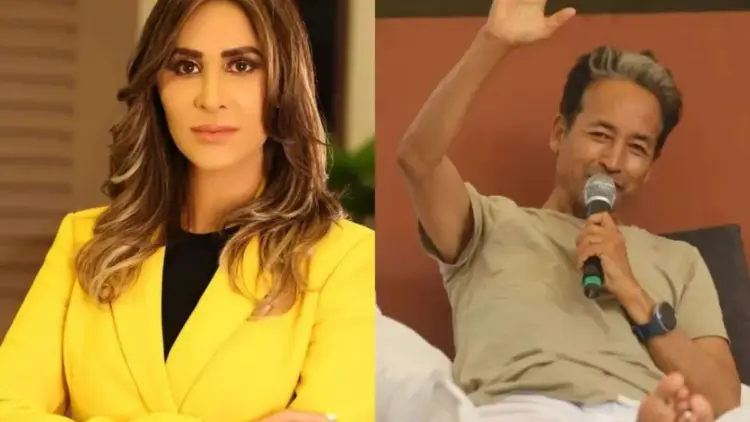
New Delhi, India – The impassioned hunger strike undertaken by renowned Ladakhi engineer and activist Sonam Wangchuk continues to resonate across the nation, drawing widespread attention and support from diverse sections of society. Amidst growing public discourse, Dr. Shagun Gupta, a prominent celebrity beauty expert and cosmetologist, has publicly aligned herself with Wangchuk’s cause, articulating a powerful message of solidarity that transcends political affiliations. Dr. Gupta’s endorsement underscores the broad appeal of Wangchuk’s protest, which centers on critical issues of education, environmental preservation, and governmental accountability.

Speaking out on her social media platforms, Dr. Gupta unequivocally stated her support for Wangchuk’s peaceful demonstration, emphasizing that her stance is rooted in a deep-seated commitment to the nation and its citizens, rather than any political agenda. Her declaration, "My silence is never for sale," has become a rallying cry, resonating with those who feel compelled to speak out against perceived injustices and systemic failures.

The Heart of the Protest: Demands for Accountability and Educational Integrity
Sonam Wangchuk, a globally recognized figure for his innovative work in education and environmental sustainability in Ladakh, embarked on an indefinite hunger strike at Jantar Mantar in Delhi on July 18th, 2026. His protest is a direct response to a series of critical lapses in the nation’s examination system, most notably the NEET-UG 2026 paper leak. This scandal has had devastating consequences, leading to the tragic suicides of at least 12 students who were adversely affected by the leak.

Wangchuk’s primary demand is the resignation of Education Minister Dharmendra Pradhan, whom he holds accountable for the recurring failures under his tenure. The activist’s resolve is a stark reminder of the profound impact that administrative negligence can have on the aspirations and futures of young Indians. His willingness to risk his own health in pursuit of justice highlights the urgency and gravity of the situation.

Dr. Shagun Gupta’s Principled Stand: Loyalty to the Constitution, Not to Parties
Dr. Shagun Gupta’s endorsement of Wangchuk’s strike is significant, particularly given her standing in the often apolitical realm of celebrity lifestyle. Her message, disseminated across her social media channels, clearly articulates the bedrock of her support:

“The future of the country and its youth and India is my home. My silence is never for sale. When the future of my nation, the dignity of its people, or the power of education calls, I will stand with courage. My loyalty is to the Constitution of India, to truth, and to my country—not to any political party.”

This powerful declaration serves to distance her support from partisan politics, framing it instead as a patriotic duty and a moral imperative. By emphasizing her allegiance to the Constitution and the nation, Dr. Gupta aligns herself with a growing sentiment that prioritizes national well-being over political maneuvering.

A Broader Movement: Echoes of Concern from Bollywood and Beyond
Dr. Gupta is not the only prominent figure from the Indian entertainment industry to voice concerns related to Wangchuk’s protest. While some public figures have faced scrutiny for their responses, or lack thereof, the issue has undeniably captured the attention of Bollywood. The original report referenced reactions from actors like Vivek Oberoi and Aamir Khan, whose engagements with the protest have been subject to public debate and online commentary. Similarly, political figures like Manoj Tiwari have also weighed in, sometimes drawing sharp criticism from netizens for their dismissive remarks.

However, Dr. Gupta’s approach is distinguished by its clarity and unwavering principle. She explicitly states, “I stand with Sonam Wangchuk not because of politics or headlines, but because I believe every peaceful voice raised for education, our environment, and India’s future deserves to be heard. My loyalty is to India, its people, and my conscience. India First. Always.” This sentiment reflects a desire to see genuine action and accountability from the government, irrespective of political affiliations.

Chronology of Sonam Wangchuk’s Hunger Strike and Growing Support
- July 18th, 2026: Sonam Wangchuk commences his indefinite hunger strike at Jantar Mantar, Delhi, demanding the resignation of Education Minister Dharmendra Pradhan and accountability for examination paper leaks.
- Early Days of Protest: Initial media coverage focuses on Wangchuk’s personal sacrifice and the immediate demands of his protest. Support begins to trickle in from various civil society groups and individuals.
- Mid-Protest (Days 5-10): The protest gains momentum as more individuals and organizations pledge their solidarity. Discussions around the systemic issues plaguing the education sector intensify.
- Week 2 and Beyond: The hunger strike draws national and international attention. The involvement of public figures, including celebrities and activists, amplifies the message. Dr. Shagun Gupta’s strong statement of support emerges during this phase, contributing to the growing wave of endorsements.
- Current Stage (Day 19 as of original report): Wangchuk continues his strike, his health reportedly deteriorating. Supporters express concern and hope for a swift resolution that addresses his demands. The ongoing protest highlights the persistent challenges in ensuring fair and transparent examination processes in India.
Supporting Data and Context: The Scale of Educational Malpractice
The gravity of Sonam Wangchuk’s protest is underscored by the recurring incidents of examination malpractice in India. The NEET-UG 2026 paper leak is a particularly egregious example, but it is not an isolated incident. Over the years, numerous competitive examinations, from national-level entrance tests to recruitment drives, have been marred by allegations of leaks, fraud, and irregularities.

- NEET-UG 2026: The most recent and devastating instance, leading to the tragic loss of 12 young lives due to the stress and despair caused by the paper leak.
- Other Competitive Exams: Similar issues have plagued exams like the Joint Entrance Examination (JEE), the Civil Services Exam (UPSC), and various state-level recruitment tests, fostering widespread distrust in the examination system.
- Impact on Students: These leaks not only rob deserving candidates of their opportunities but also inflict immense psychological trauma. The aspiration of a fair chance at a better future is systematically undermined, leading to disillusionment and despair.
- Economic Implications: The integrity of the examination system is crucial for national development. Irregularities can lead to the selection of unqualified individuals for critical roles, impacting the efficiency and effectiveness of various sectors.
The persistence of these issues points to deeper systemic flaws that require immediate and comprehensive reform. Wangchuk’s protest serves as a crucial catalyst for addressing these long-standing problems.

Official Responses and the Public Discourse
While Sonam Wangchuk’s hunger strike has garnered significant public support, official responses from the government have been a subject of debate. Activists and supporters often express frustration over what they perceive as a lack of proactive engagement or a dismissive attitude from authorities.

The demand for the Education Minister’s resignation highlights a call for direct accountability. The government’s response, or the perceived delay in a decisive action, often fuels further public outcry and solidarity with the protestors.

The public discourse surrounding the protest is multifaceted. On one hand, there are voices of strong support, like Dr. Gupta’s, emphasizing the ethical and nationalistic dimensions of Wangchuk’s cause. On the other hand, there are criticisms and counter-arguments, some of which are perceived as attempts to discredit the activist or downplay the seriousness of the issues he raises. The media, both traditional and social, plays a crucial role in shaping this discourse, amplifying messages of support, reporting on the activist’s condition, and documenting the various reactions from public figures and the government.

Implications of Wangchuk’s Protest and Gupta’s Endorsement
Sonam Wangchuk’s hunger strike, amplified by endorsements from figures like Dr. Shagun Gupta, carries significant implications for India:

- Heightened Awareness: The protest has successfully brought the issue of examination integrity to the forefront of national consciousness, prompting a much-needed public conversation about systemic reforms.
- Demand for Accountability: It has reinforced the demand for accountability from public officials and institutions responsible for conducting examinations. The expectation is that those in power will be held responsible for failures.
- Empowerment of Peaceful Protest: Wangchuk’s commitment to a peaceful, non-violent form of protest serves as an inspiration for citizens seeking to voice their grievances and demand change.
- Bridging Divides: The support from diverse individuals, including those from the lifestyle and entertainment sectors, demonstrates that concerns about education and national integrity can transcend political and social divides. Dr. Gupta’s principled stance highlights the potential for apolitical figures to contribute meaningfully to national discourse by aligning with fundamental values.
- Pressure for Reform: The sustained attention and broad-based support generated by the hunger strike will likely exert considerable pressure on the government to implement tangible reforms aimed at ensuring the fairness and transparency of the examination system.
In conclusion, Dr. Shagun Gupta’s strong support for Sonam Wangchuk’s hunger strike is more than just a celebrity endorsement; it is a clear declaration of allegiance to principles of truth, justice, and national well-being. Her unwavering loyalty to India, as she articulates, mirrors the core of Wangchuk’s protest, signaling a growing movement that prioritizes the future of the nation and the dignity of its citizens above all else. The ongoing hunger strike serves as a potent reminder of the vital role that committed individuals play in holding power accountable and advocating for a more just and equitable society.