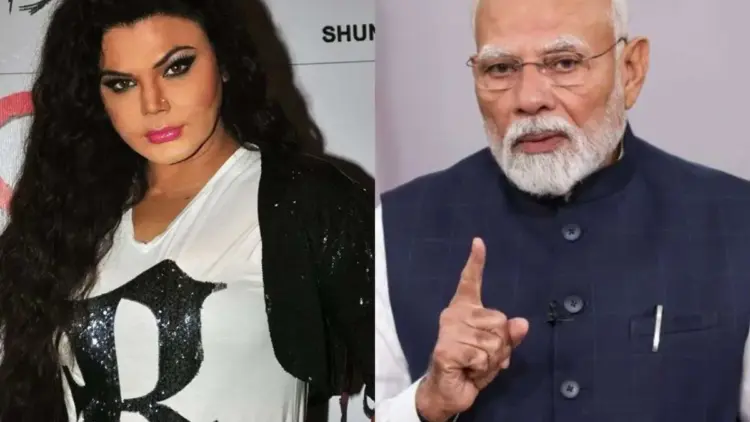
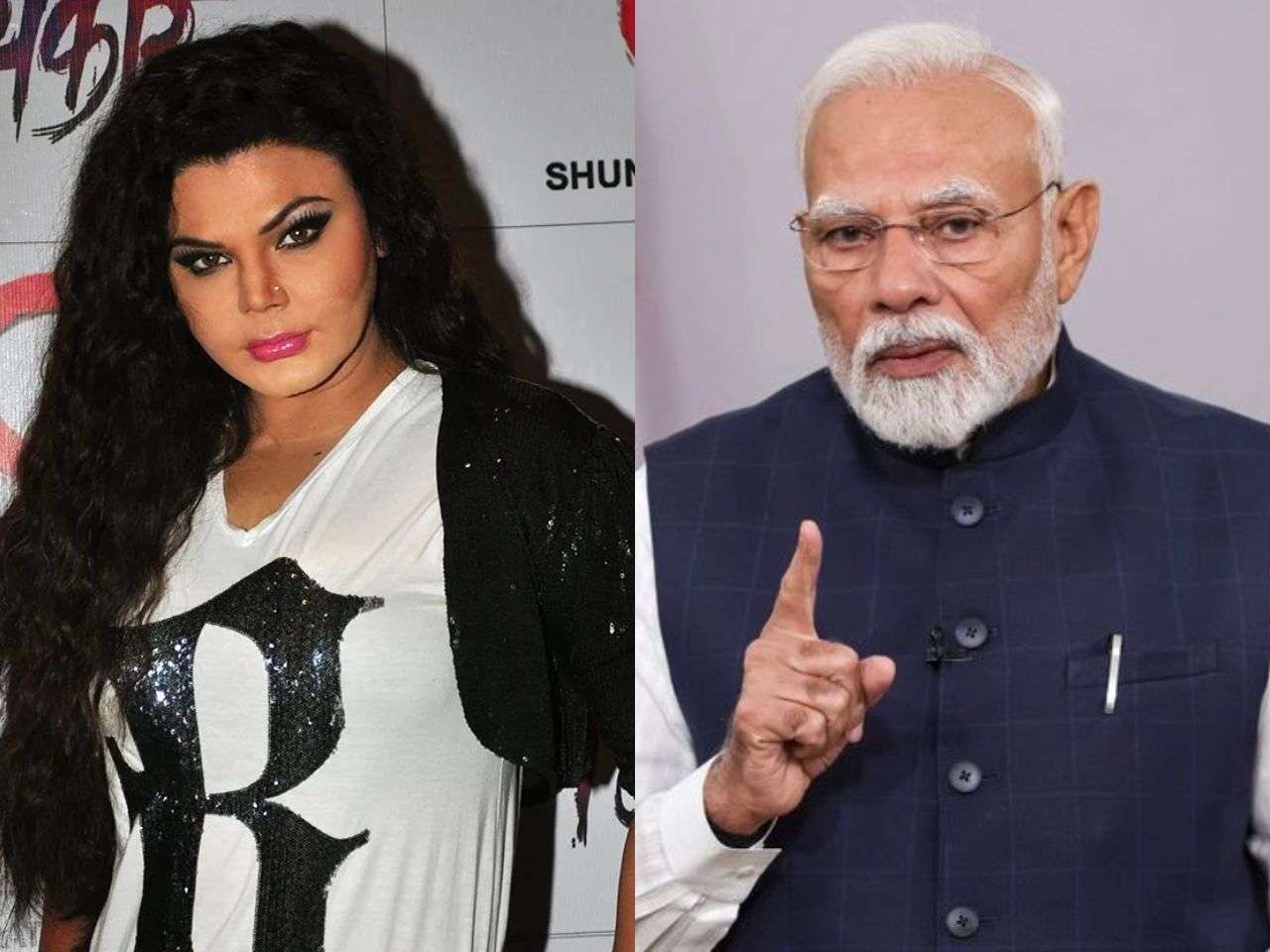
Mumbai, India – October 26, 2026 – In a move that has ignited a firestorm across social media and political discourse, controversial personality Rakhi Sawant has unleashed a blistering public critique of Prime Minister Narendra Modi, urging him to address pressing national issues. Sawant, known for her often provocative pronouncements, has in a now-deleted social media reel, directly challenged the Prime Minister on a range of critical concerns, including alleged security lapses in Arunachal Pradesh, a surge in reported rape cases, and the general state of women’s safety across the country. The audacious outburst has predictably fractured public opinion, with some lauding Sawant’s "fearless" stance and others condemning her as attention-seeking and disrespectful.
The Genesis of the Outburst: A Viral Reel’s Ripple Effect
Rakhi Sawant, a figure synonymous with Bollywood’s more flamboyant and often controversial side, has once again found herself at the center of national attention. Her latest foray into public commentary, delivered via a social media reel, has sent shockwaves through the digital landscape. The reel, which was subsequently removed, reportedly targeted Prime Minister Narendra Modi with a barrage of accusations and admonishments. Sawant’s criticism was not merely confined to broad strokes; she specifically alluded to the Prime Minister’s perceived reliance on promotional tactics and even referenced a recent instance where an AI hologram of Swami Chinmayanand was reportedly used to laud the Prime Minister.
This direct confrontation with the nation’s leader, amplified by Sawant’s characteristic no-holds-barred style, quickly garnered widespread attention. Netizens, accustomed to Sawant’s penchant for generating headlines, found themselves divided on the validity and decorum of her statements. The incident underscores the growing trend of celebrities and public figures using social media platforms to voice their opinions on significant socio-political matters, often eliciting fervent debate and strong reactions.

Sawant’s Accusations: A Litany of National Concerns
In her now-infamous reel, Rakhi Sawant articulated a series of grave concerns that she believes are being inadequately addressed by the current government. Her accusations paint a grim picture of the nation’s current state, highlighting what she perceives as critical failures in governance and leadership.

Key Accusations Detailed by Sawant:

- Border Security and Territorial Integrity: Sawant explicitly raised concerns about the reported incursions by China into Arunachal Pradesh. She questioned the Prime Minister’s response and the perceived lack of robust action to safeguard India’s territorial integrity. This point directly addresses anxieties about national security and sovereignty, issues that resonate deeply with the Indian populace.
- Women’s Safety and Rising Rape Cases: A significant portion of Sawant’s critique focused on the alarming increase in reported rape cases and the pervasive sense of insecurity among women in India. She highlighted the plight of "daughters of the nation" and the need for urgent measures to ensure their safety and well-being. This is a recurring and deeply sensitive issue in Indian society, often sparking public outcry and demands for stricter laws and enforcement.
- Economic Hardship and Unemployment: Sawant also touched upon the economic challenges facing the country, including rising poverty and unemployment. She implied that the government’s focus might be misplaced, citing the Prime Minister’s alleged extravagant lifestyle, including a mention of him consuming expensive mushrooms, as a stark contrast to the struggles of ordinary citizens.
- Critique of Leadership Style: Beyond specific issues, Sawant launched a personal attack on Prime Minister Modi’s leadership style, reportedly labeling him as "Budbak" (foolish), "bhuddhe" (old man), and "shameless." She accused him of being self-absorbed and disconnected from the ground realities faced by the common people. Her specific reference to the AI hologram incident suggests a critique of what she views as manufactured praise and a lack of genuine engagement with the populace.
Sawant’s language, described as "bebak" (fearless) by some, was characterized by its raw and emotional tone. She implored the Prime Minister to "save the country," framing her appeal as a desperate plea from a concerned citizen. The intensity of her words, coupled with the sensitive nature of the issues she raised, ensured that her message would not go unnoticed.

The Chronology of Controversy: From Reel to Reaction
The sequence of events leading to and following Rakhi Sawant’s public outburst can be traced as follows:

- October 26, 2026 (Morning/Afternoon): Rakhi Sawant reportedly records and uploads a social media reel directly addressing Prime Minister Narendra Modi. The reel, captured in a selfie video format, contains her sharp criticisms and urgent pleas.
- October 26, 2026 (Afternoon/Evening): Snippets and summaries of Sawant’s reel begin circulating on social media platforms like X (formerly Twitter) and other news aggregators. The video itself, while initially accessible, is subsequently deleted from Sawant’s primary social media accounts.
- October 26, 2026 (Evening onwards): The content of the reel gains traction, with users sharing clips and discussing Sawant’s statements. News outlets begin reporting on the incident, further amplifying its reach.
- October 27, 2026: The debate intensifies across social media. Hashtags related to Rakhi Sawant and Prime Minister Modi trend. Public reactions are sharply divided, with both support and criticism flooding online forums. Discussions extend beyond the immediate content of the reel to Sawant’s history of controversial statements and the broader implications of celebrity activism.
The rapid dissemination of the reel, despite its eventual deletion, highlights the power of social media in shaping public discourse and the swiftness with which controversies can erupt and spread in the digital age.

Supporting Data and Context: The Issues Raised by Sawant
While Rakhi Sawant’s delivery was highly personal and emotive, the issues she raised are rooted in legitimate national concerns that have been subjects of ongoing public debate and media scrutiny.

- Arunachal Pradesh Border Tensions: India has consistently raised concerns about Chinese activities along its border in Arunachal Pradesh. Reports of Chinese infrastructure development and alleged transgressions have been a recurring theme in geopolitical discussions. While the government maintains a stance of vigilance and diplomatic engagement, public apprehension regarding national security remains. The Indian government has on multiple occasions stated that Arunachal Pradesh is an inalienable part of India and has condemned any attempts to misrepresent its territory. However, the perceived threat from a powerful neighbor like China continues to be a sensitive issue for the Indian public.
- Rising Rape Cases and Women’s Safety: Statistics on crimes against women, particularly rape, have been a persistent cause for alarm in India. While official data fluctuates, reports of heinous crimes against women continue to surface, leading to widespread public outrage and demands for stricter laws, faster judicial processes, and improved societal attitudes towards women. The #MeToo movement and various campaigns advocating for women’s safety have highlighted the deep-seated nature of these issues. Law enforcement agencies and judicial bodies are often under pressure to demonstrate efficacy in combating these crimes.
- Economic Indicators and Unemployment: India’s economic performance and the challenge of unemployment are perennial concerns. While the government often highlights economic growth figures, the reality for many citizens, particularly the youth, is characterized by job scarcity and rising living costs. Poverty remains a significant issue, with various socio-economic reports underscoring the disparities within the country. The debate over economic policies, their impact on employment generation, and poverty alleviation measures is a constant feature of the national discourse.
- AI and Public Perception: The reference to an AI hologram used to praise the Prime Minister points to a broader discussion about the use of technology in political communication and the potential for manufactured narratives. As artificial intelligence becomes more sophisticated, questions about its ethical use in public life, especially in shaping public opinion, are becoming increasingly relevant.
Sawant’s intervention, however controversial, tapped into these existing anxieties and frustrations, giving voice to a segment of the population that may feel unheard or inadequately represented by mainstream political discourse.

The Internet’s Fractured Response: Admiration and Condemnation
The reaction to Rakhi Sawant’s reel has been a microcosm of the polarized nature of online discourse in India. While a section of the internet has rallied behind Sawant, praising her courage, another significant portion has vehemently criticized her, dismissing her statements as publicity stunts.

Voices of Support:

- "Bebak Attitude": Many users have commended Sawant for her "fearless" and "unfiltered" approach. They see her as someone who speaks her mind without the constraints of political correctness or fear of reprisal, a trait they find refreshing in a often guarded public sphere.
- "Speaking Truth to Power": Supporters argue that Sawant, despite her controversial persona, is articulating sentiments that many ordinary citizens feel but are hesitant to express publicly. They view her as a voice for the voiceless, daring to challenge the status quo.
- "Strong Spine": Some netizens have gone as far as to say that despite her background as an entertainer, Sawant possesses a stronger resolve than many public figures who remain silent on critical issues.
Voices of Criticism:

- "Attention Seeker": The most common criticism is that Sawant’s outburst is merely a ploy to garner attention and revive her fading public profile. Critics point to her history of controversial actions and suggest this is another calculated move to remain in the spotlight.
- "Disrespectful and Uninformed": Many have deemed her language as disrespectful and her understanding of complex national issues as superficial. They argue that such criticisms, delivered without substance or a constructive approach, are counterproductive.
- "Trolling and Mockery": A significant segment of the internet has engaged in outright trolling and mockery of Sawant, questioning her credibility and the validity of her statements. Her past controversies are often brought up to undermine her current critique.
The divided reaction highlights the difficulty in navigating celebrity activism. While Sawant’s courage is admired by some, her methods and perceived motivations are viewed with skepticism by others, creating a complex tapestry of public opinion.

Implications and Future Outlook: A Symbol of Dissatisfaction?
Rakhi Sawant’s audacious critique, regardless of its ultimate impact, serves as a potent symbol of underlying public dissatisfaction with several critical national issues. Her willingness to directly confront the Prime Minister, even through a now-deleted reel, underscores a growing impatience and a desire for more tangible action on matters of security, safety, and economic well-being.

The incident raises several important questions for the future:

- The Role of Celebrities in Political Discourse: Sawant’s actions, while controversial, highlight the increasing influence of celebrities in shaping public opinion. Their platforms provide a powerful avenue for raising awareness, but also invite scrutiny regarding the substance and intent behind their statements.
- The Efficacy of Direct Public Critique: While Sawant’s approach was direct, the effectiveness of such unvarnished criticism, particularly when delivered in a highly emotional and potentially inflammatory manner, remains debatable. constructive dialogue and informed debate are often seen as more conducive to policy change.
- Government Responsiveness to Public Sentiment: The sheer volume of reaction, both positive and negative, suggests that the issues raised by Sawant resonate with a significant portion of the population. This puts pressure on the government to not only address these concerns but also to demonstrate transparency and accountability in its efforts.
- The Power of Social Media: The rapid spread and subsequent discussion of Sawant’s reel, despite its deletion, underscore the enduring power of social media as a platform for both dissemination and debate, capable of amplifying even the most unexpected voices.
In conclusion, Rakhi Sawant’s recent outburst against Prime Minister Narendra Modi has ignited a national conversation, exposing a deep chasm in public opinion. While her methods may be contentious, her intervention has undeniably brought critical national issues to the forefront, forcing a public reckoning with concerns about security, women’s safety, and economic well-being. The long-term implications of this controversy will likely hinge on how effectively these underlying sentiments are addressed by both the government and the broader society.