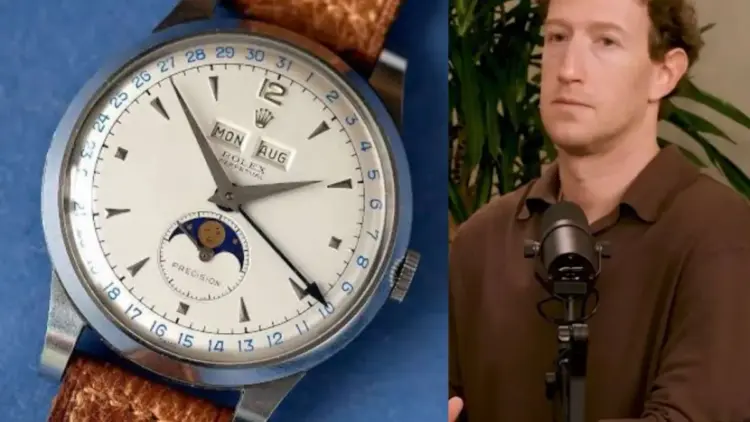
The Meta CEO’s rare Rolex Stelline, a horological marvel from the 1950s, stole the spotlight during a recent podcast, offering a fascinating counterpoint to his forward-looking discussion on artificial intelligence and biomedical research.
Introduction: A Timepiece of Unrivaled Rarity
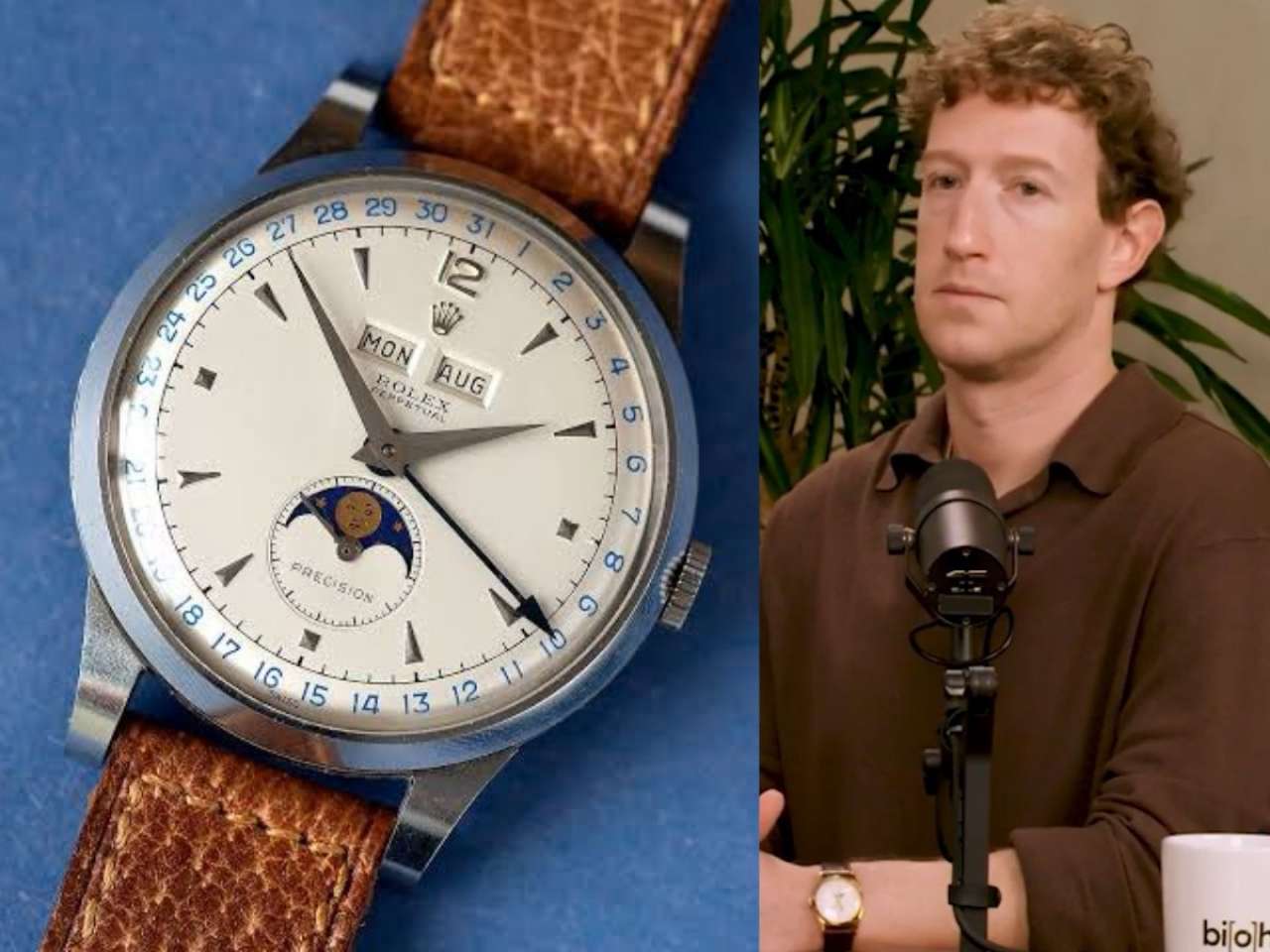
In a rare public appearance that transcended the usual tech industry discourse, Meta CEO Mark Zuckerberg recently graced the "No Priors" podcast alongside his wife, Priscilla Chan. While the conversation delved into the transformative potential of Artificial Intelligence (AI) in revolutionizing biomedical research through their Chan Zuckerberg Initiative (CZI) and its Biohub projects, it was an accessory on Zuckerberg’s wrist that captured the attention of horology enthusiasts and the broader public alike. Adorning his left arm was a vintage Rolex Ref. 6062, affectionately known as the "Stelline," a timepiece of extraordinary rarity and estimated worth of USD 2 million. This exquisite mechanical marvel, designed with a sophisticated moonphase complication, offered a tangible link to a bygone era of watchmaking, creating a striking juxtaposition with the cutting-edge technological advancements that formed the crux of the discussion.
The Stelline: A Masterpiece of Mid-Century Horology

The Rolex Ref. 6062 Stelline is not merely a watch; it is a testament to the ingenuity and craftsmanship of Rolex during the mid-20th century. Manufactured for a limited period in the 1950s, this reference stands out for its elegant design and the inclusion of a highly coveted triple-calendar complication, featuring a date, day of the week, and, most notably, a moonphase indicator. The "Stelline" moniker itself is derived from the Italian word for "little star," a nod to the charming star-shaped hour markers that often adorn its dial, particularly on the rarer variations.
What makes the Stelline so exceptional is its mechanical complexity and the limited production numbers. Unlike many contemporary watches, the Stelline is a purely mechanical instrument, relying on intricate gears and springs to power its functions. The moonphase complication, in particular, is a testament to the watchmaker’s art, requiring precise calibration to accurately track the lunar cycle. This level of intricate engineering, combined with Rolex’s reputation for durability and precision, has cemented the Stelline’s status as one of the most desirable vintage watches in the world.

A Glimpse into the Past: The Chronology of the Ref. 6062
The Rolex Ref. 6062 was introduced in the early 1950s, a period when Rolex was still solidifying its identity as a maker of robust and reliable timepieces, before the global fame of iconic professional watches like the Submariner, Explorer, and GMT-Master. The Ref. 6062 was one of Rolex’s first Oyster Perpetual models to feature a triple calendar and moonphase complication, setting it apart from its contemporaries.

Production of the Ref. 6062 was relatively short-lived, spanning only a few years. This limited production run, coupled with the inherent fragility of vintage mechanical movements and the tendency for watches to be subjected to polishing or dial refinishing over the decades, makes pristine examples exceptionally rare. The original dials, cases, and movements are crucial for maintaining the watch’s value and historical integrity. Many examples have undergone various forms of restoration, which, while sometimes necessary for continued function, can diminish their provenance and desirability among serious collectors.
The Value Proposition: Supporting Data and Market Trends

The astronomical valuation of Zuckerberg’s Stelline, estimated at USD 2 million, is not an exaggeration but a reflection of the intense demand and scarcity of these timepieces in the collector’s market. The value of a vintage Rolex Ref. 6062 is meticulously determined by several factors:
- Material of the Case: The Ref. 6062 was produced in various precious metals, including yellow gold, rose gold, and stainless steel. Gold variations, particularly rose gold, are generally more valuable.
- Dial Condition and Originality: A watch with its original dial, free from significant blemishes, discoloration, or refinishing, commands a premium. Dials with unique variations, such as "Stelline" star markers or specific numeral configurations, can further enhance value.
- Case Condition and Polish History: A well-preserved case with sharp lines and minimal polishing is highly sought after. Excessive polishing can diminish the case’s original proportions and details.
- Movement Functionality and Originality: The watch’s movement must be in excellent working order and, ideally, original to the watch.
- Provenance and Rarity: Watches with documented history or those belonging to notable individuals can fetch higher prices. Furthermore, specific configurations of the Ref. 6062, such as those with black dials and diamond markers, or certain variations of the moonphase disc, are considered exceedingly rare and thus more valuable.
International auction houses like Phillips, Christie’s, and Sotheby’s have consistently reported record-breaking sales for exceptional vintage Rolexes. Pristine specimens of the Ref. 6062 have routinely achieved seven-figure sums, with the rarest and best-preserved examples surpassing the USD 2 million mark. This indicates a robust and consistently appreciating market for horological masterpieces that combine historical significance with exquisite craftsmanship.

A Stark Contrast: Implications of Zuckerberg’s Choice
Mark Zuckerberg, a titan of the digital age with an estimated net worth of $200 billion, has played a pivotal role in shaping the modern digital landscape through Meta and its pervasive platforms. His career has been synonymous with innovation in virtual reality, social networking, and, more recently, the integration of AI into everyday life. Therefore, his choice of a completely mechanical, analogue instrument from the 1950s, to be displayed during a discussion about solving complex biological problems with advanced AI algorithms, presents a fascinating paradox.

This juxtaposition is not accidental; it speaks volumes about the enduring appeal of tangible craftsmanship and historical artistry in a world increasingly dominated by the intangible and the digital. While Zuckerberg’s work is at the forefront of technological progress, his personal appreciation for a timepiece that embodies a different era of human ingenuity highlights a broader trend: the renewed interest in vintage, mechanical objects as statements of personal style, a connection to history, and an appreciation for enduring quality.
The Stelline, with its intricate gears and manual winding mechanism, represents a form of technology that is both deeply complex and profoundly human. It is a reminder that progress is not solely defined by the latest digital advancements but also by the mastery of fundamental principles and the dedication to creating enduring, functional art. In a sense, the watch serves as a grounding element, a tangible anchor to the past that informs and perhaps even inspires the pursuit of future innovations.

The Future of AI and Biomedical Research: A CZI Vision
While the Rolex made waves, the core of the "No Priors" podcast discussion centered on the ambitious goals of the Chan Zuckerberg Initiative (CZI). Zuckerberg and Chan articulated their vision for Biohub, their medical research facility, which aims to leverage cutting-edge computer models and AI to identify, treat, and ultimately eradicate human diseases. This initiative represents a significant commitment to applying technological prowess to one of humanity’s most pressing challenges.

The couple shared their conviction that AI has the potential to accelerate breakthroughs in areas such as drug discovery, personalized medicine, and the understanding of complex biological systems. By analyzing vast datasets and identifying patterns that might elude human observation, AI can provide powerful tools for researchers to tackle diseases that have long plagued humankind. The Biohub’s focus on interdisciplinary collaboration, bringing together biologists, computer scientists, and clinicians, is a testament to their belief that a holistic approach is necessary for transformative progress.
The presence of the Stelline on Zuckerberg’s wrist during this forward-looking conversation can be interpreted in several ways. It could signify a personal philosophy that values both the innovative spirit of the future and the enduring legacy of the past. It may also suggest an understanding that true progress often involves drawing inspiration from, and building upon, the foundational achievements of previous generations. In the realm of scientific discovery, just as in horology, understanding the past is often key to unlocking the future.

Conclusion: A Symbol of Enduring Value
Mark Zuckerberg’s $2 million Rolex Stelline is more than just an expensive accessory; it is a symbol of enduring value, meticulous craftsmanship, and a rich historical lineage. Its appearance on the wrist of one of the world’s most influential tech leaders, during a conversation about the future of AI and medicine, serves as a compelling reminder that even in our rapidly evolving digital world, there remains a profound appreciation for the tangible, the timeless, and the beautifully engineered. The Stelline, with its intricate moonphase complication, quietly tracks the celestial cycles, a silent testament to human ingenuity that continues to captivate and inspire, bridging the gap between the past, the present, and the boundless possibilities of the future.