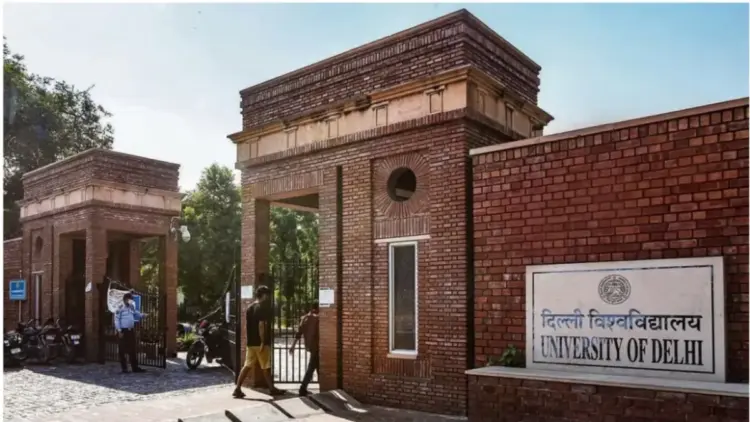
New Delhi, India – What began as a nascent idea for student representation with a modest grant of Rs 150 in the twilight weeks before India’s independence has blossomed into one of the nation’s most closely watched campus electoral contests. The Delhi University Students’ Union (DUSU), a pivotal body representing the vast student populace of one of India’s premier educational institutions, has undergone a remarkable transformation over nearly eight decades, mirroring the dynamic evolution of student politics in the country. From its rudimentary inception to its current status as a significant platform for political discourse and student advocacy, DUSU’s journey is a compelling narrative of institutional growth and the enduring power of student voice.
The Genesis of DUSU: A Vision for Student Voice
The story of DUSU is intrinsically linked to the dawn of a new era for India. On August 6, 1947, just weeks before the nation unfurled its tricolor for the first time, the Vice-Chancellor of Delhi University formally acknowledged a proposal from a representative group of students. Their aspiration: to establish a formal students’ union. The university administration, recognizing the burgeoning need for a unified student voice, gave its in-principle approval. This seminal decision laid the groundwork for an institution that would, over time, become a crucial interface between the student body and the university’s administrative machinery.
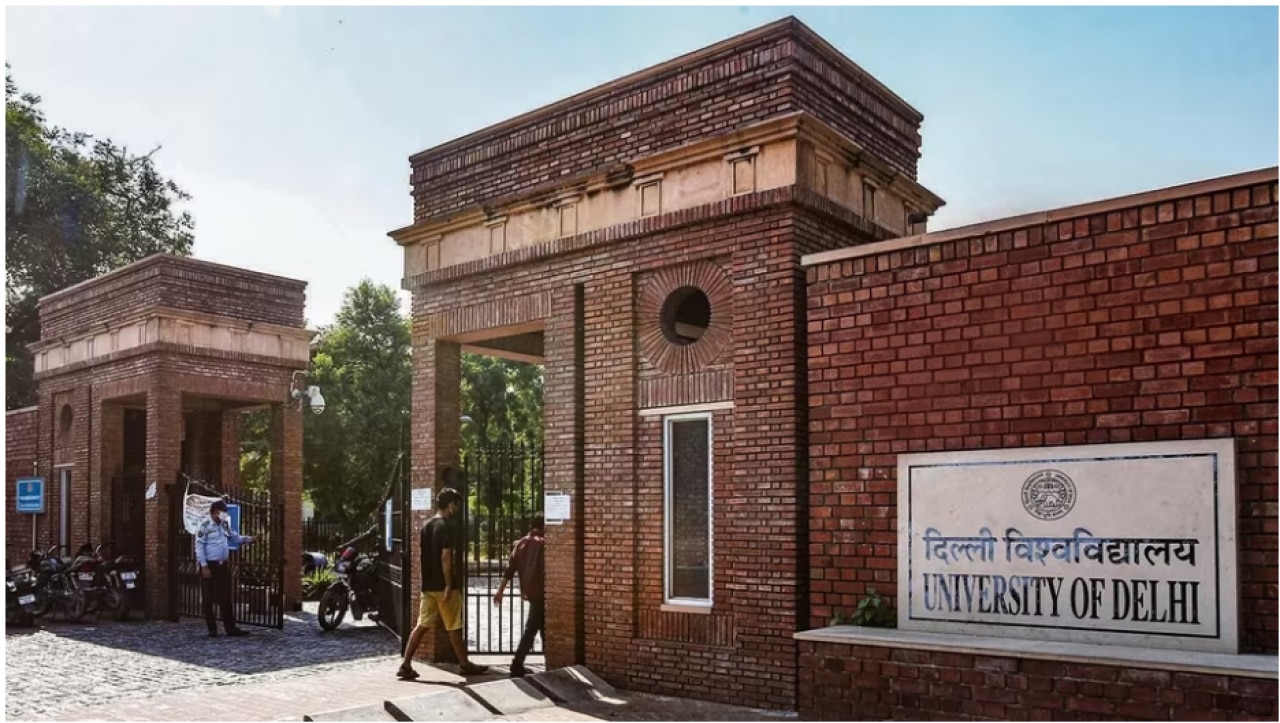
The initial plan was to form a committee tasked with drafting the union’s constitution and outlining its operational procedures. A modest grant of Rs 150 was earmarked for the initial expenses, a stark contrast to the significant financial and political stakes involved in today’s DUSU elections. This small sum, however, represented a significant commitment from the university to foster student self-governance and provide a formal channel for student concerns to be articulated and addressed. What started as a modest institutional proposal was destined to evolve into a powerful platform, representing the diverse interests of students across Delhi University’s numerous colleges and faculties.
Navigating Early Challenges: Financial Hurdles and Structural Development
The early years of DUSU were not without their challenges, particularly in the realm of financial stability. Records from March 27, 1953, reveal the union’s struggle for financial sustenance. The university’s Executive Committee considered a request for financial assistance, noting that Rs 500 had already been disbursed to the union that year. The administration urged the union to actively pursue financial self-sufficiency, a sentiment that likely resonated with the nascent student leadership.
A year later, the financial disparity had become more pronounced. Minutes from March 14, 1954, indicated a significant deficit, with the union’s expenditure standing at Rs 1,995 against an income of just Rs 815. This fiscal strain underscored the practical difficulties faced by the fledgling organization. Despite these financial constraints, the same records highlight a crucial development: DUSU had formally adopted a constitution and successfully conducted its first-ever elections. To navigate the immediate administrative and financial gaps, a caretaker committee was proposed to manage the union’s affairs until the following academic year. Furthermore, a grant of up to Rs 1,100 was considered to cover incurred expenses, subject to the scrutiny and approval of bills, illustrating the university’s continued, albeit cautious, support.
A Constitutional Overhaul: The 1973 Framework
The organizational structure and governance of DUSU underwent a significant re-evaluation nearly two decades after its inception. On August 2, 1973, the Executive Council deliberated on the possibility of revoking the existing constitution and implementing an interim framework. This move signaled a desire for a more robust and formalized governance structure, incorporating stricter financial controls and clearer administrative roles.

The new constitutional framework introduced enhanced financial oversight. Spending exceeding Rs 100 required the explicit approval of the union’s Executive Committee, a measure designed to promote fiscal responsibility. The roles and responsibilities within DUSU were also clearly delineated. The Vice-Chancellor of Delhi University was formally designated as the union’s patron, a role that continues to this day, signifying the university’s ultimate oversight. A staff adviser and a treasurer were to be appointed from the university’s teaching faculty and by the patron, respectively, ensuring a blend of student leadership and academic guidance.
Crucially, the 1973 constitution formalized the electoral process for key office-bearer positions. It stipulated the election of four office-bearers: the president, vice-president, secretary, and assistant secretary. These positions were to be directly elected by the members of DUSU, reinforcing the democratic mandate of the union. This constitutional revision marked a pivotal moment, transforming DUSU from a nascent student body into a more structured and democratically accountable organization.

The Core of DUSU: Key Posts and Objectives
Today, the DUSU elections are a keenly anticipated event, revolving around the election of four central office-bearers: the president, vice-president, secretary, and joint secretary. Each of these roles carries distinct responsibilities that are vital to the functioning of the union and the representation of student interests.
- President: The president serves as the chief spokesperson and primary representative of DUSU. This role involves articulating the union’s stance on various issues, engaging with university authorities, and leading the overall agenda of the student body.
- Vice-President: The vice-president acts as a crucial deputy to the president, stepping in to fulfill the president’s duties in their absence. This position also often involves specific portfolios and responsibilities delegated by the president.
- Secretary: The secretary is responsible for the day-to-day administrative operations of DUSU. This includes managing official correspondence, maintaining records, and ensuring the smooth functioning of the union’s secretarial work.
- Joint Secretary: Under the current structure, the joint secretary plays a vital role in communication, event management, and addressing student grievances. This position often acts as a bridge between students and the union’s leadership, facilitating the flow of information and support.
Beyond these elected positions, the current DUSU constitution reinforces the role of the Vice-Chancellor as the patron. The union’s overarching objectives, as enshrined in its constitution, are to effectively represent the interests of students before university authorities, advocate for their welfare, and promote a vibrant and conducive academic environment.

Membership and Funding: An Evolving Financial Landscape
The financial commitment required to be a member of DUSU has remained remarkably accessible over the decades, though it has seen gradual increases reflecting changing economic conditions. For many years, the subscription fee for DUSU membership was a nominal Rs 5, a figure that remained consistent until the 2012-13 academic year. Recognizing the need for increased revenue to support the union’s activities and growing operational costs, the fee was subsequently raised to Rs 20 in the 2013-14 academic year. Most recently, on June 21, 2024, university officials indicated a further increase to Rs 40, a move aimed at bolstering the union’s financial resources to better serve the student community.
The Ascent to Prominence: DUSU Elections as a National Spectacle
Over the decades, DUSU elections have transcended their initial scope to become a significant fixture in Delhi University’s academic, political, and cultural landscape. These elections are not merely internal university contests; they have evolved into a platform where national political narratives often play out, and where student organizations with strong affiliations to major political parties vie for influence.

Traditionally, DUSU elections have seen robust participation from student wings of national political organizations, most notably the Akhil Bharatiya Vidyarthi Parishad (ABVP) and the National Students’ Union of India (NSUI), which are affiliated with the BJP and Congress respectively. Alongside these established groups, Left-backed student organizations, such as the All India Students’ Federation (AISF) and Students’ Federation of India (SFI), as well as various independent candidates, also actively contest, contributing to a diverse and often fiercely competitive electoral environment.
The 2026 DUSU election, as reported, exemplified this trend, with the ABVP, NSUI, and an alliance of the AISA-SFI being prominent contenders for the four central posts. The election process, which involved voting on September 18 and the subsequent counting of votes beginning at 8 am on September 19 at the Multipurpose Hall of the University Sports Stadium in North Campus, saw a voter turnout of 40.46%. This figure, while representing a segment of the student population, underscores the continued engagement and importance placed on these elections by a significant portion of the student body.

Issues at the Forefront: Reflecting Student Concerns
The campaigns leading up to the 2026 DUSU elections highlighted a spectrum of critical issues that resonated deeply with the student community. Foremost among these were concerns surrounding student safety, the pressing need for affordable accommodation, and the improvement of essential campus facilities.
A tragic incident that significantly amplified discussions around student safety and accommodation was the collapse of a five-storey building in south Delhi’s Satya Niketan, which housed a boys’ Paying Guest (PG) facility. The incident, which tragically claimed the lives of seven individuals, including students, brought the vulnerabilities of off-campus student housing and the urgent need for better safety regulations into sharp focus. Candidates and student groups seized upon this event to advocate for enhanced safety measures in student accommodation and stricter oversight of such facilities.

Beyond accommodation and safety, other key issues that dominated the electoral discourse included improvements in public transport connectivity to campuses, the enhancement of campus infrastructure, and the strengthening of overall campus security. These issues reflect the daily realities and aspirations of students, demonstrating that DUSU elections serve as a vital barometer of student sentiment on a range of socio-economic and logistical concerns.
The Contenders: A Snapshot of the 2026 Electoral Landscape
The 2026 DUSU elections saw a multi-cornered contest with major student organizations fielding their candidates for the key positions.

- ABVP: Nominated Yash Dabas for president, Ishu Maurya for vice-president, Riya Chhawadi for secretary, and Lakshya Raj Singh for joint secretary.
- NSUI: Put forward Vijay Shankar Meena for president, Vir Chatrath for vice-president, Namrata Chaudhary for secretary, and Gopal Choudhary for joint secretary.
- AISA-SFI Alliance: Announced Ananya Raturi as their presidential candidate, Akshat Shikhar for vice-president, Stanzin Deskyong for secretary, and B Parijaat for joint secretary.
As the counting of votes progressed on September 19, the tight nature of the races, with leads fluctuating across the four positions, underscored the competitive spirit and the closely watched nature of the 2026 DUSU election. This dynamic electoral scene is a testament to the growing political consciousness and engagement among Delhi University students.
The Enduring Legacy: From Rs 150 to National Influence
The journey of the Delhi University Students’ Union is a powerful microcosm of the evolution of student representation in India. What began in 1947 as a simple proposal for a student union, backed by a modest Rs 150 grant, has transformed into a sophisticated, democratically elected body with a formal constitution, a clear set of office-bearers, and a wide-reaching presence across the university.

Today, DUSU elections command attention far beyond the confines of Delhi University’s campuses. Student organizations, regardless of their affiliation, leverage these contests as significant platforms to articulate and champion issues pertinent to education, student safety, housing, and fundamental student rights. The narrative of DUSU is not just a history of an institutional body; it is a living testament to the enduring power of student voice and its capacity to influence discourse and drive change in higher education and beyond. As DUSU continues to evolve, its role as a crucible for student leadership and a platform for critical societal issues remains undiminished.