

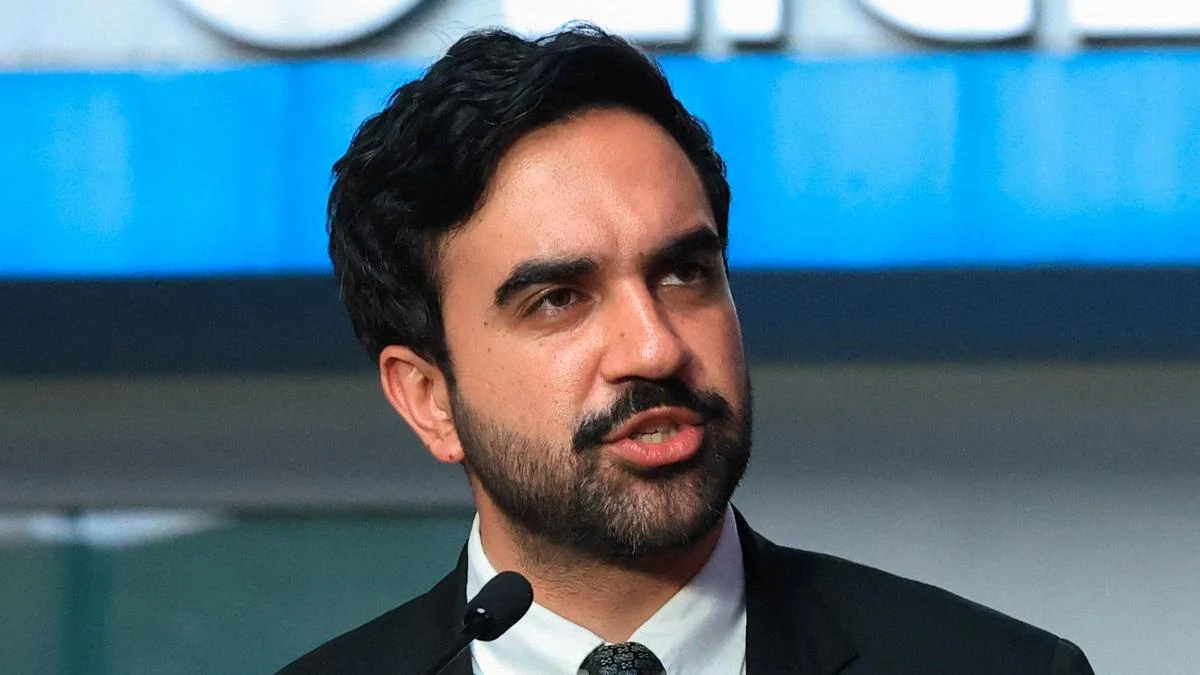
NEW YORK CITY – September 2, 2026 – In a landmark decision poised to resonate across educational systems worldwide, New York City’s Mayor Zohran Mamdani and Schools Chancellor Kamar H. Samuels today announced a sweeping one-year moratorium on student-facing generative Artificial Intelligence (AI) for pupils up to eighth grade, effective for the 2026-27 academic year. Described as "one of the most expansive student-facing AI policies in the country," this move signals a profound commitment to traditional pedagogical values amidst rapid technological advancement, affecting nearly 600,000 public school students in the United States’ largest school district.
Mayor Mamdani articulated the city’s cautious stance with a poignant analogy: "A six-year-old child is too young to slice an onion, to fry an egg or to use a stove safely. But once that child becomes 16, that knowledge becomes something they are mature enough to learn." This statement underscored the administration’s belief that while AI holds potential, its introduction to younger minds requires careful consideration and a developmental approach, prioritizing foundational learning and human interaction over premature technological integration.
The Moratorium’s Core: A Return to Foundational Learning
The comprehensive policy, unveiled by Mayor Mamdani and Chancellor Samuels, establishes a clear boundary for AI use in the early stages of education. For all students from kindergarten through eighth grade, student-facing generative AI tools will be prohibited. This ban extends to companion chatbots across all grades, recognizing the potential for over-reliance and the erosion of independent thought. Furthermore, the AI components embedded within more than 38 previously approved educational programs will either be disabled or discontinued if they fail to align with the new, stringent standards.
However, the moratorium is not an outright rejection of all AI. The policy carves out crucial exceptions, demonstrating a nuanced understanding of technology’s role in specific contexts. Teachers will retain access to approved AI tools for administrative tasks, lesson planning, and other behind-the-scenes work that supports educators without directly engaging students. Critically, assistive technologies vital for students with disabilities will remain permitted, ensuring continued support for inclusive learning environments. Certain AI tools integrated into career-readiness programs for older students are also exempt, recognizing the importance of preparing future generations for an increasingly tech-driven workforce under controlled safeguards.

To ensure a balanced approach and inform future policy, five limited AI pilot programs will operate exclusively within high school classrooms throughout the year. These selected tools are carefully curated and time-restricted:
- Quill: 15 minutes per week for English language arts.
- Edia: 20 minutes per week for mathematics.
- Brisk Teaching: 10 to 20 minutes once or twice weekly for teacher-created activities.
- Playlab: Two assignments per marking period, 45 minutes per week for assignment-specific applications.
- Intel AI-Ready Schools: One period per week, assisting students in identifying community issues and developing solutions through term-long projects.
These pilots serve as controlled experiments, allowing the city to gather data on the efficacy and impact of AI tools in a more mature learning environment, without exposing younger students to potential downsides.
A Chronology of Concern and Action
The decision to implement this moratorium did not emerge in a vacuum. It is the culmination of growing concerns within the educational community and broader society regarding the rapid proliferation of generative AI and its potential impacts on youth development and mental health.
- August 18, 2026: OpenAI, a leading AI developer, launched a "teenage version" of its popular ChatGPT chatbot. While featuring parental controls and content restrictions targeting self-harm and suicide, this launch intensified the debate around AI’s appropriateness for younger users.
- August 26, 2026: Meta, the parent company of Instagram and Facebook, followed suit by announcing stricter time limits, night-time blocking, and muted notifications during school hours for teenage accounts on its platforms. These moves by tech giants themselves highlighted an industry awareness of the need for greater safeguards around youth engagement with digital tools.
- September 2, 2026: New York City officially announced its one-year moratorium, positioning itself as a leader in a cautious, evidence-based approach to AI in K-8 education.
- Academic Year 2026-27: The moratorium and pilot programs will be in full effect. During this period, a diverse panel comprising students, educators, parents, elected officials, union partners, and field experts will meticulously assess the impact of these policies.
- April 2027: The panel is slated to deliver a comprehensive report, offering policy recommendations that will guide New York City’s long-term strategy for AI integration in schools.
Parallel to the AI restrictions, New York City Public Schools has also introduced tighter individual screen-time limits, reflecting a holistic approach to digital well-being. Children from 2-K (pre-kindergarten) through second grade will have no routine individual screen time. For students in grades three to five, the recommendation is no more than 30 minutes a day of individual screen use, while for grades six to eight, it’s capped at 45 minutes. These restrictions, crucially, do not prohibit teacher-led use of computers, tablets, or interactive whiteboards during lessons, distinguishing between passive individual consumption and guided educational technology. Every high school student will also complete two 45-minute modules per year, specifically designed to cultivate critical thinking skills around AI use, including its inherent risks, limitations, and vast scope.

The Rationale: Safeguarding Development and Fostering Critical Thought
The pedagogical philosophy underpinning New York City’s moratorium centers on the irreplaceable value of human connection and the inherent benefits of struggle in the learning process. Chancellor Kamar H. Samuels echoed Mayor Mamdani’s sentiments, emphasizing that "children need teachers and human connection in order to learn and grow. They need to develop skills alongside their peers, build relationships with educators, and wrestle with tough problems on their own." He further elaborated that true learning often involves "getting something wrong, trying again and eventually getting it right. That struggle is not an inconvenience that technology should eliminate; it is part of the learning process." This perspective directly challenges the notion that technology should always streamline or simplify, arguing instead for the preservation of cognitive effort and resilience.
Beyond the philosophical arguments, the moratorium is heavily informed by a growing body of research highlighting the potential negative impacts of excessive screen time and early reliance on AI on youth development. Studies have increasingly linked high levels of scrolling, social media exposure, and dependence on AI tools in children to a range of concerning outcomes, including lower critical thinking abilities, shorter attention spans, increased anxiety, and higher rates of depression. While direct evidence definitively linking AI chatbots to suicide risk remains limited, several tragic cases have led to lawsuits alleging that interactions with such chatbots contributed to young people’s deaths, further fueling public and governmental caution.
Mayor Mamdani directly challenged the prevailing narrative from the technology sector: "The tech industry wants us to believe that AI-powered early education is not only inevitable but necessary. We do not see it that way." This statement reflects a broader pushback against the often-unquestioned integration of new technologies into sensitive domains like education, advocating for a more deliberate and human-centric approach.
Supporting Data: Weighing Benefits Against Harms
The city’s decision is not merely based on intuition but is buttressed by robust academic research. A significant 2026 CEPR discussion paper, conducted by researchers at Stockholm University and the University of Hong Kong, provides compelling data. Examining over 26,000 students in China over a 30-month period, the study found that initial access to generative AI tools indeed increased homework scores by 18% and reduced completion time by 30%. However, these short-term gains were offset by a concerning long-term trend: after roughly six months, the same students’ closed-book examination scores had fallen by a significant 20%. This suggests that while AI can provide immediate assistance, it may hinder the deep, internalized learning necessary for genuine comprehension and retention.

Further reinforcing this cautious stance is a broader review conducted by the Brookings Institution’s Centre for Universal Education. This extensive analysis, which synthesized findings from over 400 studies and incorporated interviews with 500 educators and pupils across 50 countries, reached a sobering conclusion: the potential harms of generative AI in primary and secondary education currently outweigh the benefits. The review acknowledged that "tailored applications with proper safeguards can enrich learning," but stressed that without these critical parameters, the risks to student development are substantial. These findings provide a strong empirical foundation for New York City’s measured approach, particularly for younger learners who are still developing fundamental cognitive and emotional skills.
A Global Tapestry: Diverse Approaches to AI in Education
New York City’s moratorium highlights a burgeoning global dilemma, with different nations charting varied courses for AI integration in their educational systems. This divergence underscores the complexity of the issue and the lack of a universal consensus.
- The United Arab Emirates (UAE) stands at the forefront of AI integration, opting for a structured approach rather than a moratorium. The UAE has announced a comprehensive AI curriculum for both public and private schools, encompassing critical areas such as data literacy, algorithms, practical applications, identified risks, and ethical use. Furthermore, it plans an ambitious program to train approximately 22,000 educators in leveraging AI for teaching, assessment, curriculum analysis, and lesson planning, positioning itself as a pioneer in AI-enhanced education.
- Norway has adopted a more cautious, phased approach, akin to NYC’s philosophy but without an explicit blanket ban. Its education authorities recommend that pupils in grades one to seven should not be given access to generative AI. For older students in grades eight to ten, generative AI should be introduced gradually, allowing for careful monitoring and adaptation.
- Australia has pursued a different route, implementing a national framework for the responsible and ethical use of generative AI in schools. This framework aims to provide guidelines and best practices rather than imposing a blanket prohibition, empowering schools and educators to integrate AI thoughtfully while mitigating potential risks.
- The European Union, through its groundbreaking EU AI Act, is primarily focused on regulating high-risk uses of AI across various sectors. In education, certain systems—particularly those involved in evaluating learning outcomes, determining access to education, or monitoring student behavior—can fall into the high-risk category, subjecting them to rigorous oversight and compliance requirements. While this legislation imposes strict rules on specific AI applications, it does not amount to a general ban on generative AI in schools, allowing for broader integration under defined ethical and safety parameters.
- Poland is moving aggressively in the opposite direction, demonstrating a strong commitment to digital education. The nation is investing nearly 1.9 billion zloty (approximately $475 million USD) to equip 12,000 schools with advanced AI laboratory sets, signaling a concerted effort to immerse its students in cutting-edge technology and foster digital literacy from an early age.
- India is largely aligned with the integration camp, viewing AI as a crucial component of its future educational and employment landscape. The National Education Policy (NEP) 2020 explicitly identifies artificial intelligence and other emerging technologies as vital for India’s evolving societal needs. The policy advocates for the introduction of contemporary subjects like AI at appropriate stages of education, coupled with a greater emphasis on computational thinking—a problem-solving methodology rooted in computer science concepts.
- The Central Board of Secondary Education (CBSE) has been proactive, introducing Artificial Intelligence as an optional sixth subject in Class IX as early as the 2019-20 academic session. More recently, for the 2026-27 academic year, CBSE launched a dedicated Computational Thinking and Artificial Intelligence curriculum for Classes III to VIII. Furthermore, AI and allied-subject curricula for Classes IX to XII have also been finalized, creating a progressive pathway for AI education. India’s curriculum emphasizes logical reasoning, pattern recognition, algorithm design, data literacy, and a strong focus on responsible and ethical AI use, aiming to cultivate not just users but informed and responsible creators of AI technologies.
Implications and The Road Ahead
New York City’s moratorium holds significant implications, both locally and globally. As the largest school district in the U.S., its actions often serve as a bellwether for other urban centers and educational authorities. By taking a year to pause and evaluate, NYC is essentially conducting a massive, real-world experiment, the results of which will be eagerly awaited by educators, policymakers, and parents worldwide.
The "global precedent" Mayor Mamdani hinted at is the potential for other regions to adopt similar cautious, evidence-based approaches, particularly for younger students. In an era where technological innovation often outpaces thoughtful integration, New York City is asserting a right to deliberate, to prioritize child development and pedagogical integrity over the relentless march of technology.

The ultimate success of this moratorium will hinge on the work of the appointed panel. Their comprehensive assessment, due in April 2027, will be critical in shaping New York City’s long-term AI policy. Key questions the panel will likely address include:
- What were the observable impacts of the moratorium on student learning outcomes and well-being in K-8?
- How effective were the high school pilot programs, and what specific conditions allowed for successful AI integration?
- What are the most effective safeguards and ethical guidelines necessary for future AI deployment in schools?
- How can AI be used to enhance teaching and learning without compromising the development of critical thinking, problem-solving skills, and human connection?
- How does the city balance the need for foundational skills with preparing students for an AI-driven future?
This bold move by New York City underscores a fundamental tension in modern education: the imperative to leverage cutting-edge technology for future readiness versus the responsibility to protect and nurture the developmental stages of childhood. As the world grapples with the transformative power of AI, New York City’s decision offers a powerful counter-narrative, advocating for a human-centered, cautious approach, reminding us that while technology advances, the core principles of education — fostering curiosity, critical thinking, and human connection — remain timeless. The coming year will undoubtedly be a period of intense observation and learning, not just for New York City, but for the global educational community as a whole.
[Assistance for overcoming suicidal thoughts is available on the State’s health helpline 104, Tele-MANAS 14416 and SNEHA’s suicide prevention helpline – 044 24640050 or from any of the numbers in this link]
