

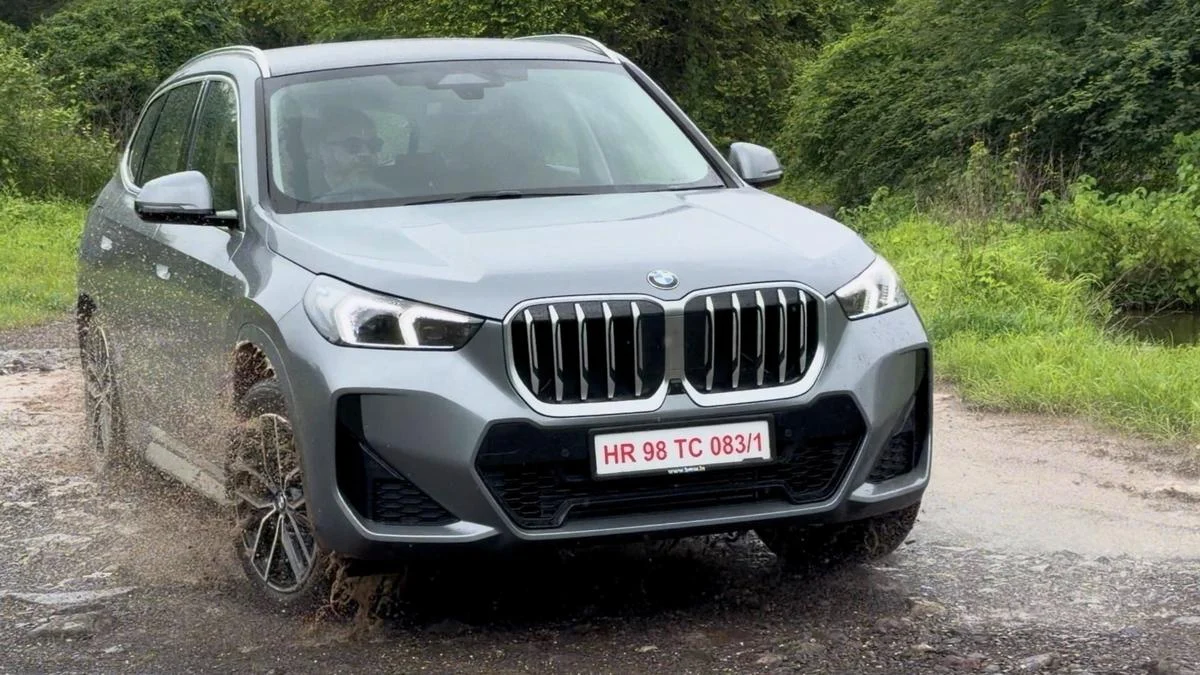
The luxury automotive landscape in India has long been defined by a unique set of contradictions. While global markets often prioritize sheer performance or compact agility, the Indian buyer demands a multifaceted blend of prestige, road presence, and, most crucially, rear-seat comfort. For years, the BMW X1 served as the spirited, compact gateway into the Bavarian brand’s ‘X’ family. However, the introduction of the Long-Wheelbase (LWB) version—specifically the sDrive18Li M Sport—marks a significant pivot in BMW’s regional strategy. It is no longer just an "entry-level" SUV; it is a calculated response to the specific needs of a market where the chauffeur-driven experience is as valued as the thrill of the open road.
Main Facts: The Evolution of the X1 sDrive18Li M Sport
The BMW X1 LWB represents a departure from the traditional "compact" philosophy of the X1 lineage. By extending the wheelbase to a generous 2,800 mm, BMW has effectively blurred the lines between the entry-level luxury segment and the class above. This iteration, priced at INR 49.90 lakh (ex-showroom), arrives in the M Sport trim, ensuring that the added utility does not come at the cost of the brand’s athletic aesthetic.
At its core, the X1 LWB is powered by a 1.5-litre, three-cylinder TwinPower Turbo petrol engine. While a three-cylinder configuration might raise eyebrows in the luxury segment, the output figures—156 hp and 230 Nm of torque—tell a story of optimized efficiency and urban-centric performance. Mated to a seven-speed Steptronic dual-clutch transmission (DCT), the vehicle manages a 0-100 km/h sprint in 9.3 seconds.
Beyond the mechanicals, the X1 LWB is a technological powerhouse. It debuts BMW’s Operating System 9, housed within a striking curved display that integrates a 10.25-inch digital instrument cluster and a 10.7-inch infotainment screen. From safety suites featuring eight airbags to convenience tech like the Digital Key Plus, the X1 LWB is positioned as a comprehensive package rather than a compromised "starter" car.

Chronology: From Compact Agility to Limousine-Lite Practicality
The journey of the BMW X1 in India has been one of consistent growth—both in terms of market share and physical dimensions.
- The Original Concept: When the X1 first arrived on Indian shores over a decade ago, it was a low-slung, driver-focused crossover that felt more like a raised 3 Series Touring than a traditional SUV. It appealed to young professionals who wanted BMW dynamics in a more versatile body style.
- The Generation Shift: As the SUV trend exploded, the second-generation X1 moved to a front-wheel-drive architecture, prioritizing cabin space and a more "upright" SUV stance. This was the first major sign that BMW was listening to global feedback regarding practicality.
- The LWB Strategy: Recognizing that Indian buyers often use their SUVs as primary family vehicles where the rear seat is frequently occupied, BMW took a page from its Chinese market playbook. The decision to bring the Long-Wheelbase version to India was a strategic move to outmaneuver rivals like the Mercedes-Benz GLA and Audi Q3, both of which offer standard wheelbases.
- The Real-World Test: Our evaluation of the X1 LWB took place in the grueling environment of Mumbai during the tail end of the monsoon season. This environment—characterized by cratered tarmac, sudden water-logging, and stop-and-go traffic—served as the ultimate proving ground for a car designed to balance luxury with ruggedness.
Supporting Data: Engineering for the Indian Terrain
The effectiveness of the X1 LWB is rooted in its specific engineering adjustments. The extended wheelbase isn’t merely a cosmetic stretch; it alters the vehicle’s center of gravity and ride harmonics.
Ride and Handling Dynamics
During testing on Mumbai’s undulating surfaces, the X1 LWB displayed a "planted" character that is often missing in shorter SUVs. The comfort-oriented suspension tuning works in tandem with the 2,800 mm wheelbase to iron out high-frequency vibrations from broken roads. Unlike the nervous, "jittery" feel some luxury cars exhibit on uneven pavement, the X1 LWB remains composed.
The ground clearance is another critical data point. While BMW doesn’t always chase class-leading height, the X1 LWB offers enough clearance to navigate deep ruts and high speed-breakers without the "stomach-churning" sound of a scraping underbody.

The Powertrain Paradox
The 1.5-litre three-cylinder engine is a marvel of NVH (Noise, Vibration, and Harshness) management. Supporting data from the drive suggests:
- Torque Delivery: A wide peak torque band from 1,500 to 4,600 rpm ensures that the car feels "punchy" in city traffic.
- Transmission Logic: The 7-speed DCT is programmed to mask the inherent imbalances of a three-cylinder engine, providing seamless shifts that keep the engine in its "sweet spot."
- Performance vs. Utility: While a 9.3-second 0-100 km/h time isn’t "M-car" territory, it is more than sufficient for overtaking on Indian national highways, where mid-range acceleration is more important than top-end speed.
Official Responses: BMW’s Market Philosophy
While BMW India’s official stance emphasizes "Sheer Driving Pleasure," the X1 LWB reveals a secondary, equally important philosophy: "The Power of Choice." By offering the M Sport trim on the LWB model, BMW is officially acknowledging that the Indian luxury buyer refuses to choose between sportiness and space.
The inclusion of BMW Operating System 9 is a significant official update. This system is designed to be more "app-centric," reflecting the smartphone-heavy lifestyle of the modern Indian consumer. The "Intelligent Personal Assistant" has been recalibrated for better voice recognition, and the "Digital Key Plus" uses Ultra-Wideband (UWB) technology, allowing the car to unlock as the owner approaches with a compatible smartphone—an official nod to the increasing demand for "touchless" luxury.
Furthermore, the safety package—including eight airbags and a comprehensive ADAS (Advanced Driver Assistance Systems) suite—reflects a corporate commitment to global safety standards, even in the entry-level luxury segment. Features like "Evasion Assistant" and "Front Collision Warning with Brake Intervention" are specifically tuned to handle the unpredictable nature of Indian traffic.

Implications: A New Benchmark for the Segment
The introduction of the X1 LWB has profound implications for the Indian luxury car market.
1. The Death of the "Entry-Level" Compromise
For years, buying an entry-level luxury SUV meant sacrificing rear-seat legroom. The X1 LWB effectively kills this compromise. With a 540-litre boot and a rear bench that offers genuine "stretch-out" space, it can now serve as a primary family car, potentially cannibalizing sales from larger, more expensive SUVs in the mid-size segment.
2. Pressure on Competitors
The X1 LWB puts immense pressure on Audi and Mercedes-Benz. While the Audi Q3 offers a balanced drive and the GLA offers a tech-forward cabin, neither currently matches the sheer rear-seat real estate of the X1 LWB. We may see a shift where "Long-Wheelbase" becomes the new standard for all luxury vehicles in India, regardless of the segment.
3. The Chauffeur-Driven Compact SUV
Traditionally, if you wanted to be driven, you bought a sedan (like the 3 Series Gran Limousine). The X1 LWB introduces the concept of the "chauffeur-driven compact SUV." For the buyer who lives in a congested city like Mumbai but wants to sit in the back while navigating through traffic, the X1 LWB offers the perfect footprint—easy to park, yet spacious enough for a relaxing commute.

4. Resale and Longevity
By packing the car with future-proof tech like OS 9 and a robust safety suite, BMW is ensuring the X1 LWB remains relevant in the pre-owned market. This helps maintain high residual values, which is a key factor for luxury car buyers in India.
Conclusion: The Rational Emotionalist
The BMW X1 LWB sDrive18Li M Sport is a masterclass in market adaptation. It successfully marries the emotional appeal of the BMW badge and "M" aesthetics with the cold, hard logic of Indian road conditions and social habits.
It is a car that satisfies the "heart" with its weighted steering, sharp looks, and premium cabin materials, while simultaneously satisfying the "brain" with its class-leading rear space, comprehensive safety features, and everyday usability. At INR 49.90 lakh, it isn’t just a way to enter the BMW family; it is a reason to stay there. For the Indian professional who balances a demanding career with a bustling family life, the X1 LWB isn’t just a luxury—it’s a highly practical tool for modern living.
This report was compiled by Motorscribes, in association with The Hindu. For more updates on the evolving Indian automotive landscape, follow @motorscribes on Instagram.
