

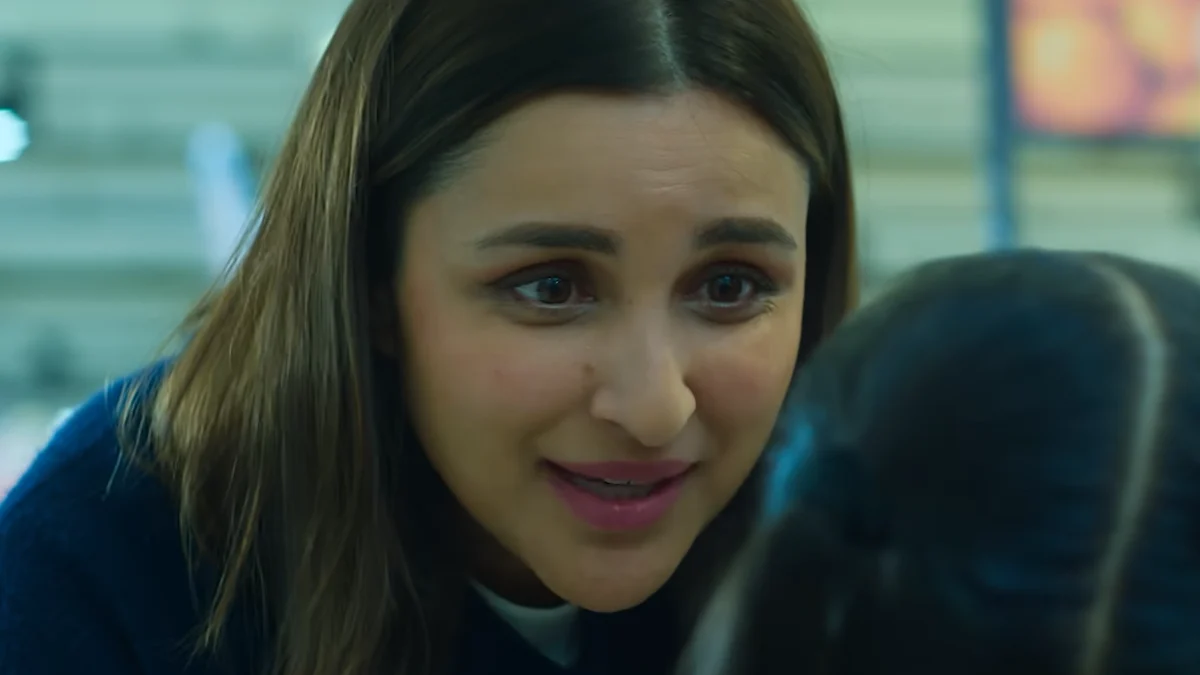
The new Netflix thriller, "Shaque: Trust No One," starring Parineeti Chopra and Tahir Raj Bhasin, attempts to weave a gripping narrative of a missing child and a mother’s relentless search. However, the series ultimately falters, becoming a convoluted blend of gothic aspirations and daily soap opera tropes, struggling to maintain its grip on genuine suspense.
The Premise: A Newborn Vanishes, A Mother’s Nightmare Begins
"Shaque: Trust No One," a Hindi-language thriller series now streaming on Netflix, plunges viewers into the chilling scenario of a newborn vanishing from a hospital room. The series centers on Anvita (Parineeti Chopra), a distraught mother whose life shatters when her infant daughter, Apeksha, is inexplicably stolen. This harrowing event sets in motion a desperate and winding search that forms the core of the narrative. The initial premise, rich with potential for intense psychological drama and suspense, is immediately established against the atmospheric backdrop of misty Shimla, a setting that hints at the gothic undertones the series aims for.
The initial hours following the disappearance are fraught with confusion and mounting panic. Anvita, understandably shattered, is met with disbelief and a lack of concrete leads. The hospital environment, typically a place of care and security, transforms into a stage for suspicion and unanswered questions. The series aims to immediately establish the tagline "Trust No One" by sowing seeds of doubt about who might be involved, even within the immediate circle of parents and hospital staff.
A Chronology of Deception and Delays
The narrative of "Shaque: Trust No One" unfolds over seven episodes, each clocking in between 32 and 44 minutes. The core timeline of the series is marked by significant time jumps and the introduction of red herrings, designed to keep the audience guessing.
-
The Initial Disappearance: The series opens with the shocking abduction of Anvita and Alok’s (Tahir Raj Bhasin) newborn daughter, Apeksha, from the hospital. This event immediately throws the couple into a maelstrom of grief and desperation. The lack of immediate answers and the seeming helplessness of the authorities are highlighted, setting a tone of pervasive anxiety.
-
The Anonymous Birthday Photographs: In a particularly unsettling turn of events, the abductor begins sending Anvita and Alok anonymous birthday photographs of their daughter, Apeksha, as she grows up. This tactic serves a dual purpose: to prolong Anvita’s agony and to provide director Rensil D’Silva ample narrative space to introduce a plethora of suspects and weave a complex web of intrigue. These yearly reminders of their lost child are designed to keep Anvita’s trauma perpetually fresh, fueling her relentless pursuit.
-
Eight Years Later: A New Lead, A Renewed Obsession: The plot takes a significant leap forward eight years after the disappearance. A new character, Sakshi (Jennifer Winget), arrives in Shimla with a young daughter who bears a striking resemblance to the lost Apeksha. This development ignites Anvita’s obsessive quest anew. She becomes convinced that Sakshi’s daughter is indeed her own, setting the stage for a direct confrontation and further complications.
-
The Reliance on Narrative Convenience: The writers of "Shaque" appear acutely aware of the advancements in forensic science, particularly DNA testing. However, instead of employing these tools as genuine investigative elements to accelerate the plot, the script frequently uses them as narrative conveniences. DNA testing is often employed to delay revelations or to create further dramatic tension, rather than serving as a straightforward means to uncover the truth. This strategic deployment, while intended to prolong suspense, often feels contrived and hinders the organic progression of the story.
-
Overstuffed Subplots and Diluted Suspense: To stretch the narrative across seven episodes, the series founders under the weight of numerous subplots. The writers venture into themes of infidelity, illegal surrogacy, the classic friction of saas-bahu dynamics, hallucinations, and even hints of witchcraft. While these elements might be intended to enrich the tapestry of the story, they ultimately create an artificiality that dilutes the primary suspense. The constant detours fragment the narrative momentum, transforming the intended thriller into a bloated family melodrama, a far cry from the tight, suspenseful experience it aspires to be.
Supporting Data: Cast Performances and Thematic Exploration
While "Shaque: Trust No One" struggles with its narrative execution, certain performances and thematic explorations offer glimpses of what the series could have been.

-
Anup Soni’s Standout Performance: Amidst the otherwise clichéd territory, Anup Soni delivers an understated yet impactful portrayal of Inspector Khurana. Soni imbues his character with a compelling depth, portraying a man not only navigating a convoluted criminal conspiracy on the outside but also battling a terminal cancer diagnosis internally. This dual battle against decay is handled with remarkable restraint and a distinct Punjabi flair, making Inspector Khurana a character that resonates amidst the melodrama. His performance provides a much-needed anchor of authenticity in a sea of artificiality.
-
Parineeti Chopra’s Trapped Intensity: As the grieving mother, Parineeti Chopra brings a commendable level of vulnerability and intensity to her role. Her portrayal effectively captures the raw anguish and desperation of a mother searching for her lost child. However, the script confines her performance within a singular emotional arc for the entirety of the series. While her desperation is palpable, it eventually becomes one-dimensional, preventing the character from developing meaningful psychological shading. Her performance, though powerful at moments, remains largely on the surface, lacking the nuanced exploration that the complex situation demands.
-
The Supporting Cast’s Generic Contributions: The rest of the cast, unfortunately, seems to be largely relegated to exchanging dramatic side-glances and muttering ominous warnings. Their performances, while contributing to the overall melodramatic tone, lack the depth to elevate the narrative. This contributes to the feeling that "OTT is the new GEC" (General Entertainment Channel), a common criticism leveled at shows that prioritize sensationalism over substance.
-
Thematic Underpinnings and Their Faltering Execution: The series attempts to explore themes of trust, maternal instinct, obsession, and the corrosive nature of secrets. The tagline "Trust No One" is hammered home repeatedly, yet the execution often undermines this central theme. The constant stream of betrayals and hidden agendas, while intended to reinforce the tagline, ultimately feels like a desperate attempt to maintain audience engagement rather than a naturally unfolding consequence of the plot. The exploration of maternal obsession, while a strong starting point, quickly devolves into repetitive displays of distress, failing to delve into the psychological complexities of such an extreme state.
Implications of the Narrative Choices
The narrative choices made in "Shaque: Trust No One" have several implications for its reception and overall impact:
-
Dilution of Suspense: The decision to overstuff the series with numerous subplots, while intended to create a richer narrative, has the unintended consequence of diluting the core suspense. The primary mystery of the missing child gets lost amidst the cacophony of other dramatic elements. This makes it difficult for the audience to remain invested in the central conflict, as the focus is constantly shifted.
-
Artificiality and Contrivance: The reliance on narrative convenience, particularly with the handling of DNA testing, contributes to a pervasive sense of artificiality. The plot points often feel forced, designed to prolong the mystery rather than arising organically from the characters’ actions or the unfolding events. This contrivance detracts from the realism the series attempts to achieve.
-
Missed Opportunities for Psychological Depth: The series had the potential to delve deeply into the psychological toll of loss, obsession, and suspicion. However, it largely remains on the surface, opting for dramatic outbursts and melodramatic confrontations rather than exploring the nuanced internal struggles of its characters. This is particularly evident in Parineeti Chopra’s performance, which, despite its intensity, feels constrained by the script’s limitations.
-
Genre Blurring and Audience Expectation: "Shaque: Trust No One" positions itself as a gothic thriller wrapped in melodrama. However, the balance is heavily skewed towards the latter. For viewers expecting a taut, suspenseful thriller, the constant deviations into soap opera tropes and predictable dramatic beats can be disappointing. The series fails to deliver a cohesive genre experience, leaving audiences questioning its intended identity.
-
The Netflix Factor and Shorter Run Times: The advent of OTT platforms like Netflix has seen a trend towards shorter series with more concentrated storytelling. While "Shaque" adheres to this format with its episodic structure and manageable runtime per episode, the narrative feels stretched thin, suggesting that the plot might have been better suited for a more concise format or a tighter script. The seven-episode length, in this instance, feels more like an obligation to fill a slot rather than a natural progression of the story.
In conclusion, "Shaque: Trust No One" is a series that, despite a compelling premise and a strong performance from Anup Soni, ultimately falters under the weight of its own ambition. Its attempt to blend genres and introduce multiple layers of intrigue results in a convoluted and often melodramatic narrative that sacrifices genuine suspense for artificial thrills. While Parineeti Chopra’s emotional portrayal is a highlight, it cannot salvage a story that struggles to find its footing, leaving viewers with a sense of missed potential and a lingering question of what could have been. The series serves as a cautionary tale of how an overabundance of plot devices can lead to a dilution of the core narrative, ultimately failing to deliver on its promise of a truly gripping thriller.
