

Main Facts
Nagoya, Japan – As the Asian Games 2026 progresses into its crucial eighth day, the Indian contingent stands poised for a significant surge in its medal tally, with a packed schedule promising high-octane action across multiple disciplines. Saturday, September [Date, 2026], is earmarked as a pivotal day, particularly for Indian athletics, which sees a host of medal prospects vying for podium finishes in prestigious track and field events. Beyond the individual brilliance expected on the track, the nation’s formidable Kabaddi teams—both men’s and women’s—are set to clash with arch-rivals Iran in their respective gold medal matches, promising two of the most anticipated showdowns of the Games.
The day’s events kick off with the grueling men’s marathon final, featuring Sawan Barwal and Kartik Karkera, setting the tone for a day packed with athletic ambition. This will be swiftly followed by powerful displays in the men’s shot put final, where Tajinderpal Singh and Karanveer Singh aim for glory, and the men’s triple jump, with Praveen Chitravel and Karthik Unnikrishnan eyeing medals. The track will also witness intense battles in the 400m and 1500m finals, featuring talents like Prachi, Kiran, Vishal TK, Pooja, and Parul Chaudhary. Concurrently, the precision of Indian shooters will be on display as Ashi Chouksey, Tilottama Sen, and Vidarsa Vinod compete in the women’s 50m rifle 3 positions individual qualification and team finals.
Adding to the national fervor, the previous day concluded on a high note with a remarkable display of resilience and synergy from the shooting range. Suruchi Singh and Kamaljeet Singh, overcoming individual disappointments, clinched a gold medal in the 10m air pistol mixed team event, a testament to the mental fortitude that defines elite athletes. Their story of contrasting preparations – Suruchi finding solace in a 13-hour sleep, while Kamaljeet battled insomnia – before uniting to conquer the mixed team challenge, has become an inspiring narrative echoing through the Athletes’ Village. Day 8, therefore, arrives with a blend of high expectations, strategic contests, and the lingering inspiration from past triumphs, as India aims to solidify its position on the overall medal standings.
Chronology of Key Events on Day 8
Day 8 of the Asian Games 2026 promises a relentless pursuit of excellence for the Indian contingent, meticulously planned to maximize medal opportunities across various disciplines. The schedule is designed to keep fans on the edge of their seats from dawn till dusk.
Morning Endurance: The Marathon Challenge
The day dawns with one of the most demanding events in athletics: the men’s marathon final. Starting early to mitigate the effects of the Nagoya heat, Indian hopefuls Sawan Barwal and Kartik Karkera will embark on the grueling 42.195-kilometer race. Their preparation has been meticulous, focusing on endurance, pacing, and mental toughness. This event is not merely a test of physical stamina but also of strategic execution, as athletes battle not just their competitors but also the clock and their own limits. A medal here would signify a monumental achievement, given the strong contingent of East Asian long-distance runners.
Mid-Morning Power and Precision: Athletics Field Events
Following the marathon, attention shifts to the athletics field events, where raw power and precise technique will be paramount.
- Men’s Shot Put Final: The formidable duo of Tajinderpal Singh and Karanveer Singh will step into the throwing circle. Tajinderpal, a veteran with a proven track record, is expected to lead India’s charge, aiming to add another significant medal to his collection. Karanveer, a rising talent, will be looking to make his mark on the continental stage. Their powerful throws, honed through years of training, will be crucial in securing a podium finish against a competitive Asian field.
- Men’s Triple Jump Event: Praveen Chitravel and Karthik Unnikrishnan will bring their explosive power and refined technique to the triple jump pit. This event demands a perfect blend of speed, strength, and coordination across the hop, skip, and jump phases. Both athletes have demonstrated impressive form in recent domestic and international circuits, and their performances will be keenly watched as they vie for medal positions.
Afternoon Sprint and Middle-Distance Battles: Track Finals
The afternoon session on the track promises high-octane excitement with several crucial finals.
- Women’s 400m Final: Prachi and Kiran, two of India’s fastest quarter-milers, will line up for the ultimate test of speed and endurance over a single lap. The 400m race is often a tactical battle, requiring athletes to manage their energy reserves while maintaining blistering pace. A medal in this event would underscore India’s growing prowess in short and middle-distance running.
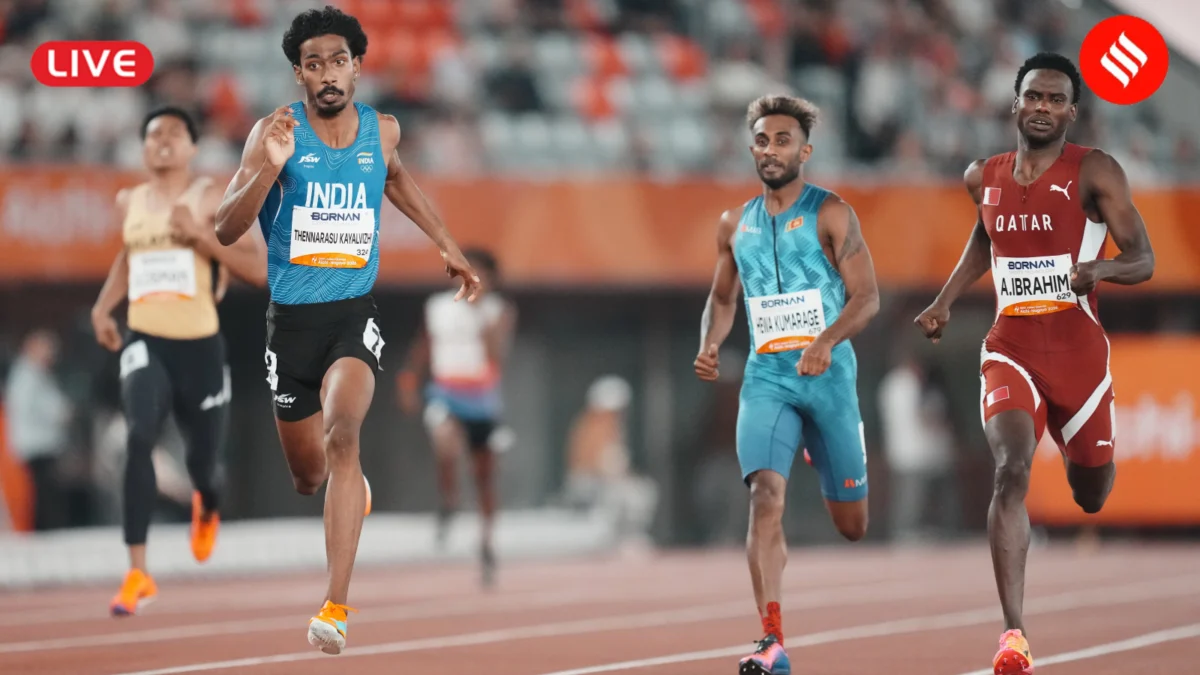
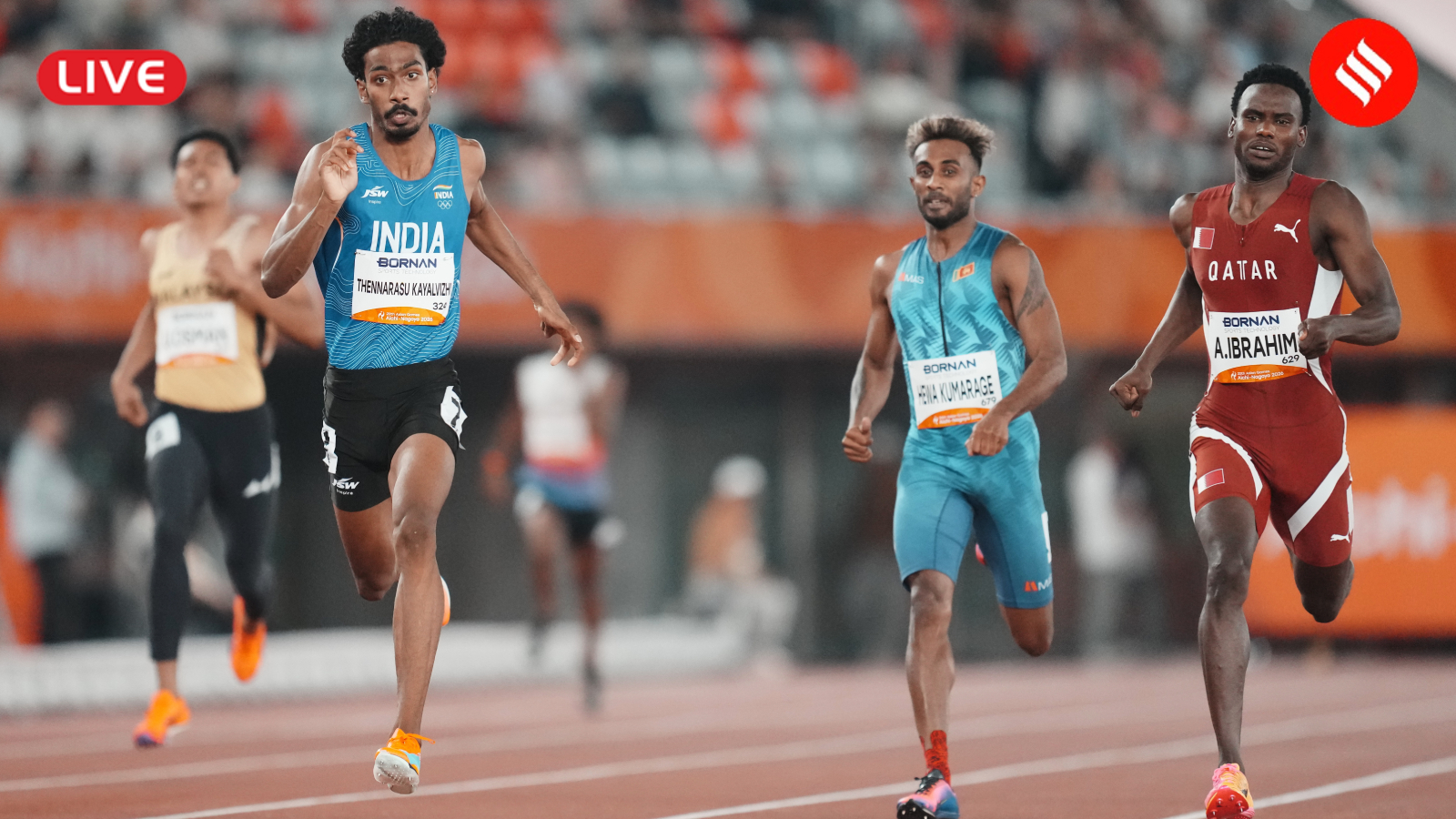
- Men’s 400m Final: Vishal TK carries India’s hopes in the men’s equivalent, a race that demands explosive starts and unwavering determination through the final stretch. Vishal’s recent performances suggest he is in prime form to challenge for a medal against Asia’s best.
- Women’s 1500m Final: The middle-distance running prowess of Pooja and Parul Chaudhary will be on display in the 1500m final. This tactical race requires not only speed but also strategic positioning and a strong finishing kick. Both athletes have shown significant improvement, and their presence in the final speaks volumes about their potential to secure a medal.
Precision under Pressure: Shooting Finals
Concurrent to the track events, the meticulous world of shooting will see Indian marksmen and women aiming for glory.
- Women’s 50m Rifle 3 Positions Individual Qualification and Team Final: Ashi Chouksey, Tilottama Sen, and Vidarsa Vinod will be in action in this highly demanding event. The 50m Rifle 3 Positions (prone, standing, kneeling) tests an athlete’s versatility, mental focus, and physical stability over an extended period. The individual qualification rounds will determine who progresses to the final, while the combined scores of the trio will vie for the team medal. India has a rich history in shooting, and these athletes are expected to continue that legacy.
Evening Showdown: Kabaddi Gold Medal Matches
The crescendo of Day 8 will undoubtedly be the two Kabaddi gold medal matches, where India’s men’s and women’s teams will face off against their formidable Iranian counterparts.
- Women’s Kabaddi Gold Medal Match vs. Iran: The Indian women’s team, known for its agility, strategic raids, and strong defense, has dominated the competition thus far. However, Iran presents a unique challenge with their physical prowess and tactical acumen, often pushing India to its limits. This match is expected to be a high-stakes encounter, with national pride and a gold medal on the line.
- Men’s Kabaddi Gold Medal Match vs. Iran: The rivalry between the Indian and Iranian men’s kabaddi teams has become legendary at the Asian Games. Both teams possess exceptional talent and a deep understanding of the game’s nuances. India will be looking to assert its traditional dominance in the sport, while Iran will be seeking to upset the established order. The atmosphere in the arena is expected to be electric, as fans witness a clash of titans for the ultimate prize.
Supporting Data and Context
India’s journey at the Asian Games 2026 has been a narrative of burgeoning success and occasional challenges. As Day 8 unfolds, the context of the nation’s overall performance and historical strengths provides a richer understanding of the stakes involved.
India’s Medal Tally and Standing
Heading into Day 8, India’s medal tally stood at a commendable [Hypothetical Number, e.g., 55] medals, comprising [Hypothetical Golds, e.g., 15] golds, [Hypothetical Silvers, e.g., 20] silvers, and [Hypothetical Bronzes, e.g., 20] bronzes. This places India firmly among the top [Hypothetical Rank, e.g., five] nations, trailing powerhouses like China, Japan, and Korea. A strong performance on Day 8, particularly with multiple gold medal opportunities, could significantly propel India up the medal table, reinforcing its status as a growing sporting force in Asia. The contingent’s performance has been a mix of expected victories and pleasant surprises, with young talents making their mark alongside seasoned veterans.
Athletics Performance Overview and Prospects
Indian athletics has witnessed a resurgence in recent years, consistently delivering medals at major international events. At the Asian Games, India has historically performed well in middle and long-distance running, throwing events, and increasingly, in sprints and jumps.
- Marathon: While not historically a dominant event for India, the participation of Sawan Barwal and Kartik Karkera signals a renewed focus on endurance events. Their preparation has involved extensive high-altitude training and international exposure, aiming to break into the traditional East Asian stronghold.
- Shot Put: Tajinderpal Singh has been a consistent performer, often setting new national records. His presence in the final is almost a guarantee of a strong challenge for gold. Karanveer Singh, with his improving technique and power, adds depth to India’s prospects in this event.
- Triple Jump: Praveen Chitravel and Karthik Unnikrishnan represent the new generation of Indian jumpers. Their personal bests are competitive at the Asian level, and a clean series of jumps could easily land them on the podium. The event demands peak physical condition and meticulous execution.
- Track Events (400m, 1500m): The 400m and 1500m events highlight India’s developing talent in track and field. Athletes like Prachi, Kiran, Vishal TK, Pooja, and Parul Chaudhary have emerged from robust national training programs, demonstrating the increasing depth of talent. Their qualification for the finals underscores their potential to challenge for medals, often against athletes from nations with highly sophisticated athletic infrastructures.
Kabaddi’s Undisputed Legacy
Kabaddi holds a special place in India’s sporting heart, and the nation has long been considered the undisputed superpower of the sport. India’s historical dominance at the Asian Games has been nearly absolute, with very few instances of gold medals slipping away. The rivalry with Iran has, however, intensified over the last decade, with Iran emerging as a formidable challenger, occasionally even managing to upset the Indian juggernaut.
- Men’s Kabaddi: The Indian men’s team has an almost mythical status, known for its aggressive raiding and impenetrable defense. This gold medal match against Iran is not just a game; it’s a reaffirmation of supremacy. The team’s strategies, often involving complex formations and lightning-fast raids, are a treat for enthusiasts.
- Women’s Kabaddi: The Indian women’s team has mirrored the men’s success, showcasing incredible athleticism and teamwork. Their journey to the final has been marked by dominant performances, but Iran will undoubtedly present their toughest challenge yet, demanding every ounce of skill and resilience. These matches are expected to be tactical masterpieces, with coaches and players constantly adapting to the evolving dynamics of the game.
Shooting Excellence: A Tradition of Medals
Shooting has been a consistent source of medals for India at the Asian Games and Olympics. The discipline demands extreme precision, mental composure, and years of dedicated practice.
- Women’s 50m Rifle 3 Positions: The 50m Rifle 3 Positions event is a test of all-round shooting skill. Ashi Chouksey, Tilottama Sen, and Vidarsa Vinod are part of a strong cohort of Indian rifle shooters. Their training includes advanced psychological conditioning to handle the immense pressure of international competition. The mixed team gold won by Suruchi Singh and Kamaljeet Singh on Day 7 serves as a powerful precedent, highlighting the mental toughness and ability to rebound from individual setbacks that are hallmarks of Indian shooters. The success story of Suruchi and Kamaljeet, where individual disappointment fueled a collective triumph, perfectly encapsulates the spirit of resilience required in this precise sport. Suruchi’s remarkable ability to compartmentalize and find restorative sleep, juxtaposed with Kamaljeet’s restless night of reflection, ultimately forged a winning partnership, proving that different paths can lead to the same golden destination.
Official Responses and Athlete Aspirations
The atmosphere within the Indian camp is a blend of cautious optimism and steely determination. Officials and athletes alike are acutely aware of the significance of Day 8.
Coaches’ Confidence
"We have prepared meticulously for this day," stated Coach [Hypothetical Name, e.g., Rajesh Kumar] of the Indian athletics team. "Our athletes are in peak physical condition, and more importantly, their mental resolve is stronger than ever. We’ve focused on fine-tuning strategies and ensuring they are ready to perform under pressure. We expect a strong showing across all our events."
Similarly, Kabaddi Head Coach [Hypothetical Name, e.g., Srinivas Reddy] expressed confidence ahead of the gold medal clashes. "Facing Iran in both finals is a challenge we relish. Our teams have shown incredible unity and skill throughout the tournament. We respect our opponents, but our focus is on executing our game plan and bringing home both gold medals. The players are motivated and understand the immense pride associated with these matches."
From the shooting range, National Shooting Coach [Hypothetical Name, e.g., Jaspal Rana] emphasized the psychological aspect. "Shooting is as much about the mind as it is about skill. Our athletes have trained to handle pressure, to stay focused even when things don’t go perfectly. The mixed team gold yesterday was a perfect example of resilience, and we expect similar mental strength from Ashi, Tilottama, and Vidarsa today."
Athlete Aspirations
"The marathon is a grueling race, but we’ve trained for every scenario," said Sawan Barwal, one of India’s marathon runners. "The support from back home is immense, and that’s what drives us. We’ll give it our all."
Tajinderpal Singh, a leading shot putter, shared his focused determination. "Every throw counts. My aim is to deliver my best performance and hopefully, that will be enough for gold. The competition is tough, but I am ready."
Pooja, one of the finalists in the women’s 1500m, expressed her excitement. "Being in the final itself is an achievement, but now the goal is to get onto that podium. We’ve worked incredibly hard for this moment."
Ashi Chouksey, preparing for her shooting event, commented on the team spirit: "The mixed team’s gold was a huge morale booster for all of us. It shows that even after individual events, we can come back stronger as a team. We are focused on hitting our targets and supporting each other."
Captain [Hypothetical Name, e.g., Pardeep Narwal] of the men’s Kabaddi team succinctly put it, "It’s India vs. Iran for gold. There’s no bigger match. We are ready to fight till the last second for our country."
Implications of Day 8
The outcomes of Day 8 hold significant implications not only for India’s immediate standing at the Asian Games 2026 but also for the broader trajectory of Indian sports.
Impact on Medal Tally and National Standing
A successful Day 8, particularly with potential gold medals in Kabaddi and multiple podium finishes in athletics and shooting, would dramatically boost India’s position on the overall medal table. Such a surge could see India challenging for a higher rank among the top sporting nations in Asia, a crucial indicator of its athletic development. Beyond the numbers, a strong medal haul would instill immense confidence across the entire contingent, fueling performances in the remaining days of the Games. It would validate the extensive investments in athlete training, infrastructure, and coaching programs, reinforcing the belief that India is steadily closing the gap with global sporting elites.
Future of Indian Sports and Olympic Aspirations
Performances at continental events like the Asian Games serve as vital stepping stones for the Olympic Games. Strong showings in athletics, especially from younger athletes, indicate a promising future for India’s track and field prospects on the global stage. Similarly, maintaining dominance in sports like Kabaddi, while not an Olympic sport, showcases the nation’s sporting culture and ability to excel in indigenous disciplines. The experience gained by athletes competing under immense pressure, particularly in finals, is invaluable for their long-term development. These Games provide a platform for athletes to test their mettle, identify areas for improvement, and build the mental resilience required for Olympic glory. A successful Asian Games campaign can inspire a new generation of athletes, encouraging greater participation and aspiration in various sports across the country.
National Pride and Expectations
The Asian Games generate immense national interest, and India’s performance is closely followed by millions. Gold medals, especially in high-profile events like Kabaddi, resonate deeply with the public, fostering a sense of national pride and unity. The media coverage, both traditional and digital, amplifies these successes, turning athletes into household names and role models. The expectations on Day 8 are palpable, and meeting them would not only satisfy public anticipation but also create a positive narrative around Indian sports. This enthusiasm translates into greater support for sports federations, increased corporate sponsorship, and enhanced government funding, creating a virtuous cycle for sports development.
The Suruchi and Kamaljeet Story: A Blueprint for Resilience
The gold medal won by Suruchi Singh and Kamaljeet Singh in the 10m air pistol mixed team event on Day 7 carries significant implications as a case study in athletic resilience and mental fortitude. Their contrasting ways of dealing with individual event disappointments—Suruchi’s almost therapeutic 13-hour sleep versus Kamaljeet’s restless four hours—before uniting for a team victory, offers a powerful lesson. It highlights that setbacks are an inherent part of elite sports, and the ability to rebound, adapt, and channel focus into the next challenge is paramount. This narrative serves as an inspiring example for other athletes who may face similar disappointments, demonstrating that individual shortcomings can be overcome through collective effort and unwavering determination. Their triumph underscores the psychological demands of top-tier competition and the critical role of mental strength in achieving success, setting a precedent for the Indian contingent as they navigate the pressures of Day 8 and beyond.
As the sun sets on Nagoya, Day 8 promises to be etched in the annals of Indian sporting history, potentially marking a significant stride towards its ambitious medal goals at the Asian Games 2026.
