

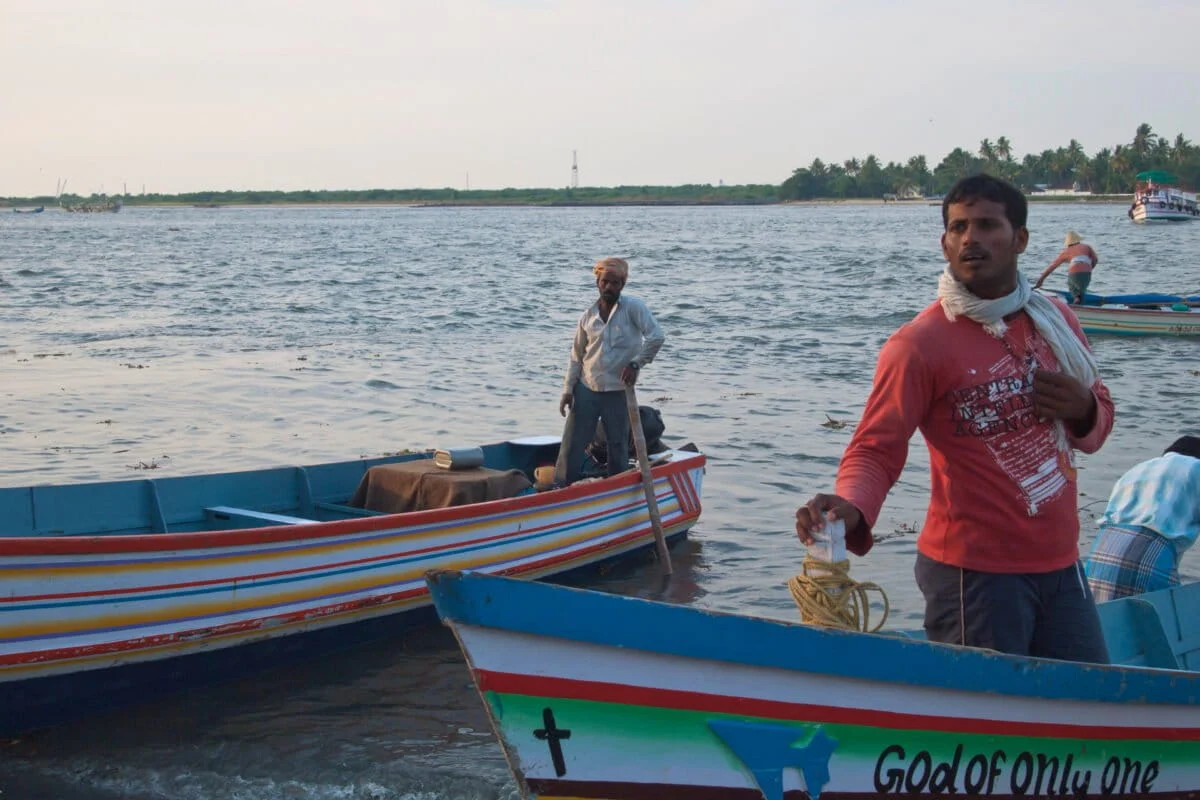
THIRUVANANTHAPURAM — On a humid July afternoon, a veteran development practitioner received a phone call that would underscore the growing disconnect between global climate models and the lived reality of small-scale fishers. The caller, a seasoned fisherman from Marianad—a coastal village in Kerala’s Thiruvananthapuram district—shared a puzzling observation: while the world was bracing for the warming effects of an El Niño year, the waters off the southern Indian coast felt uncharacteristically cold.
This observation serves as a gateway into the complex interplay of global atmospheric patterns, local oceanographic phenomena, and the shifting reliability of traditional ecological knowledge. As the Arabian Sea undergoes rapid transformation due to climate change, the experiences of those on the front lines—the fishers of Kerala—are becoming essential datasets for understanding a world in flux.
Main Facts: The Intersection of Global Warming and Local Cooling
The central paradox of the Marianad observation lies in the divergence between macro-scale climate events and micro-scale coastal dynamics. While the global community focuses on the warming of the Pacific Ocean—a hallmark of the El Niño-Southern Oscillation (ENSO)—the local waters of Kerala often experience a counter-intuitive cooling during the same period.
The Upwelling Phenomenon
The primary driver of this cooling is "upwelling." During the southwest monsoon, winds blow parallel to the Kerala coastline. Due to the Earth’s rotation and the resulting Ekman transport, these alongshore winds push the warm surface water away from the coast. To replace this displaced water, cold, nutrient-rich water from the deeper ocean rises to the surface.
The El Niño Contradiction
El Niño is historically associated with the suppression of the Indian monsoon and a general warming of tropical waters. However, the fisherman’s report from Marianad confirmed that local upwelling remains a dominant force. Even when the broader Indian Ocean is experiencing thermal stress, the specific mechanics of the Kerala coast can produce "cold spots" that are vital for marine productivity.
![El Niño, the monsoon, and the confusion of Kerala’s fishers [Commentary]](https://imgs.mongabay.com/wp-content/uploads/sites/30/2026/09/24232735/Kochi_Fishing_Fishermen_Kerala_India-1200x800.jpg)
Economic Implications
The cooling of the sea is not merely a temperature shift; it is a biological catalyst. The nutrient-rich waters brought up by upwelling support massive blooms of phytoplankton, which in turn attract large schools of fish. In July, despite the hazardous, turbid conditions of the monsoon sea, fishers reported high earnings. The scarcity of supply—caused by the high risk of venturing out—coupled with the high density of fish in deeper waters, led to a spike in shore-side prices.
Chronology: From Ancient Names to Modern Anomalies
The understanding of these oceanic shifts has evolved over centuries, moving from the nomenclature of artisanal fishers to the sophisticated modeling of modern oceanography.
- Pre-Industrial Era: Fishers off the coasts of Peru and Ecuador first identified the "El Niño" (The Christ Child) phenomenon, noticing that every few years around December, the waters warmed and the fish vanished.
- 1973: The author begins working with the fishing communities of Marianad, documenting traditional methods and the seasonal rhythms of the Arabian Sea.
- Late 20th Century: Oceanographers formalize the link between Pacific warming (El Niño) and its "teleconnections" to the Indian Monsoon. The statistical relationship suggests that El Niño years often lead to drought in the Indian subcontinent.
- Early 21st Century: The discovery of the Indian Ocean Dipole (IOD)—the "Indian El Niño"—reveals that the Indian Ocean has its own internal temperature oscillations that can either amplify or negate the effects of the Pacific El Niño.
- Present Day: Fishers report that the "signs" passed down through generations—cloud formations, wind directions, and sea birds—are becoming increasingly unreliable as the climate baseline shifts.
Supporting Data: The Mechanics of the Kerala Shelf
The southern Kerala coast, specifically the stretch between 8° and 10° north latitude, is one of the most oceanographically significant regions in the Indian Ocean.
Geographical Specificity
Marianad sits at approximately 8.6° north. This location is crucial because the coastline remains oriented north-to-south. Further south, near Enayam in Kanyakumari, the coast bends toward an east-west orientation. Studies indicate that the alongshore wind-driven upwelling is at its most intense in the band where Marianad is located. South of the "bend," upwelling is driven by a different mechanism: the direct, cross-shore push of the monsoon winds.
Biodiversity and Productivity
Research into the shelf waters off southern Kerala has identified over 100 species of phytoplankton. This high productivity is fed by two sources:
![El Niño, the monsoon, and the confusion of Kerala’s fishers [Commentary]](https://imgs.mongabay.com/wp-content/uploads/sites/30/2026/09/24232825/9509601840_51fa3afb80_k-768x512.jpg)
- Upwelled Nutrients: Nitrate and phosphate-rich waters from the deep.
- Terrestrial Runoff: Nutrients draining from Kerala’s extensive backwater systems during the monsoon rains.
Cultural Adaptation
This ecological richness has fostered a unique diversity of fishing gear. Thiruvananthapuram district is the only region in Kerala where "boat seines" of Portuguese origin—known locally as Thattumadi—are still utilized. This suggests that for centuries, the local community has adapted its technology to exploit the specific variety of species attracted by the upwelling zones.
Official Responses and Scientific Perspectives
While the individual fisherman’s observation provides a snapshot, national and international scientific bodies have been tracking these trends with increasing concern.
The India Meteorological Department (IMD)
The IMD has noted that while the correlation between El Niño and a weak monsoon is real, it is not absolute. In recent years, "positive" Indian Ocean Dipole events have frequently stepped in to provide "normal" rainfall even when El Niño was active. This confirms the complexity of the "basin-wide" vs. "local" dynamics described by the Marianad fishers.
Central Marine Fisheries Research Institute (CMFRI)
Scientists at CMFRI have documented shifts in the distribution of oil sardines and mackerel—staples of the Kerala diet. As the deeper ocean warms and upwelling patterns become more erratic, these species are moving to different latitudes or deeper waters, validating the fishers’ claims that the fish are becoming "harder to reach."
Global Climate Models
The Intergovernmental Panel on Climate Change (IPCC) has highlighted the Arabian Sea as one of the fastest-warming ocean basins in the world. This background warming creates a "new normal" where even a cooling upwelling event occurs within a broader context of rising thermal stress, potentially reaching a tipping point where the nutrient-cycle breaks down.
![El Niño, the monsoon, and the confusion of Kerala’s fishers [Commentary]](https://imgs.mongabay.com/wp-content/uploads/sites/30/2026/09/24233913/3261240396_debca34c04_o-768x512.jpg)
Implications: The Erosion of Traditional Knowledge
The most profound implication of these shifts is the devaluing of Traditional Ecological Knowledge (TEK). For generations, the ability to "read" the sea was the primary survival tool for Kerala’s fishers.
The Reliability Gap
The traditional signs—the specific "look" of a monsoon cloud or the timing of a particular wind—were built on a stable climate regime. As the world warms, these indicators are failing. A fisher may feel cold water (a sign of fish-rich upwelling), but the accompanying winds may be more violent or unpredictable than the "old knowledge" suggests, leading to increased maritime accidents.
Socio-Economic Vulnerability
Small-scale fishers are caught in a pincer movement. On one side, the biological productivity of the sea is becoming more erratic. On the other, the physical risk of fishing in a more volatile atmosphere is rising. When earnings are "good" because prices are high, it is often a symptom of a dangerous supply shortage rather than a healthy fishery.
The Need for "Co-Production" of Knowledge
The call from Marianad highlights the necessity of integrating fisher observations into formal scientific frameworks. Scientists provide the "big picture" through satellite data and pressure maps, but fishers provide the "ground truth."
As the author, a development practitioner with 50 years of experience, concludes: "Fishers are usually the first to notice these shifts, long before they show up in a dataset." The future of coastal resilience in Kerala—and across the global south—may depend on whether policy-makers choose to listen to the man standing in the surf, feeling the unexpected chill of a changing ocean.
![El Niño, the monsoon, and the confusion of Kerala’s fishers [Commentary]](https://imgs.mongabay.com/wp-content/uploads/sites/30/2026/09/24235214/pexels-manoo-media-65214113-37743684-768x512.jpg)
About the Author: The insights in this report are based on the work of a development practitioner who has spent five decades working with small-scale fishing communities in Kerala and across Asia. Formerly a professor at the Centre for Development Studies (CDS) in Thiruvananthapuram, his work focuses on the intersection of traditional livelihoods and environmental change.
