

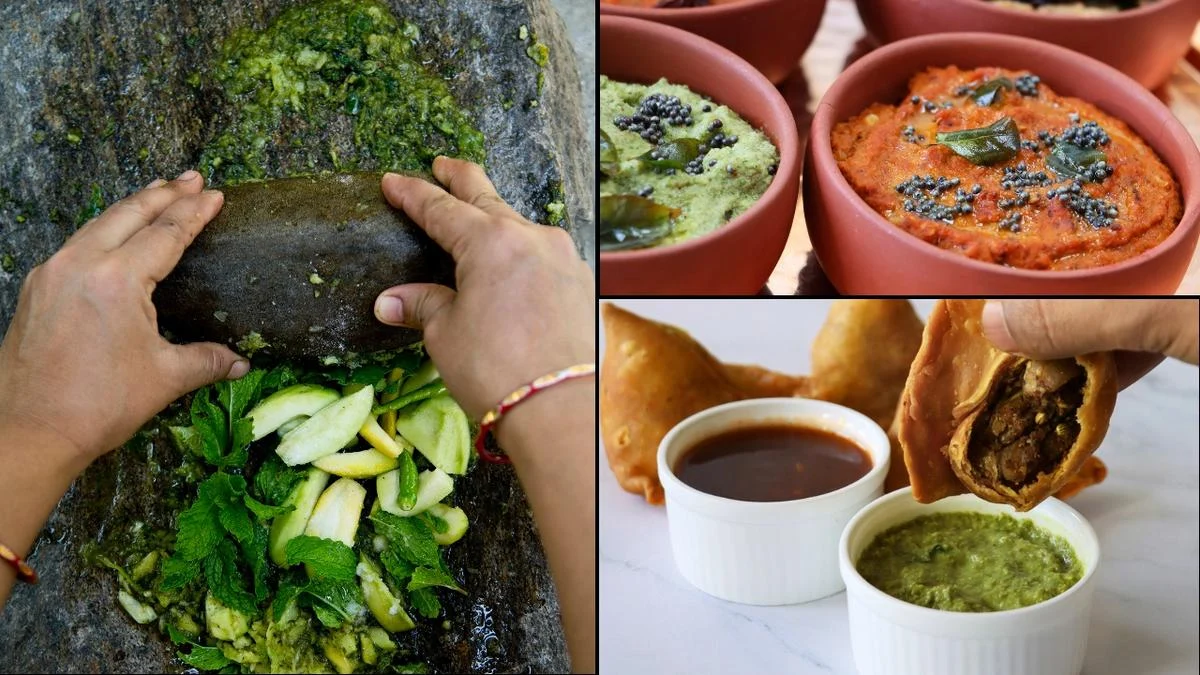
In the grand, often contentious theater of Indian national identity, debates frequently spill over from the floor of Parliament to the dining tables of the common citizen. Whether the discussion concerns a singular national language, a unified election cycle, or the selection of a national bird, the discourse is rarely as spirited as when it turns toward the plate. For years, a culinary cold war has simmered between the proponents of Biryani—the fragrant, celebratory centerpiece of the subcontinent—and the advocates of Khichdi—the humble, comforting staple of the masses.
However, a new perspective is emerging that suggests both sides may be looking at the wrong part of the plate. In her seminal work, Chutney Chronicles, author Sudha G. Tilak argues that if India is to have a national dish, it should not be a main course, but rather the condiment that accompanies it. The chutney, Tilak posits, is the ultimate "flavour map" of the nation, a culinary embodiment of the "unity in diversity" mantra that has defined the Indian project since 1947.
Main Facts: A Condiment at the Center of the Map
The core thesis of the current culinary debate rests on the idea that while Biryani and Khichdi are regional variations of rice and lentils, the chutney is a universal constant with infinite variables. It is a dish that refuses to be pigeonholed, adapting its form, flavor, and function to every micro-climate and community in the subcontinent.
As Tilak notes in Chutney Chronicles, the geography of India can be traced through its mortars and pestles: "Coconut traces the coasts, tamarind anchors the south, garlic and chillies blaze through the north, while the east leans into fruity tangs." Unlike more rigid dishes, the chutney is a vessel for seasonal abundance and local ingenuity. It encompasses everything from the delicate use of neem flowers and borage leaves to the robust pungency of fermented soybeans.
The significance of the chutney has also been recognized by intellectual heavyweights outside the culinary world. Nobel laureate Abhijit V. Banerjee, in his foreword to Tilak’s book, describes chutneys as "taste-bud openers." He argues that they reflect the "true complexity" of Indian cuisine, which thrives on the ability to build a cohesive meal out of a staggering array of disparate tastes and textures.

Chronology: From Mughal Hakims to the British Raj
The history of the chutney is, in many ways, the history of India’s interactions with the world and its own indigenous roots. While the practice of pounding ingredients into a paste is undoubtedly ancient, the recorded history of the condiment provides a fascinating timeline of cultural synthesis.
The Mughal Era: Medicinal Beginnings
The first official records of chutney in the form we might recognize today date back to the 17th-century Mughal court. Specifically, historical accounts point to the hakim (physician) of Emperor Shah Jahan. Legend suggests that during a period of illness, the Emperor was prescribed a diet of spicy and tangy accompaniments—composed of lentils, spices, and herbs—to stimulate his appetite and aid digestion. This medicinal origin highlights the chutney’s dual role as both a flavor enhancer and a digestive aid.
The Colonial Influence: The Birth of the "Major Grey" Style
The British Raj saw the chutney undergo a transformation for the global stage. As British officers and administrators developed a palate for Indian flavors, they sought to preserve them for the long journey back to Europe. This led to the creation of the "Anglo-Indian" chutney—sweeter, often vinegar-based, and utilizing fruits like green apples or plums. This era gave birth to the world-famous "Major Grey’s Chutney," a mythologized recipe that turned the Indian condiment into a staple of the British pantry, illustrating how Indian cuisine was "chutnified" for Western consumption.
The Modern Era: Post-Independence Identity
Following 1947, the chutney remained a steadfast symbol of local identity amidst the push for national homogenization. While the government debated national symbols, the kitchens of India continued to produce regional specialties that defied centralization. In 1981, Salman Rushdie immortalized the concept in his novel Midnight’s Children, using "chutnification" as a metaphor for the preservation of memory and the blending of a billion disparate lives into a single, complex national narrative.
Supporting Data: A Gastronomic Inventory of Diversity
The sheer diversity of chutney is its most potent argument for national status. It is a dish that accommodates every dietary preference and socioeconomic reality.

Regional Mapping
- The North: Defined by the cooling properties of mint and coriander, but also the rugged flavors of the Kashmiri walnut chutney (Doon Chetin). In Gujarat, the dungri ni onion chutney provides a sharp, pungent kick to fried snacks.
- The South: Dominated by the chammanthi (coconut chutney) of Kerala and the fiery pachadis of Andhra Pradesh. Here, the sourness of tamarind acts as a preservative and a flavor anchor.
- The East: Known for its "fruity tangs," including tomato-khejur (date) chutneys and the use of seasonal berries. In the Northeast, specifically Nagaland, the use of fermented soybeans (axone) creates a deep, umami-rich profile.
- The Tribal Heartland: In the forests of Chhattisgarh and Odisha, the red ant chutney (chaprah) and the madhuca (mahua flower) chutney represent the foraging traditions of India’s indigenous tribes.
Inclusivity and Sustainability
The chutney is arguably the most inclusive dish in the Indian repertoire.
- Vegan and Vegetarian: The vast majority of chutneys are naturally plant-based, making them a "bonanza of choices" for the vegan community.
- Non-Vegetarian: The tradition extends to meat and seafood, such as the piquant chicken pachadi or the Mangalorean dried shrimp chutney.
- Zero-Waste: Chutney is the original sustainable food. Mandarin orange peels, watermelon rinds, and vegetable stalks—parts of food usually discarded—are frequently "chutney-fied" into delicious accompaniments.
Official Responses: Intellectual and Political Perspectives
While there has been no official decree from the Ministry of Culture regarding a "National Food," the intellectual response to the "Chutney Manifesto" has been profound.
The Economic Perspective: Abhijit V. Banerjee’s endorsement suggests that the chutney is a masterclass in resource management. It takes low-cost, locally available ingredients and, through the application of technique and spice, elevates them to a status that defines the dining experience.
The Literary Perspective: Salman Rushdie’s "chutnification" remains the most famous literary application of the dish. He marveled at the "feasibility of the chutnification of history; the grand hope of the pickling of time!" To Rushdie, the chutney was not just food; it was a way to fit the "six hundred million eggs" of the Indian population into a single jar without losing the essence of any individual.
The Political Science Perspective: In the California Review of Books, critic Brian Tanguay and podcast host David Runciman have discussed "chutnification" as a model for democracy. They describe it as "the process of blending many disparate ingredients into a palatable paste" as a way to think about the "complex, messy and painstaking process of building a democracy." It is a way to bring competing interests and feuds into a coherent form without erasing their original character.

Implications: The Chutney vs. The Melting Pot
The debate over the chutney has implications that reach far beyond the kitchen, offering a critique of Western models of integration. For decades, the United States utilized the "melting pot" as its primary metaphor for multiculturalism. However, the melting pot implies a process of smelting where individual identities are lost to create a uniform "stew."
In the current global political climate—marked by a move toward "white bread" visions of nationalism and the rise of isolationist policies—the "melting pot" is losing its efficacy. The chutney offers a superior alternative. In a chutney, the ingredients are blended, but the individual textures—the crunch of a mustard seed, the fiber of a ginger sliver, the heat of a chili—remain discernible.
A Model for Global Multiculturalism
The implication is that the "chutnification" of society allows for a "model minority" style of integration where different groups can assimilate into the mainstream with ease while retaining their distinct cultural "flavor." It is a dish that exists on the margins of the plate, yet its absence makes the entire meal feel incomplete.
As India moves toward the mid-21st century, the lesson of the chutney is one of resilience and adaptability. It does not make a "khichdi" (a mushy mixture) of diversity in the name of unity. Instead, it proves that you can have a thousand different recipes, a thousand different ingredients, and a thousand different heat levels, and still call it by one name.
In the end, the most potent argument for the chutney as the national food is its refusal to be centralized. There is no "one chutney to bind them all," and in a nation as vast and varied as India, that may be the most honest representation of its people. As Sudha G. Tilak’s work suggests, to understand the chutney is to understand the "pickling of time" and the enduring, spicy, and tangibly complex heart of the Indian subcontinent.
