

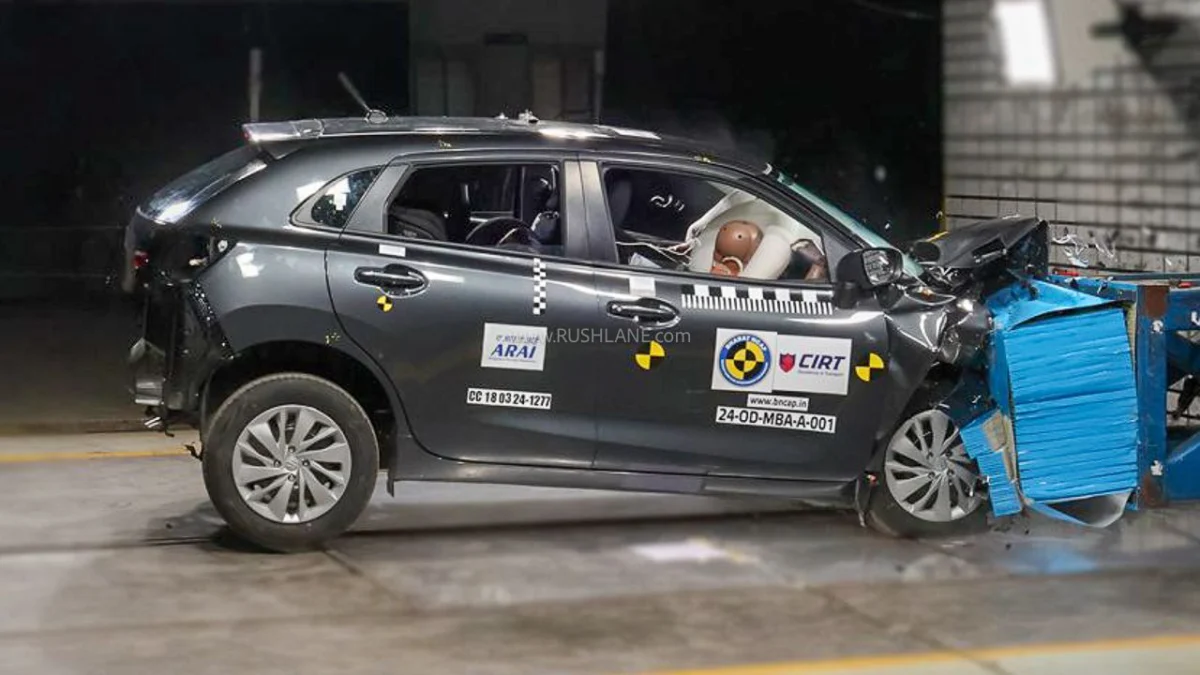
In an automotive era characterized by "feature creep" and the increasing heft of electric vehicle batteries, Suzuki Motor Corporation is pivoting toward a contrarian engineering philosophy. At the recently concluded Suzuki Technology Strategy Briefing 2026, the Japanese automaker unveiled a comprehensive roadmap aimed at stripping up to 100 kilograms from its future vehicle lineup by the year 2030.
This initiative, which spans vehicle architecture, powertrain innovation, and even the minute details of individual fasteners, is set to have a profound impact on its Indian subsidiary, Maruti Suzuki. By focusing on "lightweighting," Suzuki aims to solve the industry’s most pressing paradox: how to increase safety and technology without compromising fuel efficiency or performance.
1. Main Facts: The Pillars of Suzuki’s Lightweight Strategy
Suzuki’s strategy is not based on a single "silver bullet" solution but is rather a cumulative effort across multiple engineering disciplines. The program identifies a clear path toward a 100kg reduction, with ongoing feasibility studies suggesting a total potential saving of up to 120kg in certain models.
The 100kg Roadmap
The reduction targets are distributed across four primary domains:
- Body and Structure: Redesigning the frame and monocoque to use high-tensile materials while optimizing energy dissipation paths.
- Powertrains: Downsizing engines and using lighter alloys for internal components.
- Electrical Systems: Reducing the weight of wiring harnesses and electronic control units (ECUs).
- Component Optimization: Examining every nut, bolt, and bracket to eliminate redundant mass.
The Resin CNG Revolution
For the Indian market, the most significant announcement involves the transition of Compressed Natural Gas (CNG) storage. Currently, CNG vehicles rely on heavy steel cylinders that weigh approximately 60kg. Suzuki is developing resin-based composite cylinders that weigh just 20kg. This 40kg saving represents a massive leap in efficiency for the CNG segment, which is a cornerstone of Maruti Suzuki’s portfolio.
The "Gram Strategy"
Borrowing from its motorcycle and outboard motor divisions, Suzuki is applying a "gram-by-gram" approach. A notable example provided during the briefing was the redesign of the standard M8 bolt. By reducing the head size of a single bolt, engineers can save one gram. While seemingly negligible, a modern car contains over 2,000 bolts; optimizing these alone can strip several kilograms from the vehicle’s dry weight.

2. Chronology: The Evolution of Suzuki’s Engineering Philosophy
Suzuki’s obsession with weight is not new, but the 2026 Strategy Briefing marks a formalization of these efforts into a time-bound corporate goal.
- 2014–2018: The Heartect Era: Suzuki introduced the ‘Heartect’ platform, which utilized high-tensile steel and a smoother, curved frame to reduce weight compared to older "box-section" chassis. This platform underpinned global successes like the Baleno and Swift.
- 2020–2023: Hybridization and Safety Pressures: As global safety standards (like Global NCAP and Bharat NCAP) became more stringent, vehicles naturally became heavier due to added reinforcement and airbags. Suzuki realized that further weight reduction would require a fundamental rethink of materials beyond just the chassis.
- 2024 (The Briefing): Suzuki formally announces the 100kg reduction target for 2030. The company clarifies that this will be achieved through the "Sho-Sho-Kei-Tan-Bi" philosophy (Smaller, Fewer, Lighter, Shorter, Beauty).
- 2025–2030 (The Implementation Phase): The rollout of new turbo-petrol engines, 48V hybrid systems, and the lightweight resin CNG tanks across the global and Indian lineups.
3. Supporting Data: The Physics of Efficiency
The drive for lightweighting is rooted in the fundamental laws of physics. For every 100kg removed from a vehicle, there is a direct and measurable improvement in several key performance metrics.
Fuel Consumption and Emissions
Industry data suggests that a 100kg reduction in vehicle weight typically leads to a fuel efficiency improvement of approximately 1 to 1.5 kilometers per liter (km/l) in internal combustion engines. Furthermore, it results in a reduction of roughly 7 to 9 grams of CO2 per kilometer. For a company like Maruti Suzuki, which sells over 1.5 million cars annually in India, these marginal gains aggregate into a massive reduction in the brand’s total carbon footprint.
Braking and Dynamics
Weight is the enemy of momentum. A lighter car requires less energy to stop, meaning braking systems can be downsized (further reducing weight) while maintaining or improving stopping distances. Additionally, a lower mass reduces the "pendulum effect" in corners, allowing for better handling and less wear on tires and suspension components.
Comparison: Steel vs. Resin CNG Tanks
| Feature | Traditional Steel Tank | Proposed Resin Tank | Improvement |
|---|---|---|---|
| Weight | ~60 kg | ~20 kg | 66.6% Reduction |
| Impact on Payload | Significant | Minimal | Higher Cargo Capacity |
| Center of Gravity | Higher/Rear-biased | Lowered/Balanced | Improved Stability |
4. Official Responses: The "Sho-Sho-Kei-Tan-Bi" Philosophy
During the Technology Strategy Briefing, Suzuki leadership emphasized that weight reduction would not come at the expense of safety. The company is leaning heavily on its corporate manufacturing philosophy, known as Sho-Sho-Kei-Tan-Bi.
- Sho (Smaller): Designing components to be more compact to save space.
- Sho (Fewer): Reducing the total part count in a vehicle to minimize assembly complexity and weight.
- Kei (Lighter): The core focus of the 2030 goal—using advanced materials like ultra-high-tensile steel and resins.
- Tan (Shorter): Shortening development cycles and the physical distance energy must travel through a structure during a crash.
- Bi (Beauty): Ensuring that the functional pursuit of lightness results in a clean, aesthetically pleasing design.
Official Stance on Safety:
Suzuki engineers clarified that the strategy involves "managing energy" rather than just "adding metal." By moving the engine forward and optimizing the deformation space between the powertrain and the cabin, they can create a more effective "crumple zone." This allows the vehicle to meet 5-star safety requirements using thinner, stronger sections of steel rather than thick, heavy plates.

5. Implications: What This Means for the Future of Mobility
The 100kg weight reduction program has far-reaching implications for consumers, the environment, and the competitive landscape of the automotive industry.
For the Indian Consumer
In India, "Kitna Deti Hai" (How much mileage does it give?) remains the ultimate consumer query. Maruti Suzuki already leads in fuel efficiency, but a 100kg lighter Baleno or Brezza could set benchmarks that competitors using traditional heavy platforms may find impossible to match. Furthermore, the resin CNG tank addresses the biggest complaint of CNG owners: the loss of boot space and the sluggish performance caused by the heavy cylinder.
The EV Transition
Weight reduction is perhaps most critical for Electric Vehicles (EVs). Battery weight is the primary hurdle for EV range. If Suzuki can shave 100kg from the chassis and components of an EV, they have two choices:
- Increase Range: Keep the battery size the same and gain 10–15% more range.
- Decrease Cost: Use a smaller, lighter battery to achieve the same range, thereby making the EV more affordable for the mass market.
Mono-fuel CNG Vehicles
Suzuki’s study of mono-fuel CNG systems (vehicles that run exclusively on gas without a petrol tank) suggests a future where the internal combustion engine is simplified. By removing the fuel pump, petrol tank, and associated lines, another 20–30kg could be saved. This would be particularly viable in urban Indian markets where the CNG infrastructure is now robust.
Competitive Pressure
Suzuki’s move puts pressure on rivals like Tata Motors and Hyundai. While competitors have focused on "perceived toughness" through heavier builds, Suzuki is betting that the future belongs to "intelligent toughness"—where safety is achieved through engineering finesse rather than sheer mass.
Conclusion
Suzuki’s 2030 lightweighting vision represents a return to the core principles of efficient engineering. By targeting a 100kg reduction, the company is not just making cars faster or more frugal; it is creating a sustainable blueprint for the next generation of mobility. For Maruti Suzuki in India, this strategy ensures that the brand remains synonymous with value, efficiency, and increasingly, sophisticated engineering. As the first resin CNG tanks and "optimized bolts" begin to appear in production models, the industry will be watching closely to see if Suzuki can truly prove that, in the world of automotive design, less is indeed more.
