

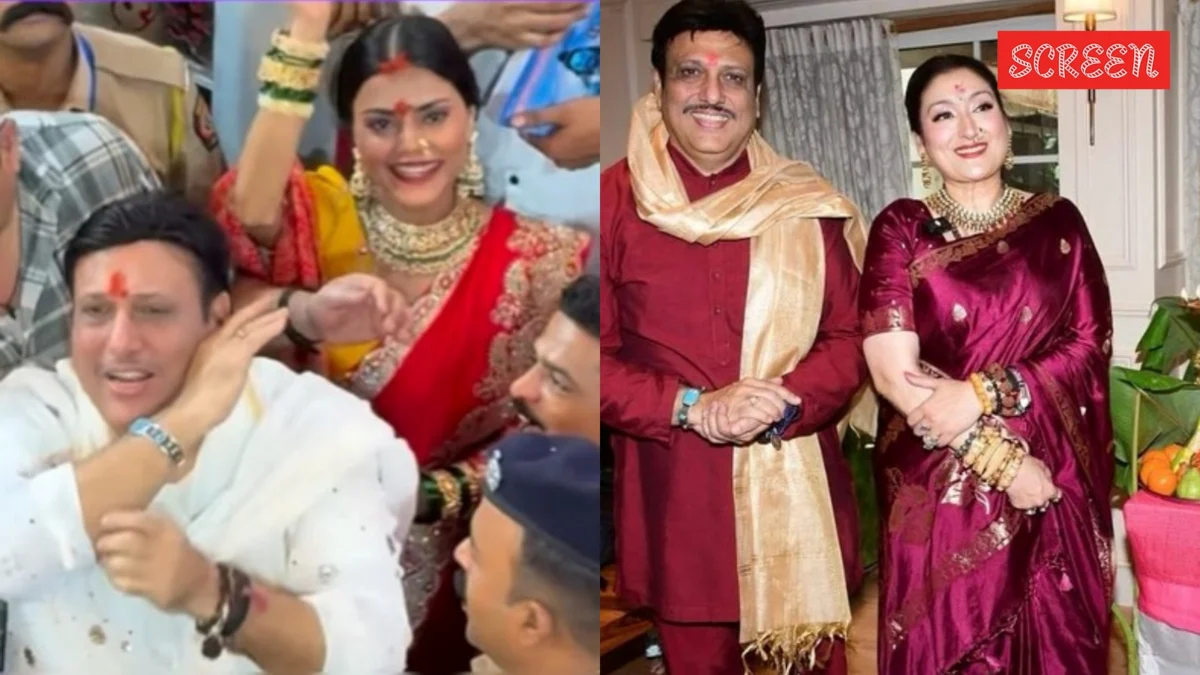
Mumbai, India – Amidst a swirling vortex of speculation surrounding her alleged relationship with veteran Bollywood actor Govinda, actress Komal Rani Swarnkar has vehemently denied any wrongdoing, issuing a strongly worded statement on Instagram Stories that refutes claims of being a "homebreaker" and questions the public pronouncements of Govinda’s wife, Sunita Ahuja. The public exchange marks a significant escalation in a narrative that has gripped entertainment circles, bringing Govinda’s long-standing marriage under intense scrutiny.
The controversy gained significant traction following Sunita Ahuja’s recent public appeal for support, where she likened marital troubles to battling "demons" and sought solidarity from women and the Gen-Z demographic. Swarnkar’s statement, released shortly after, directly addresses the accusations, though without explicitly naming Ahuja or Govinda. Her remarks are widely interpreted as a direct response to the ongoing public discourse and a recent joint appearance with Govinda at Mumbai’s Lalbaugcha Raja Ganpati festival, which further fueled rumors about their connection.
The Accusations and the Denials: A Public Feud Unfolds
Komal Rani Swarnkar, known for her role in the film "Roopa," which also stars Govinda, has found herself at the center of a media storm. The actress’s Instagram post, a detailed and impassioned defense, attempts to dismantle the narrative that she is responsible for the alleged discord in the Ahuja household. Her statement, laced with poignant metaphors and rhetorical questions, seeks to shift the blame and expose what she perceives as a calculated attempt to tarnish her reputation.
"Nobody ever can be a homebreaker in already broken house," Swarnkar declared in her statement, a pointed jab at the notion that she could be the catalyst for marital breakdown. She further questioned the wisdom of publicizing personal struggles, suggesting a disconnect between genuine pain and a desire for public attention. "I don’t understand what kind of pain a woman is going through, where, instead of trying to heal it, she seems to enjoy putting it on display in public," she wrote, implying that Sunita Ahuja’s public pronouncements might be more performative than genuine.
Swarnkar’s statement also delves into the psychological aspects of the situation, questioning the motives behind what she describes as a "carefully thought out conspiracy" to "mentally harass a man, stop him from working, force him to sit at home and waste away, isolate him completely and drive him to the point of death." She starkly contrasts this with the behavior expected of a "good and devoted wife," suggesting that such treatment of a husband is uncharacteristic of a healthy marital relationship. The actress posits that this public display might be a strategic maneuver to gain sympathy, especially when private resolutions have apparently failed. "They can achieve by going public and gaining people’s sympathy," she wrote, leaving little room for ambiguity regarding her perception of the situation.
The actress concluded her statement with a direct plea for her name to be removed from the dispute, stating, "Stop using my name to serve your agenda. May God protect every decent man from such cunning women." This closing remark underscores her frustration and her desire to extricate herself from a situation that has seemingly spiraled out of control.
A Chronology of Escalation: From Festival Appearances to Public Appeals
The current public spat can be traced back to a series of events that have intensified the scrutiny on Govinda and his marital life. The initial spark appears to have been Govinda’s appearance with Komal Rani Swarnkar at the revered Lalbaugcha Raja Ganpati pandal in Mumbai on September 22. This event was particularly noteworthy as it occurred shortly after Sunita Ahuja had visited the same pandal alone. The visual of Govinda and Swarnkar together, especially in the context of a public religious gathering, was quickly interpreted by media and the public as a sign of their close association, thereby reigniting long-standing rumors about their relationship.
Following this, Sunita Ahuja made her own public statement while visiting the Dakshineswar Kali Temple in Kolkata. Her pilgrimage was framed as a quest for divine intervention to remove "demons" from her life, a clear metaphorical reference to the troubles plaguing her marriage. Her pronouncements were direct and emotionally charged, appealing to the media to refrain from giving publicity to individuals she believes are exploiting the situation for personal gain. "Those who are trying to gain publicity by coming into the media, I fold my hands and request the media not to support them," she stated, a veiled reference that many interpreted as directed at Swarnkar.
Ahuja’s plea for support extended to younger generations and women at large. "I want all of you to please support me. All the Gen-Z youngsters and women, please support me. What is happening to me is not right. My home is breaking for no reason," she implored, highlighting the distress she claims to be experiencing. This public appeal for external validation and sympathy significantly amplified the narrative, placing Govinda and his alleged affairs under an even harsher spotlight.
Govinda himself had previously addressed the speculation surrounding his visit to Lalbaugcha Raja with Swarnkar. He asserted that their presence together was purely professional, linked to the promotion of his upcoming film "Roopa." Drawing parallels to past collaborations with actresses like Karisma Kapoor and Raveena Tandon, he explained that such visits to temples were often undertaken for good luck before film releases. "I went to Lalbaugcha to pray for my film ‘Roopa’… I prayed as I am starting it again after a long time," he told ANI.
However, Govinda also hinted at a more strategic aspect to the unfolding events, suggesting that the controversy was not accidental but a "very strategically planned movement" aimed at isolating him from his family and tarnishing his image. This assertion suggests a deeper, possibly orchestrated, attempt to disrupt his personal and professional life.
Supporting Data and Context: A History of Rumors and Public Appearances
The current controversy is not an isolated incident but appears to be part of a recurring narrative that has shadowed Govinda and Sunita Ahuja’s marriage for years. Rumors of Govinda’s alleged affairs have surfaced periodically, often linked to his co-stars. The public appearances with Komal Rani Swarnkar, particularly the recent one at Lalbaugcha Raja, have served as potent catalysts for these resurfaced discussions.
Govinda and Sunita Ahuja have been married since 1987, a union that has produced two children, daughter Tina Ahuja and son Yashvardhan Ahuja. Their long-standing relationship, once considered a bedrock of Bollywood, is now being dissected under the weight of these allegations. The public nature of their marital issues is a stark departure from the typical discretion maintained by many celebrity couples in India.
The film "Roopa," mentioned by Govinda as the reason for his joint appearance with Swarnkar, is reportedly an upcoming project that marks a new phase in the actor’s career. His explanation that temple visits are a personal ritual for good fortune in his film endeavors is a plausible defense, yet it has been overshadowed by the broader context of marital discord.
The strategy of using public platforms, such as social media and religious festivals, to address or amplify personal matters is becoming increasingly common in the age of digital media. Sunita Ahuja’s appeal to Gen-Z and women reflects an understanding of how to leverage these platforms to garner support and shape public opinion. Similarly, Swarnkar’s use of Instagram Stories is a direct response, aiming to counter the narrative in a similarly accessible and immediate manner.
Official Responses and Public Statements: A Multifaceted Narrative
The responses from the key individuals involved paint a complex and often contradictory picture.
Komal Rani Swarnkar’s Statement:
- Core Message: Denies being a "homebreaker" and questions the motives behind public displays of marital distress.
- Key Arguments:
- Cannot be blamed for problems in an "already broken house."
- Questions the wisdom of publicizing personal pain instead of seeking private resolution.
- Suggests the public pronouncements might be a "carefully thought out conspiracy" to mentally harass Govinda.
- Implies that a devoted wife would not treat her husband so poorly.
- Questions if the behavior is driven by a desire for public sympathy.
- Requests her name not be used to serve others’ agendas.
Sunita Ahuja’s Statement:
- Core Message: Seeks divine intervention for marital troubles and requests public and media support against those causing harm.
- Key Arguments:
- Visited Dakshineswar Kali Temple to ask Goddess Kali to destroy "demons" in her life.
- Appeals to the media not to support individuals seeking publicity through the controversy.
- Asks for support from women and Gen-Z, stating her home is breaking "for no reason."
- Implies her suffering is unjust and that her home is being unfairly disrupted.
Govinda’s Statement:
- Core Message: Attributes joint appearances to professional commitments and suggests the controversy is a deliberate attempt to damage his reputation.
- Key Arguments:
- Visit to Lalbaugcha Raja with Swarnkar was for his film "Roopa."
- Compares it to previous auspicious temple visits with other actresses.
- Claims the controversy is a "strategically planned movement" to isolate him and tarnish his image.
- Suggests past attempts to destabilize him have failed.
Implications and Future Outlook: The Lingering Shadow of Speculation
The public airing of grievances between Swarnkar and Ahuja has far-reaching implications, not only for the individuals involved but also for the perception of celebrity relationships and marital harmony in the public eye.
The persistent rumors and the ensuing public statements raise questions about the stability of Govinda and Sunita Ahuja’s marriage, a relationship that has endured for over three decades. The narrative of marital strife, amplified by public appeals and counter-statements, risks causing irreparable damage to their personal lives and public image.
Komal Rani Swarnkar’s forceful defense, while understandable from her perspective, places her directly in the crossfire. Her efforts to distance herself from the "homebreaker" label may be overshadowed by the persistent media narrative, making it challenging for her to escape the association.
Sunita Ahuja’s appeal for support, particularly from younger generations, highlights a contemporary approach to navigating personal crises in the digital age. The success of such appeals often depends on the ability to connect emotionally with a wider audience and to frame the narrative in a way that elicits sympathy and solidarity.
Govinda’s assertion of a "strategically planned movement" introduces a layer of intrigue, suggesting that the current situation might be part of a larger, more complex game. This adds another dimension to the narrative, hinting at potential external forces at play.
As the story unfolds, the media and the public will likely continue to dissect every statement and appearance, seeking clarity amidst the conflicting accounts. The long-term implications for Govinda’s career, his family life, and the reputations of all involved remain to be seen. However, the current public exchange has undeniably cast a long shadow of doubt and speculation over a once-stable celebrity marriage, leaving audiences to ponder the true extent of the turmoil within the Ahuja household. The narrative is far from over, and the coming days are likely to bring further developments in this unfolding celebrity drama.
