

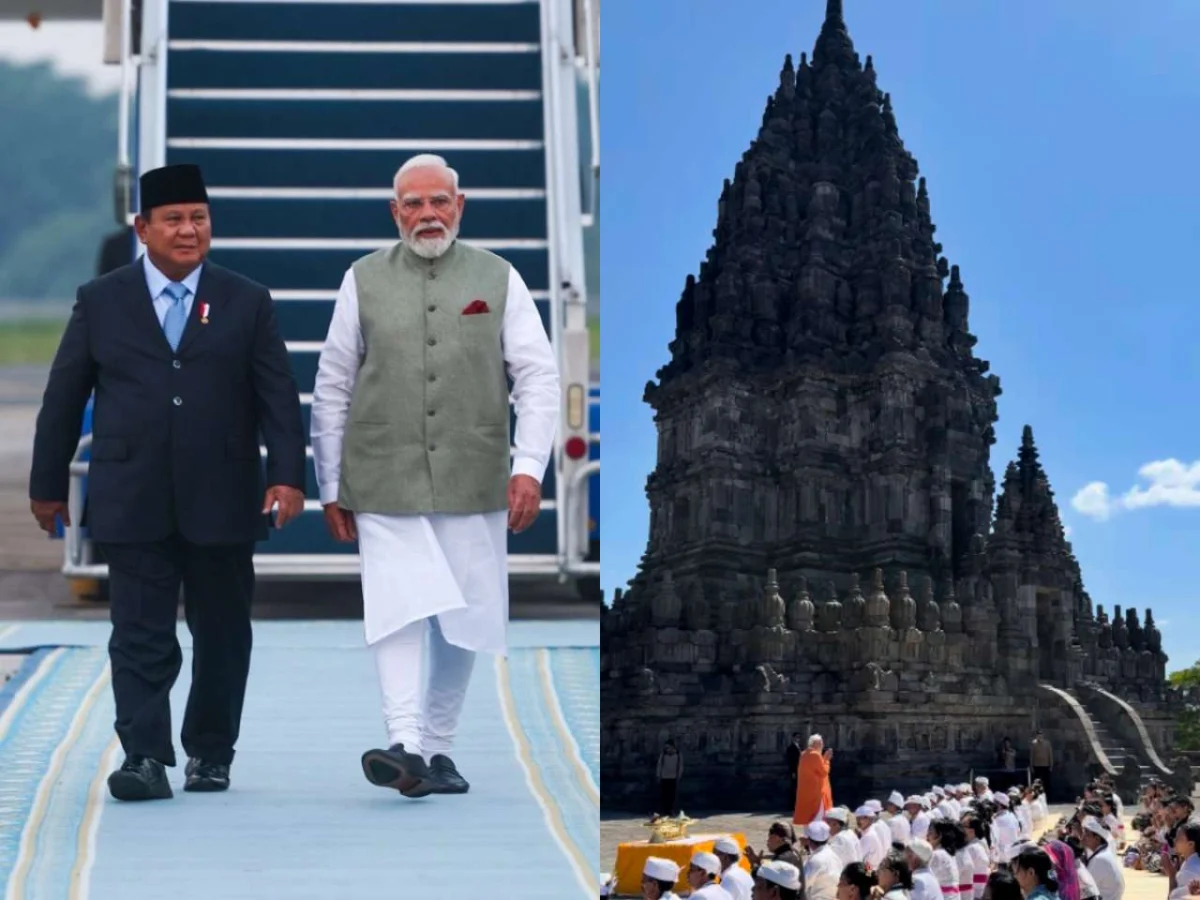
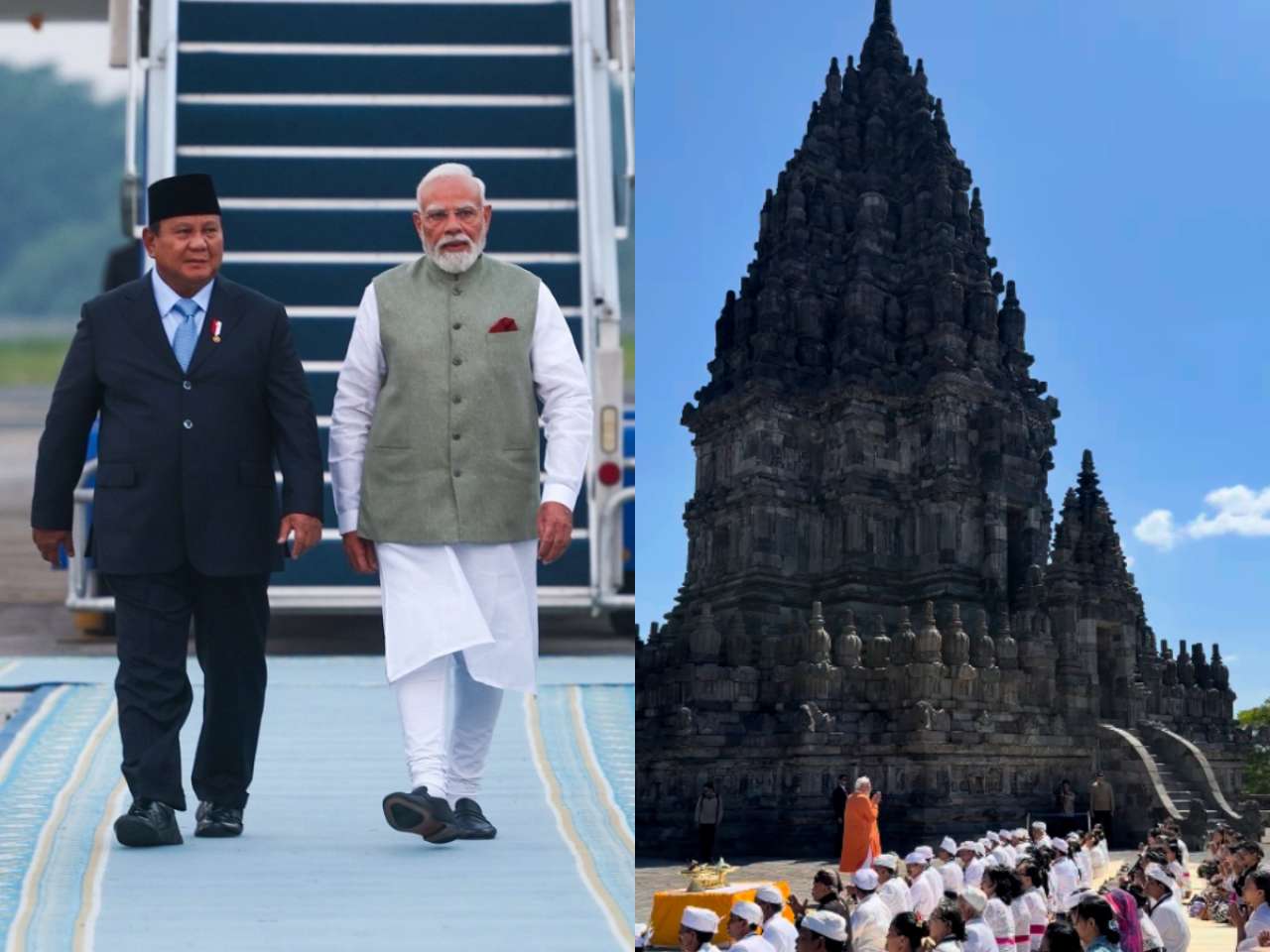
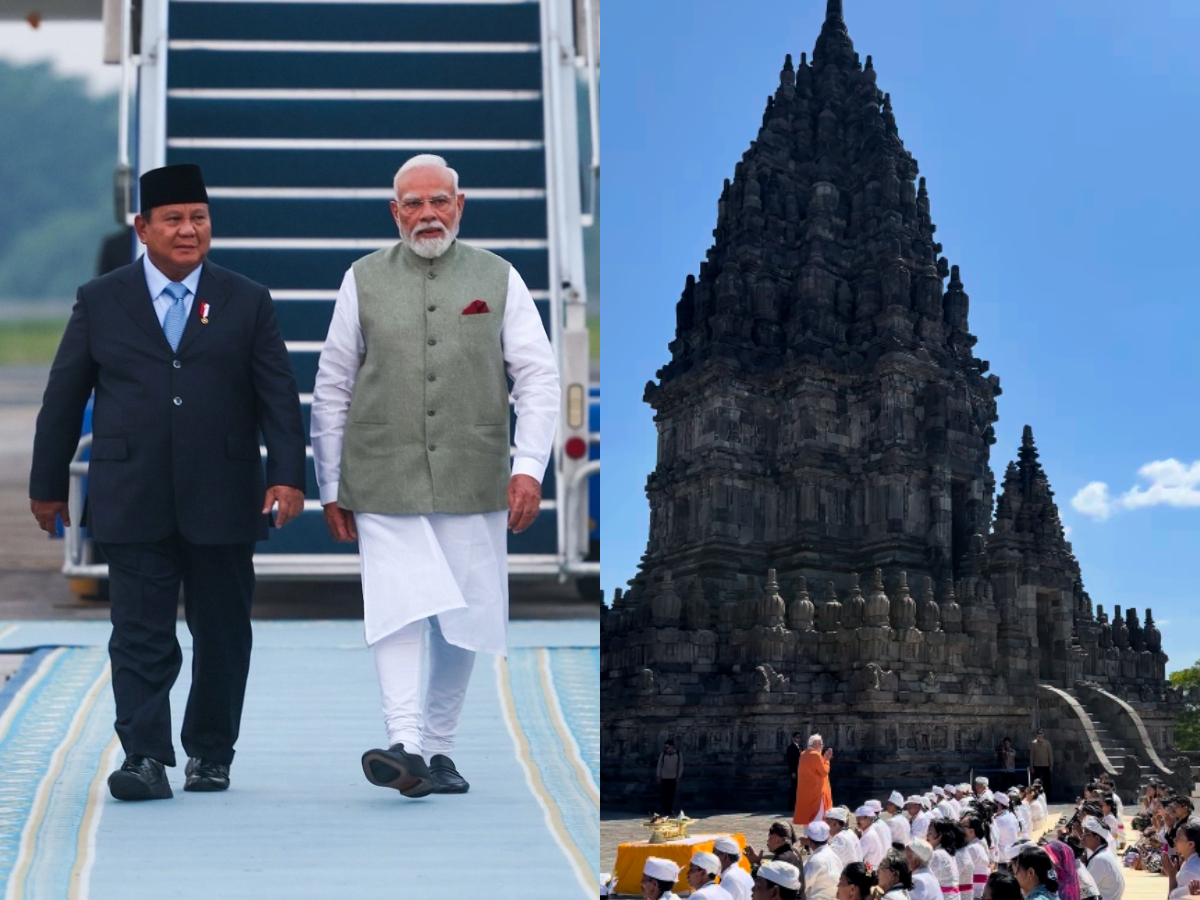
Yogyakarta, Indonesia – During his recent state visit to Indonesia, Prime Minister Narendra Modi made a significant pilgrimage to the majestic Prambanan Temple complex, a UNESCO World Heritage Site nestled near Yogyakarta. This visit transcended mere diplomatic protocol, serving as a powerful visual testament to the deep-rooted, centuries-old cultural and historical ties that bind India and Indonesia. The spiritual journey to this architectural marvel, a testament to Indonesia’s vibrant Hindu past, also signals a potential for enhanced collaboration in preserving such invaluable global heritage sites.
While Indonesia is globally recognized as the world’s most populous Muslim-majority nation, the presence and continued reverence of the Prambanan Temple stand as a profound symbol of its rich and diverse historical tapestry, particularly its significant Hindu heritage. Prime Minister Modi’s presence at the ancient temple not only acknowledged this shared cultural legacy but also highlighted the enduring influence of Indian civilization in Southeast Asia.
The Grandeur of Prambanan: A Beacon of Hindu Architecture in Southeast Asia
Prambanan, located in Central Java, is not merely a temple; it is a sprawling complex that represents the pinnacle of Hindu temple architecture in Indonesia and stands as one of the largest in the entire Southeast Asian region. Its grandeur is second only to the iconic Angkor Wat in Cambodia, another testament to the expansive reach of ancient Indian cultural influence.
The construction of this magnificent edifice dates back to the 9th and 10th centuries, during the reign of the Sanjaya Dynasty of the ancient Mataram Kingdom. The complex is a sacred tribute to the Hindu Trimurti – the principal deities of Lord Shiva, Lord Vishnu, and Lord Brahma – reflecting a profound understanding and devotion to the core tenets of Hinduism.
)
Often juxtaposed with the nearby Borobudur Temple, a UNESCO World Heritage Site that eloquently narrates Indonesia’s Buddhist heritage, Prambanan completes the narrative of ancient Java’s rich and pluralistic religious and cultural landscape. Together, these two monumental structures offer an unparalleled glimpse into the sophisticated spiritual and artistic achievements of the region’s past civilizations.
The historical and architectural significance of the Prambanan Temple Compound was officially recognized by UNESCO in 1991, when it was inscribed as a World Heritage Site, cementing its status as a treasure of global importance.

Architectural Marvels and Spiritual Significance
The immediate impression of Prambanan is its commanding presence, characterized by soaring, elegant towers that pierce the Javanese sky. The central heart of the complex comprises three principal temples, each dedicated to one of the Trimurti. The Temple of Shiva, the destroyer and transformer, is the tallest, reaching an impressive height of approximately 47 meters. Within its sacred confines, visitors can find statues of Lord Shiva, along with his consort Goddess Durga, the elephant-headed deity Lord Ganesha, and the revered sage Agastya.
The architectural layout of the temples adheres to a meticulously planned square grid, a design deeply rooted in Hindu cosmology and its understanding of the universe. This spatial organization reflects a profound philosophical integration of faith and design. Originally, the Prambanan complex boasted an expansive vision, encompassing around 240 temples spread across nearly 40 hectares. While many of the subsidiary structures have succumbed to the ravages of time and are now in ruins, the main shrines have undergone extensive and dedicated restoration, ensuring their survival for future generations.
)
The Epic Narratives Etched in Stone: The Ramayana at Prambanan
Beyond its imposing architecture, Prambanan is renowned for its intricate and evocative stone carvings. The temple walls are adorned with detailed bas-reliefs that meticulously narrate the epic saga of the Ramayana, one of Hinduism’s most cherished and influential scriptures. Tradition dictates that visitors traverse the temple complex in a clockwise direction, allowing them to follow the unfolding narrative of the epic as depicted on the stone canvases.
These remarkable carvings are not merely decorative; they serve as a powerful conduit, showcasing the profound influence of Indian culture on Javanese art while simultaneously embodying the distinct artistic sensibilities and local adaptations of Java. The enduring legacy of the Ramayana is further celebrated through contemporary performances. The temple complex frequently serves as a breathtaking backdrop for open-air Ramayana ballet performances, where the fusion of dance, music, and theatre creates an immersive cultural experience, with the illuminated temple providing a truly magical setting.
)
The Legend of Princess Roro Jonggrang: Folklore and Identity
Prambanan is inextricably linked to a celebrated Javanese legend that imbues the site with a rich layer of local folklore and cultural identity. The tale revolves around Princess Roro Jonggrang, who, according to the legend, agreed to marry the formidable warrior Bandung Bondowoso on the condition that he construct 1,000 temples within a single night.
The ambitious prince, aided by supernatural forces, nearly accomplished this monumental task. However, the resourceful princess, fearing the union, devised a clever scheme to thwart his efforts. She orchestrated the villagers to light fires and pound rice, creating the illusion that dawn had arrived prematurely. Deceived by this ruse, the spirits assisting the prince withdrew before the thousandth temple could be completed.
)
Enraged by the princess’s deception, Bandung Bondowoso, in his fury, cursed Roro Jonggrang, transforming her into stone. Local tradition holds that the statue of Goddess Durga enshrined within the Temple of Shiva represents the cursed princess. While historians generally regard this narrative as folklore, it remains a vital and cherished part of the local cultural heritage, adding a romantic and mythical dimension to the temple’s history.
From Ancient Ruins to a Protected World Heritage Site
Following significant political shifts in the 10th century, the grandeur of Prambanan began to fade, and the complex gradually fell into disrepair. The relentless forces of nature, including volcanic eruptions and seismic activity, coupled with prolonged periods of neglect, took their toll. Many structures were damaged, and large parts of the temple complex became buried under volcanic ash and encroaching vegetation, rendering them hidden for centuries.
)
The site’s rediscovery in the 19th century marked a turning point, initiating a long and arduous process of restoration. Despite these efforts, the temple faced further adversity. The devastating Yogyakarta earthquake in 2006 inflicted considerable damage, necessitating yet another phase of meticulous restoration and preservation projects. Through these sustained endeavors, the monument has been painstakingly safeguarded and its historical integrity maintained.
Today, while the reconstruction and restoration of several smaller temples continue, the main shrines stand proudly restored, attracting a multitude of visitors and remaining one of Indonesia’s most significant tourist attractions and cultural landmarks.
)
A Lasting Symbol of Indonesia’s Enduring Hindu Heritage
Despite the demographic shift in modern Indonesia, where Islam is the dominant faith, the echoes of Hindu traditions remain an indispensable and vibrant component of the nation’s historical and cultural fabric. The influence of Hinduism first reached the Indonesian archipelago over 1,500 years ago, carried by burgeoning trade routes and dynamic cultural exchanges with India.
This period saw the rise of numerous Hindu and Hindu-Buddhist kingdoms that held sway over significant portions of Java, Sumatra, and Bali. These powerful dynasties left behind an indelible legacy in the form of magnificent temples, ancient inscriptions, and enduring cultural traditions that continue to shape the Indonesian identity. While Bali stands today as the primary heartland of Hinduism in Indonesia, monumental sites like Prambanan serve as crucial custodians of the country’s rich and multifaceted Hindu past, ensuring that this vital chapter of Indonesian history is not forgotten.
)
Prime Minister Modi’s visit to Prambanan Temple was more than a diplomatic engagement; it was a journey into shared history and a recognition of the enduring cultural connections that have bridged the vast Indian Ocean for millennia. The visit underscores the mutual respect for heritage and the potential for continued collaboration in preserving these irreplaceable global treasures, reinforcing the bonds between India and Indonesia through the shared language of history, art, and spirituality.
