

The Andaman and Nicobar Islands, an emerald string of archipelagos in the Bay of Bengal, represent one of the world’s last frontiers of both biological and anthropological isolation. From an aerial perspective, North Sentinel Island appears as a dense, unbroken canopy of dark green, hemmed in by the vibrant turquoise of its coastal reefs. Within this verdant fortress live the Sentinelese, a people who have maintained voluntary isolation for millennia, protected by a stringent government policy of non-interference.
However, this isolation—and the rich biodiversity it safeguards—is under increasing pressure. As India looks toward the archipelago for strategic and economic expansion, the tension between industrial development and indigenous sovereignty has reached a critical boiling point. Manish Chandi, a social ecology consultant and former advisory board member of the Tribal Research Institute, warns that the very survival of these communities depends on a fundamental shift in how the Indian state perceives "progress."
![Isolated island tribes should choose their own destinies, says Manish Chandi [Interview]](https://imgs.mongabay.com/wp-content/uploads/sites/30/2026/09/26224219/q.-Shompen-2-of-the-27th-Km-EW-road-1997.jpg)
Main Facts: A Biodiversity Stronghold Under Siege
The tribal reserves of the Andaman and Nicobar Islands are unique not only for their inhabitants but for their ecological integrity. According to Chandi, who spent over two decades working with the Andaman Nicobar Environment Team, these reserves surpass the region’s national parks and wildlife sanctuaries in terms of species density and floral diversity.
The Ecological Significance of Tribal Lands
Unlike areas designated for forestry or settlement, tribal reserves have historically been exempt from large-scale timber extraction. This has preserved primary forests and intact coastal ecosystems.
![Isolated island tribes should choose their own destinies, says Manish Chandi [Interview]](https://imgs.mongabay.com/wp-content/uploads/sites/30/2026/09/27134419/North-Sentinel-Island-coastal-forest-2048x1358-1-768x512.jpg)
- North Sentinel Island: The island’s shorelines are a mosaic of sandy beaches, rocky outcrops, and mangroves. These habitats serve as essential nurseries for marine life. The Sentinelese utilize these reefs to hunt sea turtles (Green and Hawksbill) and collect mollusks, maintaining a self-sufficient diet that has sustained them for generations.
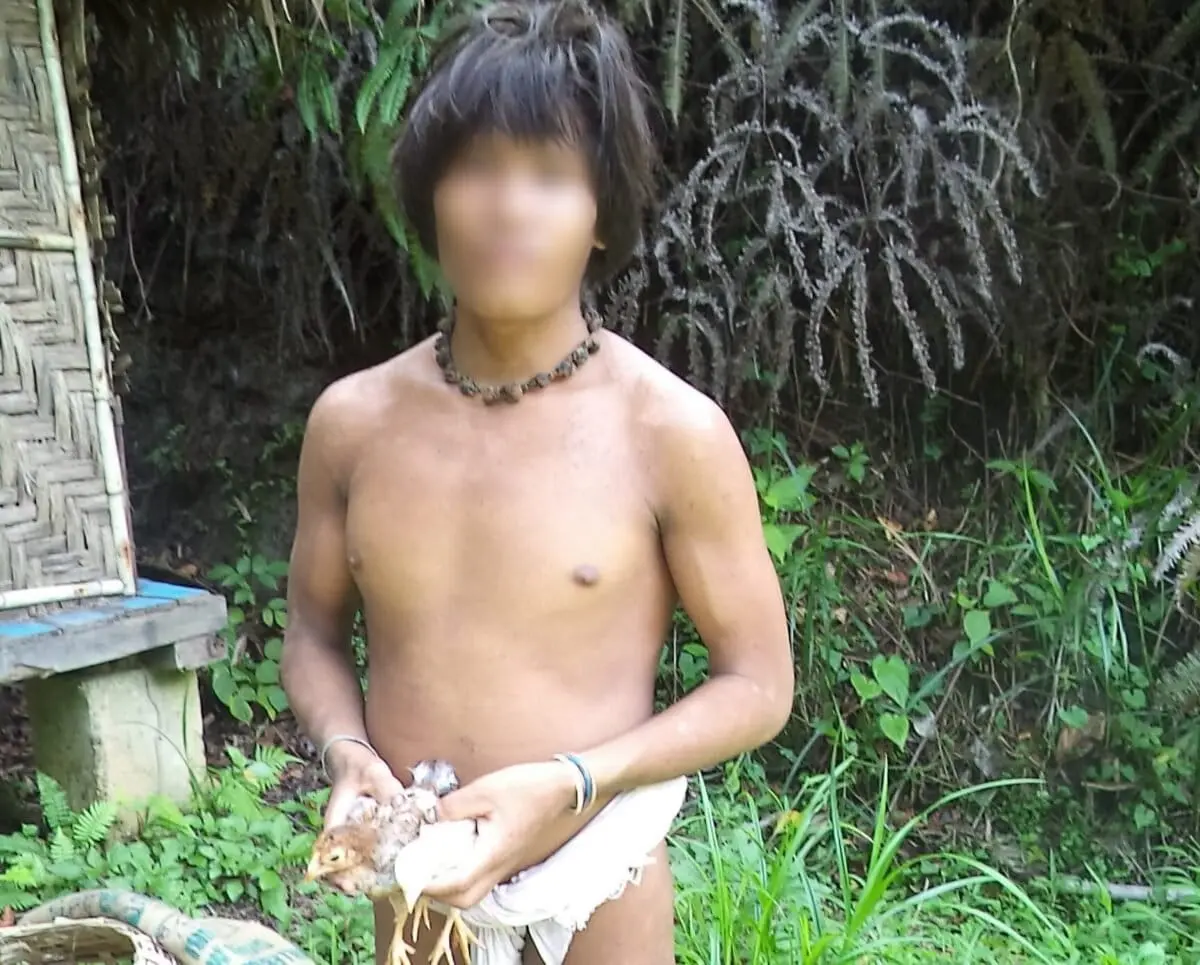
- Great Nicobar Island: This island houses a Biosphere Reserve that overlaps with the Shompen tribal territory. It is home to endemic species such as the crab-eating macaque and the Nicobar megapode, alongside vast stretches of "food forests" that the Shompen depend upon for foraging.
The Human Landscape
The archipelago is home to six recognized tribes, each with a different level of contact with the outside world:
- Sentinelese: Voluntarily isolated; total non-contact.
- Shompen: Voluntarily isolated in the Great Nicobar interior; minimal contact with officials.
- Jarawa (Ang): Limited contact; inhabit a large reserve in the Andaman Islands.
- Onge: Settled with ongoing interactions with the administration.
- Great Andamanese: Fully contacted; population decimated by colonial-era diseases.
- Nicobarese: Integrated into mainstream society but still fighting for ancestral land rights.
Chronology: From Protection to Pressure
The legal and social framework governing these islands has evolved over decades, moving from strict protection toward a more controversial "developmental" outlook.
![Isolated island tribes should choose their own destinies, says Manish Chandi [Interview]](https://imgs.mongabay.com/wp-content/uploads/sites/30/2026/09/27135015/o.-Shompen-2-in-2013-with-van-raja-chicks-from-Vet-Dept-e1789411480912-1200x965-1.jpeg)
- 1950: The declaration of the Onge Tribal Reserve on Little Andaman Island marks the beginning of formal legal protections for indigenous territories.
- 1972–1989: A suite of protective legislation is enacted, including the Wildlife (Protection) Act and the Andaman and Nicobar Islands (Protection of Aboriginal Tribes) Regulation.
- 2004: The Indian Ocean Tsunami strikes. This cataclysmic event displaces the Nicobarese and some Shompen from their ancestral southern and western coasts to government-built shanties near Campbell Bay.
- 2010: Displaced communities are settled in "permanent" shelters, which Chandi argues has led to a loss of self-sufficiency and an increased dependence on government rations.
- 2022–2024: The Indian government fast-tracks the Great Nicobar Mega Project, a multi-billion dollar transhipment port and township.
- August 2026: Litigation continues as environmentalists and tribal councils challenge the project’s clearance, citing the de-notification of 84 square kilometers of tribal reserve land.
Supporting Data: The Cost of Encroachment
The threats to these tribes are not merely theoretical; they are quantifiable through the depletion of the resources they rely on for survival.
Marine Resource Exploitation
In the waters surrounding North Sentinel Island, illegal fishing has become a rampant issue. Despite the "buffer zone" regulations, fishers and trawlers from South and Middle Andaman frequently encroach on Sentinelese waters. They target high-value export species:
![Isolated island tribes should choose their own destinies, says Manish Chandi [Interview]](https://imgs.mongabay.com/wp-content/uploads/sites/30/2026/09/27134557/Jarawa-tribal-reserve-by-Pankaj-Sekhsaria-ATR-board-jirkatang-768x512.jpg)
- Sharks: Hunted for fins.
- Lobsters and Crabs: Exploited for the luxury seafood market.
- Sea Turtles: Both Green (Chelonia mydas) and Hawksbill (Eretmochelys imbricata) are frequently poached using nets and spears.
This creates a resource imbalance. While the Sentinelese hunt only for survival using traditional bows and harpoons, commercial poachers strip the reefs of the very biomass the tribe requires to remain self-sufficient.
The Great Nicobar Project Footprint
The proposed development on Great Nicobar is unprecedented in scale. The project includes an international container transhipment terminal, a greenfield airport, a power plant, and a township.
![Isolated island tribes should choose their own destinies, says Manish Chandi [Interview]](https://imgs.mongabay.com/wp-content/uploads/sites/30/2026/09/27140426/green-turtle-and-green-grass-1200x663-1-768x512.jpg)
- Land De-notification: Approximately 84 square kilometers (32 square miles) of the Tribal Reserve are slated for de-notification.
- Environmental Impact: Critics argue the project will destroy vital coral reefs and nesting grounds for the leatherback turtle.
- Human Impact: At least three to four Shompen habitations are located within the project’s demarcated forest zone, despite official claims that no tribal communities will be displaced.
Official Responses and Bureaucratic Misunderstandings
The Indian government’s stance on these issues often reflects a disconnect between administrative goals and indigenous realities.
The "Adequate Safeguards" Narrative
Bodies such as the National Centre for Sustainable Coastal Management (NCSCM) and the National Green Tribunal (NGT) have largely ruled in favor of large-scale projects. The NGT recently cited that "adequate safeguards" have been provided to protect the environment and the tribes. Officials often point to the provision of "free rations"—such as salt, rice, and cloth—as evidence of their care for the tribal populations.
![Isolated island tribes should choose their own destinies, says Manish Chandi [Interview]](https://imgs.mongabay.com/wp-content/uploads/sites/30/2026/09/27134757/t.-Crab-eating-macaque-Great-Nicobar-e1789410473864-768x512.jpg)
The Critique of "Manufactured Consent"
Manish Chandi offers a scathing critique of this approach. He notes that the administration’s efforts to integrate the Shompen—such as bringing them to vote in general elections—are often performative.
"Not a single person from the administrative machinery can speak the Shompen language," Chandi points out. He argues that "consent" for de-notifying forests is impossible to obtain when the two parties cannot communicate logically. Furthermore, the provision of external food resources often leads to a "dependency trap," making once-independent communities sedentary and reliant on government schemes.
Implications: Sovereignty vs. Industrialization
The future of the Andaman and Nicobar tribes represents a broader global struggle over the rights of indigenous people to determine their own destinies.
![Isolated island tribes should choose their own destinies, says Manish Chandi [Interview]](https://imgs.mongabay.com/wp-content/uploads/sites/30/2026/09/27135431/m.-2-Gillnetting-fishers-off-North-Sentinel-wreck-coast-1200x796-1.jpeg)
The Risk of Sedentarization
When tribal lands are de-notified for tourism or business enclaves, the inhabitants are often moved into government-built accommodation. This "sedentarization" removes the tribes from their ancestral landscapes, effectively ending their roles as the natural stewards of the forest. Chandi warns that this leaves the larger landscape "devoid of their presence and use," making it easier for further industrial exploitation.
The Need for a New Paradigm
For these communities to survive, Chandi argues that the "civilized" world must move from "vain curiosity" to "appreciation, respect, and dignity."
![Isolated island tribes should choose their own destinies, says Manish Chandi [Interview]](https://imgs.mongabay.com/wp-content/uploads/sites/30/2026/09/27135308/w.-3.-katchel-mangroves-2-1200x803-1-768x512.jpg)
- Participation over Imposition: Development should only occur on the terms of the indigenous people, in their ancestral lands, and with their genuine consensus.
- Policing and Enforcement: Rather than building malls and casinos, administrative resources should be directed toward patrolling buffer zones to stop poachers from stealing tribal food resources.
- Science and Technology: Modern tools should be used to monitor the health of the ecosystems the tribes depend on, rather than just facilitating the extraction of resources.
Conclusion
The Sentinelese and the Shompen are not "primitive" relics of the past; they are contemporary societies that have mastered the art of sustainable living within their environments. The thick, dark green canopy of North Sentinel Island is a testament to their success. Whether that canopy remains intact—or is replaced by the concrete of a transhipment port—will depend on whether the Indian state chooses to honor its own protective laws or sacrifice its most unique cultural and biological treasures for the sake of a "developmental vision" that the islanders themselves never requested.
As the litigation of 2026 continues, the world watches to see if the archipelago’s original guardians will be allowed to choose their own destinies, or if they will be forced into a dependency that leads to their eventual disappearance.
