

Introduction: The Dual Mandate of Growth and Sustainability
As India positions itself as a global manufacturing powerhouse, the steel industry has emerged as the backbone of its "Viksit Bharat" (Developed India) 2047 vision. Central to this industrial surge is an ambitious plan to double domestic coking coal production by 2030. However, this expansion brings a hidden and potent environmental cost: methane emissions.
Methane, a greenhouse gas with a global warming potential over 80 times that of carbon dioxide over a 20-year period, is an inherent byproduct of coal mining. While the world focuses on the carbon footprint of coal combustion, the "fugitive emissions" released during the extraction process—known as Coal Mine Methane (CMM)—are increasingly becoming a focal point for climate scientists and policy analysts. If India does not integrate robust monitoring and abatement measures into its mining roadmap now, it risks "locking in" high-emission infrastructure that could jeopardize its Net Zero 2070 goals.
I. Main Facts: The Coking Coal Imperative
The Steel Connection
Coking coal, or metallurgical coal, is distinct from the thermal coal used in power plants. When heated in the absence of oxygen, it transforms into coke, a high-carbon fuel and reducing agent essential for the Blast Furnace-Basic Oxygen Furnace (BF-BOF) steelmaking route. This process currently accounts for approximately 62% of India’s steel production.
The Production Gap
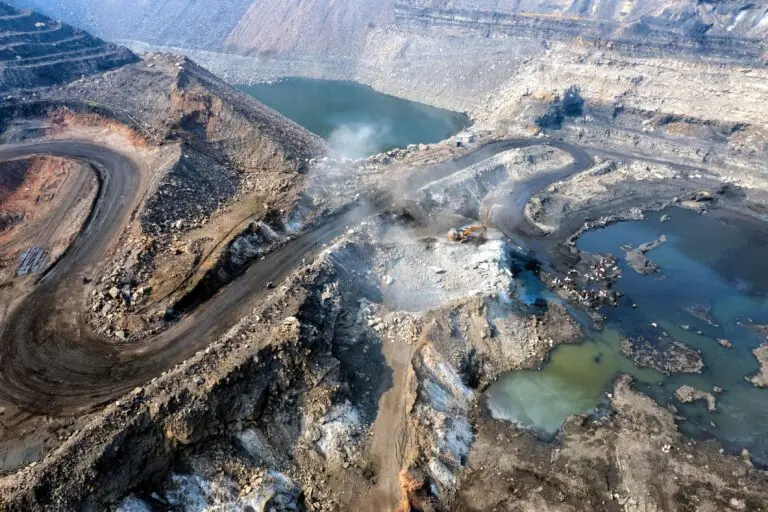
India is currently the world’s second-largest producer of crude steel, but it grapples with a significant resource deficit. In the 2023-24 fiscal year, India mined 66.8 million tonnes (MT) of raw coking coal. However, due to high ash content and poor caking properties, only 5.4 MT was of sufficient quality for steelmaking after washing. Consequently, the country remains tethered to international markets, importing nearly 90% of its coking coal requirements.
![India’s coking coal push needs a methane plan [Commentary]](https://imgs.mongabay.com/wp-content/uploads/sites/30/2026/09/29115811/pexels-vikashkr50-17971796-1200x800.jpg)
The Methane Intensity
Coking coal is significantly more "gassy" than thermal coal. On average, coking coal mining exhibits a 50% higher methane intensity. This is primarily because coking coal is often found in deeper, more pressurized geological seams where methane—formed during the ancient "coalification" process—remains trapped until disturbed by mining activity.
The Scale of Expansion
Under "Mission Coking Coal," the Indian government aims to scale domestic production to 140 MT by 2030. This is intended to feed a steel industry that is projected to grow from a capacity of 200 million tonnes per annum (MTPA) to 300 MTPA within the same timeframe.
II. Chronology: The Evolution of Mission Coking Coal
The roadmap for India’s coking coal self-reliance has evolved through several strategic phases:
- 2017: The National Steel Policy: The government set an ambitious target of 300 MTPA steel capacity by 2030, highlighting the need for secure raw material supply chains.
- 2021-2022: Launch of Mission Coking Coal: In response to volatile global prices and supply chain disruptions, the Ministry of Coal officially launched a mission to identify new blocks and enhance the washing capacity of existing mines.
- 2023-2024: The Production Surge: Raw coking coal production reached 66.8 MT. The government began auctioning more coal blocks to private players and incentivizing Coal India Limited (CIL) to ramp up deep-seated mining.
- 2025 (Projected): The Methane Milestone: Analysts from the Institute for Energy Economics and Financial Analysis (IEEFA) project that by 2025, just seven key mines could increase methane emissions by 10% over current levels, reaching 234.7 kilotonnes (kt).
- 2030: The Target Year: The deadline for doubling production to 140 MT. This period is seen as the "critical window" for implementing abatement technologies before mines reach peak capacity.
III. Supporting Data: The Geography and Economics of Emissions
The Geographic Concentration
Methane emissions are not evenly distributed across India’s coalfields. Research indicates a high degree of concentration:
![India’s coking coal push needs a methane plan [Commentary]](https://imgs.mongabay.com/wp-content/uploads/sites/30/2026/09/29114008/2.jpg)
- The Jharkhand Factor: Approximately 81% of CMM emissions from 30 major operating mines originate from just seven sites, primarily located in the state of Jharkhand.
- Depth and Density: While 97% of current mining is surface-based, easily accessible reserves are vanishing. About 41% of remaining reserves lie deeper than 300 meters, necessitating a shift to underground mining—which globally accounts for 85% of coking coal methane emissions.
The Technical Abatement Potential
There are three primary technological pathways to mitigate these emissions:
- Degasification: Extracting high-concentration methane through boreholes before mining begins. This gas can be used for power generation.
- Ventilation Air Methane (VAM) Oxidation: Underground mines require massive ventilation systems to keep air safe for workers. This exhausted air contains dilute methane (VAM). Specialized thermal or catalytic oxidizers can destroy this methane, often recovering the heat for industrial use.
- Capture-and-Route: Sealing off abandoned sections of mines to prevent fugitive leaks and directing the gas to utilization plants.
The Economic Feasibility
Contrary to the perception that green measures are prohibitively expensive, methane abatement in the coal sector is remarkably cost-effective:
- Cost per Tonne: Nearly 87% of India’s abatable coking coal methane can be mitigated for less than $20 per tonne of CO2 equivalent (tCO2e).
- Negative Average Cost: For CMM utilization (turning gas into power), the average cost is actually negative $11.9/tCO2e, meaning the energy recovered pays for the infrastructure over time.
- Total Potential: Effective implementation across major mines could reduce emissions by 125 kilotonnes annually.
IV. Official Responses and Industry Initiatives
The Indian government and major industrial players have begun to recognize that "clean coal" is no longer an oxymoron but a necessity for international competitiveness.
Government Policy Shifts
The Ministry of Coal has begun emphasizing "Pre-mining Coal Bed Methane (CBM)" extraction. By treating methane as a resource rather than a waste product or a safety hazard, the government is encouraging developers to extract gas before the first shovel of coal is turned. Furthermore, the push for "Green Steel" under the Ministry of Steel is creating demand-side pressure to reduce the overall carbon intensity of the metal.
![India’s coking coal push needs a methane plan [Commentary]](https://imgs.mongabay.com/wp-content/uploads/sites/30/2026/09/29123411/Primary_coking_coal_20180405_154027_1-768x512.jpg)
Corporate Leadership: Tata Steel and CIL
- Tata Steel’s Jamshedpur Trial: In a world-first, Tata Steel initiated a trial to inject Coal Bed Methane directly into a blast furnace. This serves two purposes: it utilizes the methane and reduces the amount of solid coking coal required for the smelting process.
- Coal India Limited (CIL) and Moonidih: At the Moonidih mine in Jharkhand, a demonstration project successfully used recovered methane to generate on-site electricity, proving the commercial viability of CMM-to-power models in the Indian context.
The Role of Scrap and Alternatives
To lower the dependence on coking coal, the government has set a target for 50% of steel production to be scrap-based by 2047, up from the current 23%. This shift toward the Electric Arc Furnace (EAF) route—which requires only 12kg of coking coal per tonne of steel compared to 770kg in blast furnaces—is a critical pillar of the national strategy.
V. Implications: The Risks of Inaction and the Path Forward
The "Lock-in" Risk
The most significant implication of the current expansion is the risk of "emissions lock-in." Mining infrastructure typically has a lifespan of 30 to 50 years. If new mines are designed without methane capture systems today, retrofitting them later will be significantly more expensive and technically challenging. This could leave India with a high-emission asset base at a time when global markets may impose carbon border taxes.
International Trade and CBAM
The European Union’s Carbon Border Adjustment Mechanism (CBAM) and similar emerging policies in the US and UK mean that the carbon intensity of Indian steel will soon dictate its price on the global market. High methane emissions during the mining phase will be factored into the "embedded emissions" of the final steel product, potentially making Indian exports less competitive.
Social and Safety Implications
Methane is not just a climate threat; it is a major safety hazard in underground mining. High methane concentrations can lead to explosions. By institutionalizing methane drainage and VAM oxidation, India can simultaneously improve mine safety and reduce its environmental footprint, creating a "win-win" for labor and the planet.
![India’s coking coal push needs a methane plan [Commentary]](https://imgs.mongabay.com/wp-content/uploads/sites/30/2026/09/29112718/Furnace_of_IISCO_Steel_Plant-2.jpg)
Strategic Recommendations
To successfully navigate this transition, India must adopt a multi-pronged approach:
- Mandatory Pre-feasibility Studies: Every new coking coal block auction should require a methane drainage and utilization plan as part of the environmental clearance process.
- Targeted Intervention: Focus abatement efforts on the "Top 7" high-emitting mines in Jharkhand to achieve the most significant impact with the least capital expenditure.
- Financial Incentives: Provide tax breaks or subsidies for the import of VAM oxidation technology and CMM-to-power turbines.
- R&D in Hydrogen Steel: Accelerate the transition to Direct Reduced Iron (DRI) using green hydrogen, which could eventually eliminate the need for coking coal entirely.
Conclusion
India’s "Mission Coking Coal" is an understandable response to the need for energy security and industrial growth. However, the doubling of production must not lead to a doubling of the climate crisis. The technology to capture and utilize methane is proven, cost-effective, and provides a clear pathway to decarbonizing one of the world’s most "hard-to-abate" sectors. By acting early, India can ensure that its path to 300 MTPA of steel is not only paved with industrial success but also aligned with its global identity as a leader in climate action.
