

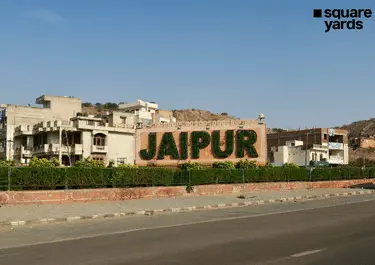
JAIPUR – In a move set to redefine the urban landscape and real estate dynamics of Rajasthan’s capital, the Jaipur Development Authority (JDA) has greenlit a massive investment of over ₹575 crore. This capital injection, targeting eight pivotal infrastructure projects, aims to address the city’s most pressing bottlenecks: chronic traffic congestion, seasonal monsoon flooding, and a deficit in high-end event infrastructure.
The decision, finalized during the 10th meeting of the JDA’s Projects Works Committee (PWC) and chaired by JDA Commissioner Siddharth Mahajan, marks a strategic shift toward long-term urban resilience. For investors and residents tracking the Jaipur property market, these approvals represent more than just civil engineering contracts; they are the blueprints for the next phase of the city’s economic appreciation.
Main Facts: A Multi-Pronged Approach to Urban Growth
The ₹575 crore budget is distributed across various sectors, from elevated transit corridors to sophisticated drainage systems. The primary focus is on four major geographical belts: South Jaipur (Gopalpura Bypass), the residential heartland (Mansarovar), the premium northern suburbs (Vidyadhar Nagar), and the burgeoning western outskirts (Kalwar and Benad Roads).
Key Budgetary Allocations at a Glance:
- Gopalpura Bypass Elevated Road: ₹250.85 crore
- Stormwater Drainage (Kalwar/Benad/Jhotwara): ₹234.58 crore
- Vidyadhar Nagar MICE Center: ₹42.22 crore
- Mansarovar/Shipra Path Redevelopment: ₹34.85 crore
- Miscellaneous Urban Improvements: ~₹13 crore (Ramniwas Bagh Food Arena and Zone-C2 footpaths)
These projects are designed to tackle the "negative externalities" that have historically suppressed property values in certain pockets. By mitigating flood risks and slashing commute times, the JDA is effectively removing the barriers that have kept cautious buyers away from these high-potential areas.
Chronology: From Congestion to Connectivity
The evolution of Jaipur from a heritage-focused "Pink City" to a sprawling Tier-2 metropolis has not been without its growing pains. Over the last decade, the city has expanded outward, but the infrastructure has often struggled to keep pace with the influx of residents and vehicles.
- The Saturation Phase (2015–2020): Key corridors like the Gopalpura Bypass and Kalwar Road reached a breaking point. Traffic volume on the Bypass surged as it became a primary artery for south Jaipur, while the western suburbs faced annual paralysis during the monsoon due to inadequate drainage.
- The Planning Phase (2021–2023): The JDA conducted feasibility studies for elevated roads and integrated drainage networks. The need for a dedicated corporate event space (MICE) in the north was also identified to decentralize economic activity from the city center.
- The Approval Milestone (Present): The 10th PWC meeting marks the official transition from proposal to execution. With the budget cleared, the city enters a phase of intensive construction aimed at future-proofing the infrastructure for the next twenty years.
Supporting Data: Real Estate Impact and Zonal Analysis
The JDA’s spending is expected to have a direct, albeit varied, impact on property valuations across the city. Below is an in-depth analysis of the targeted zones.
1. South Jaipur: The Gopalpura Bypass Transformation
The largest slice of the budget—₹250.85 crore—is dedicated to an elevated road stretching from the Triveni Nagar railway overbridge (ROB) to Gujjar Ki Thadi.
- Current Market State: Rates currently range between ₹4,600 and ₹7,850 per sq. ft.
- The Problem: The corridor is currently plagued by "friction" caused by shops, offices, and residential entrances that slow down through-traffic.
- The Impact: The elevated road will create a signal-free transit, effectively separating local traffic from long-distance commuters. This is expected to trigger a surge in demand for premium builder floors and high-street retail outlets. Historically, properties adjacent to signal-free corridors in cities like Delhi or Bangalore have seen a 15–20% appreciation post-completion.
2. West Jaipur: Solving the Monsoon Crisis
With a combined commitment of ₹234.58 crore, the JDA is addressing the "Achilles’ heel" of Kalwar Road, Benad Road, and Jhotwara: waterlogging.
- Current Market State: Prices are among the city’s most competitive, ranging from ₹3,300 to ₹4,250 per sq. ft.
- The Solution: A ₹176.22 crore stormwater drain for Kalwar Road and a ₹58.36 crore network for Benad and Murlipura.
- The Impact: This project is a "confidence builder." For years, end-users avoided these areas despite low entry prices due to the risk of seasonal flooding. By ensuring year-round accessibility, the JDA is likely to unlock massive demand for JDA-approved plots and affordable housing segments.
3. Mansarovar: Enhancing the Residential Benchmark
Mansarovar, already one of Jaipur’s most established residential hubs, will see ₹34.85 crore invested in road redevelopment.
- Yield Data: Mansarovar Extension currently offers rental yields of up to 6.52%, the highest in the city.
- The Focus: The redevelopment of Shipra Path (₹26.32 crore) and the Durgapura sector road (₹8.53 crore).
- The Impact: These upgrades facilitate smoother internal circulation. For the "Mansarovar Core," where prices average ₹4,350 per sq. ft., the focus is on maintaining quality of life. In the "Extension" (averaging ₹5,000 per sq. ft.), the improved connectivity will sustain the high rental demand from young professionals and families.
4. North Jaipur: The MICE Factor
Vidyadhar Nagar, a premium enclave with average rates of ₹5,900 per sq. ft., is set to host a new MICE (Meetings, Incentives, Conferences, and Exhibitions) center.
- The Strategy: The ₹42.22 crore venue aims to capture the corporate event market.
- The Impact: Unlike residential-focused road projects, a MICE center acts as a commercial magnet. It drives demand for hospitality services, serviced apartments, and upscale retail. This project is expected to solidify Vidyadhar Nagar’s position as the price benchmark for Jaipur’s property market.
Official Responses: The JDA’s Strategic Vision
Under the leadership of Commissioner Siddharth Mahajan, the JDA has emphasized that these projects are not isolated improvements but part of a "holistic urban master plan."
According to JDA sources, the priority of the 10th PWC meeting was to ensure that the city’s infrastructure keeps pace with its rapid outward expansion. The emphasis on "signal-free" transit and "integrated drainage" reflects a shift toward modern urban planning standards seen in global metros.
While the JDA has not yet released a definitive timeline for the completion of all eight projects, the clearance of the revised budget for the Gopalpura Bypass suggests that tendering for the most critical works is imminent. Officials have also noted that while smaller projects—like the ₹6.37 crore food arena at Ramniwas Bagh—may not move property prices, they are essential for improving the "livability index" and public spaces of the city.
Implications for Buyers and Investors
The JDA’s ₹575 crore roadmap offers clear signals for various types of real estate participants:
For End-Users:
The mitigation of flooding in the Kalwar-Jhotwara belt is the most significant development. Families looking for affordable plots or 2/3 BHK homes can now look at these areas with reduced risk. However, buyers are cautioned to verify JDA approvals on individual plots, as public infrastructure spending does not automatically legalize unapproved colonies.
For Rental Investors:
Mansarovar Extension remains the "sweet spot." With a rental yield of 6.52%, the area is already outperforming many Tier-1 city micro-markets. The planned road upgrades will only serve to make the area more attractive to high-quality tenants who prioritize commute times.
For Capital Appreciation Hunters:
The Gopalpura Bypass elevated road is the project to watch. While the construction phase (usually 24–36 months) may cause temporary disruptions and a "wait-and-see" lull in prices, the post-completion phase typically sees a sharp uptick in value as the "convenience factor" becomes tangible.
A Note of Caution:
History suggests that infrastructure-led appreciation occurs in two waves: at the time of announcement and at the time of completion. Investors should be prepared for the "middle dip"—the period of construction noise, dust, and traffic diversions. Furthermore, the success of these projects depends heavily on the quality of execution and the adherence to timelines by contractors.
Conclusion
Jaipur is at a crossroads. With the JDA’s ₹575 crore commitment, the city is betting big on its ability to transition from a historic town into a modern, functional powerhouse. For the property market, these projects represent the removal of "growth ceilings." Whether it is the signal-free dreams of Gopalpura or the dry streets of Kalwar, the message from the JDA is clear: Jaipur is building for a more accessible, flood-free, and commercially vibrant future.
As these projects move from the PWC meeting room to the ground, the "Pink City" may soon see its real estate sector turn a very profitable shade of green.
