

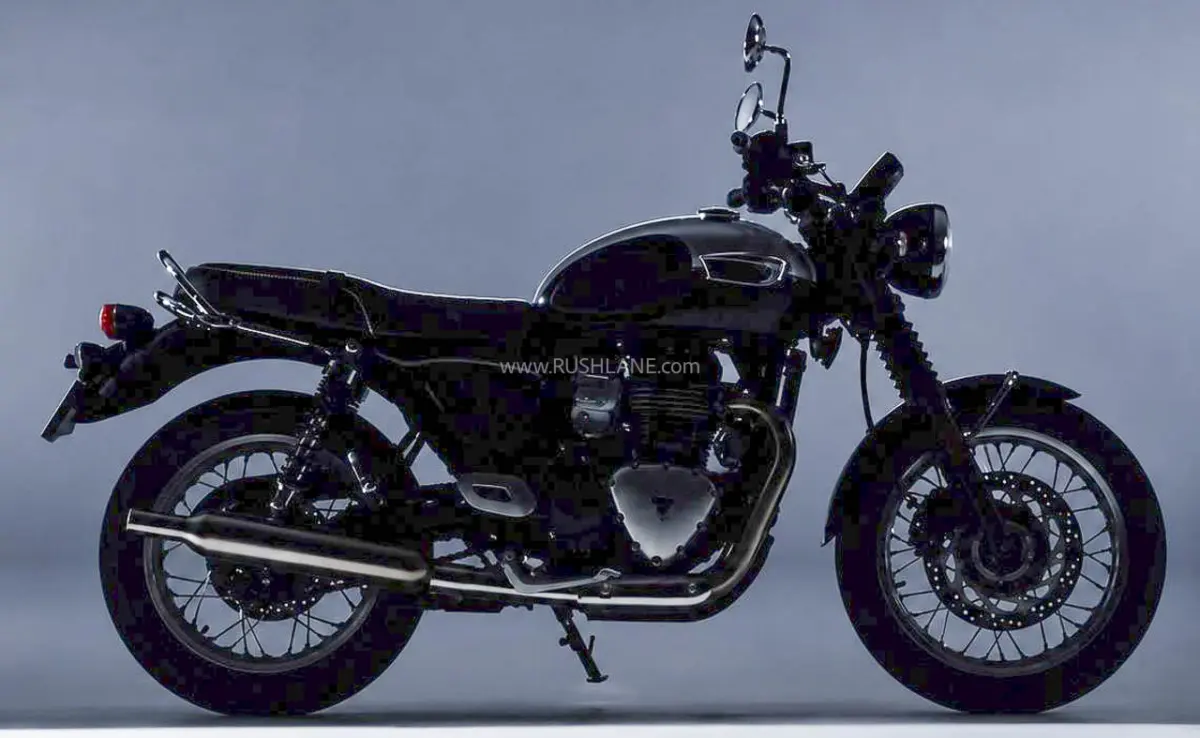
The global motorcycling community is currently abuzz with anticipation as Triumph Motorcycles, the iconic British marque, prepares for a significant announcement scheduled for October 6, 2026. A recently released teaser from the Hinckley-based manufacturer has confirmed that four new motorcycles are on the horizon, but one particular silhouette has captured the imagination of enthusiasts and industry analysts alike: a classic-styled roadster that appears to be the long-rumored Triumph Bonneville 400.
This development marks a pivotal moment in the strategic partnership between Triumph and Bajaj Auto. By bringing the legendary "Bonneville" nameplate—synonymous with the golden era of British motorcycling—into the accessible 400cc segment, Triumph is poised to challenge the dominance of established players in the mid-capacity retro market.
Main Facts: The Anatomy of a New Legend
The teaser images, though artistically shadowed, reveal a motorcycle that leans heavily into the "Modern Classic" DNA that has made the larger Bonneville T100 and T120 global icons. Unlike the Speed 400, which offers a contemporary "neo-retro" look, the upcoming Bonneville 400 (name yet to be officially confirmed) is a pure exercise in heritage styling.
Key Visual and Mechanical Identifiers
Based on the teaser and recent spy shots from both India and Europe, several defining features have emerged:
- The Silhouette: The bike features a quintessential "Bonnie" profile, characterized by a flat bench seat, a sculpted fuel tank with knee indents, and a more relaxed, upright riding triangle compared to the Speed 400.
- Suspension Overhaul: Perhaps the most significant mechanical departure from the existing 400cc platform is the move to twin rear shock absorbers. While the Speed 400 utilizes a modern monoshock, the Bonneville 400 adopts a traditional twin-shock setup, which is essential for achieving the authentic retro aesthetic and likely provides a more linear, comfort-oriented damping characteristic.
- Wheels and Tyres: The teaser clearly showcases wire-spoke wheels, a hallmark of classic motorcycles. These are expected to be paired with tubed tyres, though Triumph may offer alloy variants or tubeless-ready spokes as premium accessories.
- Exhaust System: The motorcycle sports a low-slung, long "peashooter" style exhaust finished in chrome. This design is a direct nod to the 1960s Bonnevilles and suggests a different exhaust note—perhaps deeper and more rhythmic—compared to the raspy growl of the Speed 400.
- Lighting and Detailing: A circular LED headlamp with a signature Triumph DRL, round chrome mirrors, and a broad rear fender with a compact tail lamp assembly complete the look. The front forks are encased in rubber gaiters, further reinforcing the vintage appeal.
Chronology: The Road to the 400cc Bonneville
The journey toward a smaller Bonneville has been several years in the making, rooted in the 2017 partnership announcement between Triumph and Bajaj Auto.

- August 2017: Triumph and Bajaj announce a non-equity partnership to manufacture a new range of mid-capacity motorcycles (250cc to 750cc).
- June 2023: The partnership bears its first fruit with the global unveil of the Speed 400 and Scrambler 400X in London. These bikes redefined the performance expectations of the 400cc single-cylinder segment.
- Late 2023 – Early 2024: High-volume sales begin in India and international markets. However, enthusiasts note a gap in the lineup: a "true" classic rival to the Royal Enfield Classic 350.
- April 2026: First "clear" spy shots of a twin-shock, retro-styled Triumph 400 emerge during road testing in India. The motorcycle appears production-ready, featuring distinct Bonneville-style components.
- September 2026: Triumph releases a global teaser titled "The Next Chapter," showing four distinct silhouettes. The classic roadster is the most prominent, leading to widespread speculation of an October launch.
- October 6, 2026: The official date for the global announcement (12:00 PM BST / 4:30 PM IST).
Supporting Data: Engineering and Market Strategy
To understand the significance of the Bonneville 400, one must look at the technical foundation provided by the TR-Series engine and the market dynamics of the mid-capacity segment.
The Powerplant Paradox
The existing 398.15cc liquid-cooled, DOHC, single-cylinder engine produces 40 PS and 37.5 Nm of torque. While this engine is a masterpiece of modern engineering, there is significant speculation regarding the "India-spec" Bonneville.
Some industry insiders suggest that Triumph and Bajaj might introduce a 349cc variant of this engine for the Indian market. This move would serve two purposes:
- Aggressive Pricing: A slightly smaller displacement could allow for lower taxation and production costs, enabling Triumph to price the bike directly against the Royal Enfield Classic 350.
- Character Tuning: A long-stroke version of the 350-400cc architecture could provide the "thump" and low-end torque that traditional classic buyers crave, distinguishing it from the high-revving nature of the Speed 400.
Structural Changes
Adopting twin rear shocks is not merely a cosmetic change. It requires a redesigned rear subframe and a new swingarm. Data suggests that the Bonneville 400 will have a longer wheelbase than the Speed 400, prioritizing stability and pillion comfort over the flickability of a street naked. The inclusion of conventional telescopic forks (likely 41mm or 43mm) with gaiters instead of the USD forks found on the Speed 400 also points toward a more cost-effective yet period-correct hardware choice.
Official Responses and Manufacturing Synergy
While Triumph’s official stance remains guarded until the October 6 event, the synergy between the UK design team and Bajaj’s manufacturing prowess is the backbone of this project.

The motorcycles are manufactured at Bajaj’s dedicated "Chakan 2" plant in Pune, India. This facility is built to global quality standards, ensuring that the Bonneville 400 meets the "fit and finish" expectations associated with the Triumph badge while benefiting from Bajaj’s economies of scale.
Representatives from Bajaj have previously hinted that the "400 platform" was designed to be modular. This modularity allows Triumph to swap tanks, seats, exhausts, and suspension components to create entirely different personas—from the sporty Speed to the rugged Scrambler, and now, the elegant Bonneville—without reinventing the core engine and chassis.
Implications: Shaking Up the Global Mid-Weight Market
The arrival of a Bonneville 400 has far-reaching implications for the motorcycling landscape, particularly in emerging markets like India, SE Asia, and Latin America, as well as A2-license holders in Europe.
1. The Royal Enfield Factor
For decades, Royal Enfield has held a near-monopoly on the "Classic" segment with the Classic 350 and Bullet 350. While Honda (with the CB350) and Jawa/Yezdi have attempted to chip away at this share, they lacked the global "premium" cachet of the Triumph brand. The Bonneville 400 represents the most credible threat to Royal Enfield’s dominance to date, offering a blend of British heritage and modern performance that is hard to ignore.
2. Diversifying the Teaser: The Other Three
It is important to note that the teaser showed four bikes. While the Bonneville 400 is the headline act for retro fans, the other silhouettes suggest:

- A New Street Triple Variant: Likely a "Moto2 Edition" or a tech-update for the mid-weight naked.
- Two Adventure Models: Speculation is rife about a "Tiger 400." If Triumph successfully shrinks the Tiger DNA into the 400cc platform, it could disrupt the entry-level ADV market currently ruled by the KTM 390 Adventure and the Himalayan 450.
3. Democratizing the "Bonnie"
The Bonneville has always been an aspirational motorcycle, but its 900cc (T100) and 1200cc (T120) iterations are often out of reach for younger riders or those in markets with high displacement taxes. The 400cc version democratizes the brand. It allows a new generation of riders to enter the Triumph family much earlier in their riding careers, fostering brand loyalty that could eventually lead to the purchase of larger Triumphs.
4. Pricing Strategy
To be successful, industry analysts expect the Bonneville 400 to be priced slightly above the Speed 400 but below the Scrambler 400X. In the Indian market, a price point between ₹2.40 lakh and ₹2.60 lakh (ex-showroom) would make it an incredibly compelling proposition.
Conclusion
As the clock ticks down to October 6, 2026, the motorcycle world is watching with bated breath. The Triumph Bonneville 400 is more than just a new model; it is a strategic masterstroke designed to marry the soul of the 1950s with the reliability and performance of the 2020s.
By leveraging the "Bonneville" name, Triumph isn’t just selling a 400cc motorcycle; they are selling a piece of history. Whether it features a 350cc or 400cc heart, its mission is clear: to bring the elegance of the British "Modern Classic" to every corner of the globe, one affordable, chrome-laden mile at a time. The "Next Chapter" for Triumph appears to be its most ambitious yet, and the road ahead looks remarkably classic.
