

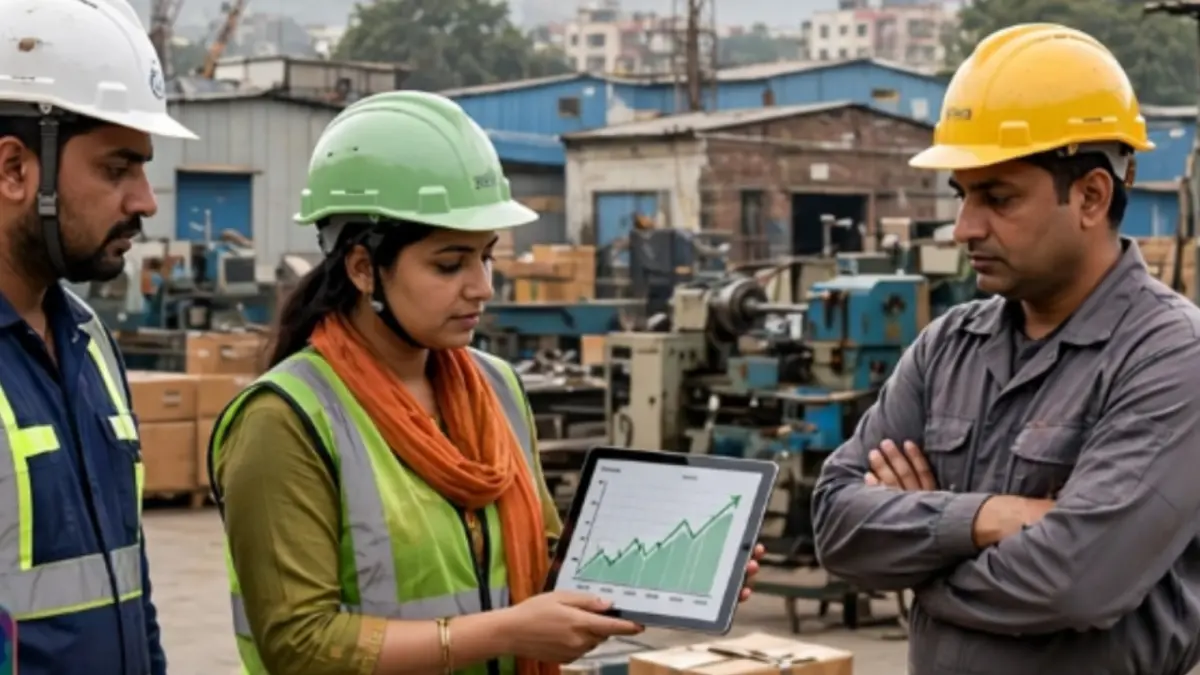
NEW DELHI, [Date] – In a pivotal move poised to redefine the growth trajectory of India’s small and medium enterprises (SMEs), the Union Cabinet has officially sanctioned the creation of a ₹10,000 crore SME Growth Fund (SGF). This monumental initiative, a cornerstone of the government’s broader economic strategy, is designed to inject crucial equity capital into high-potential businesses, empowering them to scale, innovate, and confidently expand their footprint on the global stage. The decision, chaired by Prime Minister Shri Narendra Modi, underscores the government’s unwavering commitment to fostering a vibrant and globally competitive entrepreneurial ecosystem, directly addressing a critical financing gap that has long constrained the aspirations of India’s most dynamic businesses.
Main Facts: A Paradigm Shift in SME Funding
The approval of the ₹10,000 crore SME Growth Fund marks a significant departure from traditional credit-based financing models, signaling a strategic shift towards providing ‘patient growth equity capital’ to deserving small and medium-sized enterprises. This fund is not merely another lending facility; it is envisioned as a catalyst for transformative growth, offering long-term risk capital that enables businesses to pursue ambitious expansion plans, invest in cutting-edge technologies, and explore new markets without the immediate burden of debt repayment.
The primary objective of the SGF is to identify and support SMEs that possess proven business models and demonstrate clear potential for scalability and innovation. By directly investing equity, the fund aims to nurture these businesses into larger, more resilient, and globally competitive entities. This strategic injection of capital is expected to unlock a new wave of entrepreneurial energy, driving job creation and economic diversification across the country.
The operational framework for the SGF involves channeling these funds through an Alternative Investment Fund (AIF) mechanism. This structure will allow for direct equity investments into selected SMEs, ensuring that capital reaches businesses that are strategically aligned with the fund’s objectives. The focus will predominantly be on manufacturing enterprises, particularly those operating within the burgeoning Tier-II and Tier-III industrial clusters, which are often underserved by conventional financial instruments despite their immense potential. This targeted approach seeks to not only bolster manufacturing capabilities but also to promote balanced regional development and integrate these smaller industrial hubs into national and global supply chains.
)
Crucially, the government’s commitment extends beyond mere financial allocation. The SGF is part of a holistic suite of measures first outlined in the Union Budget 2026-27, which emphasized providing equity, liquidity, and professional support to the entire MSME ecosystem. This comprehensive approach recognizes that capital alone is not sufficient; SMEs also require strategic guidance, access to advanced technologies, and robust market linkages to thrive in an increasingly complex global economy. The fund is therefore poised to become a cornerstone of India’s economic future, aligning with the ambitious vision of "Viksit Bharat @ 2047" – a developed India by 2047.
Chronology: From Budgetary Promise to Cabinet Approval
The journey towards the establishment of the SME Growth Fund is rooted in a long-standing recognition of the pivotal role that Small and Medium Enterprises play in India’s economic fabric, coupled with an equally persistent challenge in their access to appropriate financing. The concept of bolstering the SME sector with equity capital has been a subject of extensive deliberation within policy circles, culminating in its prominent mention during the Union Budget 2026-27 announcements.

Early Recognitions and Policy Discussions: For decades, Indian governments have acknowledged the MSME sector as the backbone of the economy, a significant contributor to GDP, employment generation, and exports. However, it was also consistently observed that while credit facilities and working capital loans were relatively accessible, there was a glaring gap in the availability of long-term, patient equity or risk capital. This gap severely hampered the ability of promising SMEs to undertake significant capital expenditures, invest in R&D, or pursue aggressive market expansion strategies that require a longer gestation period for returns.
The Genesis in Union Budget 2026-27: The Union Budget for the fiscal year 2026-27 served as a watershed moment, formally outlining the government’s intention to address this critical financing void. The budget articulated a holistic vision for the MSME ecosystem, emphasizing not just credit enhancement but also the provision of equity, liquidity, and professional support. This marked a strategic pivot, recognizing that for India’s SMEs to truly "scale, innovate, expand internationally, adopt advanced technologies, undertake acquisitions, and transform into industry leaders," they needed more than just debt – they needed partners in growth. The commitment of ₹10,000 crore was initially earmarked as part of this broader budgetary framework, setting the stage for its eventual materialization.
)
Intensive Deliberations and Framework Development: Following the budget announcement, a period of intensive consultations and framework development ensued. Expert committees, industry stakeholders, and financial institutions were likely engaged in discussions to design an effective mechanism for fund deployment. The decision to route the investments through an Alternative Investment Fund (AIF) structure reflects a considered approach to leverage professional fund management expertise, ensuring robust due diligence, strategic investment decisions, and effective monitoring of the recipient SMEs. This phase would have involved defining eligibility criteria, investment mandates, and governance structures to ensure transparency and accountability.
Cabinet Approval: The Final Nod: The culmination of these efforts arrived with the Union Cabinet’s definitive approval, chaired by Prime Minister Shri Narendra Modi. This approval transforms a budgetary promise into a concrete, implementable policy. The government’s official statement underscored the fund’s role in addressing the "critical financing gap" and reiterated its commitment to empowering entrepreneurs. This final approval signifies the government’s readiness to operationalize the fund, moving from conceptualization to execution, and setting in motion a mechanism designed to catalyze a new era of growth for India’s small and medium businesses. The timing reflects a strategic push to accelerate economic development and realize the vision of a developed India by 2047, by fostering a new generation of globally competitive enterprises.
)
Supporting Data: Understanding the Landscape and the Need
The establishment of the SME Growth Fund is not an isolated policy decision but a carefully considered response to the prevailing economic realities and the specific challenges confronting India’s vast and vital Small and Medium Enterprise sector. Understanding the underlying data and context reveals the imperative behind this significant governmental intervention.
The Economic Powerhouse: India’s MSME Sector: The Micro, Small, and Medium Enterprises (MSME) sector is widely recognized as the engine of India’s economic growth.
)
- Contribution to GDP: MSMEs contribute approximately 30% to India’s Gross Domestic Product (GDP), a figure that government initiatives consistently aim to increase. Their collective output is critical for maintaining economic momentum.
- Employment Generation: The sector is an unparalleled employment generator, providing livelihoods to over 11 crore people across various industries. This makes MSMEs crucial for inclusive growth and poverty alleviation, particularly in semi-urban and rural areas.
- Exports: MSMEs play a significant role in India’s export basket, contributing around 40% to the total exports. Their integration into global supply chains is vital for enhancing India’s trade balance and international competitiveness.
- Innovation and Diversification: Beyond economic metrics, MSMEs are often incubators of innovation, driving technological adoption and diversifying the industrial base into niche sectors.
The Critical Financing Gap: A Persistent Challenge: Despite their immense contribution, Indian SMEs have historically faced structural challenges, with access to appropriate finance being paramount.
- Over-reliance on Debt: Traditional banking channels and financial institutions have primarily offered debt instruments (loans, credit lines) to SMEs. While essential for working capital and short-term needs, debt carries repayment obligations and collateral requirements that can stifle growth for businesses with long gestation periods or those undertaking high-risk, high-reward innovation.
- Scarcity of Equity Capital: Unlike large corporations that can tap into capital markets or attract significant venture capital, high-potential SMEs often struggle to find investors willing to provide long-term equity. Equity capital, or ‘risk capital,’ is crucial for:
- Scaling Operations: Funding significant expansion, capacity additions, or new production lines without increasing debt burden.
- Innovation and R&D: Investing in research and development, prototyping, and adopting advanced technologies that may not yield immediate returns.
- International Expansion: Financing market entry strategies, setting up overseas operations, or acquiring international certifications.
- Strategic Acquisitions: Pursuing inorganic growth opportunities to consolidate market position or gain technological advantages.
- Patience and Flexibility: Equity investors typically have a longer investment horizon and are more tolerant of initial losses as the business scales, offering flexibility that debt cannot.
Geographical and Sectoral Disparities: The data also highlights significant disparities in access to capital and growth opportunities.
)
- Tier-II and Tier-III Clusters: Manufacturing SMEs located in smaller cities and industrial clusters often face greater hurdles in accessing sophisticated financial instruments and attracting private equity. The SGF’s explicit focus on these regions aims to correct this imbalance, fostering localized industrial growth and creating employment opportunities beyond metropolitan areas.
- Manufacturing Sector Focus: The emphasis on manufacturing reflects India’s ambition to become a global manufacturing hub. Equity capital is particularly vital for this sector, given the high capital expenditure required for machinery, infrastructure, and technology upgrades.
Broader Government Strategy: The SGF is an integral part of a comprehensive governmental strategy aimed at strengthening the SME sector. This includes:
- Credit Support: Schemes like MUDRA and Emergency Credit Line Guarantee Scheme (ECLGS) have provided liquidity during crises.
- Digitalisation: Initiatives to promote digital adoption for efficiency and market access.
- Ease of Doing Business: Reforms to simplify regulations and reduce compliance burdens.
- Public Procurement Reforms: Mandates for government departments to procure a certain percentage from MSMEs.
- Startup Support: Nurturing new ventures through various incubators and funds.
- Production Linked Incentive (PLI) Schemes: Incentivizing domestic manufacturing across key sectors, where MSMEs often serve as critical component suppliers.
In essence, the ₹10,000 crore SME Growth Fund leverages this comprehensive understanding of the sector’s strengths, weaknesses, and strategic importance. It represents a targeted intervention designed to provide the specific type of capital – equity – that has been conspicuously absent, thereby enabling India’s SMEs to unlock their full potential and contribute significantly to the nation’s economic aspirations.
)
Official Responses: The Government’s Vision and Rationale
The Union Cabinet’s approval of the SME Growth Fund is accompanied by clear statements from the government, articulating the strategic rationale and the overarching vision behind this significant financial commitment. These official responses underscore a deep understanding of the challenges faced by the SME sector and the transformative potential of targeted equity capital.
Addressing the "Critical Financing Gap": A key theme reiterated in the government’s official communication is the acknowledgment of a persistent "critical financing gap" within the SME ecosystem. The statement explicitly notes, "While various initiatives have enhanced access to credit for SMEs, a gap remains in the availability of long-term risk capital required by enterprises seeking to scale, innovate, expand internationally, adopt advanced technologies, undertake acquisitions, and transform into industry leaders." This highlights a nuanced understanding that traditional debt financing, while readily available, often falls short when businesses need to make large, strategic, and often risky investments necessary for significant growth. Equity capital, by contrast, provides the patient, non-repayable funds crucial for such transformative endeavors.
)
Empowering Entrepreneurship and Innovation: The government’s statements consistently emphasize the fund’s role in empowering India’s entrepreneurs. By providing equity, the SGF aims to free businesses from the immediate pressure of loan repayments, allowing them to focus on innovation and long-term strategic planning. This is particularly vital for companies looking to:
- Innovate: Invest in research and development (R&D) to create new products, services, or processes.
- Adopt Advanced Technologies: Procure and integrate cutting-edge machinery, software, and automation to enhance efficiency and competitiveness.
- Expand Internationally: Fund market entry strategies, establish global distribution networks, or secure international certifications.
- Undertake Acquisitions: Strategically acquire smaller companies or technologies to accelerate growth and market consolidation.
The "Viksit Bharat @ 2047" Mandate: The initiative is firmly embedded within the broader national vision of "Viksit Bharat @ 2047" – a developed India by the centenary of its independence. The official statement articulates this linkage clearly: "The initiative will serve as a key pillar in advancing the vision of Viksit Bharat @ 2047." By catalysing investment in high-growth SMEs, the government believes the fund will help "create champions, drive innovation-led industrialisation, and generate quality employment opportunities across the country." This signifies a long-term strategic outlook, where a robust and innovative SME sector is seen as indispensable for achieving sustained economic growth, technological self-reliance, and global leadership.
)
Holistic Support for the MSME Ecosystem: The government’s commitment extends beyond just financial allocation. The fund is presented as part of a "holistic set of announcements" made in the Union Budget 2026-27, focusing on providing "equity, liquidity and professional support for the MSME ecosystem as a whole." This comprehensive approach suggests that recipient SMEs may also benefit from mentorship, advisory services, and access to networks that can further accelerate their growth and improve their operational efficiencies. The emphasis on "professional support" indicates a desire to not just fund but also to professionalize the management and governance structures of these growing enterprises.
Targeted Sectoral and Regional Development: The government has also articulated a clear focus on specific segments. The majority of the fund will concentrate on "small and medium manufacturing enterprises, including those operating in Tier-II and Tier-III industrial clusters." This targeted approach reflects a strategic intent to:
)
- Strengthen Manufacturing Base: Reinforce India’s domestic manufacturing capabilities, reducing reliance on imports and boosting indigenous production.
- Promote Inclusive Growth: Ensure that economic development is not confined to major metropolitan areas but also percolates to smaller towns and industrial clusters, fostering balanced regional development and creating employment where it is most needed.
- Integrate into Global Supply Chains: Help these manufacturing units meet international quality standards and integrate into global value chains, enhancing India’s position as a reliable global supplier.
In summary, the official responses highlight a well-thought-out strategy to leverage equity capital as a powerful tool for economic transformation. The government views the SME Growth Fund not merely as a financial scheme but as a strategic investment in the future of Indian entrepreneurship, innovation, and ultimately, the realization of a developed and globally competitive India.
Implications: Reshaping India’s Entrepreneurial Landscape
The approval of the ₹10,000 crore SME Growth Fund carries profound implications for India’s small and medium enterprises, the broader economy, and the nation’s long-term developmental goals. This initiative is set to reshape the entrepreneurial landscape by addressing fundamental challenges and unlocking new avenues for growth.
)
For Small and Medium Enterprises (SMEs):
- Access to Patient Growth Capital: This is perhaps the most significant implication. High-potential SMEs will finally have access to the kind of long-term, patient equity capital that enables ambitious growth strategies. Unlike debt, equity does not require immediate repayment, allowing businesses to invest in high-risk, high-reward ventures, R&D, and market penetration strategies that have longer gestation periods.
- Enhanced Innovation and Technology Adoption: With equity capital, SMEs can more readily invest in cutting-edge technologies, automation, and innovation. This will not only improve their efficiency and product quality but also enable them to compete more effectively with larger domestic and international players. It fosters a culture of innovation-led growth.
- Global Expansion and Competitiveness: The fund explicitly aims to help SMEs "expand globally" and "join global supply chains." Equity infusion will provide the necessary resources to navigate international market entry barriers, comply with global standards, and build international partnerships, transforming local businesses into global contenders.
- Professional Support and Governance: As part of the holistic approach, SMEs receiving equity may also benefit from professional guidance, mentorship, and improved corporate governance practices. This can elevate their operational standards, attract further investment, and enhance their long-term sustainability.
- Reduced Financial Strain and Risk: By diversifying their capital structure away from excessive reliance on debt, SMEs can reduce their financial risk and improve their resilience against economic downturns or market fluctuations. This financial stability allows entrepreneurs to focus more on core business operations and strategic growth.
- Attracting Private Investment: The government’s commitment through the SGF can act as a significant derisking factor, potentially attracting co-investment from private venture capital and private equity funds, thereby multiplying the overall capital available for SMEs.
For the Indian Economy:
)
- Job Creation: The scaling and expansion of SMEs, particularly in manufacturing, will inevitably lead to the creation of a significant number of quality employment opportunities across various skill levels, contributing to a reduction in unemployment and underemployment.
- Innovation-led Industrialisation: By fostering innovation within SMEs, the fund will drive industrial growth that is not just capacity-driven but also technology-driven. This can lead to the development of new industries, products, and services, enhancing India’s overall industrial sophistication.
- Increased GDP Contribution: A more robust, innovative, and globally competitive SME sector will naturally contribute a larger share to India’s Gross Domestic Product, accelerating the nation’s economic growth trajectory.
- Regional Development and Balanced Growth: The specific focus on manufacturing SMEs in Tier-II and Tier-III industrial clusters will spur economic activity in these regions, reducing urban-rural disparities and promoting more equitable distribution of wealth and opportunities across the country.
- Strengthening Manufacturing Base: The emphasis on manufacturing aligns with national goals of ‘Make in India’ and self-reliance (Atmanirbhar Bharat). It will help build a stronger, more resilient domestic manufacturing base capable of meeting both domestic demand and export targets.
- Achievement of "Viksit Bharat @ 2047": The fund is a concrete step towards realizing the vision of a developed India by 2047. By nurturing a vibrant entrepreneurial class and fostering globally competitive industries, it lays a strong foundation for sustainable economic prosperity and technological leadership.
Potential Challenges and Considerations:
- Selection Process and Transparency: Ensuring a transparent, merit-based selection process for identifying high-potential SMEs will be crucial to the fund’s success. Clear criteria and robust due diligence mechanisms must be in place to prevent misuse and ensure capital is directed effectively.
- Implementation Effectiveness: The success of the AIF model will depend on the expertise and autonomy of the fund managers, their ability to identify promising ventures, and their capacity to provide value-added support beyond capital.
- Monitoring and Evaluation: Establishing strong monitoring and evaluation frameworks will be essential to track the fund’s impact, measure returns on investment, and make necessary adjustments to its strategy over time.
- Geographical and Sectoral Balance: While the focus is on manufacturing in Tier-II/III, ensuring a broad impact across various high-growth sectors and regions within the SME ecosystem will be important to maximize the fund’s benefits.
- Exit Strategies: As an equity fund, clear and viable exit strategies for investments will need to be developed to ensure capital recycling and sustainable operation of the fund.
Future Outlook:
)
The SME Growth Fund represents a landmark commitment, signaling a new era for Indian entrepreneurship. Its successful implementation could pave the way for similar future initiatives, encouraging further private sector participation in SME equity financing, and solidifying India’s position as a global hub for innovation and industrial growth. By catalysing investment and fostering a supportive ecosystem, the fund is poised to empower a new generation of entrepreneurs, driving India towards its ambitious developmental goals and securing its place as a leading economic power.
