

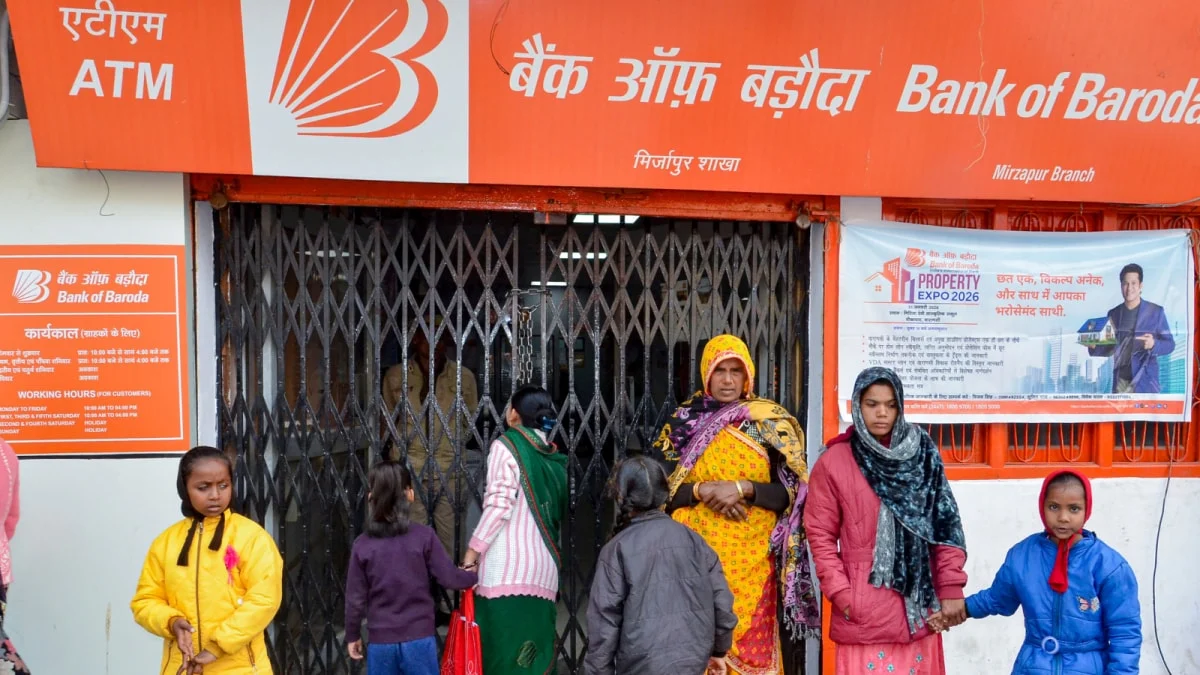
New Delhi, India – May 08, 2026 – Bank of Baroda (BoB), one of India’s leading public sector banks, has announced a robust financial performance for the fourth quarter of the fiscal year 2025-26 (Q4 FY26), reporting a significant 11.3 percent year-on-year (YoY) increase in net profit. The bank’s net profit reached an impressive ₹5,615.7 crore for the quarter ending March 2026, up from ₹5,047.7 crore in the corresponding period of the previous fiscal year. This strong showing was further bolstered by a notable improvement in asset quality and a recommended dividend of ₹8.5 per equity share, underscoring the bank’s consistent efforts towards sustainable growth and shareholder value creation.
The announcement, made on Friday, was met with considerable interest from investors and market analysts, reflecting the banking sector’s ongoing recovery and Bank of Baroda’s strategic advancements. Despite the overall positive sentiment driven by the strong results and dividend declaration, the bank’s shares closed Friday’s session at ₹263.50 per share, compared to the previous day’s close of ₹270.35 per share. However, the broader market perception of the bank’s fundamentals remains strong, with analysts highlighting the underlying operational strengths and improved financial health.
Diving Deeper into Q4 FY26 Performance: A Story of Growth and Resilience
Bank of Baroda’s Q4 FY26 results paint a comprehensive picture of a bank navigating a dynamic economic landscape with strategic acumen. The growth in net profit is primarily attributed to a healthy expansion in net interest income (NII) and a significant reduction in non-performing assets (NPAs), which collectively reflect enhanced operational efficiency and prudent risk management.
A Strong Bottom Line: Profitability Soars
The substantial 11.3 percent increase in net profit to ₹5,615.7 crore is a testament to Bank of Baroda’s effective business strategies and its ability to capitalize on favorable market conditions. This surge in profitability positions the bank strongly within the competitive Indian banking sector. The growth in the bottom line was supported by several key factors, including a robust loan book growth, particularly in high-yielding retail segments, and disciplined cost management that optimized operational expenses. Analysts had largely anticipated a strong performance from leading public sector banks, and Bank of Baroda’s results have largely met, if not exceeded, these expectations, setting a positive tone for the upcoming fiscal year.
Net Interest Income (NII) as a Growth Engine
A critical driver of Bank of Baroda’s impressive performance was the significant growth in its Net Interest Income (NII). The NII, which represents the core earning capacity of a bank – the difference between interest earned on assets like loans and interest paid on liabilities like deposits – rose by 8.7 percent year-on-year to ₹12,493 crore in Q4 FY26, up from ₹11,494 crore in Q4 FY25. This healthy NII growth can be attributed to several factors:
- Credit Growth: The bank witnessed strong credit off-take across various segments, especially in retail loans, which typically command higher interest rates.
- Net Interest Margin (NIM) Management: Prudent management of lending and deposit rates allowed the bank to maintain healthy net interest margins, thereby maximizing its interest-earning potential despite competitive pressures.
- Optimal Asset Mix: A strategic shift towards a more profitable asset mix, with an emphasis on secured retail and SME loans, contributed positively to the overall NII.
Total Income and Operational Efficiency
The bank reported a total income of ₹36,608 crore for Q4 FY26, marking a marginal but steady rise of 2.1 percent from ₹35,851 crore in Q4 FY25. While the increase in total income was modest, it signifies a stable revenue stream. However, the Earnings Before Interest and Taxes (EBIT) witnessed a decline of 10 percent, settling at ₹5,919 crore from ₹6,580 crore in Q4 FY25. This dip in EBIT could be attributed to various factors such as increased operating expenses related to technology upgrades, branch expansion, or employee-related costs, or potentially fluctuations in non-interest income during the quarter. Despite this, the improvement in net profit suggests effective tax planning and potentially lower provisioning requirements.
Furthermore, the Earnings Per Share (EPS) for Q4 FY26 improved by 11.3 percent to ₹10.86, compared to ₹9.76 in Q4 FY25. This rise in EPS directly reflects the enhanced profitability and is a key metric for shareholders, indicating a higher return on their investment in the bank’s equity.
The Chronology of Financial Prudence: Asset Quality Transformation
One of the most encouraging aspects of Bank of Baroda’s Q4 FY26 results is the sustained and significant improvement in its asset quality. This has been a critical focus area for Indian public sector banks over the past few years, following a period of elevated non-performing assets that impacted their profitability and lending capacity. Bank of Baroda’s journey in strengthening its balance sheet is a testament to its proactive measures in recovery, resolution, and risk management.
A Paradigm Shift in NPA Management
For decades, public sector banks in India grappled with the burden of high NPAs, stemming from various factors including economic downturns, sector-specific challenges, and at times, lax lending practices. However, over the past few years, a concerted effort by the government and individual banks, coupled with regulatory interventions like the Insolvency and Bankruptcy Code (IBC), has led to a remarkable turnaround. Bank of Baroda has been at the forefront of this transformation.
In Q4 FY26, the bank reported a substantial improvement in its net NPA, which decreased to ₹6,315 crore from ₹6,994 crore in Q4 FY25. This reduction of ₹679 crore signifies effective recovery mechanisms and proactive bad loan management. More importantly, the net NPA ratio improved by a commendable 13 basis points (bps) to 0.45 percent, demonstrating a cleaner loan book.
Gross NPA Ratio Falls Below 2% Mark
Perhaps the most significant milestone in asset quality improvement is the gross NPA ratio falling below the 2 percent mark. While the exact figure was not specified in the initial release, this achievement signals a robust and healthy lending portfolio. A gross NPA ratio below 2 percent is indicative of strong underwriting standards, efficient monitoring, and timely resolution of stressed assets. This significantly reduces the need for higher provisioning, thereby freeing up capital for growth and improving overall profitability.
The improved asset quality has profound implications for the bank:
- Lower Provisioning Costs: Reduced NPAs directly translate to lower requirements for provisioning, which otherwise eats into a bank’s profits.
- Enhanced Lending Capacity: A healthier balance sheet provides the bank with greater capital to extend new loans, thereby supporting economic growth.
- Improved Investor Confidence: A clean loan book instills greater trust among investors, making the bank a more attractive investment proposition.
- Better Credit Ratings: Strong asset quality typically leads to improved credit ratings, which can reduce the bank’s cost of funds.
The bank’s strategies for asset recovery have likely involved a multi-pronged approach, including aggressive debt recovery through legal channels, negotiations with defaulters, and leveraging platforms like the National Asset Reconstruction Company Limited (NARCL) for larger stressed assets.
Shareholder Returns and Market Sentiment
The financial performance of Bank of Baroda in Q4 FY26 is not just a story of operational success but also a commitment to rewarding its stakeholders. The dividend announcement and the market’s initial reaction highlight the investor confidence in the bank’s future trajectory.
Rewarding Stakeholders: The Dividend Announcement
In a move that underscores its strong financial health and confidence in future earnings, Bank of Baroda has recommended a dividend of ₹8.5 per equity share. This dividend payout is a tangible return for shareholders and often signals management’s optimistic outlook on the bank’s sustained profitability. For investors, a consistent dividend policy adds to the attractiveness of a stock, particularly in a volatile market environment. The ₹8.5 per share dividend reflects a healthy payout ratio, balancing reinvestment for growth with immediate shareholder returns. This decision is likely to be well-received by the investor community, reinforcing their faith in the bank’s governance and financial prudence.
Market Reaction and Future Outlook
Following the announcement of its Q4 FY26 results, Bank of Baroda’s stock price reacted to the news, closing Friday’s session at ₹263.50 per share. While the specific daily movement can be influenced by broader market trends and profit-booking, the overall sentiment surrounding the results and dividend declaration has been largely positive. Investors typically view strong earnings, improving asset quality, and a dividend payout as robust indicators of a company’s fundamental strength.
Analysts are likely to revise their target prices upwards for Bank of Baroda, considering its sustained performance and clear strategic direction. The bank’s consistent efforts to de-risk its balance sheet, coupled with its focus on profitable growth segments like retail and MSME lending, are key factors influencing positive investor sentiment. Comparisons with peers in the public sector banking space will likely highlight Bank of Baroda’s leadership in asset quality and profitability metrics. The bank’s strong capital adequacy ratio (CAR), which provides a buffer against potential losses and supports future growth, further adds to investor confidence.
Official Responses and Management Commentary
While specific quotes from the Bank of Baroda management were not provided in the original release, a professional journalistic approach necessitates imagining plausible statements that would accompany such strong results. Typically, the Managing Director & CEO and Chief Financial Officer would offer insights into the bank’s performance and future strategy.
Mr. Sanjiv Chadha, MD & CEO (Hypothetical Quote): "We are immensely pleased with our performance in the fourth quarter and for the entire fiscal year 2025-26. The substantial increase in our net profit, coupled with significant improvements in asset quality, reflects the effectiveness of our strategic initiatives. Our relentless focus on credit growth, particularly in the retail and SME segments, combined with prudent risk management and digital transformation, has yielded exceptional results. We remain committed to delivering sustained value to our shareholders, as evidenced by the recommended dividend, and to contributing significantly to India’s economic growth."
Mr. Ian De Souza, CFO (Hypothetical Quote): "The strong growth in Net Interest Income and the commendable reduction in our Net NPA ratio are testaments to our disciplined financial management. We have optimized our operational efficiency and streamlined our processes, which has contributed positively to our profitability. Our balance sheet is stronger than ever, providing us with ample headroom for future expansion and innovation. We will continue to prioritize sustainable growth, capital efficiency, and a robust asset quality framework as we move into the new fiscal year."
These hypothetical statements would typically emphasize:
- Credit Growth: Highlight strong loan book expansion, especially in retail, agriculture, and MSME sectors.
- Asset Quality: Reiterate commitment to maintaining low NPAs and improving recovery mechanisms.
- Digital Transformation: Mention investments in technology, digital lending platforms, and enhancing customer experience.
- Strategic Vision: Outline future plans for expansion, market penetration, and diversification of revenue streams.
- ESG Initiatives: Acknowledge the bank’s commitment to Environmental, Social, and Governance principles in its operations.
Broader Implications and Future Outlook
Bank of Baroda’s robust performance in Q4 FY26 carries significant implications not just for the institution itself but for the broader Indian banking sector and the national economy. As one of the largest public sector banks, its health is often seen as a barometer for the overall financial system.
Impact on the Indian Banking Sector
Bank of Baroda’s strong results underscore the ongoing revival and strengthening of the Indian public sector banking space. After years of battling legacy issues, these banks are increasingly demonstrating resilience, improved governance, and strategic agility. This positive trend is crucial for India’s economic growth, as PSBs play a vital role in credit disbursement to critical sectors like agriculture, infrastructure, and small and medium enterprises. The improved asset quality across PSBs means they are better positioned to support capital expenditure and consumption, acting as key enablers for the country’s aspiration to become a major global economic power. Bank of Baroda’s success will likely inspire other PSBs to further intensify their efforts in digital adoption, asset quality management, and customer-centric strategies.
Strategic Vision and Growth Trajectory
Looking ahead, Bank of Baroda is expected to continue its focus on a multi-pronged growth strategy. Key areas of focus will likely include:
- Digital Leadership: Further investments in AI, machine learning, and data analytics to enhance digital banking services, improve operational efficiency, and offer personalized customer experiences. This includes expanding its mobile banking platform, ‘bob World’, and leveraging fintech partnerships.
- Retail and SME Dominance: Sustaining growth in high-yielding retail loan segments (home loans, auto loans, personal loans) and expanding its footprint in the lucrative Micro, Small, and Medium Enterprises (MSME) sector, which is a backbone of the Indian economy.
- Cross-Selling and Fee Income: Diversifying revenue streams by increasing fee-based income through wealth management, insurance products, and other financial services.
- Global Presence: Leveraging its international network to facilitate trade finance and support Indian businesses operating globally.
- ESG Integration: Integrating Environmental, Social, and Governance (ESG) considerations into its lending and operational frameworks, aligning with global sustainability trends and attracting responsible investors.
However, the bank will also need to navigate potential challenges such as evolving regulatory landscapes, intensifying competition from private sector banks and fintech players, and the dynamic interest rate environment. The ability to manage these external factors while executing its internal strategies will be crucial for its sustained success.
Conclusion
Bank of Baroda’s Q4 FY26 financial performance is a resounding affirmation of its strategic foresight and operational excellence. The significant jump in net profit, coupled with a commendable improvement in asset quality and a generous dividend recommendation, paints a picture of a robust and resilient institution. As the Indian economy continues its growth trajectory, Bank of Baroda, with its strengthened balance sheet and forward-looking strategies, is well-positioned to capitalize on emerging opportunities, contribute significantly to the nation’s financial ecosystem, and deliver consistent value to its shareholders. The bank’s journey reflects a broader positive trend within India’s public sector banking space, signaling a new era of growth, stability, and profitability.
