

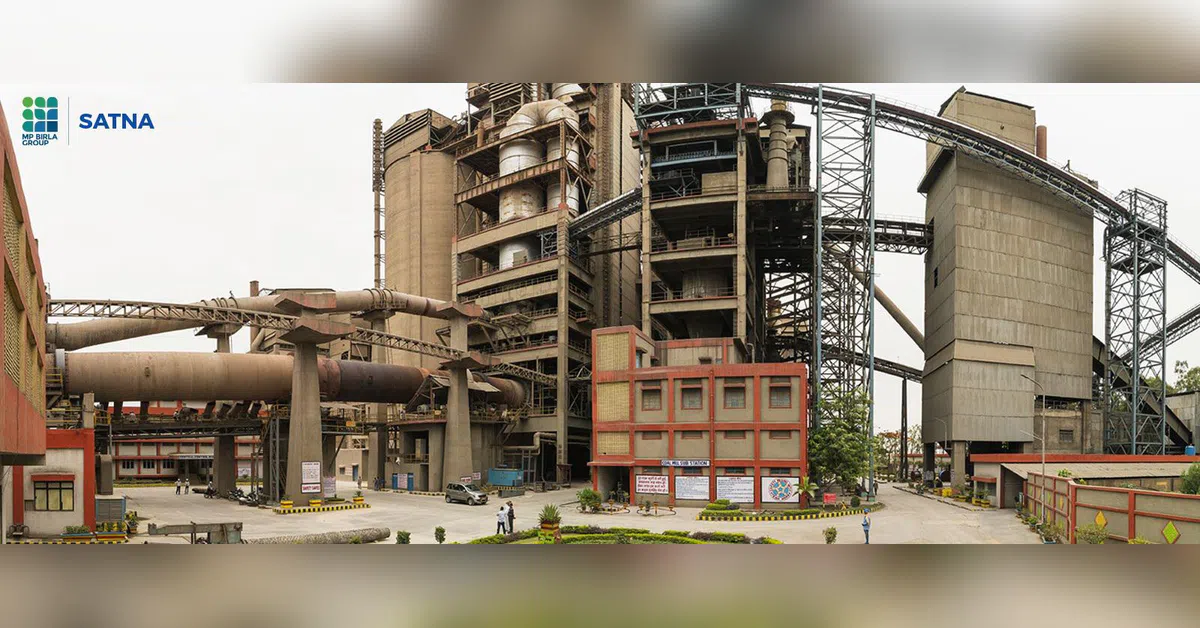
Kolkata, India – [Insert Date] – Birla Corporation Ltd, the flagship company of the diversified M P Birla Group, has demonstrated remarkable resilience and strategic acumen, reporting a significant surge in consolidated net profit for the fourth quarter of fiscal year 2025-26. Despite facing a challenging environment marked by subdued cement realisations and severe disruptions in its jute business, the company posted a net profit of ₹294.77 crore for the January-March quarter of FY26, a substantial increase from ₹256.6 crore recorded in the corresponding period a year ago.
This impressive profit growth, achieved against the backdrop of only a marginal uptick in overall revenue, underscores Birla Corporation’s adeptness in cost management, operational efficiency, and leveraging its core cement business’s volume strengths. The full fiscal year 2025-26 further cemented this trajectory, with the company announcing an extraordinary 88.8 percent surge in annual profit, reaching ₹557.58 crore, accompanied by record-high cement sales and production figures.
The results, disclosed in a regulatory filing, paint a picture of a company strategically navigating a complex economic landscape. While the cement division achieved its highest-ever quarterly sales volume, it grappled with persistent pricing pressures. Simultaneously, the jute division faced a perfect storm of raw material shortages and escalating prices, significantly impacting its performance. This nuanced financial narrative highlights the company’s diversified portfolio and the contrasting fortunes of its primary business segments, yet ultimately points to a robust underlying operational framework that delivered strong bottom-line growth.
A Deeper Look into Q4 FY26 Performance: Strategic Resilience Amidst Sectoral Challenges
The fourth quarter, typically a period of heightened construction activity in India, presented a mixed bag of opportunities and obstacles for Birla Corporation. While the company capitalized on demand to achieve record volumes in its cement segment, the overall revenue growth remained modest, reflecting the competitive intensity and pricing dynamics prevalent in the industry.
Consolidated Financial Highlights for Q4 FY26:
- Net Profit: ₹294.77 crore, an increase from ₹256.6 crore in Q4 FY25. This 14.8% year-on-year growth in net profit, despite a relatively flat top-line, signals strong internal efficiencies and cost optimization strategies.
- Revenue from Operations: Marginally up at ₹2,836.12 crore, compared to ₹2,814.91 crore in the year-ago period. This modest increase, as the company noted, was "owing to poor realisation from the cement business and external shocks affecting the performance of Birla Jute Mills."
- Total Expenses: Rose by a controlled 1 percent to ₹2,522.18 crore. This contained expense growth, relative to the profit surge, indicates effective cost controls across various operational parameters, from raw materials to logistics and administrative overheads.
- Total Income: Remained almost flat at ₹2,875.07 crore, mirroring the trend in revenue from operations.
These figures illustrate a strategic imperative within Birla Corporation to enhance profitability through operational leverage and stringent financial discipline, rather than solely relying on top-line expansion in a challenging pricing environment. The ability to grow net profit by nearly 15% with a mere 0.75% increase in revenue is a testament to the effectiveness of these internal strategies.
Cement Division: Volume Growth vs. Price Pressure
The cement business, which constitutes the lion’s share of Birla Corporation’s revenue, demonstrated a strong operational performance in Q4 FY26, albeit with a caveat regarding pricing.
- Revenue: Marginally increased to ₹2,716.06 crore from ₹2,691.84 crore in the corresponding quarter of the previous year.
- Sales Volume: Grew by a healthy 4 percent to 5.45 metric tonnes (MT), which the company proudly declared as its "highest ever for a quarter." This surge in volume underscores the robust demand in the market, likely fueled by government-led infrastructure projects and sustained housing demand.
- Realisation Challenges: Despite the strong demand and record volumes, the company noted that sales realisations "remained subdued." This is a critical point reflecting the intense competition within the Indian cement sector, where capacity additions by various players often lead to pricing pressures. Cement manufacturers frequently face a delicate balance between maximizing sales volumes and maintaining healthy profit margins, especially when input costs like fuel, power, and logistics are volatile. The struggle to pass on rising costs to consumers or to capitalize fully on demand with higher prices remains a perennial challenge for the industry.
The paradox of record volumes alongside subdued realisations suggests that while the market absorbed more cement, it did so at a price point that constrained revenue growth. This situation necessitates relentless focus on operational efficiencies, cost reduction, and strategic market penetration to ensure profitability.
Jute Division: Confronting Supply Chain Disruptions
In stark contrast to the cement segment’s operational achievements, the jute division, managed by Birla Jute Mills, faced significant headwinds that impacted its financial performance. This segment, though smaller, plays a vital role in the company’s diversified portfolio.
- Revenue Decline: Revenue from the Jute division was down 2.63 percent to ₹120.14 crore.
- Core Issues: The primary reasons cited for this decline were a severe "jute shortage and a rise in raw jute prices." India’s jute industry is highly dependent on agricultural output, making it vulnerable to climatic conditions and farming practices.
- Production Impact: The raw material crisis led to a significant decline in daily production, which fell to 110 metric tons. This represented an "18 per cent year-on-year and 7 per cent sequentially" drop in output, directly impacting sales volumes.
- Price Volatility: The magnitude of the raw material price hike was staggering, with "raw jute prices in the March quarter up 92 per cent year-on-year and 57 per cent sequentially." Such a dramatic increase in input costs, coupled with an inability to fully pass these on due to market dynamics, severely squeezed margins.
- Sales Performance: Total sales in the March quarter dropped 2 percent from a year ago to ₹120 crore, with domestic sales falling 5 percent year-on-year. This indicates a contraction in market share or demand for jute products in the face of higher prices and potential competition from synthetic alternatives.
The challenges faced by the jute division highlight the inherent volatility of commodity-dependent industries and the susceptibility to external factors ranging from agricultural yields to global supply chain dynamics. For Birla Corporation, effectively managing this segment involves not just operational efficiency but also strategic procurement and potentially exploring avenues for product diversification or value addition to mitigate raw material price risks.
Full Fiscal Year 2025-26: A Landmark Year of Growth and Expansion
While the fourth quarter provided a snapshot of the immediate operational challenges and successes, the full fiscal year 2025-26 demonstrates a compelling narrative of strategic growth and robust financial performance for Birla Corporation. The annual results underscore the cumulative impact of sustained efforts in capacity expansion, operational efficiency, and market penetration throughout the year.
Key Achievements for FY26:
- Profit Surge: The company’s consolidated net profit for the entire fiscal year surged by an impressive 88.8 percent, reaching ₹557.58 crore. This nearly doubling of profit signals a significant turnaround and enhanced profitability compared to the previous fiscal year.
- Total Consolidated Income: Rose by a solid 5 percent to ₹9,772.56 crore, indicating consistent top-line growth driven primarily by its core cement business.
- Record Cement Sales: Birla Corporation achieved a "record high" in cement sales, reaching 18.72 MT for the full year. This is a testament to the robust demand environment and the company’s effective sales and distribution network.
- High Capacity Utilisation: The company reported a capacity utilisation of 95 percent, a highly efficient figure for the industry, indicating optimal use of its manufacturing assets and strong market demand for its products. High capacity utilization is crucial for improving operating leverage and reducing per-unit costs.
- Landmark Cement Production: Cement production also climbed to a landmark during the year, reaching 19 MT for the first time. This reflects both the increased demand and the enhanced production capabilities of the company.
- Strategic Capacity Expansion: A significant development during the year was the commissioning of Kundanganj Line III in March. This expansion increased Birla Corporation Limited’s annual production capacity to 21.4 MT from 20 MT. This strategic investment is crucial for meeting future demand, gaining market share, and capitalizing on the long-term growth potential of the Indian infrastructure sector. Such expansions are critical for maintaining competitiveness and driving future revenue growth.
The full-year results affirm Birla Corporation’s strong position in the Indian cement market and its ability to deliver substantial value to shareholders through strategic growth and operational excellence. The capacity expansion, in particular, positions the company favorably for future demand cycles, allowing it to scale operations and strengthen its market presence.
Official Responses and Strategic Outlook
Birla Corporation’s earnings statements also provided insights into the company’s perspective on the market dynamics and its outlook for the immediate future. These statements serve as the "official responses" from the company regarding its performance and strategic positioning.
Regarding the cement market, the company noted that manufacturers are "attempting to raise prices to offset cost pressure but have so far had mixed results." This candid assessment highlights the delicate balance between managing input costs and navigating a highly competitive pricing environment. While there is an evident need to improve realisations, market forces often dictate the extent to which price hikes can be sustained.
The early part of the new fiscal year (FY27) saw some positive developments: "In the first half of April, there were some favourable price revisions on the back of hardening demand." This suggests that the market may be showing signs of absorbing higher prices, possibly due to renewed construction activity post-monsoon or sustained infrastructure spending. However, the company quickly tempered this optimism by stating that "competition for market share remains intense as the industry continues to add new manufacturing capacity." This acknowledges the inherent structural challenge of overcapacity or rapid capacity expansion, which tends to keep a lid on significant price increases across the board.
Looking ahead, Birla Corporation identified key external factors that will shape the cement market in early FY27: "Geopolitical disturbances in West Asia and monsoons are going to determine how the cement market shapes up."
- Geopolitical Disturbances: Conflicts and instability in West Asia can have a cascading effect on global energy prices, particularly crude oil. Since fuel (coal, pet coke) and logistics (freight) are significant cost components for cement manufacturing, any surge in energy prices directly impacts production costs. This could further intensify the pressure on cement manufacturers to either raise prices or absorb higher costs, impacting profitability. Supply chain disruptions stemming from such geopolitical events could also affect the availability and cost of imported raw materials or spare parts.
- Monsoons: The monsoon season traditionally leads to a slowdown in construction activity across India. This seasonal dip in demand can put further pressure on cement prices and sales volumes. Companies typically brace for this period by managing inventory, optimizing production schedules, and focusing on cost efficiency. The intensity and spread of the monsoon can significantly influence the demand recovery in the post-monsoon period.
These forward-looking statements from Birla Corporation demonstrate a clear understanding of the macro and micro economic factors influencing its operations and underscore the need for agility and strategic planning to navigate these anticipated challenges.
Implications and Future Trajectory
The latest financial results and outlook from Birla Corporation carry significant implications for the company, its stakeholders, and the broader Indian industrial landscape.
For Birla Corporation:
- Sustained Profitability Focus: The strong profit growth despite marginal revenue increase signals a strategic shift towards enhancing internal efficiencies and cost management. This focus will be crucial in a market characterized by intense competition and volatile input costs.
- Cement as the Growth Engine: The cement division remains the primary growth driver, with record sales volumes and strategic capacity expansion. The commissioning of Kundanganj Line III positions the company to capitalize on the anticipated long-term demand growth driven by government infrastructure projects and housing initiatives. The challenge will be to translate this volume growth into improved realisations.
- Jute Division Restructuring/Mitigation: The significant challenges in the jute division necessitate a closer look at its operational model, raw material sourcing strategies, and potential for product diversification or value addition to reduce vulnerability to price volatility and supply shortages.
- Strategic Agility: The company’s ability to adapt to external shocks, whether in the form of geopolitical disturbances affecting energy prices or seasonal demand fluctuations due to monsoons, will be critical for sustained performance. This includes dynamic pricing strategies, robust supply chain management, and continuous technological upgrades to enhance efficiency.
For the Indian Cement Industry:
- Competitive Landscape: The report reinforces the highly competitive nature of the Indian cement market. Despite strong demand, the addition of new capacities by various players ensures that pricing power remains constrained. This environment favors companies with strong operational efficiencies, extensive distribution networks, and strategic cost advantages.
- Infrastructure-led Growth: The underlying demand for cement continues to be robust, primarily driven by the Indian government’s massive push for infrastructure development (roads, railways, ports, affordable housing). Companies like Birla Corporation are well-positioned to benefit from this long-term growth trajectory.
- Input Cost Management: The persistent challenge of managing input costs (fuel, power, freight) remains central to the industry’s profitability. Companies that can effectively hedge against price volatility or invest in renewable energy sources will gain a competitive edge.
- Regional Dynamics: The "mixed results" for price revisions highlight the regional variations in demand-supply dynamics and competitive intensity across India’s diverse cement markets.
For Investors:
- Positive Signal: The impressive profit growth and record cement sales for FY26 send a positive signal to investors, demonstrating the company’s ability to generate value even in challenging market conditions.
- Long-term Outlook: The strategic capacity expansion and focus on operational efficiency suggest a strong long-term growth potential, aligning with India’s economic growth story.
- Diversification Benefits: While the jute division faced challenges, the overall diversified portfolio provides a degree of stability, cushioning the impact of single-segment volatility. However, the performance of the jute division will be a segment to watch for potential turnaround strategies.
Birla Corporation, as a flagship entity of the venerable M P Birla Group, continues to demonstrate its strategic prowess in navigating the complexities of the Indian industrial landscape. The record performance in cement, coupled with a proactive approach to managing challenges in other segments, positions the company for continued growth. As it looks towards FY27, the emphasis on operational excellence, strategic capacity utilization, and agile response to external market forces will undoubtedly define its journey in a dynamic and competitive environment. The interplay of global events, domestic policies, and inherent market dynamics will continue to shape the narrative of this key player in India’s foundational industries.
