

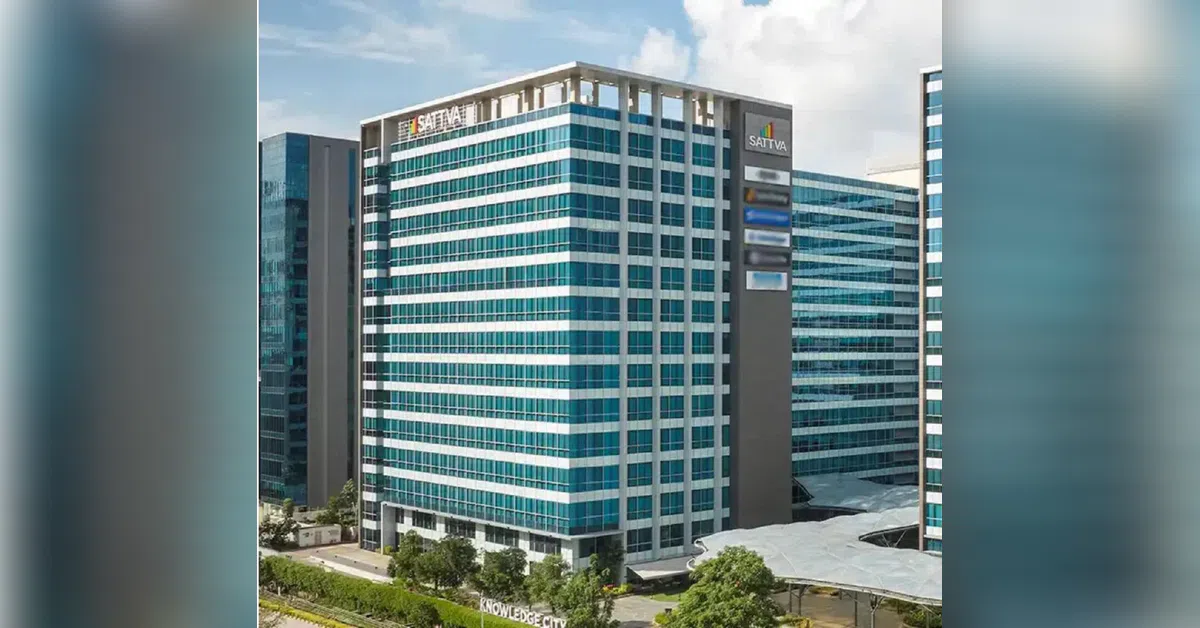
Mumbai, India – May 15, 2026 – Knowledge Realty Trust (KRT), India’s largest real estate investment trust (REIT) by market capitalization, has concluded its first full financial year post-listing with a stellar performance, announcing a robust 14 percent year-on-year (YoY) growth in net operating income (NOI) for the fourth quarter of fiscal year 2026 (Q4 FY26). The REIT, backed by real estate giants Sattva and global investment firm Blackstone, reported an NOI of ₹1,053.3 crore for the quarter, underscoring its strong operational momentum and strategic market positioning.
The impressive quarterly figures cap off a remarkable fiscal year for KRT, which saw its full-year NOI for FY26 climb by 18 percent YoY to ₹4,048.4 crore. Alongside these financial achievements, KRT declared significant distributions to its unitholders, further cementing its appeal as a stable, income-generating investment vehicle. For Q4 FY26, distributions totaled ₹716.6 crore, or ₹1.62 per unit. Cumulatively, since its landmark listing in August 2025, KRT has distributed a substantial ₹2,101.9 crore, equating to ₹4.74 per unit, reflecting consistent value creation for its diverse investor base.
Operationally, the REIT demonstrated strong leasing activity, securing 1.1 million square feet (msf) of gross leasing in Q4 FY26. This performance contributed to a cumulative leasing total of 3.5 msf for the entire fiscal year, pushing the portfolio occupancy to a healthy 92 percent. KRT’s strategic focus on a high-quality, "AI-resilient" portfolio, coupled with proactive debt management and a significant pipeline for future growth, positions it for sustained expansion in India’s dynamic commercial real estate sector.
A Year of Milestones: KRT’s Journey from Listing to Market Leadership
The fiscal year 2026 marks a pivotal period for Knowledge Realty Trust, transitioning from its August 2025 listing to establishing itself as a dominant force in the Indian REIT landscape. Its journey has been characterized by strategic execution, robust financial management, and a forward-thinking approach to portfolio development.
From Inception to Public Offering
The genesis of Knowledge Realty Trust lies in the powerful collaboration between two industry stalwarts: Sattva Developers, a prominent Indian real estate developer with a long-standing track record, and Blackstone, one of the world’s largest alternative asset managers. This partnership brought together a vast portfolio of high-quality commercial assets, primarily office spaces, across key Indian metropolitan areas. The strategic intent behind forming KRT and subsequently listing it as a REIT was to unlock the value of these premium assets, provide institutional and retail investors access to income-generating real estate, and professionalize the management of large-scale commercial portfolios.
The listing of KRT in August 2025 was a landmark event for the Indian capital markets, significantly expanding the nascent REIT sector. It immediately assumed the mantle of India’s largest REIT by market capitalization, signaling strong investor confidence in its underlying assets and management expertise. The initial public offering (IPO) generated considerable interest, reflecting the growing appetite for stable, yield-generating investment opportunities amidst India’s robust economic growth narrative.
Navigating the First Full Fiscal Year (FY26)
Following its listing, KRT embarked on its first full fiscal year with a clear mandate for growth and value creation. The period from Q1 to Q4 FY26 saw the REIT systematically execute its operational and financial strategies.
- Initial Market Integration and Performance: The early quarters focused on consolidating its position post-listing, ensuring seamless operational integration of its vast portfolio. The market closely watched KRT’s initial distribution payouts and leasing activities as benchmarks for the sector. The consistent distribution payouts, culminating in ₹4.74 per unit since listing, quickly established KRT as a reliable income provider.
- Aggressive Leasing and Occupancy Growth: Throughout FY26, KRT maintained a strong focus on optimizing its portfolio’s occupancy. The reported 3.5 msf of cumulative leasing for the year, alongside a 92 percent portfolio occupancy, demonstrates the high demand for its premium office spaces. This aggressive leasing strategy was crucial for driving NOI growth and maintaining a healthy revenue stream. The ability to command a 5 percent premium to market rents on new leases further underscored the superior quality and strategic locations of its assets.
- Strategic Capital Management: FY26 also witnessed KRT’s astute financial management, particularly in its debt strategy. The REIT raised ₹4,200 crore in debt, but critically, it simultaneously worked to optimize its capital structure. Through high-cost debt replacement, rate renegotiations, and benefiting from general rate cuts, KRT successfully reduced its blended cost of debt from 8.6 percent to an impressive 7.2 percent. This proactive approach significantly enhanced its financial efficiency and boosted its bottom line.
- Global Recognition and Investor Outreach: A significant milestone in FY26 was KRT’s inclusion in prestigious global indices such as FTSE All World, All Cap, and Nareit Global REITs indices. This inclusion marked a critical recognition of KRT’s scale, liquidity, and governance standards on the international stage. It not only elevated the REIT’s global profile but also opened doors to a broader pool of international institutional investors. Concurrently, KRT reported a doubling of its unitholder base since listing, indicating broadening participation across various investor classes, from retail to institutional, both domestic and international.
Setting the Stage for FY27
As KRT moves into FY27, the foundations laid in its first full year provide a robust platform for continued expansion. The CEO, Shirish Godbole, highlighted the "strong operating momentum, a resilient balance sheet, and multiple visible growth levers" as key drivers for the upcoming fiscal year. The established ROFO (Right of First Offer) pipeline, coupled with significant headroom for inorganic growth due to its low loan-to-value (LTV) ratio, suggests a proactive and expansive strategy for the future.
Unpacking the Performance: Data-Driven Success
KRT’s impressive FY26 results are not merely headline figures but are deeply rooted in a combination of strategic planning, efficient operations, and a robust market for commercial real estate in India. A detailed look at the supporting data reveals the underlying strengths that powered this performance.
Financial Highlights and Distribution Prowess
The core of KRT’s financial success lies in its Net Operating Income (NOI) growth. For Q4 FY26, the NOI of ₹1,053.3 crore represented a substantial 14 percent increase over the corresponding period in the previous year. This quarterly growth was further amplified over the full fiscal year, with FY26 NOI reaching ₹4,048.4 crore, an 18 percent jump YoY. This consistent growth in NOI is a direct indicator of the increasing rental income generated from KRT’s properties, driven by effective leasing, rental escalations, and high occupancy rates.
Distributions to unitholders are a critical metric for REITs, signifying the direct returns to investors. KRT’s declaration of ₹716.6 crore, or ₹1.62 per unit, for Q4 FY26, contributes to a cumulative distribution of ₹2,101.9 crore, or ₹4.74 per unit, since its listing. This consistent payout strategy underscores the REIT’s commitment to delivering attractive yields, a fundamental appeal for investors seeking stable income streams. Such robust distributions, especially in its first full year of operation, send a strong signal of financial health and operational efficiency to the market.
Robust Leasing and Rental Dynamics
KRT’s operational strength is evident in its leasing performance. The gross leasing of 1.1 msf in Q4 FY26 and 3.5 msf for the full FY26 period is a testament to the quality and demand for its assets. This aggressive leasing activity helped maintain a high portfolio occupancy rate of 92 percent, ensuring minimal revenue leakage from vacant spaces.
Beyond just occupancy, the quality of rental income is paramount. KRT reported an impressive 7 percent YoY increase in in-place rents across its portfolio. This indicates natural growth in rental values, driven by market demand and contractual escalations. More remarkably, the REIT achieved leasing spreads of 26 percent. A leasing spread represents the difference between the new rent and the expiring rent on a leased space. A 26 percent spread signifies KRT’s ability to significantly increase rents upon renewal or re-leasing, directly contributing to NOI growth. Furthermore, the fact that rents on new leasing in FY26 were at a 5 percent premium to market rents reflects not only the superior quality of KRT’s assets but also its strong embedded pricing power within its micro-markets. This premium indicates that tenants are willing to pay more for KRT’s spaces due to their strategic locations, modern infrastructure, and high-quality amenities.
"AI-Resilient" Portfolio: A Future-Proof Strategy
A cornerstone of KRT’s long-term strategy is its "AI-resilient" portfolio, a proactive response to the evolving demands of the global economy and the increasing integration of artificial intelligence into business operations. This resilience is attributed to three key attributes:
- High Exposure to Global Capability Centres (GCCs): A significant 45 percent of KRT’s gross rentals originate from GCC occupiers. GCCs, often the captive technology and R&D centers of multinational corporations, are characterized by their long-term growth trajectories, stable tenancy, and sophisticated infrastructure requirements. They are less susceptible to economic fluctuations that might impact traditional IT services and are critical for companies to innovate and remain competitive in the AI era.
- Negligible Exposure to Traditional IT Services: In contrast to GCCs, traditional IT services firms have faced headwinds from automation and shifting client demands. KRT’s minimal reliance on this segment insulates its portfolio from potential volatility, ensuring a more stable and predictable income stream.
- Significant Front-Office Assets: 31 percent of KRT’s portfolio value is concentrated in front-office assets. These are typically prime locations, often serving client-facing functions, executive offices, and collaborative spaces. Such assets are highly valued for their strategic importance, brand visibility, and the necessity for in-person interaction, making them less prone to disruption from remote work trends or AI-driven automation.
This strategic composition ensures that KRT’s assets remain relevant and in high demand, even as technological advancements reshape the nature of work.
Prudent Capital Management and Growth Headroom
KRT’s financial discipline extends to its capital structure. In FY26, the REIT raised ₹4,200 crore in debt, but concurrently managed to reduce its blended cost of debt from 8.6 percent to 7.2 percent. This significant reduction was achieved through a combination of high-cost debt replacement, successful rate renegotiations with lenders, and leveraging favorable market conditions that saw general rate cuts. A lower cost of debt directly translates to higher distributable income for unitholders.
Furthermore, KRT boasts a remarkably low loan-to-value (LTV) ratio of 18 percent. LTV is a crucial indicator of a REIT’s financial health and its capacity for future growth. An 18 percent LTV is exceptionally low by industry standards, providing substantial headroom for inorganic growth through future acquisitions. This robust balance sheet, coupled with net debt of ₹12,000 crore against a net asset value (NAV) of ₹54,815.2 crore, positions KRT as a financially sound entity capable of pursuing significant expansion opportunities. Its market capitalization, as of May 12, 2026, stood at approximately ₹52,000 crore, reflecting strong investor confidence in its valuation.
Official Responses: A Vision for Sustained Growth
The leadership at Knowledge Realty Trust has articulated a clear vision, emphasizing the strategic factors contributing to its success and outlining future growth pathways.
Shirish Godbole, Chief Executive Officer of Knowledge Realty Trust, expressed satisfaction with the REIT’s performance and strategic positioning. "We are happy to inform that KRT was included in FTSE All World, All Cap and Nareit Global REITs indices in FY26, reflecting growing global investor recognition," Godbole stated. This inclusion is a pivotal achievement, signifying KRT’s adherence to international standards of governance, transparency, and liquidity. For a relatively young Indian REIT, such global recognition is invaluable, enhancing its appeal to a wider spectrum of international institutional investors who rely on these indices for portfolio allocation. It also implies increased visibility and potential for greater trading volumes, ultimately benefiting unitholders.
Godbole further highlighted the broadening investor base as a key indicator of market confidence. "Encouragingly, we continue to see broadening participation across investor classes, with our unitholder base more than doubling since listing," he noted. This expansion of the unitholder base, encompassing both domestic and international, retail and institutional investors, speaks volumes about the market’s belief in KRT’s long-term value proposition. A diversified investor base typically leads to greater market stability and liquidity for the REIT’s units.
Looking ahead, Godbole conveyed a confident outlook for the upcoming fiscal year. "We enter FY27 with strong operating momentum, a resilient balance sheet and multiple visible growth levers," he affirmed. This statement encapsulates KRT’s current strengths and future potential. The "strong operating momentum" is underpinned by consistent NOI growth, high occupancy, and premium leasing spreads. The "resilient balance sheet" is a direct result of its prudent debt management, low LTV, and robust NAV. The "multiple visible growth levers" point towards both organic growth from existing assets (rental escalations, re-leasing at higher rates) and inorganic expansion opportunities, particularly through its strategic ROFO pipeline and ample debt capacity.
Implications: KRT’s Impact on the Indian Commercial Real Estate Landscape
Knowledge Realty Trust’s impressive performance in FY26 carries significant implications, not just for its unitholders but for the broader Indian commercial real estate sector and the nascent REIT market.
Setting a Benchmark for the Indian REIT Sector
As the largest Indian REIT by market capitalization, KRT’s success serves as a critical benchmark for the entire sector. Its ability to consistently deliver strong NOI growth, maintain high occupancy, and provide attractive distributions demonstrates the viability and potential of the REIT structure in India. This performance is likely to instill greater confidence among potential sponsors considering listing their own portfolios as REITs and attract more institutional capital into the sector. It validates the regulatory framework and the market’s capacity to absorb and value such vehicles.
Bolstering Investor Confidence in Indian Commercial Real Estate
KRT’s global index inclusions and the doubling of its unitholder base are powerful endorsements of investor confidence in Indian commercial real estate. International investors, in particular, often look to such indices for entry points into emerging markets. KRT’s inclusion signals that Indian office assets, especially those managed by professional entities like KRT, meet global standards of investment quality and offer compelling risk-adjusted returns. This could lead to increased foreign direct investment into the commercial real estate segment, benefiting the broader economy.
Future Growth Trajectory and Strategic Acquisitions
The "multiple visible growth levers" mentioned by CEO Shirish Godbole are a key driver of KRT’s future outlook. The existing ROFO pipeline, comprising four assets from co-sponsor Sattva Developers spanning 6.7 msf across three Indian cities, provides a clear roadmap for inorganic expansion. Having a sponsor-backed pipeline offers a significant strategic advantage, ensuring a steady supply of high-quality, pre-vetted assets that align with KRT’s investment criteria. This reduces acquisition risk and provides predictable growth avenues.
Furthermore, KRT’s exceptionally low LTV of 18 percent offers immense financial flexibility. This significant headroom means KRT can easily raise additional debt to fund future acquisitions without overleveraging its balance sheet. In a market ripe with opportunities, particularly as India’s economy continues to expand and demand for modern office spaces surges, KRT is strategically positioned to capitalize on both organic growth within its existing portfolio and substantial inorganic expansion through strategic acquisitions.
The "AI-Resilient" Advantage in a Evolving World
KRT’s deliberate focus on an "AI-resilient" portfolio is a forward-thinking strategy that positions it for long-term relevance and stability in a rapidly evolving global economy. By concentrating on GCCs and front-office assets while minimizing exposure to traditional IT services, KRT is effectively hedging against potential disruptions from technological advancements and changing work patterns. As AI continues to reshape industries, the demand for sophisticated, collaborative, and strategically important office spaces will likely remain strong, benefiting KRT’s specialized portfolio. This strategic foresight ensures that KRT’s assets remain highly desirable and generate sustainable income streams well into the future.
In conclusion, Knowledge Realty Trust has delivered a resounding performance in its first full fiscal year, setting a high bar for operational excellence and financial prudence. With a robust balance sheet, a strategically curated portfolio, strong leadership, and clear growth pathways, KRT is well-positioned to continue its trajectory as a leading player in India’s dynamic commercial real estate sector, offering compelling returns and long-term value to its growing unitholder base.
