

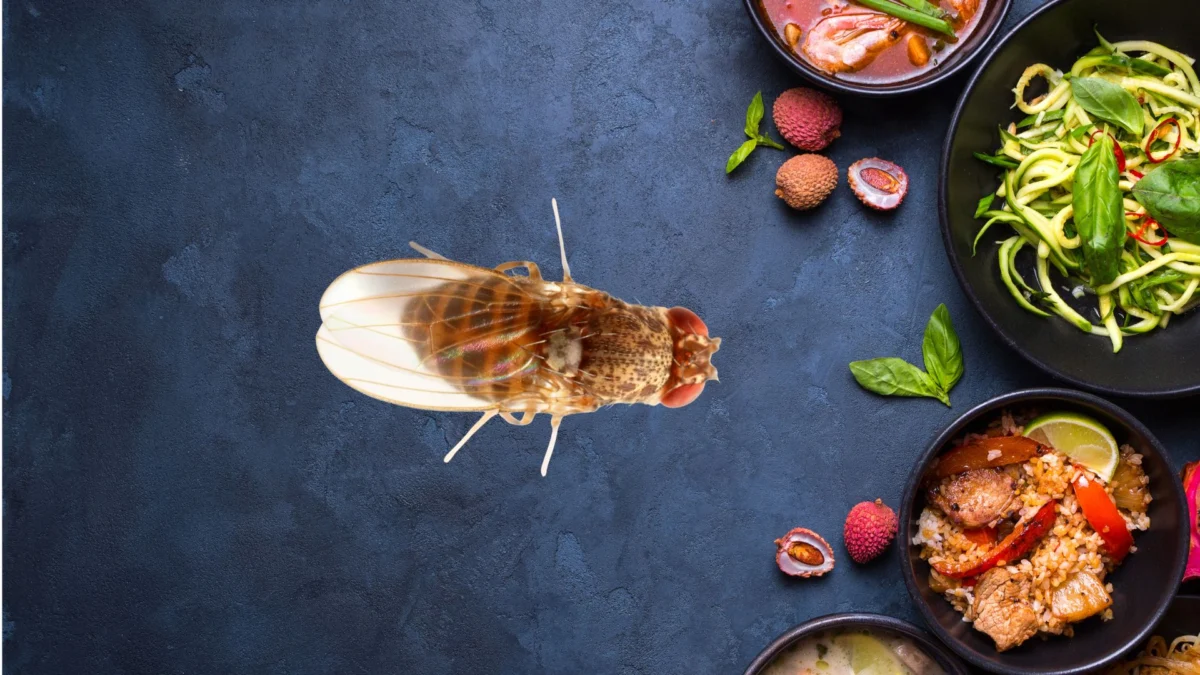
SONEPAT — As the global climate crisis accelerates, the intersecting threats of rising temperatures and shifting nutritional availability are creating a complex web of challenges for biodiversity and public health. In a groundbreaking study that bridges the gap between ecology, nutrition, and immunology, researchers at Ashoka University have uncovered a startling correlation between dietary intake and disease resilience. Their findings reveal that a low-carbohydrate, high-protein diet significantly enhances the ability of fruit flies (Drosophila melanogaster) to survive lethal bacterial infections, even under the physiological stress of elevated environmental temperatures.
This discovery, published by the university’s biological sciences department, offers a window into the future of global health, suggesting that what an organism eats may be its most critical defense against the pathogens thriving in a warming world.
Main Facts: The Intersection of Nutrition, Heat, and Immunity
The study centers on the "tri-trophic" interaction between an organism, its environment, and its pathogens. While it has long been known that temperature affects metabolic rates and that diet influences immune function, the Ashoka University study is among the first to examine these factors in tandem with reproductive status.
The core findings suggest that the traditional "regular" diet—often used as a baseline in laboratory settings—may actually leave organisms more vulnerable to environmental shifts. Specifically, the researchers found that:
- Dietary Resilience: Unmated female fruit flies on a low-carbohydrate diet survived bacterial infections at significantly higher rates than those on high-carb or standard diets.
- Temperature Buffering: While warmer temperatures usually make fruit flies more susceptible to disease, those on low-carb or high-carb diets maintained their survival rates, effectively "buffering" the negative impacts of heat.
- The Tolerance Mechanism: Surprisingly, the diets did not reduce the bacterial load within the flies. Instead, the nutrition allowed the flies to better tolerate the presence of the bacteria, surviving the damage without necessarily killing the invader.
- The Cost of Reproduction: These survival benefits were almost entirely negated once the flies mated, revealing a profound biological trade-off between the energy required for egg production and the energy required for immune defense.
Chronology: From Larval Development to Pathogenic Challenge
To reach these conclusions, the research team at Ashoka University designed a meticulous multi-stage experiment that tracked the flies from the very beginning of their life cycle.

Phase I: Controlled Rearing
The experiment began with the cultivation of female fruit flies from the egg stage. To ensure that the results were not merely a snapshot of adult health but a reflection of lifelong physiological development, the flies were raised under strictly controlled conditions. They were divided into groups and placed in specialized incubators set to two distinct temperatures:
- 25°C (77°F): Representing a standard, optimal laboratory room temperature.
- 29°C (84.2°F): Representing a warmer, stressed environment reflective of current global warming trends.
Phase II: Dietary Intervention
Throughout their development and into early adulthood, the flies were restricted to one of three specific nutritional regimens:
- High-Carbohydrate Diet: Rich in sugars, simulating a diet high in caloric density but low in structural nutrients.
- Regular Diet: A balanced laboratory standard.
- Low-Carbohydrate Diet: A regimen emphasizing protein (derived from yeast) over sugars.
Phase III: The Infection Challenge
Once the flies reached maturity, they were exposed to Providencia rettgeri, a naturally occurring Gram-negative bacterium that is a common pathogen for fruit flies. This bacterium is known to cause systemic infection and high mortality rates, making it an ideal candidate for testing immune resilience.
Phase IV: Observation and Data Collection
Following the infection, the researchers monitored the flies around the clock. They didn’t just count the dead; they analyzed the "Bacterial Load Upon Death" (BLUD) and the "Bacterial Load in Surviving Flies." They also tracked secondary health indicators, such as how long the flies could survive without food (starvation resistance) and their total reproductive output.
Supporting Data: Tolerance vs. Resistance
The data yielded a surprising distinction in the world of immunology: the difference between resistance (the ability to clear a pathogen) and tolerance (the ability to limit the damage caused by a pathogen).

The Survival Gap
At 25°C, flies on a low-carb diet showed a survival rate nearly 30% higher than those on a regular diet when infected with P. rettgeri. When the temperature was raised to 29°C, the "regular diet" group saw a sharp decline in survival. However, the low-carb group maintained their high survival rate, showing almost no decrease in resilience despite the four-degree jump in temperature.
Bacterial Load Consistency
One of the most significant data points was the bacterial count. The researchers expected that the surviving low-carb flies would have fewer bacteria in their systems, indicating a stronger "kill" response from the immune system. Instead, the bacterial loads were nearly identical across all dietary groups. This suggests that the low-carb diet provides a "metabolic cushion" that protects vital organs and tissues from the toxins produced by P. rettgeri, rather than simply fueling the production of more antimicrobial peptides.
The Mating Penalty
The data took a dramatic turn when considering mated females. In fruit flies, the process of producing eggs is incredibly resource-intensive. The study found that once a female fly mated, the survival advantage provided by the low-carb diet vanished. This suggests that the biological "budget" for immunity is secondary to reproduction; when the body is forced to choose between surviving an infection and producing the next generation, the evolutionary drive to reproduce consumes the very resources the low-carb diet had provided for defense.
Official Context: The Role of Ashoka University
The research, conducted at Ashoka University’s Sonepat campus, places the institution at the forefront of "Eco-Immunology"—a field that studies how environmental factors shape the immune systems of living creatures.
While official statements from the lead investigators emphasize that this is a model organism study, they highlight the broader scientific implications. The researchers noted that while they successfully identified the benefits of a low-carb/high-protein ratio, the experimental design—which altered both yeast and sugar simultaneously—leaves room for further investigation. Future studies will need to isolate whether it is the lack of sugar or the abundance of protein that serves as the primary driver for infection tolerance.

Furthermore, the university pointed out the limitations in their reproductive data. By counting only the final number of adult offspring, the study could not determine if the diets affected the "viability" of the eggs (whether the eggs were healthy enough to hatch) or the "fecundity" (how many eggs were laid). These nuances remain a priority for the next phase of Ashoka’s biological research.
Implications: A Warning for a Warming Planet
The results of this study extend far beyond the laboratory fruit fly. They provide a sobering look at the challenges facing global ecosystems and human populations in the 21st century.
1. Climate Change as a Disease Multiplier
As the planet warms, pathogens like Providencia rettgeri and their human-infecting counterparts often replicate faster. Simultaneously, heat stress weakens the host’s natural defenses. The Ashoka University study proves that temperature does not act in a vacuum; its lethality is dictated by the nutritional state of the host. In regions where climate change is causing both heatwaves and crop failures (leading to poor nutrition), the risk of devastating disease outbreaks is exponentially higher.
2. Nutritional Degradation
Rising CO2 levels in the atmosphere have been shown in other studies to reduce the protein and mineral content of staple crops like rice and wheat, making them more carbohydrate-heavy. The Ashoka study suggests that this shift toward high-carb, low-protein food sources could make wildlife—and potentially humans—less tolerant of infections, exactly at the time when a warmer climate is making those infections more common.
3. Predictive Modeling for Public Health
By understanding how fruit flies—which share about 75% of the genes that cause diseases in humans—respond to these stressors, scientists can build more accurate models for how infectious diseases might spread in human populations. This research suggests that nutritional intervention could be a key component of public health strategies in climate-vulnerable zones.

4. Wildlife Conservation
For conservationists, this study highlights a hidden danger. Endangered species already struggling with habitat loss and heat may be pushed over the edge by a simple change in the nutritional quality of their natural food sources, rendering them unable to survive common local pathogens.
Conclusion
The Ashoka University study serves as a critical reminder that the health of an organism is a delicate balance of internal and external factors. As we move into an era of unprecedented environmental instability, the humble fruit fly has provided a vital lesson: our survival may depend not just on the medicines we develop, but on the very fuel we put into our bodies. The "Low-Carb" advantage in the face of infection and heat is a clear signal that in the fight against climate change, nutrition is a frontline defense.
