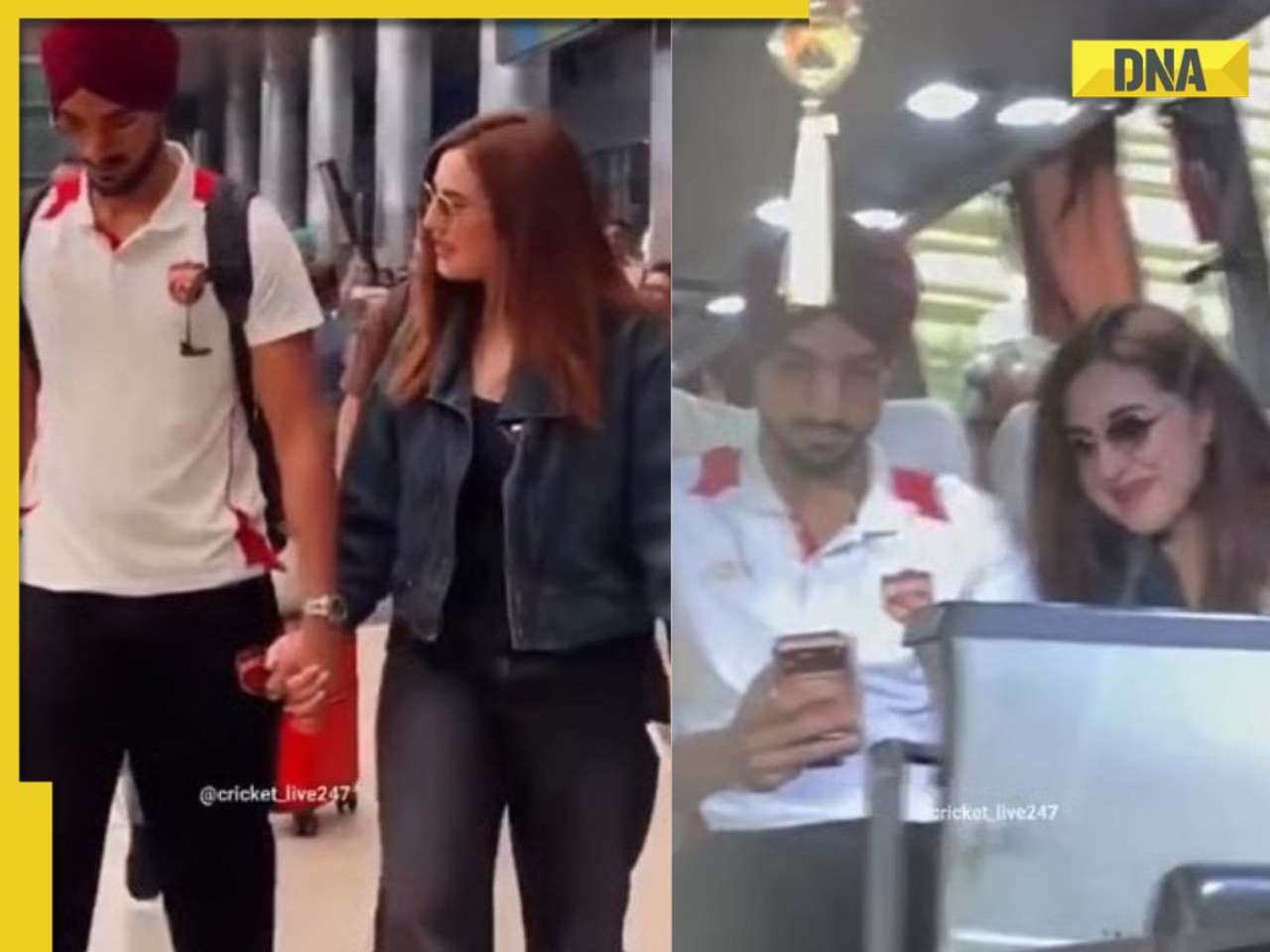
Mumbai, May 13, 2026 – The vibrant spectacle of the Indian Premier League (IPL) 2026 has been overshadowed by a burgeoning controversy involving Punjab Kings’ star pacer Arshdeep Singh and his rumoured girlfriend, Samreen Kaur. Viral images and videos circulating across social media platforms depict Kaur in close proximity to the team, including alleged travel on official buses and presence in restricted team zones. This has ignited a fierce debate among fans and cricket pundits alike, raising serious questions about whether the young bowler has breached the Board of Control for Cricket in India’s (BCCI) stringent travel and conduct guidelines, which were recently reinforced with a renewed emphasis on player protocols.
The controversy comes at a critical juncture for both the league and Arshdeep, a player of significant national importance, having been credited as India’s highest wicket-taker in T20Is and an ICC trophy winner in 2024, 2025, and 2026. The alleged infractions have triggered a wider discussion about player discipline, the sanctity of team bio-bubbles or designated zones, and the ever-present challenge of balancing personal lives with professional responsibilities in the high-stakes world of franchise cricket.
Chronology of a Controversy: From Viral Snaps to Policy Scrutiny
The unfolding drama began subtly but quickly escalated into a full-blown media storm, highlighting the immense power of social media in shaping narratives around public figures.
The Initial Spark: Viral Sightings and Social Media Frenzy
The first whispers of a potential breach emerged from fan-shot content that rapidly went viral. A video clip, initially shared by a fan and subsequently amplified across Twitter (now X) and other platforms, showed Arshdeep Singh and Samreen Kaur walking hand-in-hand through an airport. The key detail that sparked alarm was the apparent boarding of the Punjab Kings team bus by both individuals. This immediate visual evidence was quickly followed by further reports and images suggesting Kaur’s consistent presence with the team, including allegations of her staying in official team hotels – areas typically designated exclusively for players and essential support staff.
The timing of these visuals could not have been more problematic. Just days prior to the pictures surfacing, the BCCI Secretary, Devajit Saikia, had reportedly circulated a comprehensive seven-page advisory specifically for the 2026 season. This document, designed to tighten control over player conduct and team environments, explicitly laid down strict rules: absolutely no unauthorized individuals, including partners or girlfriends, were permitted on team buses or within restricted hotel zones. The advisory was a clear signal from the board that it intended to curb what it vaguely termed the "girlfriend culture" – a phenomenon that has, in various forms, been a subject of debate within cricket circles for years.
Tweets from various accounts further fueled the narrative:
Massive allegations on Arshdeep Singh and Samreen Kaur
Arshdeep Singh’s girlfriend Samreen Kaur was allegedly the only partner traveling in the team bus.
He is being blamed as the reason why the BCCI introduced strict guidelines regarding players’ girlfriends.
Despite… pic.twitter.com/OGRZvcoKKU
— TEJASH (@Tejashyyyyy) May 13, 2026
Another tweet, ironically highlighting Kaur’s perceived "aura," also inadvertently provided further visual evidence:
Samreen Kaur’s aura is on another level. Arshdeep Singh, India’s highest wicket-taker in T20Is and an ICC trophy winner in 2024, 2025, and 2026, opened the car door for her. pic.twitter.com/nqZjqYuvko
— (@rushiii_12) May 12, 2026
These posts, coupled with the official advisory, created a perfect storm, leaving little room for ambiguity in the public’s perception of the situation.
BCCI’s Timely Intervention: A Tightened Leash
The BCCI’s recent advisory, issued before the playoffs stage of IPL 2026, was not merely a reiteration of existing rules but a significant tightening of the leash. The document reportedly outlined detailed protocols for player movement, interaction with external individuals, and access to team facilities. The intent was clear: to maintain strict discipline, ensure player focus, and, critically, safeguard the integrity and security of the league and its participants.
While "girlfriend culture" might sound benign, the BCCI’s concerns, as detailed in the advisory, extended far beyond simple camaraderie. The board’s memo explicitly pointed to "national security and integrity" as paramount concerns, warning cricketers and franchises to be vigilant against "targeted compromise and honey-trapping." This pointed reference indicated a heightened awareness of external threats, particularly from influencers and individuals potentially connected to betting syndicates, who could seek to exploit players’ personal vulnerabilities for illicit gains. The advisory was a proactive measure aimed at mitigating these advanced and often sophisticated risks.
The Gravity of the Guidelines: Beyond Personal Lives
The BCCI’s stance, reinforced by the comprehensive seven-page advisory, underscores a profound shift in how professional cricket bodies perceive and manage the intersection of players’ personal and professional lives. This isn’t just about maintaining an appearance of discipline; it delves into fundamental issues of security, integrity, and the commercial viability of a multi-billion-dollar league.
National Security and Integrity Concerns
The explicit mention of "national security and integrity" in the BCCI’s advisory elevates the Arshdeep Singh controversy beyond a simple breach of decorum. In the context of the IPL, a global sporting spectacle attracting massive investments and public attention, the risks of "targeted compromise and honey-trapping" are substantial. These threats are not abstract; they manifest through various channels, including social media, where influencers might cultivate relationships with players, potentially leading to breaches of confidential information or, more sinisterly, involvement in betting-related activities.
The reference to "betting apps" is particularly telling. Cricket has a history, albeit a painful one, with match-fixing and illegal betting. The BCCI and the International Cricket Council (ICC) have invested heavily in anti-corruption units and strict protocols to protect the sport’s integrity. Allowing unauthorized individuals, especially those whose backgrounds and intentions are not vetted, into the team’s inner sanctum creates potential vulnerabilities that could be exploited by syndicates looking for inside information or opportunities to influence game outcomes. The advisory, therefore, serves as a critical line of defense against external pressures that could undermine the fairness and credibility of the game.
Moreover, in an era of heightened digital surveillance and data breaches, ensuring the security of high-profile athletes is a complex undertaking. The BCCI’s proactive measures reflect an understanding that player security extends beyond physical safety to include protection against reputational damage, financial exploitation, and psychological manipulation. Any individual granted access to the team environment, even if informally, represents a potential vector for these threats.
Precedent and Player Responsibility
The BCCI’s robust guidelines are rooted in the principle that professional athletes, particularly those representing national and international brands like the IPL, carry a significant responsibility. Their conduct, both on and off the field, reflects not only on themselves but also on their teams, the league, and the sport as a whole. Breaches of protocol, especially those related to security and integrity, are therefore not minor infractions but serious challenges to the established order.
The advisory serves as a clear contractual obligation for players. By signing their IPL contracts, players implicitly agree to adhere to these rules. Any deviation, therefore, is not just a social misstep but a potential contractual violation, which can carry severe consequences. This framework emphasizes that privileges, such as participating in a premier league like the IPL, come with commensurate responsibilities and a degree of personal sacrifice for the greater good of the sport.
The board’s potential disciplinary action against Arshdeep, if proven guilty, would set a powerful precedent. It would signal to all players that the BCCI is serious about enforcing its rules, regardless of a player’s stature or on-field performance. This firm stance is crucial for maintaining discipline across all franchises and ensuring that the integrity of the league remains uncompromised. It reinforces the idea that no individual is above the rules, and collective responsibility takes precedence over individual desires.
Arshdeep Singh’s Performance Under Pressure
Amidst the swirling controversy off the field, Arshdeep Singh’s performance on it has also drawn scrutiny, raising questions about the potential impact of personal distractions on professional output.
On-Field Statistics and Scrutiny
As of the current stage of IPL 2026, Arshdeep Singh’s statistics paint a mixed picture. With 13 wickets from 11 matches, he remains a significant contributor to the Punjab Kings’ bowling attack. This haul is respectable and indicates his capability to pick up crucial wickets. However, a deeper dive into his numbers reveals areas of concern that have fueled the debate around his consistency and focus.
His bowling average stands at a hefty 32, which is considered high for a frontline death bowler. Furthermore, his economy rate has crept close to 10 runs per over. In the fast-paced, high-scoring environment of the IPL, an economy rate approaching double digits can put immense pressure on the rest of the bowling unit and the team’s ability to defend totals. These statistics suggest that while Arshdeep can deliver breakthroughs, he might also be leaking too many runs, perhaps struggling with control or execution under pressure.
However, amidst these concerns, there was a glimmer of his vintage form. In a recent match against Delhi Capitals in Dharamshala, Arshdeep showcased his resilience, snagging 2 wickets for just 21 runs in his four overs. This impressive spell came even as Punjab Kings failed to defend a significant total, highlighting his individual effort in an otherwise challenging team performance. Such flashes of brilliance remind fans and critics alike of his immense talent and potential.
The Weight of Expectations
Arshdeep Singh is not just any player; he is a celebrated cricketer with a burgeoning international career. The original article highlights his status as India’s highest wicket-taker in T20Is and an ICC trophy winner in 2024, 2025, and 2026 – an impressive string of accolades for a player in his prime. This stellar record places a significant weight of expectation on his shoulders, both from the national selectors and the Punjab Kings franchise, which relies on him as a key match-winner.
The controversy, therefore, couldn’t have come at a worse time. With the IPL playoff race heating up, every match becomes a do-or-die encounter. Players are expected to maintain peak physical and mental conditioning, with absolute focus on their game. Any off-field distraction, particularly one that involves potential breaches of team and league protocols, can be detrimental to a player’s concentration and, by extension, to the team’s performance. The question now is whether Arshdeep can compartmentalize the external noise and deliver the consistent, match-winning performances his team desperately needs.
Official Responses and Lack of Clarity
In the aftermath of the viral content and the escalating debate, both the player’s franchise and the league’s governing body have found themselves under pressure to address the situation.
Punjab Kings’ Stance: Calling Out "Fake News"
The Punjab Kings management eventually broke their silence on Wednesday, issuing a statement via their official social media channels. The team urged journalists and fans to "stop spreading ‘fake news’" and to "verify facts before spreading misinformation for attention or traction." Their statement read:
Criticism, banter, and opinions are part of sport. Fake stories and made-up narratives for cheap engagement are not. We urge everyone to verify facts before spreading misinformation for attention or traction.
— Punjab Kings (@PunjabKingsIPL) May 12, 2026
While the statement was a clear attempt to control the narrative and perhaps deflect some of the intense scrutiny, it was notably devoid of a direct denial regarding Samreen Kaur’s presence with the team. This omission has been widely interpreted as a tacit acknowledgment that she might indeed have been present, but the team wished to dispute the "narratives" or "allegations" surrounding the nature of her presence or any breach of rules. The ambiguity in their response has done little to quell speculation, instead, it has, for many, inadvertently lent credence to the core allegations while condemning the sensationalism surrounding them.
BCCI’s Imminent Action?
The BCCI, renowned for its swift and often uncompromising action in matters of player discipline and integrity, has yet to issue a formal public statement directly addressing the Arshdeep Singh situation. However, reports indicate that the board is "weighing disciplinary action" against the pacer. This suggests that the internal machinery of the BCCI’s anti-corruption unit and disciplinary committee is likely already in motion, reviewing evidence and assessing the extent of any potential breach.
The possibility of "even tougher rules" being introduced further underscores the gravity with which the BCCI views the incident. Disciplinary actions could range from a formal warning or a monetary fine to a temporary suspension from matches, depending on the severity and frequency of the alleged breaches. Given the explicit warnings about national security and integrity, any proven violation could lead to significant repercussions, serving as a deterrent for other players. The board’s silence, for now, could be indicative of a thorough internal investigation being conducted before a definitive stance is taken, aiming for a measured and legally sound response rather than a knee-jerk reaction.
Wider Implications: The Future of Player Protocols and IPL Integrity
The Arshdeep Singh controversy extends far beyond the individual player and team; it carries significant implications for the future of player protocols, the perception of the IPL, and the ongoing challenge of managing celebrity athletes in a highly scrutinized environment.
Setting a Precedent
The manner in which the BCCI addresses this issue will undoubtedly set a powerful precedent for future player conduct. A lenient approach might be interpreted as a weakening of the recently tightened guidelines, potentially encouraging similar breaches by other players and franchises. Conversely, a firm and transparent disciplinary action would reinforce the BCCI’s commitment to maintaining strict standards, ensuring that all stakeholders understand the consequences of non-compliance. This case could influence how future contracts are drafted, how teams manage player entourages, and how social media policies are enforced. It underscores the ongoing evolution of sports governance in an increasingly interconnected and transparent world.
Balancing Privacy and Professionalism
The controversy reignites the perennial debate about the balance between a professional athlete’s right to privacy and their public persona, along with their obligations to their employers and the sport. While players are entitled to personal lives, the unique demands of professional sport, particularly in a high-stakes league like the IPL, often necessitate a degree of sacrifice and adherence to specific codes of conduct. The BCCI’s guidelines implicitly argue that when personal choices impinge on team discipline, security, or the integrity of the game, professional obligations must take precedence.
This is a delicate tightrope walk. Overly restrictive rules can alienate players and be perceived as an intrusion into personal liberty. However, lax enforcement can open doors to vulnerabilities and compromise the league’s reputation. The Arshdeep Singh case will force a re-evaluation of where this line is drawn and how effectively such policies can be communicated and enforced in a manner that is both fair to the players and protective of the league’s interests.
The IPL’s Image and Commercial Interests
The IPL is not just a cricket tournament; it’s a massive commercial enterprise, a brand built on excitement, talent, and, crucially, integrity. Controversies, particularly those involving integrity and security, can tarnish this brand image. Sponsors, broadcasters, and fans invest billions, expecting a clean and professionally run league. Any perception of lax discipline or compromised security could deter future investments and erode public trust.
Therefore, the BCCI’s response is also a strategic move to safeguard the IPL’s commercial interests. By demonstrating a proactive approach to potential threats and a commitment to upholding the highest standards, the board reinforces the league’s credibility. This situation serves as a stark reminder that in the hyper-competitive world of global sports leagues, maintaining an impeccable image is as vital as the on-field action itself.
Conclusion: Awaiting the Verdict
As IPL 2026 hurtles towards its crucial playoff stages, the Arshdeep Singh controversy looms large, adding an unexpected layer of drama to the cricketing spectacle. The allegations of breaching strict BCCI protocols, particularly those designed to protect national security and integrity, place the Punjab Kings pacer in a precarious position. While his recent on-field performance against Delhi Capitals offered a glimpse of his undeniable talent, the shadow of off-field scrutiny remains.
The Punjab Kings’ ambiguous statement has done little to diffuse the tension, and the cricket world now awaits a definitive stance from the BCCI. The outcome of this investigation will not only determine Arshdeep Singh’s immediate future but will also significantly shape the future of player conduct guidelines in the IPL, setting a precedent for how the league navigates the complex interplay of celebrity, privacy, and professional accountability. For now, fans aren’t just watching for Arshdeep’s lethal bowling; they are watching to see if he, and the league, can successfully navigate the storm brewing in his personal life.



)

)
)
)
)
)
)
)
)
)
