

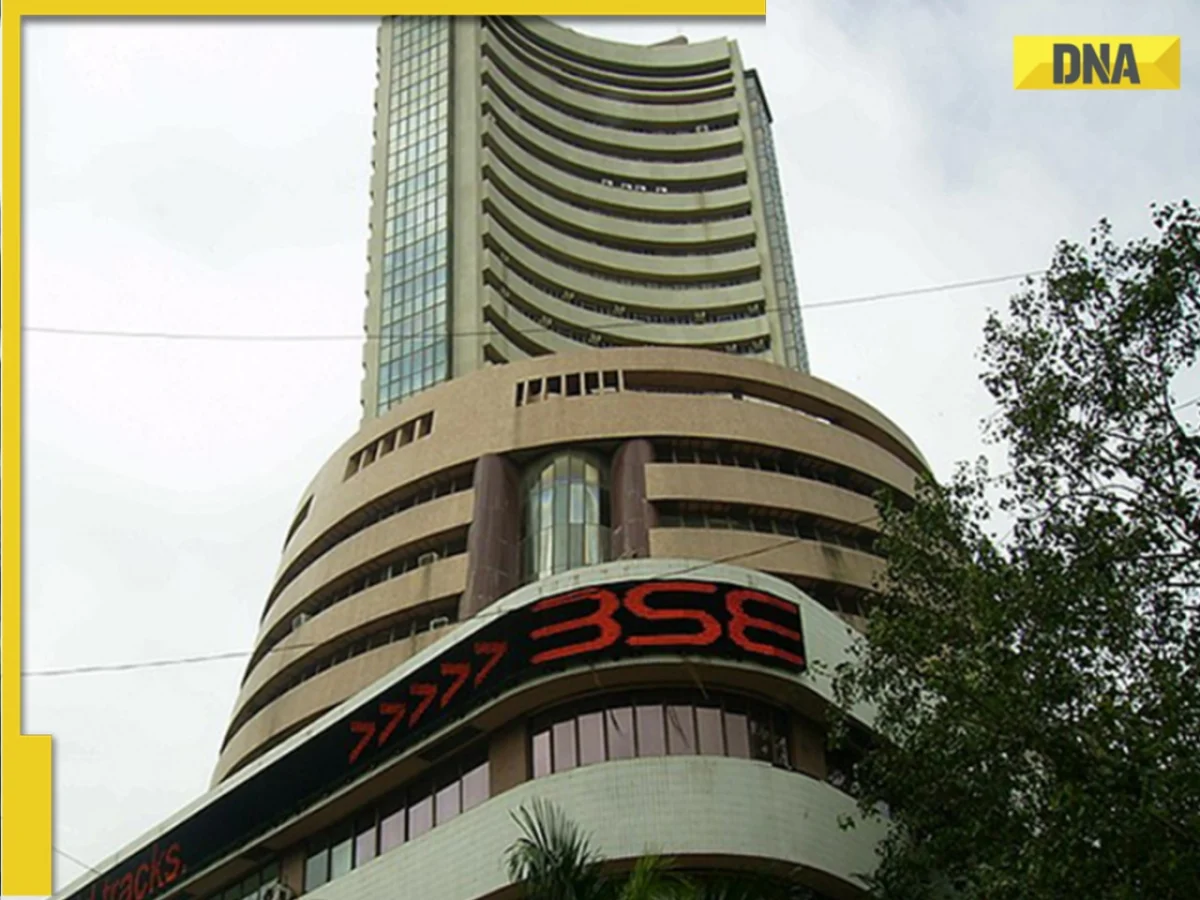
Mumbai, India – May 8, 2026 – Indian benchmark indices witnessed a sharp downturn in early trading on Friday, as renewed geopolitical tensions between the United States and Iran sent shockwaves through global markets, triggering a significant surge in crude oil prices. The escalating risk-off sentiment prompted investors to shed riskier assets, with banking and auto stocks bearing the brunt of the sell-off.
The BSE Sensex opened notably lower, shedding 419.91 points, or 0.54%, to trade at 77,424.61 as of 9:36 am IST. The broader NSE Nifty 50 mirrored the decline, falling by 134.45 points, or 0.55%, to reach 24,192.20. The market’s cautious opening, predicted by analysts earlier in the day, underscored the profound impact of global political instability on investor confidence. The immediate catalyst appears to be reports of fresh US-Iran clashes, stoking fears of wider conflict in the Middle East and disrupting crucial oil supply routes.
The Early Session’s Unfolding: A Chronology of Decline
The trading day commenced on a somber note, with both key indices signaling weakness from the outset. The Sensex began its descent at 77,631.94, immediately facing selling pressure. While it briefly attempted to pare some losses, touching an early high of 77,647.44, this rally proved ephemeral. The index quickly succumbed to overwhelming bearish sentiment, slipping further to an intraday low of 77,291.72 within the first hour of trading.
Similarly, the NSE Nifty 50 opened at 24,233.65, showing an initial flicker of resilience by reaching an early high of 24,253.80. However, this modest upward movement was short-lived. The index swiftly reversed course, declining steadily to an early low of 24,158.15, firmly establishing the prevailing negative trend for the morning session. The rapid erosion of early gains across both benchmarks highlighted the market’s vulnerability to external shocks and the swift reaction of institutional investors to emerging risks.
)
Aakash Shah, Technical Research Analyst at Choice Broking, had accurately anticipated the cautious negative opening, noting, "Indian equity markets are expected to open on a cautious negative note, with Gift Nifty trading at 24,314, down by 85 points amid renewed geopolitical concerns following reported Iran–US clashes. Asian markets traded mixed in early trade, while global sentiment remained cautious due to rising Middle East tensions." His forecast proved prescient, setting the stage for the day’s downward trajectory.
Geopolitical Tensions: The Catalyst for Volatility
The primary driver behind Friday’s market correction is the sudden escalation of tensions between the United States and Iran. While specific details of the "reported clashes" remain under close scrutiny, any perceived increase in hostility between these two nations, particularly involving the critical Strait of Hormuz, immediately sends jitters across global commodity markets. The Strait of Hormuz is a vital chokepoint through which a significant portion of the world’s seaborne oil passes. Disruptions or even the threat of disruptions in this region can severely impact global oil supply, leading to price spikes.

The fear translated directly into the crude oil market, with Brent Crude prices surging by 1.48% to reach $101.54 per barrel, and West Texas Intermediate (WTI) gaining 1.38% to $96.12. For a major oil importer like India, a sustained rise in crude prices above the critical $100 mark poses a multi-faceted threat.
Historically, India’s economy is highly susceptible to oil price volatility. As one of the largest net importers of crude oil globally, higher prices directly inflate the nation’s import bill, exacerbating both the fiscal deficit and the current account deficit. This, in turn, puts significant pressure on the Indian Rupee, leading to depreciation, and fuels domestic inflation. Past oil shocks have frequently coincided with periods of economic slowdown and monetary tightening by the Reserve Bank of India (RBI), making investors particularly sensitive to such geopolitical developments. The current spike reignites these concerns, prompting a swift flight from equity markets.
)
Sectoral Impact: A Deeper Dive into the Decline
The broad-based selling pressure was not uniform across all sectors. Banking and auto stocks emerged as the primary casualties, leading the decline. The Nifty Private Bank index fell by 0.96%, while the Nifty Auto index slipped by 0.87%. Nifty Oil & Gas also saw losses, declining by 0.78%. Financial services and PSU banks followed suit, shedding 0.75% and 0.68% respectively.
Why these sectors?
)
- Banking (Private and PSU) and Financial Services: These sectors are inherently sensitive to macroeconomic stability. A surge in oil prices often leads to higher inflation, which can prompt the RBI to hike interest rates to maintain price stability. Higher interest rates increase borrowing costs for businesses and consumers, potentially leading to a slowdown in economic activity, an increase in non-performing assets (NPAs) for banks, and reduced credit demand. Furthermore, a depreciating rupee, a common consequence of high oil prices, can make foreign borrowing more expensive for Indian companies, impacting the balance sheets of banks that have lent to them.
- Auto: The automotive sector faces a double whammy. Firstly, rising fuel prices directly impact consumer spending power and the cost of vehicle ownership, potentially dampening demand. Secondly, higher crude oil prices contribute to increased input costs for manufacturers (e.g., plastics, lubricants, and energy for production), which can squeeze profit margins if companies cannot fully pass on these costs to consumers. Higher interest rates also make vehicle financing more expensive, further deterring potential buyers.
- Oil & Gas: While intuitively one might expect oil and gas companies to benefit from rising crude prices, the initial market reaction is often one of broader risk aversion. Furthermore, the sector is diverse. Upstream exploration and production companies might see an uptick in profitability, but downstream refining and marketing companies face margin pressures as they struggle to pass on the full increase in crude costs to consumers due especially to government interventions or regulated pricing mechanisms.
Amidst the widespread selling, selective buying was observed in defensive sectors such as FMCG, IT, and Pharma. These sectors typically act as a cushion during market downturns due to their relatively stable demand (FMCG), export-oriented nature (IT, Pharma benefiting from a weaker rupee), or less direct correlation with domestic economic cycles. Their resilience provided some limited support to the broader market, preventing an even steeper fall.
Expert Insights and Market Outlook
Abhishek Bhilwaria, an AMFI-registered MFD, articulated the prevailing sentiment, stating, "The Indian stock market is currently witnessing a sharp correction, with the Sensex and Nifty 50 retreating as renewed US-Iran hostilities trigger risk-off sentiment. The primary driver of this volatility is the sudden spike in Brent crude prices above the $100 mark, which threatens India’s fiscal stability by increasing the import bill and stoking inflationary pressures."
)
He further advised investors on a cautious approach, emphasizing the importance of monitoring the rupee’s depreciation and the potential for sustained Foreign Institutional Investor (FII) outflows. Bhilwaria specifically highlighted "oil-sensitive sectors like paints and aviation" as facing "immediate margin pressure." He concluded that "the market’s trajectory will likely depend on whether geopolitical tensions in the Strait of Hormuz escalate further or stabilise through diplomatic channels," underscoring the critical role of de-escalation for market recovery.
From a technical perspective, Aakash Shah of Choice Broking provided crucial levels for the Nifty 50. He noted, "As long as Nifty holds above the 24,200–24,000 support zone, the broader trend is likely to remain constructive." This suggests that despite the current downturn, the underlying bullish trend could remain intact if these key support levels are not breached. However, he cautioned, "A sustained move above 24,500 may trigger further upside toward 24,600 and 24,800, while a break below 24,000 could drag the index toward 23,800." These levels will be closely watched by traders and investors as indicators of the market’s near-term direction and strength. A breach of the 24,000 mark would signal deeper correction and heightened bearishness.
)
Global Market Repercussions: A World on Edge
The impact of the US-Iran tensions and rising oil prices was not confined to India alone. Global markets were broadly trading cautiously, reflecting widespread apprehension.
- Asian Markets: Most Asian indices were in the red. Japan’s Nikkei slipped 0.62%, Hong Kong’s Hang Seng shed a more significant 1.20%, Taiwan Weighted lost 0.85%, and South Korea’s KOSPI fell 0.52%. These declines underscore Asia’s collective vulnerability to energy price shocks and geopolitical instability, given the region’s heavy reliance on imported oil.
- US Futures: US Dow Jones futures showed a marginal uptick of 0.09% to 49,642.52, possibly indicating some resilience in traditional industrial stocks or speculative buying. However, S&P 500 and Nasdaq futures slipped 0.38% and 0.13% respectively, suggesting that broader market sentiment, particularly in growth and technology sectors, remained cautious amid inflation concerns and potential interest rate implications.
- Currency Markets: The US Dollar Index remained flat at 98.23, reflecting its safe-haven appeal in times of uncertainty. Crucially for India, the USD/INR climbed 0.32% to 94.56. A depreciating rupee makes imports more expensive, further fueling inflation and widening the trade deficit. Conversely, GBP/INR and EUR/INR eased slightly, indicating the dollar’s relative strength against other major currencies.
The coordinated response across global markets highlights the interconnectedness of economies and the immediate transmission of geopolitical risks into financial assets.
)
Cryptocurrency Market: A Parallel Narrative of Consolidation
Even the seemingly uncorrelated cryptocurrency market felt the ripples of global uncertainty, albeit with its own unique dynamics. Bitcoin, after its recent impressive surge past the $82,000 mark, was found consolidating, trading around $79,500. This pullback was largely attributed to traders booking profits after the significant rally, a natural occurrence at higher price levels.
Akshat Siddhant, Lead Quant Analyst at Mudrex, noted that despite the pullback, Bitcoin "remains in an uptrend, currently trading at $79,500, with buyers staying in control." He emphasized the continued institutional demand, with spot Bitcoin ETFs attracting "more than $1 billion in inflows this week, the highest since January." This influx of institutional capital provides a strong underlying support for the cryptocurrency.
)
However, Siddhant also cautioned investors, stating that "nearly $15 billion in long liquidations sit below current prices, increasing downside risk during volatility." This means that a significant drop could trigger a cascade of forced selling from leveraged positions, amplifying any downward movement. For now, he advised, "holding above the $79,000 support zone remains crucial for sustaining momentum."
CoinSwitch echoed a similar sentiment, suggesting that "a move back above the $80.5K level could improve near-term sentiment and support price stabilisation." They recommended a disciplined approach for investors, advising, "gradually building positions over time may be a more disciplined and balanced approach than trying to time short-term market fluctuations." This highlights the inherent volatility of the crypto market and the wisdom of long-term strategies over short-term speculation, especially in uncertain times.
)
Broader Economic Implications for India
The current market correction, driven by geopolitical tensions and rising oil prices, carries significant broader economic implications for India beyond just stock market movements.
- Heightened Inflationary Pressures: As a major oil importer, India faces an immediate challenge of imported inflation. Higher crude prices translate to increased costs for transportation, manufacturing, and ultimately, consumer goods. This can erode purchasing power, reduce consumer demand, and force the Reserve Bank of India (RBI) to consider tighter monetary policy, potentially through interest rate hikes, to bring inflation under control. Such measures, while necessary, can slow down economic growth.
- Strain on Fiscal and Current Account Deficits: A larger oil import bill directly widens India’s current account deficit (CAD), which measures the difference between the country’s foreign exchange earnings and expenditures. A widening CAD puts pressure on the rupee and can make the economy more vulnerable to external shocks. Simultaneously, if the government decides to absorb some of the oil price increase to shield consumers (e.g., by cutting excise duties), it would strain the fiscal deficit, impacting public finances and potentially diverting funds from essential development projects.
- Rupee Depreciation and FII Outflows: A depreciating rupee makes imports more expensive and can deter foreign investment. Foreign Institutional Investors (FIIs) tend to pull capital out of emerging markets during periods of global uncertainty and rising risk aversion, further weakening the rupee and putting downward pressure on equity markets. Sustained FII outflows can dry up liquidity and prolong market corrections.
- Impact on Economic Growth: The combined effect of higher inflation, potential interest rate hikes, and reduced consumer and business confidence can lead to a slowdown in overall economic growth. Sectors reliant on discretionary spending or high energy inputs would be particularly affected, potentially impacting job creation and investment.
Anticipated Policy Responses and Outlook
While no immediate official responses from the Indian government or the Reserve Bank of India were reported on Friday morning, market participants will be closely watching for any statements or actions.
)
- Government’s Stance: In similar past situations, the Indian government has explored various options, including adjusting excise duties on fuel to cushion consumers from price shocks, although this comes at the cost of fiscal revenue. The strategic petroleum reserves could also be utilized if the situation escalates severely to manage supply. Any diplomatic efforts to de-escalate tensions in the Middle East would also be a priority, given India’s significant energy security interests.
- RBI’s Role: The Reserve Bank of India’s primary mandate is price stability. If sustained high oil prices translate into significant inflationary pressures, the RBI might be compelled to reconsider its monetary policy stance. While the central bank typically prefers to support growth, unchecked inflation could necessitate interest rate hikes, which would further tighten liquidity and potentially impact economic expansion.
- Market Stability Measures: Although unlikely in the early stages of a correction, in extreme volatility scenarios, regulatory bodies like SEBI or stock exchanges could introduce circuit breakers or other measures to prevent panic selling and ensure orderly market functioning.
The immediate outlook for Indian equities remains cautious. A sustained recovery will hinge critically on the de-escalation of geopolitical tensions in the Middle East and the stabilization of global crude oil prices. Domestically, the market will be looking for reassurances on inflation control and the resilience of corporate earnings. Investors are advised to maintain a disciplined approach, conduct thorough research, and consider diversification to navigate the prevailing uncertainties. Monitoring global headlines and expert analysis will be paramount in the days and weeks ahead.
Find your daily dose of All Latest News including Sports News, Entertainment News, Lifestyle News, explainers & more. Stay updated, Stay informed – Follow DNA on WhatsApp.
