

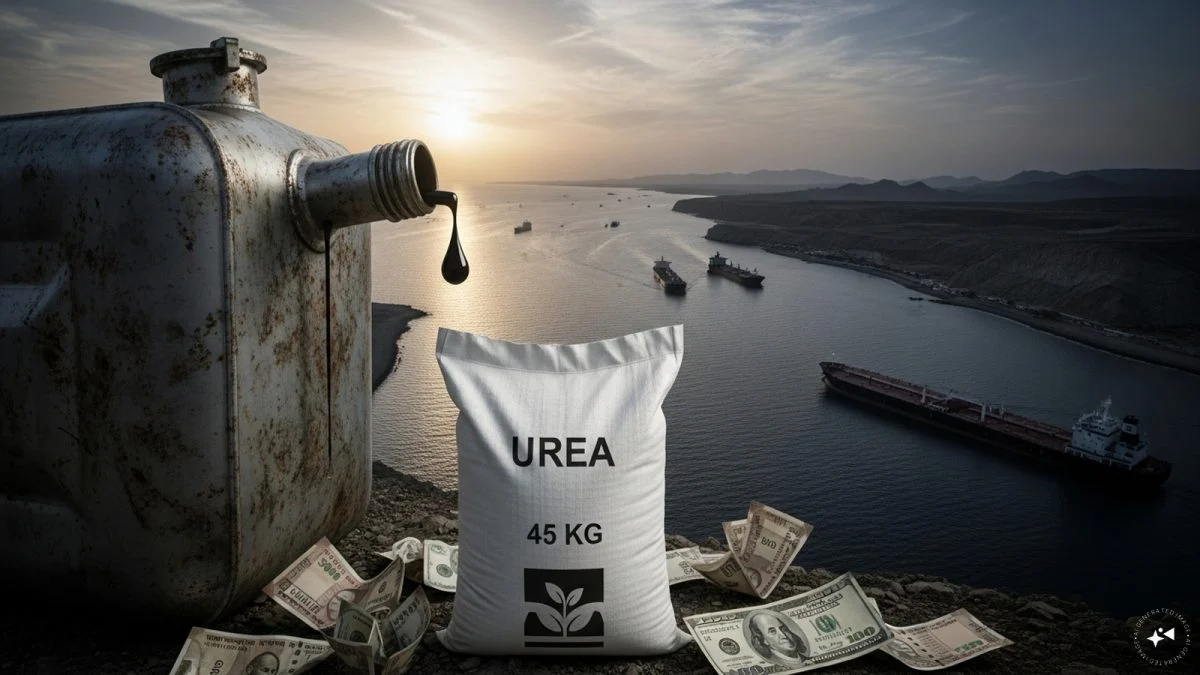
New Delhi, India – In an unprecedented move reflecting the deepening economic anxieties stemming from the escalating US-Iran conflict in West Asia, Prime Minister Narendra Modi on Sunday issued a stark call for national austerity. Urging citizens to embrace measures such as increased public transport usage, adopting work-from-home models, postponing foreign travel, and even deferring gold purchases, the Prime Minister underscored India’s vulnerability to global supply chain disruptions and volatile commodity markets. The pronouncement comes as global crude oil prices surge, threatening India’s energy security, foreign exchange reserves, and the stability of essential imports like fertilisers.
The conflict, which has seen a significant escalation following the US rejection of Iran’s latest peace proposal, has sent ripples across international markets, particularly impacting the global oil supply chain. India, a net importer of crude oil, finds itself at the forefront of nations grappling with the economic fallout, facing mounting pressure to maintain domestic price stability for its vast consumer base.
The Geopolitical Storm: US-Iran Tensions and Global Ramifications
The simmering tensions between the United States and Iran have long been a source of instability in the crucial West Asia region. However, the latest deadlock, characterised by a breakdown in diplomatic efforts and a hardening of stances, has pushed global crude prices to unprecedented highs. Analysts point to fears of supply disruptions from the Strait of Hormuz, a critical chokepoint through which a significant portion of the world’s oil transits, as a primary driver of market volatility. Any direct military confrontation or even severe maritime disruptions in this vital waterway could lead to catastrophic spikes in oil prices, plunging the global economy into a severe crisis.
For India, a nation heavily reliant on imported energy to fuel its economic growth, the implications are profound. The country imports over 85% of its crude oil requirements, making it acutely susceptible to price fluctuations and supply shocks. The current scenario places immense pressure on the government to strike a delicate balance between absorbing international price increases and passing them on to consumers, a decision fraught with political and economic consequences.
Austerity Measures: PM Modi’s Urgent Call to Action
Prime Minister Modi’s address was not merely a warning but a concrete appeal for collective national effort. His directive for citizens to adopt cost-cutting measures is a testament to the severity of the economic headwinds India is currently facing. The call for avoiding gold purchases, postponing foreign travel, and opting for work-from-home arrangements is aimed directly at easing pressure on the nation’s foreign exchange reserves, which have seen a significant outflow in recent weeks.
The emphasis on public transport and reduced personal vehicle usage directly addresses the escalating cost of crude oil imports. By reducing domestic fuel consumption, the government hopes to mitigate the financial burden of soaring international prices and reduce the overall import bill. This unprecedented appeal for individual austerity highlights the national urgency of the situation, shifting a portion of the responsibility onto citizens to conserve resources and contribute to economic stability.
Official Responses and Preparedness: An Informal Group of Ministers Convenes
Following the Prime Minister’s call, Defence Minister Rajnath Singh chaired an urgent meeting of the Informal Group of Ministers (IGoM) to assess India’s preparedness and strategise responses to the escalating crisis. The IGoM, comprising key cabinet ministers, affirmed that while there was no immediate shortage of essential commodities, resource conservation was paramount. This internal government consultation signals a concerted effort to manage the crisis proactively, drawing lessons from other countries that have already implemented emergency measures to curb domestic consumption.
Sujata Sharma, Joint Secretary (Marketing & Oil Refinery) within the Ministry of Petroleum & Natural Gas, provided assurances regarding the availability of petroleum products. "Adequate stocks of petrol and diesel are available, and LPG supplies for domestic cooking purposes are being maintained," Sharma stated, adding, "Over the past three days, 1 crore 26 lakh LPG cylinders have been delivered to households against 1 crore 14 lakh bookings. Similarly, sales of commercial LPG have exceeded 17,000 tonnes over the last three days." These figures aim to reassure the public about immediate supply stability, even as the broader economic challenges loom large.
Fuel Security: Navigating the Volatile Oil Market
India’s strategic petroleum reserves and ongoing supply management efforts are critical to weathering the current storm. According to a statement from the Ministry of Defence, India currently possesses a strategic crude oil supply equivalent to 60 days of its consumption, alongside 60 days of Natural Gas and 45 days of LPG rolling stock. These reserves provide a crucial buffer against immediate supply disruptions, offering the government valuable time to formulate responses and secure alternative sources if necessary.
However, the financial cost of maintaining stable domestic fuel prices amidst surging international crude markets is becoming increasingly unsustainable. For over 70 days since the commencement of the West Asia conflict, India has managed to keep petrol and diesel prices steady for consumers. This stability has come at a considerable price, with India’s oil marketing companies reportedly absorbing losses of nearly Rs 1,000 crore per day. The cumulative under-recoveries are estimated to have reached close to Rs 2 lakh crore in the first quarter of 2026, a massive financial burden borne to shield consumers from the full impact of global price volatility.
This strategy, while providing immediate relief to households and businesses, raises concerns about the long-term financial health of these companies and the broader fiscal implications for the government. Analysts suggest that a sustained period of high crude prices could necessitate a review of the current pricing mechanism, potentially leading to a gradual increase in domestic fuel prices or a more direct subsidy mechanism. Diversification of energy sources, accelerated investment in renewable energy, and enhanced energy efficiency measures are increasingly seen as imperative long-term solutions to mitigate India’s structural vulnerability to global oil market fluctuations.
Safeguarding India’s Financial Fortunes: The Forex Challenge
The Prime Minister’s plea to avoid overseas holidays, destination weddings abroad, and non-essential gold purchases is a direct response to the pressure on India’s foreign exchange reserves. These measures are designed to curb non-essential dollar outflows, thereby conserving valuable foreign currency that is predominantly used for critical imports, most notably crude oil. Over the past 10 weeks, an estimated Rs 1 lakh crore has reportedly flowed out of India due to higher import bills and heightened global uncertainty, a trend that could weaken the Rupee and make imports even more expensive.
India’s foreign exchange reserves currently stand at $703 billion, a robust figure by global standards, but a decline from an all-time high of $728.5 billion recorded in late February 2026. While these reserves provide a strong bulwark against external shocks, their continuous depletion for non-essential imports is a cause for concern. The reserves are vital for managing the country’s balance of payments, stabilising the Rupee, and ensuring the smooth financing of essential imports.
The surge in gold imports further exacerbates the forex challenge. In the financial year 2025-26, India’s gold imports soared to a record $72 billion, marking a significant 24% jump from $58 billion in FY25. Gold, largely a non-productive asset from an economic growth perspective, represents a substantial outflow of foreign currency. PM Modi’s focus on both oil consumption reduction and reduced gold purchases is a strategic effort to stem these dollar outflows, ensuring that the nation’s precious foreign exchange can be prioritised for essential energy imports and other critical economic needs.
Agricultural Resilience: Securing Fertiliser Supplies
Beyond energy and finance, the West Asia conflict also casts a shadow over India’s agricultural sector, particularly concerning fertiliser supplies. Prime Minister Modi addressed farmers, urging them to reduce the use of chemical fertilisers by 50% and transition towards natural farming practices. This initiative is twofold: it aims to protect soil health and, crucially, reduce India’s import dependence on fertilisers, which are also vulnerable to geopolitical disruptions.
India is significantly dependent on global supply chains to meet its fertiliser demands. A substantial portion, approximately 33% of global fertiliser shipments, including critical components like urea and sulphur, transit through the Strait of Hormuz. This makes India’s agricultural sector directly exposed to any disruptions in the region, highlighting the interconnectedness of global geopolitics and domestic food security.
Despite the external vulnerabilities, the Informal Group of Ministers was reassured that fertiliser availability remains robust. Government data indicates that overall fertiliser stock positions are currently strong, with supplies exceeding requirements. As of May 11, 2026, India’s stock positions for key fertilisers were as follows (in LMT – Lakh Metric Tonnes), with a comparison to the previous year:
| Product | Stock As on 11.05.2026 | Stock As on 11.05.2025 |
|---|---|---|
| Urea | 76.65 | 75.48 |
| DAP | 22.52 | 14.87 |
| NPKs | 60.42 | 48.32 |
| SSP | 26.99 | 26.92 |
| MOP | 13.07 | 12.99 |
| Total | 199.65 | 178.58 |
The Department of Agriculture and Farmers Welfare noted that the total fertiliser requirement for the upcoming Kharif season is estimated at 390.54 LMT. India’s current stock of 199.65 LMT represents over 51% of this requirement, which is significantly higher than the usual level of approximately 33% at this time of year. This robust stock position provides a crucial safety net for the agricultural sector, ensuring adequate supplies for the critical planting season.
Furthermore, domestic production of fertilisers has shown a substantial increase, rising from 76.78 LMT on March 1 to 92.01 LMT on May 10. This boost in local manufacturing capacity helps to mitigate reliance on imports and strengthens India’s self-sufficiency in this vital sector. The sale of fertilisers this year has also seen a healthy increase, reaching 71.19 LMT, a rise of 19.35% compared to the previous year, indicating strong demand and robust agricultural activity.
The Road Ahead: Long-Term Strategies and Citizen Responsibility
The West Asia conflict serves as a stark reminder of India’s interconnectedness with the global geopolitical and economic landscape. While immediate measures focus on managing fuel and fertiliser supplies and conserving foreign exchange, the crisis underscores the urgent need for long-term strategic planning.
This includes accelerating the transition to renewable energy sources, diversifying trade partners, investing further in strategic petroleum reserves, and bolstering domestic production capabilities across critical sectors. The emphasis on natural farming by the Prime Minister is not just an environmental initiative but a strategic economic one, aiming to reduce a significant import bill and enhance agricultural resilience.
Ultimately, the Prime Minister’s call for austerity is a plea for national solidarity and collective responsibility. It signifies that navigating this complex global environment requires not just governmental action but also the conscious participation of every citizen in conserving resources and contributing to the nation’s economic stability. As the world watches the developments in West Asia with bated breath, India prepares to face the challenges ahead, drawing on its reserves, its policies, and the collective will of its people.
