

MAIN FACTS: A Tale of Two Cities and a Dying Craft
In the heart of India’s capital, the Delhi Development Authority (DDA) is moving forward with an ambitious ₹4-crore plan to install a permanent houseboat at Baansera Park. The project aims to bring a touch of the Himalayas to the plains of Delhi, offering a glimpse into the iconic "floating palaces" that have defined the Kashmiri landscape for centuries. However, this architectural endeavor in Delhi highlights a poignant irony: while the capital invests millions in a singular replica, the actual craft of houseboat construction in its birthplace, the Kashmir Valley, is fighting for its very survival.
For nearly four decades, a government-imposed ban on new houseboat construction has left the master craftsmen of Kashmir—the Wastas—in a state of professional limbo. As the existing fleet on Dal and Nigeen lakes slowly decays, the specialized knowledge required to build these massive cedar-wood structures is evaporating.

Amidst this existential crisis, a vital documentation project funded by the British Museum’s Endangered Material Knowledge Programme (EMKP) has just concluded. Led by researcher Sayali Athale and architect Anto Gloren, the project has spent months recording the oral histories, intricate joinery techniques, and cultural rituals of the few remaining master boat-builders. As the final research is submitted this month, it serves as a digital sarcophagus for a craft that may soon no longer exist in the physical world.
CHRONOLOGY: From Mughal Transport to a Modern-Day Ban
The history of the Kashmiri houseboat is not merely one of tourism, but of evolution and adaptation. While popular colonial narratives often credit the British with introducing the houseboat to circumvent land-ownership laws in the 19th century, researchers Athale and Gloren argue that the craft’s roots are much deeper, stretching back 400 to 500 years.
- The Mughal Era (16th–17th Century): Historical texts such as the Ain-e-Akbari and Jahangir-Nama contain references to floating dwellings and transport vessels in the valley. During this era, water was the primary highway of Kashmir.
- The Era of the Bahast (Pre-1947): Before the proliferation of motorable roads, the bahast—a heavy cargo boat—was the lifeline of Srinagar’s canals. These vessels transported essential goods like rice, wheat flour, and firewood.
- The Golden Age of the Doonga (1920s–1930s): The doonga, a more modest predecessor to the luxury houseboat, was the standard mode of travel. A 60-kilometer journey from Srinagar to Anantnag was routinely undertaken by water, with families living aboard these wooden structures.
- The 1988 Construction Ban: As tourism boomed, unregulated growth led to severe environmental concerns regarding the pollution of Dal Lake. In 1988, the Jammu & Kashmir government banned the construction of new houseboats. This legislative move, intended to protect the ecosystem, inadvertently signaled the beginning of the end for the boat-building guild.
- The 2022 Nigeen Fire and 2023 Policy: A devastating fire in 2022 destroyed seven houseboats on Nigeen Lake, forcing the government to allow limited rebuilding. In 2023, a new houseboat policy was introduced, providing a framework for minor repairs, though critics argue it lacks the technical depth to preserve the original craft.
SUPPORTING DATA: The Shrinking Fleet and the Scarcity of Deodar

The decline of the houseboat is reflected in stark numbers. At the height of their popularity, thousands of houseboats and doongas dotted the Jhelum river and the lakes of Srinagar. Today, according to architect Anto Gloren, fewer than 750 remain.
The technical challenges of maintaining this dwindling fleet are immense. A traditional houseboat is constructed primarily from Deodar (Himalayan Cedar), prized for its water-resistant properties and longevity. However, strict forest conservation laws have made fresh Deodar timber nearly impossible to source for boat-builders.
Consequently, craftsmen have turned to "recycled" timber—salvaging wood from old buildings and dismantled bridges. While this wood is often high-quality and seasoned, it comes in irregular sizes. This has forced a fundamental shift in construction techniques:
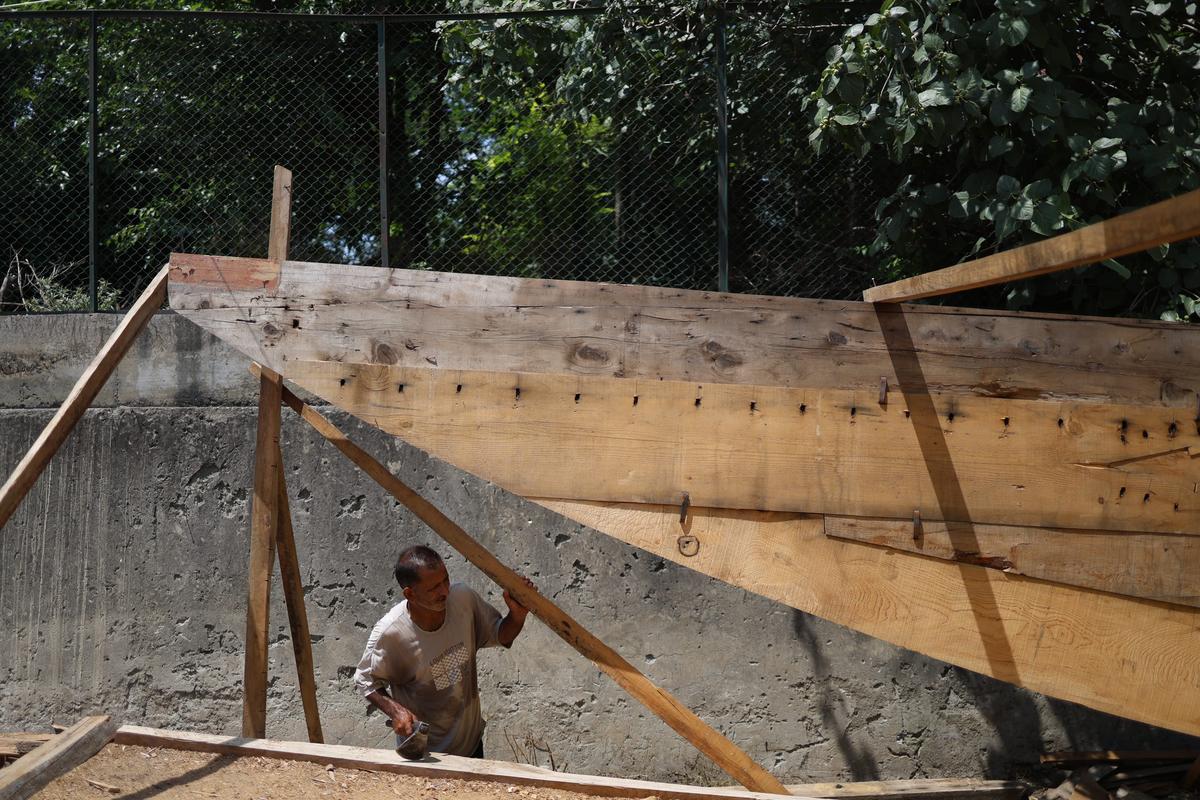
- Structural Integrity: Traditionally, the pasch (the primary structural beam running the length of the hull) was carved from a single, massive piece of wood. Today, builders must join three or more smaller pieces together.
- The Labor of the Hull: Building a single hull remains a Herculean task, taking five to six months of manual labor. Because new boats are not being built, the only time researchers could witness this process was during the reconstruction of boats destroyed by fire.
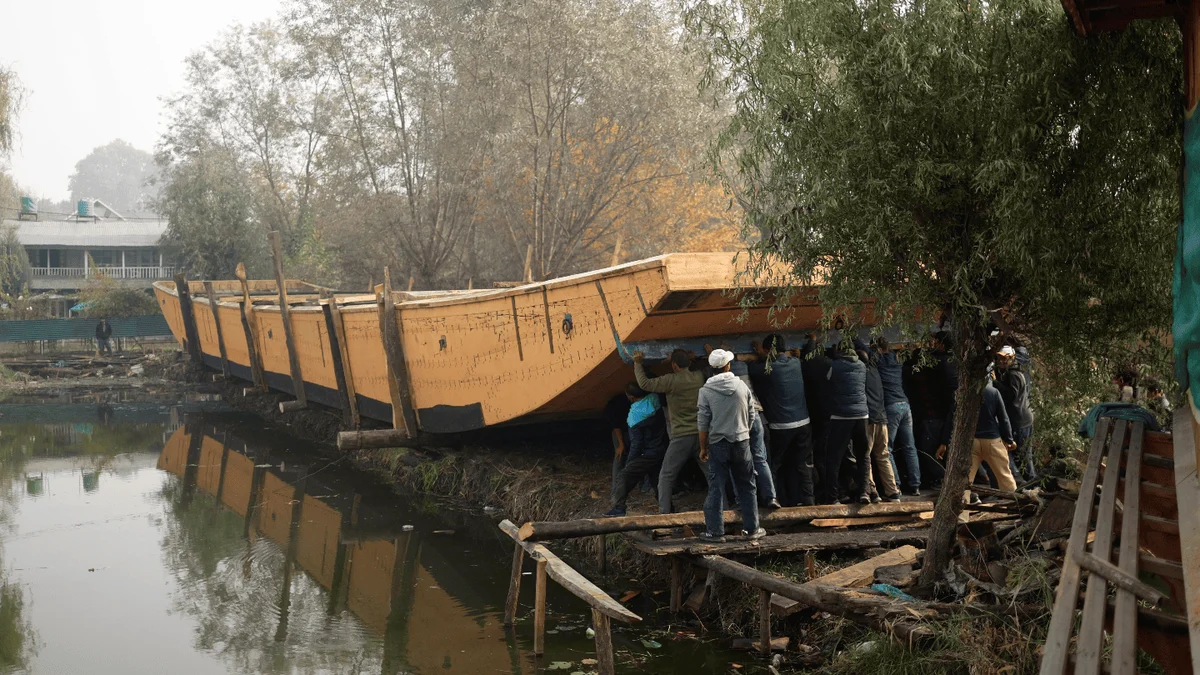
- The "Push" Ceremony: One of the most significant cultural findings of the British Museum project was the documentation of the hull-launching ceremony. In the absence of modern dry docks, nearly a hundred community members gather to manually push the 120-foot-long wooden hull into the water—a rare display of communal labor that is vanishing as the industry shrinks.
OFFICIAL RESPONSES: Recognition and the Digital Archive
The plight of the Wastas has not gone entirely unnoticed by the state. In a landmark event last year, the Director of Jammu & Kashmir’s Department of Handicrafts formally felicitated the master craftsmen in Srinagar.
The government has promised to include "hull builders"—who are distinct from general carpenters due to their specialized knowledge of hydrodynamics and timber seasoning—in the official list of Kashmiri craftspeople. This inclusion is a critical bureaucratic step, as it makes these artisans eligible for:
- Government Welfare Schemes: Access to pensions and health insurance for aging masters.
- Institutional Loans: Financial support for those looking to maintain their workshops.
- Artisan Identity Cards: Official recognition that validates their status as custodians of cultural heritage.
Furthermore, the British Museum’s EMKP project ensures that even if the physical boats disappear, the "Material Knowledge" will not. The data collected—including high-definition video of joinery, audio recordings of oral histories, and detailed architectural drawings—will be hosted on an open-access platform. This digital repository is intended to be a resource for future generations of Kashmiris and international maritime historians alike.
IMPLICATIONS: A Culture at a Crossroads
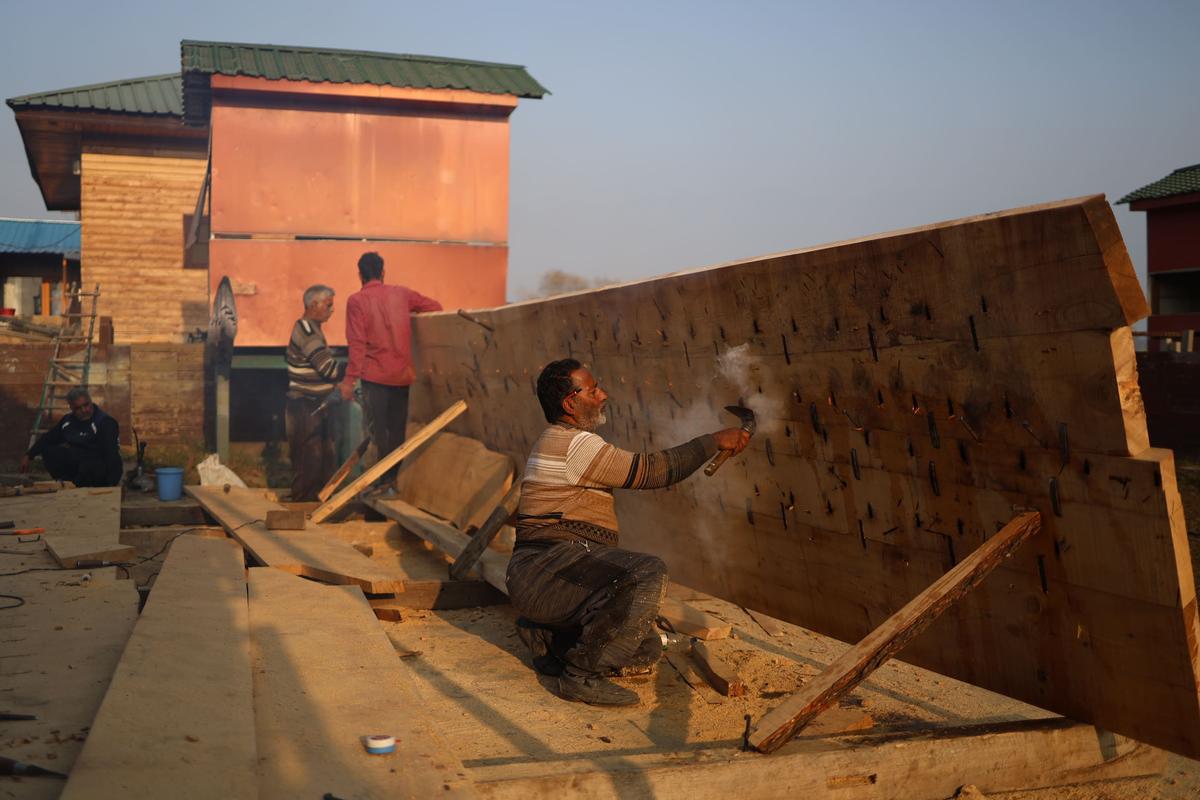
The survival of houseboat-making is currently tethered to a fragile ecosystem of tourism and environmental regulation. The current generation of Wastas—including Ghulam Ahmad Najar (67), Mohammad Subhan Najar (65), and Abdul Khaliq Najar—represents the final link to an unbroken chain of oral tradition. The recent death of master craftsman Nazir Ahmed Kawdari in January 2024 underscored the urgency of the situation.
The socioeconomic implications for the younger generation are clear. While many sons of these master craftsmen have assisted their fathers, the lack of a steady market has driven them toward more stable professions. Today, the children of the Wastas are more likely to be found running pharmacies, grocery stores, or serving in the police force than wielding an adze on the banks of the Jhelum.
The irony of the DDA’s ₹4-crore project in Delhi serves as a commentary on how modern India chooses to preserve its heritage. By treating the houseboat as a "permanent fixture" in a city park, the government risks turning a living, breathing tradition into a static museum piece.
In Kashmir, the boat is more than an aesthetic; it is a complex intersection of forestry, hydrology, and community. The 2023 policy allowing repairs is a "glimmer of hope," as Ghulam Ahmad Najar puts it, but it may not be enough to reverse the tide. Without a sustainable way to source timber and a legal framework that allows for the controlled replacement of the aging fleet, the master craftsmen of Bandipora and Srinagar may be the last of their kind.
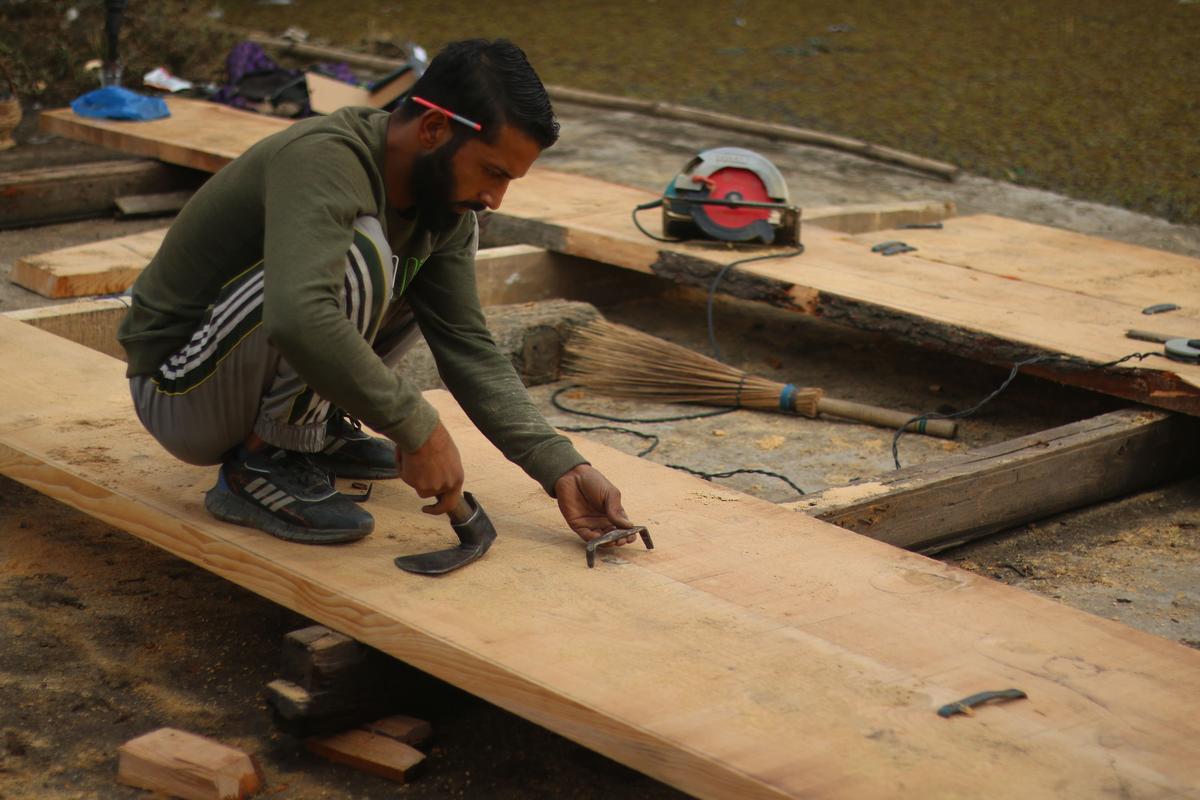
As the British Museum project concludes, the focus shifts from documentation to action. The question remains: will the digital archive be a manual for a future revival, or will it be the final testament to a culture that was allowed to sink beneath the surface of the very waters that once sustained it? For now, the Wastas continue their work, repairing the old with the old, holding together a legacy with joints and prayers, waiting to see if their sons will ever find a reason to take up the tools again.
