

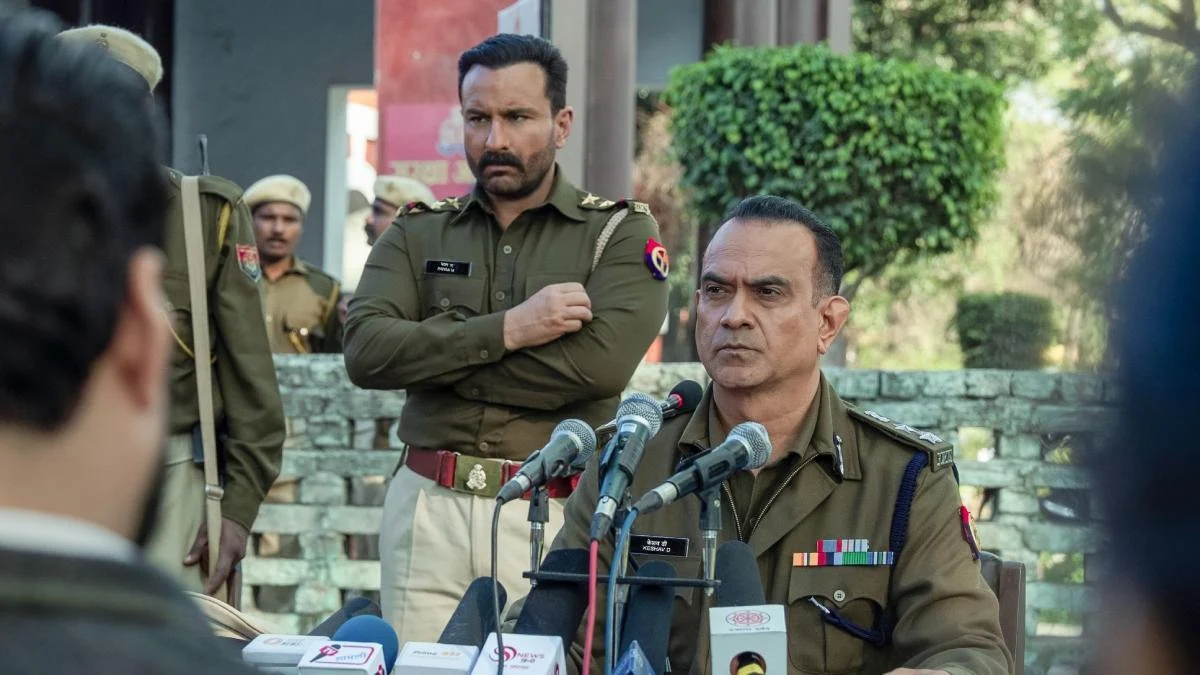
Mumbai, India – On a sun-drenched summer afternoon at the Netflix office in Mumbai, Saif Ali Khan, clad in a sharp all-black ensemble, exuded a relaxed yet focused demeanor. The occasion was an interaction surrounding his upcoming Netflix film, Kartavya. Sharing an easy camaraderie with co-stars Rasika Dugal and Manish Chaudhari, Saif, known for his wit and charm, settled in to discuss his latest project, a gritty crime drama that sees him reprising the role of a cop, a full-circle moment that harkens back to his groundbreaking debut on the streaming giant.
From "Sacred Games" to "Kartavya": A Journey Back to the Uniform
Saif Ali Khan’s foray into the world of streaming with Netflix began with the critically acclaimed series Sacred Games in 2018. His portrayal of Inspector Sartaj Singh was a pivotal moment, not just for his career but for the Indian web series landscape. "The international appeal of the platform was incredibly exciting," Saif recalled, his eyes lighting up at the memory. "When they approached me for Sacred Games, they had just released Narcos and the concept of doing a mafia show in your own language for a global audience was, frankly, intoxicating."
He vividly remembers a particular scene in Sacred Games that underscored the show’s unique narrative and visual approach. "There was this scene where Sartaj had to find a piece of paper hidden within a cabinet filled with three thousand files," he explained. "I hadn’t witnessed anything quite like that in a typical commercial film. Its treatment was remarkably distinct, especially the way Bombay was depicted – the backstreets teeming with rats, the pervasive chaos, the raw underbelly of the city. It was a visceral experience, both to watch and to be a part of."
Sacred Games not only cemented Saif’s position as a formidable force in the digital space but also played a significant role in defining the aesthetic and narrative possibilities of streaming in India. The crime-drama genre, in particular, has continued to thrive on OTT platforms, giving rise to certain recurring tropes. Saif finds these elements, such as the contemplative detective hunched under a single light with a cigarette, a compelling watch in crime thrillers. "I also enjoy those scenes where police officers, while examining a dead body, engage in personal conversations," he confessed with a smile. "I’ve observed this in several films and it’s something I’d genuinely love to explore on screen."
Unpacking the Tropes and Textures of Crime Dramas
The conversation then naturally drifted to the shared experiences and preferences of the cast regarding crime narratives. Rasika Dugal, known for her nuanced performances, finds the element of misdirection in thrillers particularly engaging. "I enjoy when a story leads you down a certain path, a red herring that makes you invest in a particular trail, only to reveal it’s not the one," she stated.
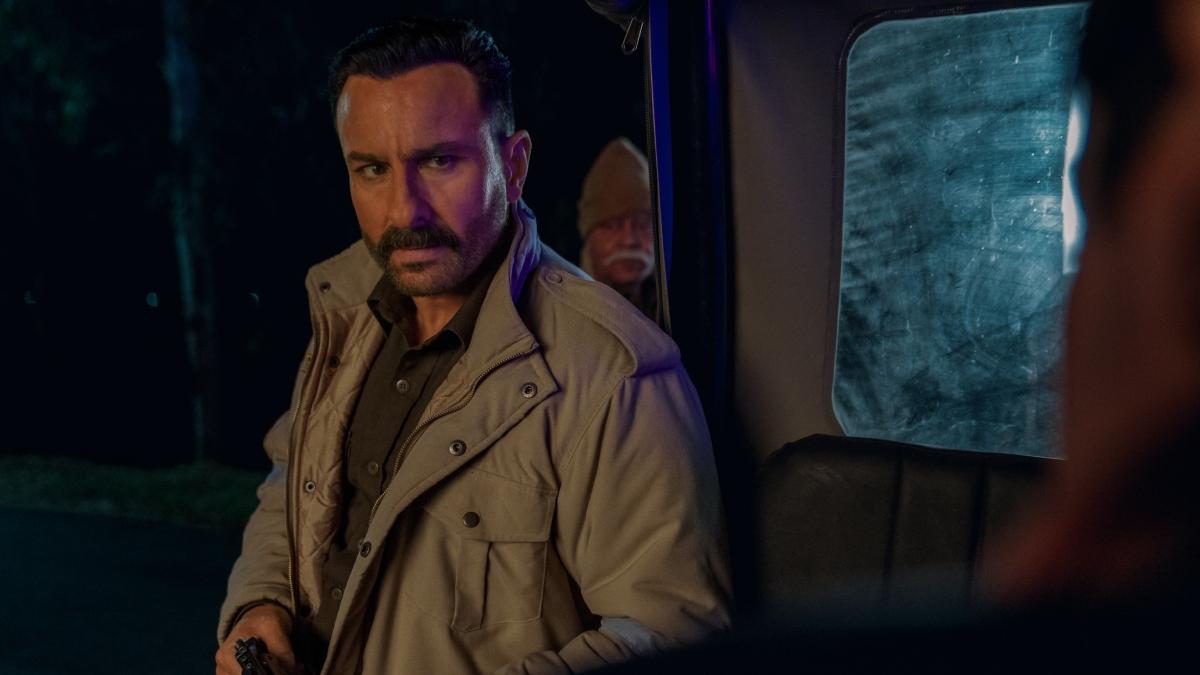
Manish Chaudhari, who also dons the police uniform in Kartavya, chimed in with his own memorable encounter with a classic suspenseful trope. "I absolutely love those moments in the middle of the night when there’s a sound outside the door," he shared. "You cautiously approach, gun in hand, and slowly crack open the door to investigate. I actually got to play out such a scene in Powder back in 2010."
The Director’s Vision and the Hesitation of Darkness
Kartavya, helmed by director Pulkit, known for his impactful work on the Bhumi Pednekar-starrer Bhakshak (2024), presents a compelling narrative that resonated deeply with the cast. Interestingly, Pulkit had initially approached Manish for the role of the antagonist in Bhakshak. However, Manish, a father of two, expressed reservations about delving into the darker, more morally ambiguous aspects of the character. "He commits some truly heinous acts in that film," Manish explained. "I had to tell Pulkit, ‘I’m sorry, but I have children.’ It was a significant concern for me."
Fortunately, Pulkit revisited Manish for Kartavya, and this time, the offer was irresistible. "He came back to me for Kartavya and said, ‘Now you can’t say no’," Manish chuckled. "I was more than happy to accept this time."

The Power of Language: Devnagari and Dialect Mastery
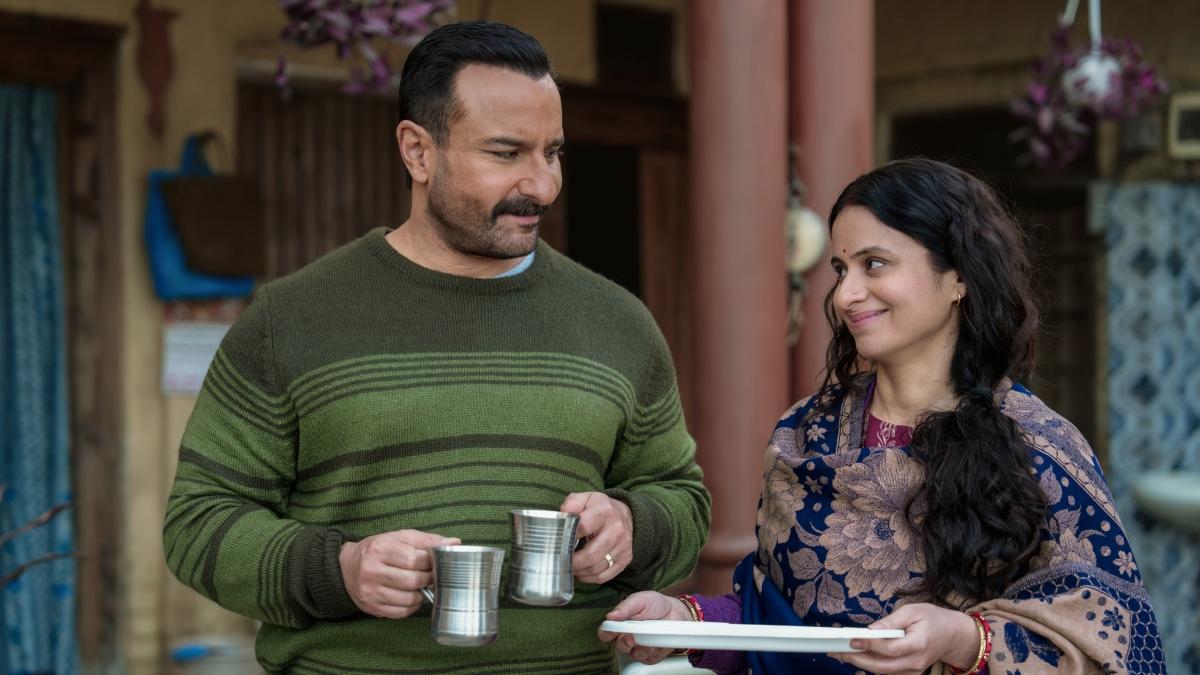
Rasika Dugal was particularly captivated by the screenplay of Kartavya, not only for its compelling story but also for its unique presentation. "The entire script was written in Devnagari," she revealed, a hint of amusement in her voice. "It read like a short story from the progressive writers’ movement, which I found quite fascinating. I often request scripts that are written in Devnagari because I want to read the dialogue in the language it will be spoken in. It becomes challenging to read Hindi in Roman script, as it can unconsciously influence your spoken dialect." She demonstrated this point with an exaggerated inflection in Hindi, prompting a playful retort from Saif, "Is that why I sound like that? Have I been reading it the wrong way?"
Saif, in turn, acknowledged the importance of linguistic authenticity and his own ability to engage with the Devnagari script. "I’ve learned it over the years, and it’s a wonderful experience to read in that script," he stated. "It’s unfortunate that many people still don’t know it." His performance in Kartavya sees him adeptly adopting the dialect of the heartland, a skill that brings to mind his iconic portrayal of Langda Tyagi in Vishal Bhardwaj’s Omkara (2006).
"In my mind, the dialect in Kartavya felt akin to the one in Omkara," Saif mused. "The process of mastering an accent is much like learning a song; you have to meticulously work on each word. Repetition makes it significantly easier." He also shared valuable insights gained from seasoned actors regarding accent acquisition. "I recall megastar Amitabh Bachchan advising me to practice dialogues constantly – on the treadmill, in the shower – and then to consciously forget them, allowing them to become an organic part of you."
He also recounted an equally insightful tip from Deepak Dobriyal, his co-star in Omkara. "He told me to first say the dialogues loudly, so that someone in the building opposite could hear you," Saif explained. "This builds confidence with the line, and then you can deliver it softly."
The Evolving Landscape of Streaming and Storytelling
Saif emphasized the profound impact of language and accent in bringing a narrative to life. "It’s the words that truly enrich a world," he asserted. "A language comes alive with a good accent, and Kartavya seems to embody that grounded, earthy sentiment."
However, despite the increasing focus on authentic storytelling and grounded performances, a sense of stagnation has begun to permeate the streaming landscape. Tropes often remain unchallenged, and the influence of algorithms on content creation, coupled with dwindling attention spans, is increasingly dictating storytelling decisions. Rasika Dugal attributes these shifts to the natural evolution of technological advancements. "When streaming services first emerged, web shows were often looked down upon," she observed. "They were considered something for people who were largely unemployed in Versova to do. But that perception has dramatically shifted now. So, these changes are inevitable, and creators will undoubtedly find creative ways to navigate them."
Manish Chaudhari underscored the persistent need for a diverse range of stories to be told. "We grew up watching Clint Eastwood in the West and Amitabh Bachchan and Dharmendra here," he reminisced. "They were all part of incredible stories. We never thought about the distinction between commercial cinema or artistic cinema. For someone like me, growing up, I wanted to be a part of both worlds. Therefore, it’s crucial to tell great stories with genuine intent."
Addressing the current state of the industry, Saif voiced his concerns about the pressures of catering to a fragmented audience. "You constantly hear advice to avoid doing certain things or to craft stories that can be easily followed by someone watching on their phone," he expressed. "You absorb all this, and then a major film comes along that defies all the established rules, and suddenly, all those guidelines go out the window. So, once in a while, we need a director to create a proper piece of cinema, not just content."
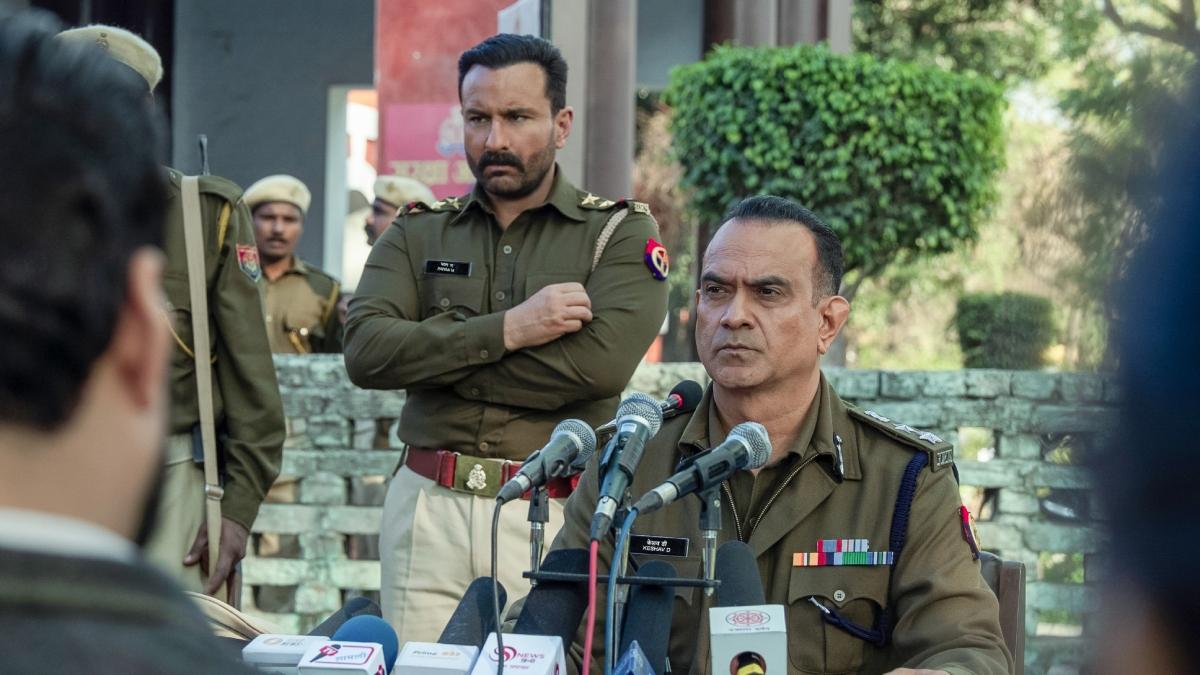
The conversation concluded with a poignant reminder of the enduring power of cinema to transcend trends and to connect with audiences on a deeper level. As Kartavya prepares for its release on Netflix on May 15th, the anticipation is palpable, fueled by the promise of a compelling narrative, strong performances, and a renewed commitment to authentic storytelling in the ever-evolving world of Indian entertainment. The film stands as a testament to the collaborative spirit of its cast and crew, and their shared vision for a cinema that is both resonant and relevant.
