

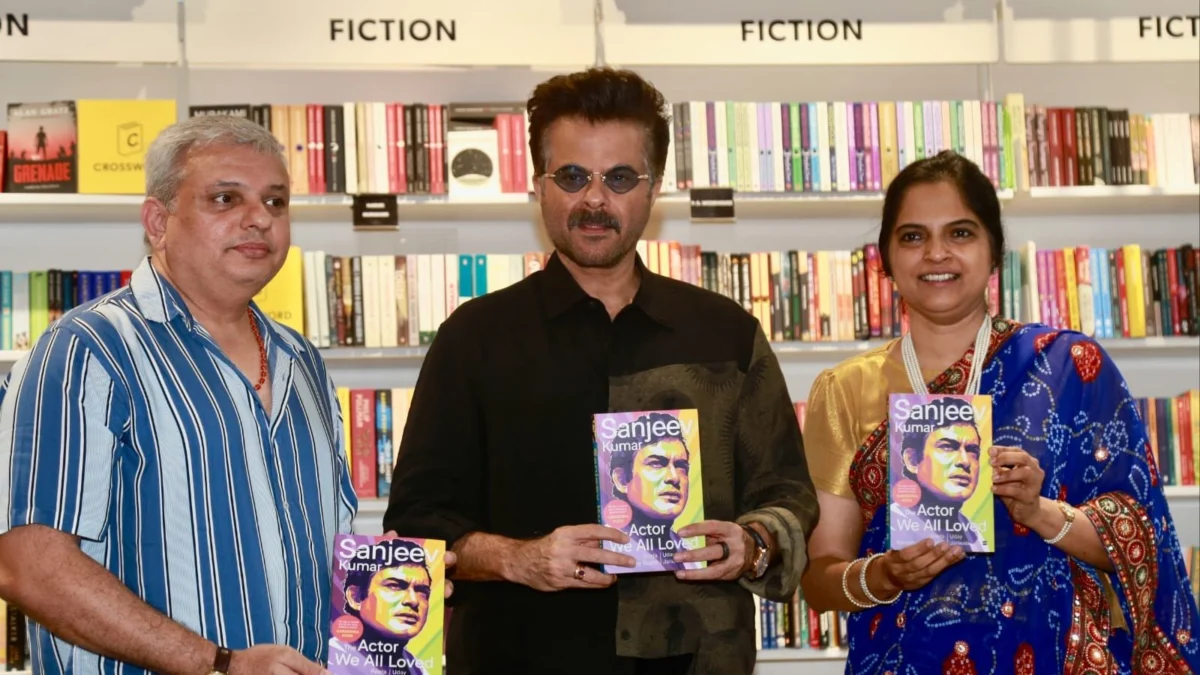
The landscape of Indian cinema is populated by stars who shone brightly, but few have left behind a legacy as intellectually stimulating and emotionally resonant as Sanjeev Kumar. Decades after his untimely passing, the actor remains a subject of intense fascination for cinephiles and scholars alike. In a significant move to document his life, his nephew Uday Jariwala and noted biographer Reeta Ramamurthy Gupta recently released the definitive biography titled Sanjeev Kumar: The Actor We All Loved.
Launched in a star-studded event in Mumbai, the book seeks to peel back the layers of the man born Harihar Jethalal Jariwala, moving beyond the greasepaint to reveal the human being who remained remarkably grounded despite his monumental fame.
Main Facts: A Long-Overdue Tribute
The biography, Sanjeev Kumar: The Actor We All Loved, serves as a comprehensive record of the actor’s journey from the theater stages of Gujarat to the pinnacle of Bollywood. The project was born out of a realization by Reeta Ramamurthy Gupta in 2018 that, despite his stature, no formal biography existed for the legendary actor.
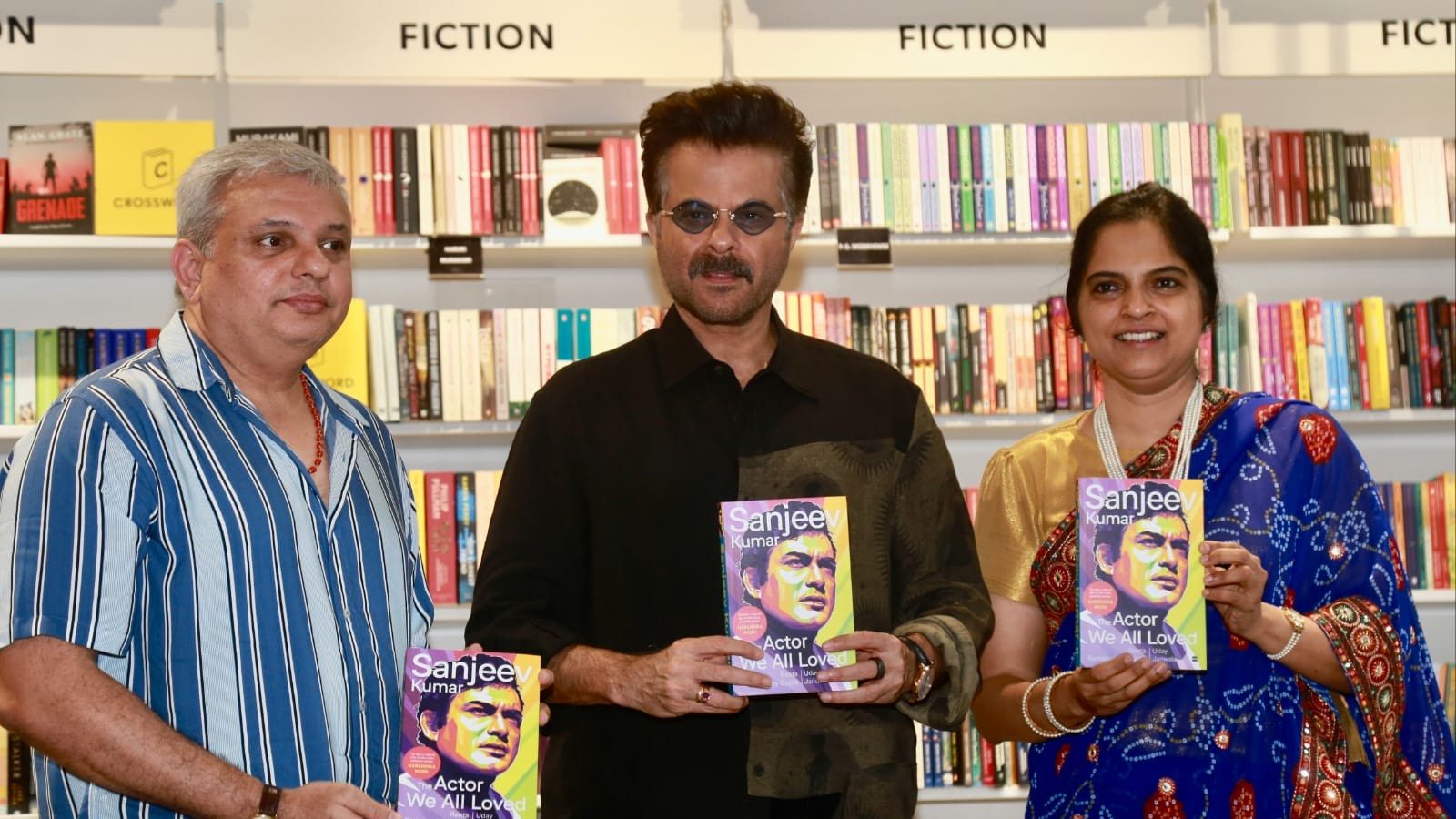
The book launch was headlined by veteran actor Anil Kapoor, a self-proclaimed devotee of Kumar’s craft. The narrative of the book is built upon two pillars: meticulous research into his cinematic contributions and personal, never-before-shared anecdotes provided by his family, primarily through Uday Jariwala.
Key highlights of the publication include:
- An exploration of his versatility, from the stoic Thakur in Sholay to the complex roles in Satyajit Ray’s Shatranj Ke Khiladi.
- First-hand accounts of his life away from the camera, emphasizing his simplicity and lack of "superstar hangups."
- A corrective narrative designed to dispel decades of industry rumors and gossip that have often clouded his true personality.
Chronology: From Surat to the "Golden Age" of Cinema
To understand the biography, one must understand the timeline of the man it celebrates. Sanjeev Kumar’s life was a testament to the transformative power of art.
The Early Years and Theater Roots
Born in 1938 in Surat, Kumar’s family eventually moved to Mumbai. His artistic journey did not begin in front of a camera but on the stage. He was a stalwart of the Indian People’s Theatre Association (IPTA) and later joined the Indian National Theatre. This period was crucial; it was here that he developed the "actor’s actor" reputation, often playing characters far older than his actual age—a trend that would define his film career.
The 1960s: The Breakthrough
The biography highlights 1968 as a pivotal year. While he had been working in the industry for some time, his performance in Sunghursh, alongside the legendary Dilip Kumar, marked his arrival as a powerhouse. Despite sharing the screen with the "Tragedy King," Sanjeev Kumar held his own, a feat that caught the attention of the entire industry, including a young Anil Kapoor.
The 1970s: The Golden Era
The 1970s saw Kumar become the go-to actor for directors like Gulzar. This decade produced masterpieces such as Koshish (1972), where he played a deaf-mute man, and Aandhi (1975). It was also the era of Sholay (1975), where his portrayal of Thakur Baldev Singh became an indelible part of Indian pop culture.
2018–2022: The Making of the Biography
The chronology of the book itself began in 2018 when Reeta Ramamurthy Gupta began conceptualizing the project. Over four years, the authors collaborated to synthesize historical film data with the Jariwala family’s private archives, culminating in the 2022 release.
Supporting Data: The Artistic Impact and Global Recognition
The biography does not merely recount life events; it provides data points that argue for Sanjeev Kumar’s position as one of the world’s finest actors.
One of the most compelling arguments for his global relevance is the inclusion of Shatranj Ke Khiladi (The Chess Players) on Martin Scorsese’s prestigious list of "40 films you must watch before you die." Directed by Satyajit Ray, the film features Kumar as Mirza Sajjad Ali. Reeta Ramamurthy Gupta notes that this international recognition was a primary driver for her commitment to the book.
Furthermore, the book explores the "Sanjeev Kumar Paradox":
- Age Versatility: At the age of 37, he played the elderly Thakur in Sholay, while simultaneously playing romantic leads in other films.
- Genre Fluidity: He was equally adept at slapstick comedy (Angoor), intense drama (Aandhi), and suspense (Anamika).
- The "Anti-Hero" Trend: Long before the term became fashionable, Kumar was choosing roles that were morally ambiguous or physically challenged, prioritizing the script over his "hero" image.
Official Responses: Insights from the Authors and Peers
During the launch, the authors and guest speakers provided poignant reflections that form the emotional core of the biography.
Reeta Ramamurthy Gupta on the Inspiration
Gupta shared that her connection to Kumar was rooted in childhood nostalgia, specifically memories of her father singing "Thande Thande Pani Se Nahana Chahiye" from the film Pati Patni Aur Woh.
"I was shocked to know that no one had written a book about him before," Gupta stated. She emphasized that seeing Shatranj Ke Khiladi was the final catalyst. "The film features on Martin Scorsese’s list… my mind was made up. I had to write this book."
Uday Jariwala on the Human Side
For Uday Jariwala, the biography was a mission of truth. He sought to replace the "rumor mill" version of Sanjeev Kumar with the reality of the man he knew.
"I wanted people to know who Sanjeev Kumar was in reality. He was a superstar, but he was very down-to-earth and very simple in life. He never had any hangups," Jariwala remarked. He shared intimate memories of the actor taking his nephews to see Charlie Chaplin movies and driving the family around himself, eschewing the traditional entourage of drivers and staff.
Anil Kapoor’s Tribute
Anil Kapoor recounted his first "encounter" with the actor’s brilliance while watching Sunghursh.
"The film starred the great Dilip Kumar Sahab. By the time I came out, I was thinking, ‘Who was this other actor in the film?’ I then came to know it was Sanjeev Kumar sahib. I have been a fan of his ever since," Kapoor shared, highlighting how Kumar’s screen presence could rival even the most established titans of the industry.
Implications: Preserving the Heritage of Indian Cinema
The release of Sanjeev Kumar: The Actor We All Loved has broader implications for the study of Indian cinema and the culture of celebrity biographies in the country.
1. Shift from Gossip to Scholarship
Historically, Indian film literature has often leaned toward sensationalism. This biography signals a shift toward a more scholarly and respectful approach to documenting the lives of icons. By focusing on his craft and his genuine personality, the authors set a standard for future cinematic biographies.
2. Educational Value for Future Actors
For aspiring actors, the book serves as a manual on versatility. In an era where "branding" often takes precedence over "acting," Kumar’s career—defined by his willingness to look unglamorous or play older roles—offers a counter-narrative to modern stardom.
3. Cultural Preservation
As the "Golden Age" of Bollywood recedes into the past, documenting the lives of its primary architects becomes crucial. This biography ensures that Sanjeev Kumar is not just a name in a filmography but a three-dimensional figure whose contributions to the arts are understood in their proper context.
4. Correcting the Record
By addressing the rumors that often surrounded the actor’s bachelorhood and personal life, the book allows the Jariwala family to reclaim the narrative. It provides a sense of closure to a legacy that has often been misinterpreted by the tabloid press.
In conclusion, Sanjeev Kumar: The Actor We All Loved is more than a book; it is a cultural reclamation. It decodes the enigma of a man who was a king on screen but a commoner at heart. Through the eyes of Reeta Ramamurthy Gupta and Uday Jariwala, readers are finally invited to meet the real Harihar Jariwala—the man who taught a nation that true stardom lies in the mastery of one’s craft and the simplicity of one’s soul.
