

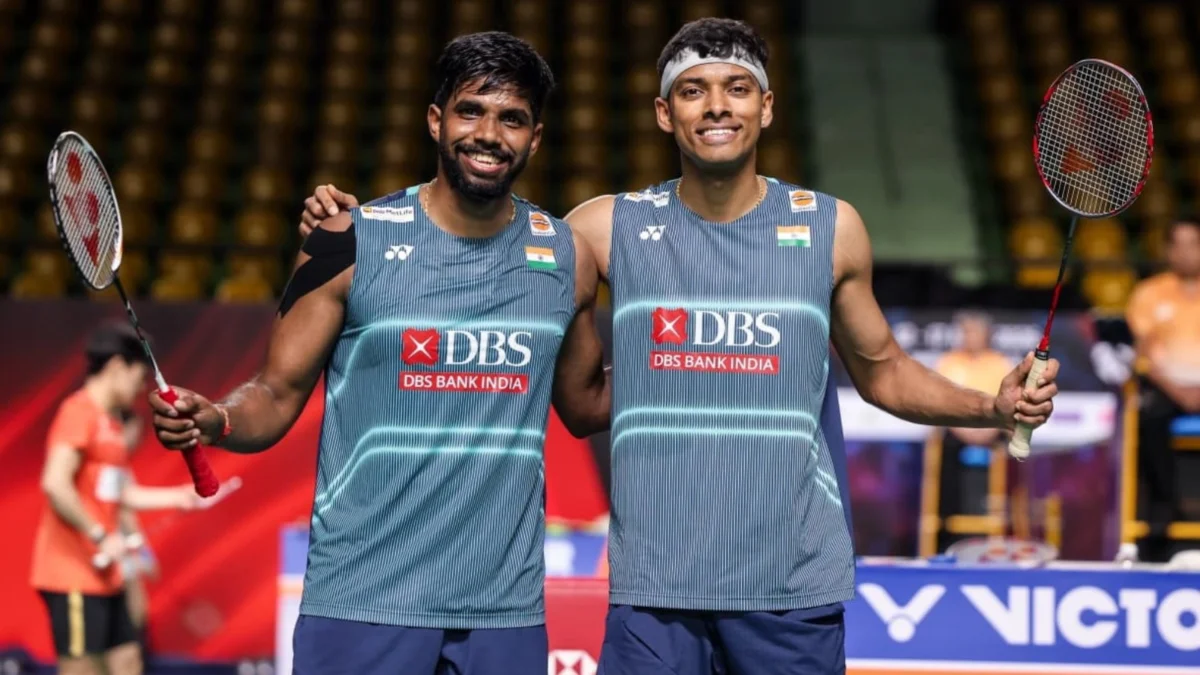
Bangkok, Thailand – In a display of tactical brilliance, unwavering resilience, and sheer grit, India’s premier men’s doubles pair, Satwiksairaj Rankireddy and Chirag Shetty, battled back from a set down to defeat former World No. 1s Goh Sze Fei and Nur Izuddin of Malaysia, securing their berth in the final of the Thailand Open Super 500. The 82-minute, three-set marathon, ending 19-21, 22-20, 21-16, was more than just a victory; it was a testament to their evolving problem-solving acumen and an emphatic statement after a fortnight marked by fluctuating fortunes.
The win, a much-needed surge of momentum, felt like a flash of lightning following a period of rumbling thunder for the Indian duo. Having navigated a challenging stretch in recent tournaments, the relief and renewed confidence emanating from their performance were palpable. This hard-fought semi-final clash not only grants them their first final appearance of the season but also underscores their capacity to adapt and overcome even when operating outside their preferred comfort zone.
The Crucible of "Plan B": A Deliberate Discomfort
The match began with an intriguing strategic gambit, dubbed "Plan B" by the Indian camp – a pre-meditated, albeit discomfiting, tactical shift designed to test their adaptability and expose potential weaknesses in their opponents’ game. This audacious strategy implied allowing the Malaysian duo, currently ranked No. 9 globally, to dictate the initial rhythm of the match. Goh Sze Fei and Nur Izuddin are renowned for their intricate, fast-paced net exchanges, a style often likened to a chess game where the opening moves are crucial.
Under "Plan B," the Indians deliberately engaged in this tight, flat, front and mid-court battle. The objective was to starve Satwik and Chirag of the high lifts that typically allow them to unleash their devastating smashes – their bread and butter. Instead, they were forced into a taut, tense war-theatre primarily confined to the front half of the court, where defensive prowess against Goh’s potent jump smashes, especially following any errant lifts, became paramount.
This strategic pivot also necessitated a shift in their traditional roles: Satwik, typically the powerhouse from the backcourt, was asked to operate more frequently at the net, while Chirag, usually the more agile front-court player, manned the back. While an essential training measure for contingencies, this role reversal is far from their ideal, natural rhythm. It was a self-inflicted pressure test, designed to push their boundaries and expand their repertoire, but it started badly.
First Set Struggles: Navigating the Malaysian Maze
The initial phase of "Plan B" saw the Indians struggling profoundly. Trailing 9-15, they found themselves caught in a "criss-cross maze," operating from bending, almost crouching positions to engage in the rapid net play. For two shuttlers who stand well over six feet tall, maintaining a low, attacking crouch-squat stance at the net is physically demanding and fundamentally counter-intuitive to their natural posture. The article vividly described them not as "crouching tigers" but rather "scrambling rabbits," highlighting the awkwardness and discomfort they faced against the nimbler, shorter Malaysians.
This struggle underlined a crucial technical aspect that the Indian pair, despite their world-class status, still needs to refine. The suggestion to "urgently speak to India’s finest wrestlers or even Leander Paes" is a poignant observation, emphasizing the need to master the low, explosive stance essential for dominating the front court – a skill intrinsic to wrestling and tennis net play.
Despite their early woes and the physical demands, the Indians, through sheer effort, began to chip away at the deficit. They managed to take seven of the next ten points, subtly opening up the court just enough to gain some breathing room and claw their way back to 16-18. However, a crucial round-the-head shot from Chirag failed to connect, and Satwik, uncharacteristically, seemed a touch off-pace, watching as the shuttle returned to his court. The first set was lost 19-21, a clear indication that "Plan B," while strategically sound in theory, was proving incredibly difficult to execute against such skilled opponents.
The Coaching Brain Trust: Unlocking the Code
The initial setback, however, did not signal defeat for Satwik-Chirag. Their journey to the pinnacle of men’s doubles – having reached World No. 1 and currently ranked No. 4 – is defined by their innate ability to problem-solve under pressure. This capacity is not just individual talent but also a testament to their astute coaching team.
Central to this tactical re-evaluation was Manu Attri, a former Olympian whose understanding of the game is as profound as his versatility. Described as a "chameleon" for his ability to play both front and back court, and a "Meerut man" who deeply comprehends the "Malaysian-Indonesian way of front court sorcery," Attri’s insights were invaluable. His background equipped him perfectly to untangle the intricate flat-exchange gameplan that Goh-Nur were employing, allowing the Indians to decode their opponents’ strategy. Alongside him, their primary coach, Mathias Boe (though not explicitly named in the excerpt, "coach Tan" is mentioned, suggesting another key figure or a pseudonym), is instrumental in refining their overall strategy and execution.
Their collective experience and analytical prowess proved crucial in the brief interval between sets. The advice given wasn’t about abandoning "Plan B" entirely, but rather finding the precise moments and methods to transition back to their attacking strengths.
The Turnaround: From Defense to Dominance
The second set began with the Indians still grappling with the Malaysians’ stock model, finding themselves 4-6 down. But then, a decisive shift occurred. Satwik-Chirag unleashed a crucial five-point surge, subtly altering their approach. They began "dipping the shuttle" more effectively, disrupting the parallel play and, critically, forcing Goh-Nur to lift the shuttle. This was the key. Forcing lifts out of the Malaysians was precisely what the Indians needed to shed their defensive cloak and toggle back to their preferred aggressive, attacking style.
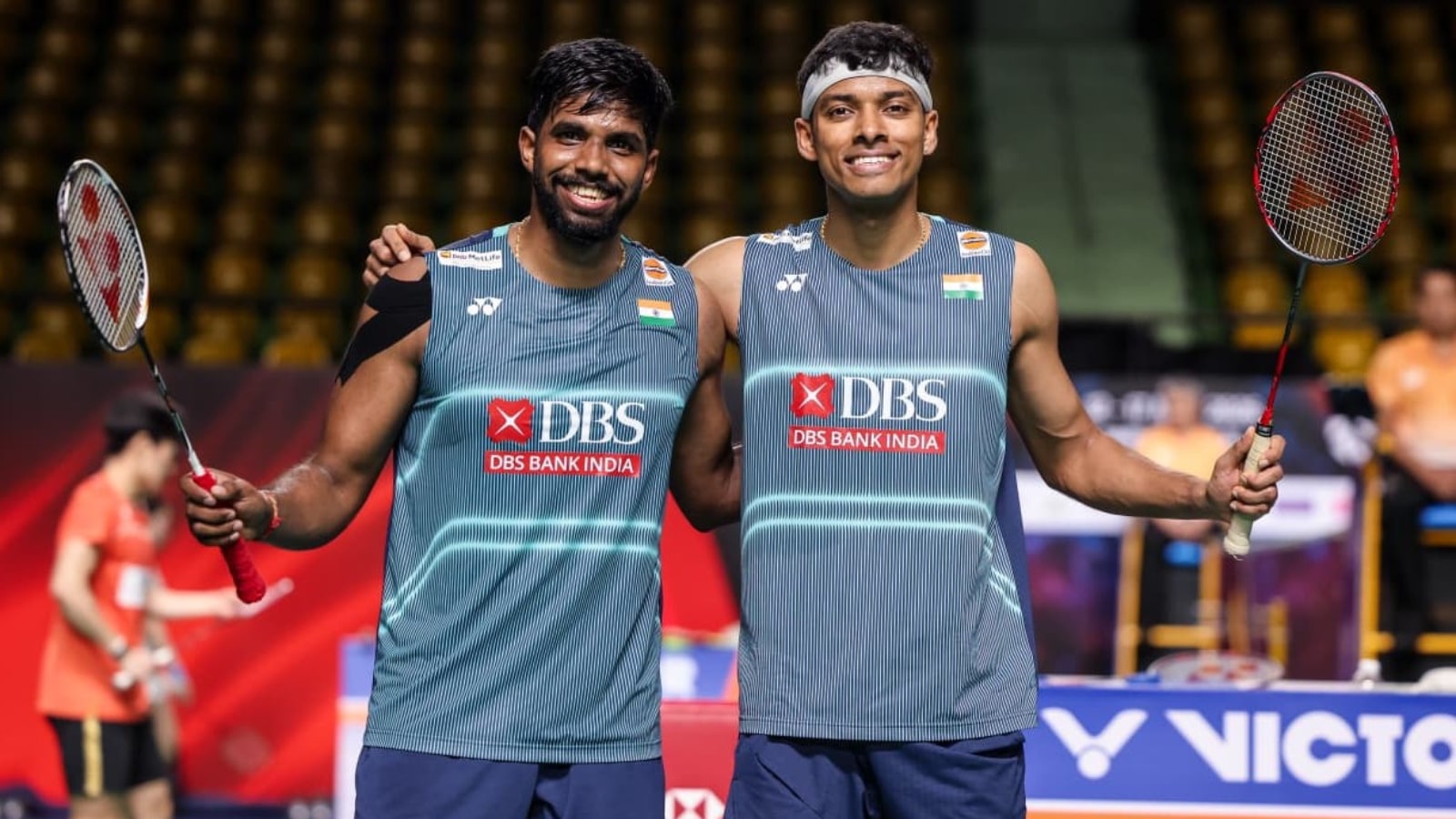
The momentum swung back and forth, reaching a tense 16-16 deadlock. It was here that Chirag, a player known for his fiery spirit, began to truly break the shackles. He even successfully reviewed a faulted serve call, winning the point and further fueling his determination. This moment underscored a piece of blunt, yet invaluable, advice he had received from his childhood coach, Uday Pawar: even as they improved their defense, they must never rely on retrieves to win matches. By instinct, Satwik and Chirag are attackers, and they needed to back that core strength.
While Satwik was still finding his range, occasionally erring on lengths, Chirag remained sturdy, unleashing powerful smashes at every opportunity. This relentless aggression allowed them to pull away to 19-16. Though nervy rallies followed, bringing the score to 20-20, the decider was eventually earned by a moment of brilliance from Satwik: a "brilliant tall flat cross from backcourt" that demonstrated his ability to clutch up under pressure. The second set, 22-20, was theirs, setting the stage for a dramatic final set.
Third Set Ascendancy: Unchained and Unstoppable
Once released from the "chains of forecourt flats," the Indian duo was well on their way in the third set. The psychological burden of operating outside their comfort zone had lifted, and their natural attacking instincts took over. Chirag’s signature "swivel serve" and his characteristic "Huudd" exhales, a reassuring sign of his confidence and intensity, were back in full force. Despite a high serve error and a long rally ending in net-tape drama that saw the shuttle clip and tumble onto the Malaysian side, the Indians maintained control.
They systematically dismantled their opponents, who simply could not withstand the relentless pressure. The shift in tempo, the increased pace, and the sheer power of Satwik and Chirag proved overwhelming. The Malaysians, in their post-match comments to the BWF, readily conceded this point: "They increased pace and kept attacking. And put pressure on us. And we cannot sustain that. The attacking was too strong… we couldn’t overcome."
The final score of 21-16 in the decider not only sealed their victory but also marked their first final of the 2026 season, and their second in two years at the Thailand Open. Bangkok holds special significance for the pair, having won twice in the city previously and, notably, being crowned Thomas Cup champions there.
Player Insights: Lessons Learned and Future Focus
Post-match, both Satwik and Chirag offered insightful reflections on the tactical battle. Chirag drew motivation from their defensive efforts in the first set, highlighting how well they moved the Malaysians around even after being forced to lift. Satwik, ever the analytical one, delved deeper into the challenges posed by the flat game, particularly from shorter players.
"Malaysians and Indonesians always want to dominate the net. They don’t want us to play back court," Satwik explained to the BWF. "Goh-Nur had the upper hand at the net that’s how they started first game. They were controlling front and mid court. They’re quite skillful with their hands at the net and being short guys they use net skills. We are tall and need to bend, and play tight shots to get there. For them it’s very easy… it’s tactical."
This explanation underscores a crucial lesson learned the hard way throughout their career, particularly from past losses to formidable net-playing pairs like the "Minions" (Kevin Sanjaya Sukamuljo and Marcus Fernaldi Gideon) and Olympic champions Aaron Chia and Soh Wooi Yik. Their ability to articulate and address these tactical nuances demonstrates their continuous growth as a pair.
Despite the monumental win, their focus remains firmly on the next challenge. "Job not done yet," was Satwik’s concise verdict, while Chirag, ever pragmatic, accepted, "Slowly we are getting better, we are playing well in patches." This measured optimism reflects their understanding that consistency is key, and while this victory is significant, the ultimate prize still awaits.
Implications and the Road Ahead: The Final Showdown
This hard-fought victory carries significant implications for Satwik-Chirag. It serves as a massive confidence booster, especially after the "noise of the past fortnight" – a subtle nod to any perceived underperformance or pressure they might have been facing. Reaching a Super 500 final so early in the season sets a strong precedent and signals their intent for the year, particularly with major events like the Olympics on the horizon. The tactical flexibility demonstrated, even under duress, will undoubtedly be a valuable asset moving forward.
In the final, the Indians will face another formidable Indonesian pair, Leo Rolly Carnando and Daniel Marthin. Both 24 years old, the Indonesians present a different kind of challenge. Marthin, like Satwik, is a six-footer, and their combined speed and array of tricks will demand another high-level performance from the Indian duo. Satwik-Chirag have a favorable head-to-head record against them, having secured four victories in their last encounters in 2023. However, every match is a new battle, and the pressure of a final often brings out the best in competitors.
For Satwiksairaj Rankireddy and Chirag Shetty, this journey to the Thailand Open final is more than just a quest for a title; it’s a continuous evolution of their game, a relentless pursuit of perfection, and a testament to their dedication. As they prepare for the final showdown, their mantra remains clear: "Working Sundays" is precisely what they play badminton for – the thrill of competition, the challenge of victory, and the ultimate reward of lifting the trophy.
