

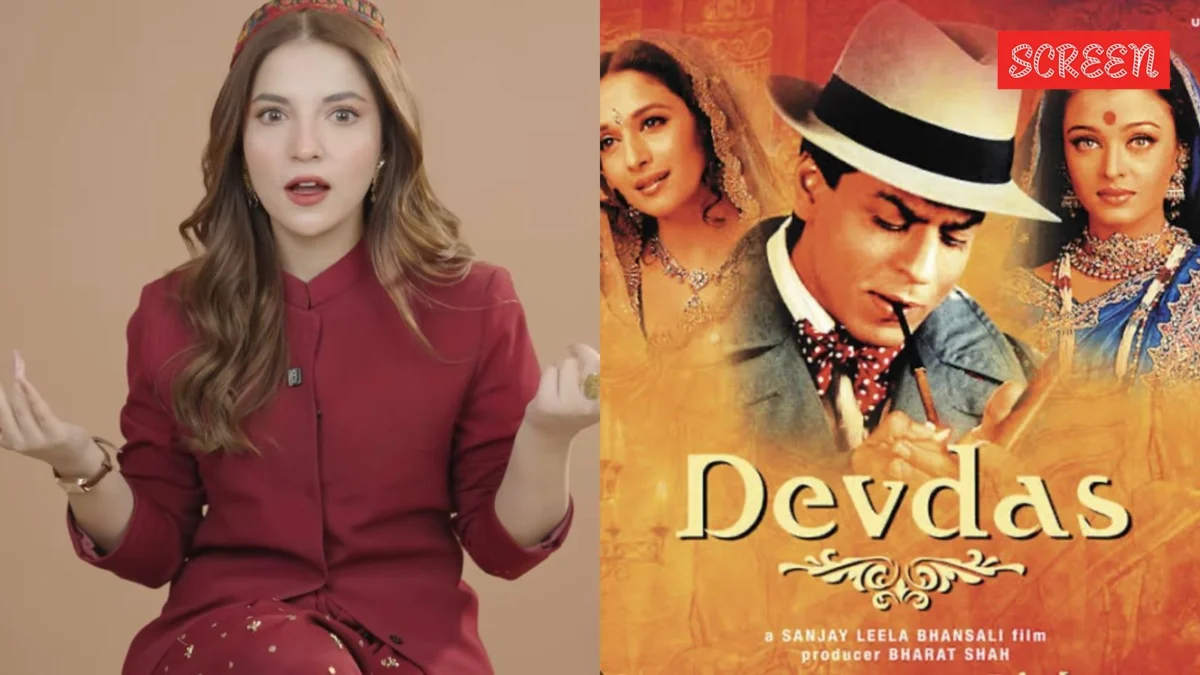
Mumbai, May 18, 2026 – A recent statement by Pakistani influencer-turned-actress Dananeer Mobeen, labeling Sanjay Leela Bhansali’s iconic 2002 film "Devdas" as "overrated," has ignited a fiery debate across social media platforms and within the Indian film fraternity. The film, a lavish cinematic adaptation of Sarat Chandra Chattopadhyay’s classic novel, starring Shah Rukh Khan, Aishwarya Rai Bachchan, and Madhuri Dixit, is widely revered as a masterpiece of Indian cinema, celebrated for its grandeur, performances, and poignant storytelling. Mobeen’s candid critique, however, has been met with significant backlash, with many deeming her comments uninformed and disrespectful to a celebrated work of art.
The Spark: Dananeer Mobeen’s "Devdas" Critique
The controversy erupted following an interview with Mashion, where Dananeer Mobeen, now 24, was participating in a rapid-fire trivia segment. When prompted to name a classic film she found overrated, she unhesitatingly chose "Devdas." Her reasoning, delivered with a dismissive tone, centered on her perceived lack of substance in the narrative, questioning the film’s enduring appeal.
"What is the story? There’s an alcoholic, there’s a woman who has no self-respect, there’s a dad who [expletive], and there’s another woman who is forced upon the man. There is a man who is forced upon this other woman… what is happening, and why is it a classic? Why is everyone going gaga? I get the sets, the grandeur, outfits, but the story? Why are we glamorizing alcoholism?" Mobeen articulated, sparking immediate online outrage.
Her comments were quickly amplified across social media, particularly on X (formerly Twitter), where clips of the interview went viral. The actress found herself on the receiving end of a barrage of criticism, with users dissecting her remarks and questioning her understanding of cinematic history and literary depth.
Who is Dananeer Mobeen? A Rise to Prominence
Dananeer Mobeen, a 24-year-old Pakistani national, first gained widespread recognition in 2021 for her viral catchphrase, "Pawrty hori hai," which became a sensation on social media. This initial virality propelled her into the entertainment industry, leading to her television debut the same year in the ARY Digital show "Sinf-e-Aahan."
Her career trajectory saw a significant upswing with her breakthrough performance in the 2023 drama "Muhabbat Gumshuda Meri," which garnered substantial popularity. In 2026, she continued to build her acting portfolio with the critically acclaimed show "Meem Se Mohabbat" and is currently appearing in the drama "Hurmat." More recently, Mobeen ventured into filmmaking with her debut movie, "Mera Lyari," where she portrays the character of Afsana Baloch. Reports suggest that "Mera Lyari" was envisioned as a Pakistani answer to the popular Indian film "Dhurandhar," but unfortunately, it did not achieve box office success.
Despite her burgeoning career in Pakistan’s entertainment sphere, Mobeen’s foray into critiquing a cornerstone of Indian cinema has overshadowed her recent professional achievements, drawing attention to her perceived lack of engagement with the cultural significance of "Devdas."
Internet’s Fury: A Torrent of Backlash
The reaction from netizens to Mobeen’s statements was swift and overwhelmingly negative. Many users expressed disbelief and disappointment, accusing her of superficiality and a lack of appreciation for a film rooted in a celebrated literary work.
One widely circulated comment highlighted the potential disconnect between Mobeen’s fame and her critical commentary: "I’m sure Dananeer has no clue that Devdas was based on a novel from Sarat Chandra Chattopadhyay, one of the most prolific authors from the Bengali Renaissance. This is what happens when you become an actor due to viral reels. She probably thinks Ismat Chughtai is a medical lab." This sentiment was echoed by many who felt her critique stemmed from a shallow understanding rather than a nuanced cinematic analysis.
The criticism extended to her portrayal of the characters and the film’s themes. A user directly addressed the notion of glamorizing alcoholism, stating: "Someone should remind Dananeer, Devdas does not glorify alcoholism. His downfall is driven by ego and addiction, and he dies broken. Paro’s choice to marry another man is an act of self-respect, not weakness. The only thing overrated here is her fake accent, not Devdas." This response encapsulated a common defense of the film, arguing that Devdas’s tragic arc is a cautionary tale of addiction and unrequited love, not an endorsement.
Further critiques focused on the lack of depth in her analysis: "What a shallow and uninformed take on Devdas. Reducing a classic like that to casual commentary shows a real lack of understanding of cinema. Not every opinion needs to be voiced, especially when it dismisses something so iconic so lightly. Very disappointing." The sentiment that Mobeen’s opinion lacked the necessary gravitas to critique such a monumental film was a recurring theme.
Some users resorted to more pointed accusations, labeling her an "attention seeker" and her views "idiotic." One post read: "Dananeer is an attention seeker!!! Always tries to become famous through shortcuts!" Another comment intensified the criticism: "What an utterly idiotic take. She is running down one of the greatest classics written by one of the greatest playwrights who ever existed. That’s why education is so important. Any random person getting a mic and speaking nonsense needs to stop."
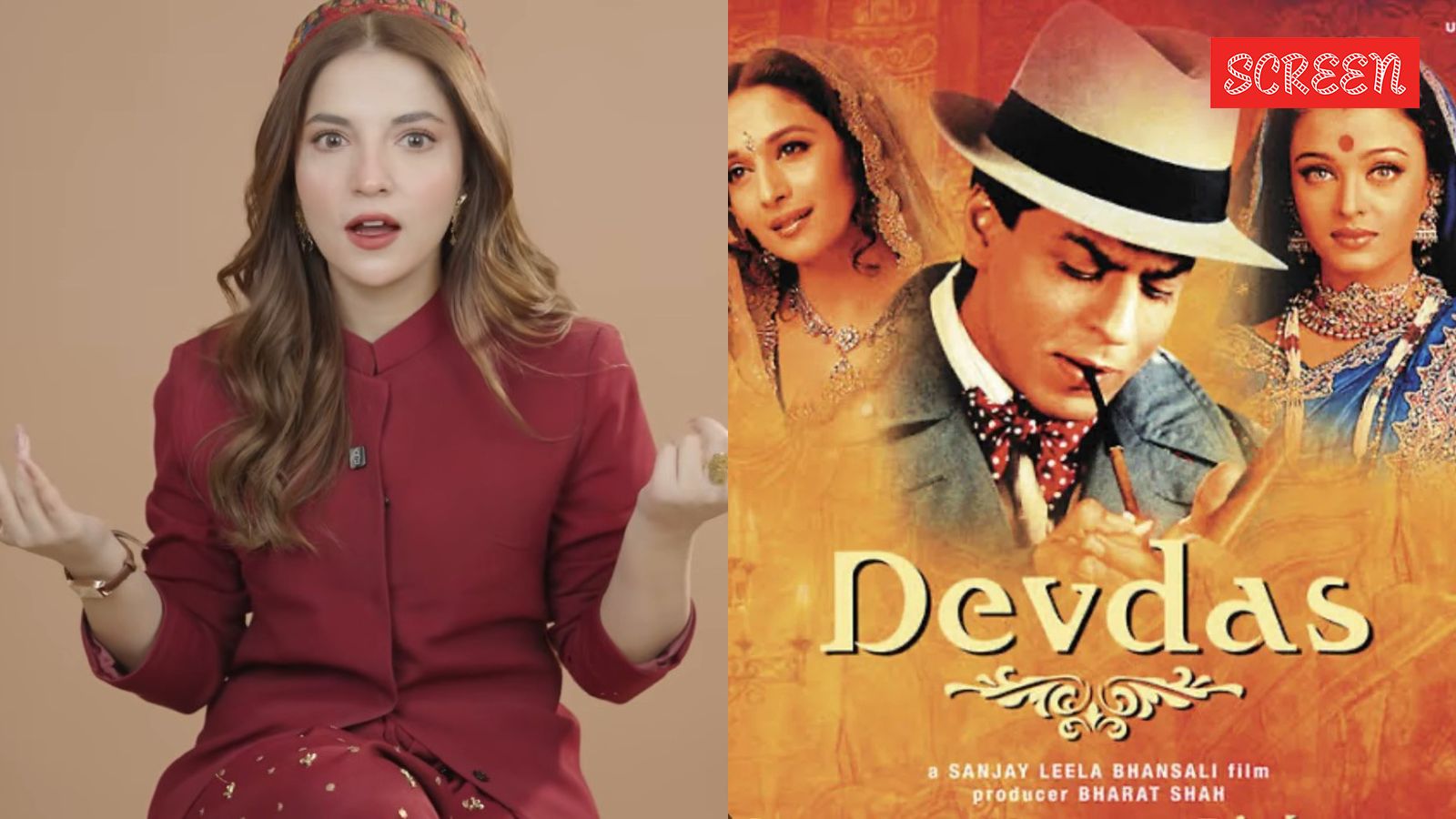
Adding an ironic twist to the controversy, one user pointed out that Mobeen herself had previously dressed up as Paro, the film’s protagonist, during a segment on her show "Very Filmy." This observation further fueled the criticism, with many questioning the sincerity of her current denunciation of the film.
A Deeper Dive: The Nuances of "Devdas" and its Interpretations
The widespread backlash stems from a fundamental misunderstanding, or perhaps a deliberate misrepresentation, of "Devdas" as merely a story of alcoholism. The film, and the novel it is based on, is a complex exploration of unrequited love, societal pressures, ego, addiction, and the tragic consequences of one’s choices.
Sarat Chandra Chattopadhyay’s novel, a literary cornerstone of the Bengali Renaissance, delves into the psychological and emotional turmoil of its characters. Devdas, born into wealth and privilege, is consumed by his passionate but forbidden love for Paro. His descent into alcoholism is not presented as a lifestyle choice but as a destructive response to heartbreak, societal constraints, and his own inability to reconcile his desires with reality.
Paro’s journey is equally nuanced. Her decision to marry the wealthy landlord Bhujanga is often misinterpreted as a lack of self-respect. However, within the context of the era and her circumstances, it can be viewed as a pragmatic choice to secure her future and escape the dependency that Devdas’s wavering commitment imposed. Chandramukhi, the courtesan, represents a different facet of love and sacrifice, offering solace and unwavering devotion to Devdas despite his own self-destructive path.
Sanjay Leela Bhansali’s 2002 adaptation, with its opulent sets, breathtaking costumes, and stellar performances, elevated these themes to a visually spectacular level. The film’s grandeur is not merely aesthetic; it reflects the larger-than-life emotions and the societal opulence that both enabled and ultimately constrained the characters. The "glamorization" often cited by critics is, for many, the film’s masterful storytelling that immerses the audience in the characters’ tragic world, eliciting empathy rather than admiration for their destructive paths.
Voices from the Helm: Bhansali and Khan on "Devdas"
The director of the acclaimed film, Sanjay Leela Bhansali, has himself addressed the interpretations surrounding "Devdas." In a 2024 interview with Hollywood Reporter India, he discussed how some actors initially had reservations about the character, viewing him as a "loser" and accusing the film of "romanticizing alcoholism."
Bhansali, however, offered a profound counter-narrative. "This is the story of a man who loved," he stated, emphasizing the universal theme of love and devotion. He argued that Devdas’s unwavering love for Paro, to the extent that his identity became synonymous with her name, represents a profound and noble form of affection. "What is our biggest duty in this life? To love and give love. Does anyone love like Devdas? I wanted to say, ‘If you love somebody, that’s how you love.’ Devdas is a story of a man who loved," he passionately explained. He defended Devdas as "the most noble of any of my characters" because of his singular devotion.
Shah Rukh Khan, who essayed the titular role, also shared his perspective on the character at the Locarno Film Festival in 2024. Khan expressed his intention to portray Devdas not as a character to be emulated but as a cautionary figure. "I don’t like to play characters that demean women, I didn’t want him to be liked in the film for the reason that he disses a woman and doesn’t commit to her. I wanted him to come across as a person who is spineless and not somebody you should look up to," he revealed. Khan acknowledged Bhansali’s masterful direction but reiterated his personal view that "nobody wants to be Devdas, it is not a character you take back home." His aim was to ensure that a character with commitment issues with women did not become popular in a "different sense," a goal he believed he achieved.
The Implications and the Unanswered Question
Dananeer Mobeen’s comments, while ostensibly a personal opinion, have broader implications for how cultural artifacts are discussed and critiqued, especially across borders. In an era of rapid digital dissemination, a single statement can ignite a global conversation, highlighting the importance of informed discourse and cultural sensitivity.
The controversy underscores the enduring power and multifaceted interpretations of "Devdas." It serves as a reminder that literary and cinematic classics often transcend simplistic readings, offering rich tapestries of human emotion, societal critique, and timeless themes.
While the internet’s reaction has been largely condemnatory, Dananeer Mobeen has yet to issue a formal response to the online backlash. Her silence leaves the audience to ponder the motivations behind her critique and whether she will engage further with the deeply rooted cultural and literary significance of "Devdas." The debate, however, has undeniably brought renewed attention to Bhansali’s magnum opus, prompting discussions about its artistic merit, its thematic complexity, and its indelible mark on Indian cinema. The incident also raises questions about the responsibility that comes with a public platform, particularly when engaging with works that hold significant cultural weight for millions.
