

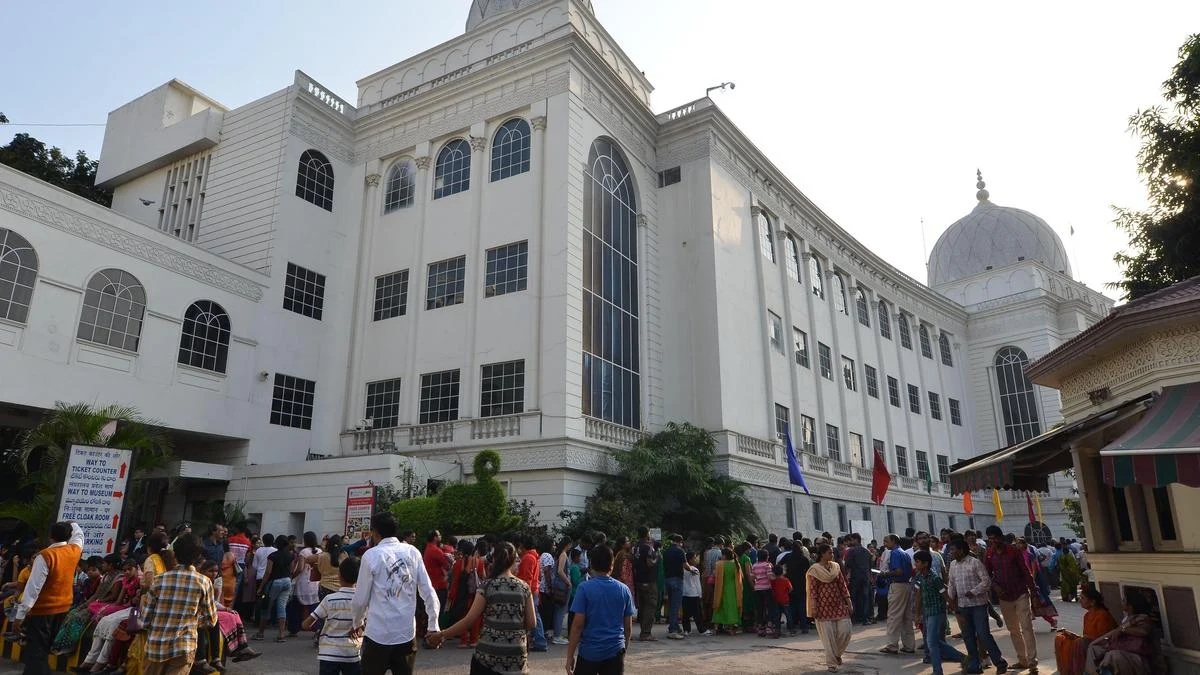
Hyderabad, India – As the Salar Jung Museum in Hyderabad proudly marks its Diamond Jubilee, a momentous occasion celebrating 75 years of preserving and showcasing a staggering collection of global art and artifacts, it beckons visitors to embark on a journey through time. This venerable institution, established by the discerning eye and passionate spirit of Nawab Mir Yousuf Ali Khan, Salar Jung III, offers an unparalleled opportunity to traverse centuries and continents within a single afternoon. From its humble beginnings in the 18th-century palace complex of Dewan Devdi to its sprawling current location, the museum stands as a testament to a lifelong dedication to acquiring objects of exceptional quality and historical significance.
A Legacy Forged in Art and Diplomacy
The genesis of the Salar Jung Museum can be traced back to 1951, when Nawab Mir Yousuf Ali Khan, a prominent figure who served as the Prime Minister of Hyderabad from 1912 to 1914, laid the foundation for what would become one of the largest and most diverse single-artist museums in the world. His insatiable appetite for art and antiquities, coupled with a keen intellect for discerning authenticity and quality, resulted in a collection that now numbers nearly 48,000 artefacts. These treasures, meticulously gathered from across the globe, span a vast spectrum of human creativity, from ancient relics to exquisite European masterpieces.
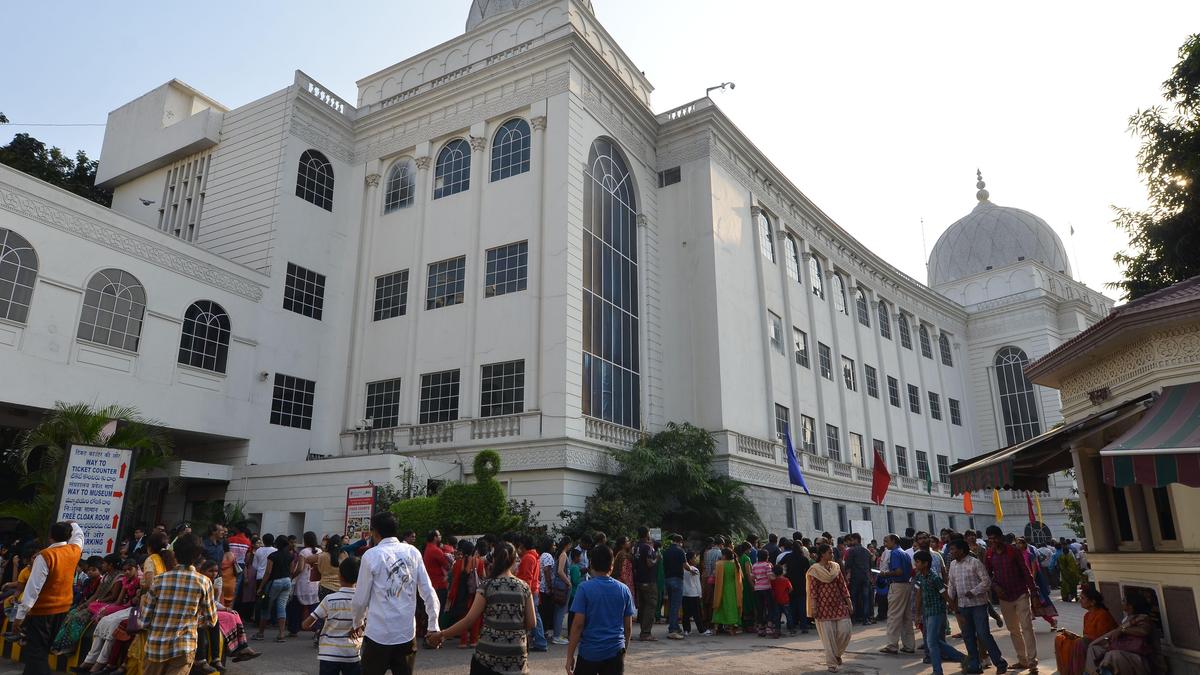
Initially housed within the ancestral palace complex of the Salar Jung family at Dewan Devdi, the museum relocated to its current, expansive premises in 1968. This state-of-the-art facility, spread across nine acres, is thoughtfully divided into central, eastern, and western blocks, each housing a distinct facet of the museum’s immense repository. The institution’s commitment to preserving this legacy is evident in its dedication to providing a comprehensive and immersive experience for every visitor.
A Chronological Tapestry of Human Endeavor
The Salar Jung Museum is not merely a repository of objects; it is a living chronicle of human civilization, meticulously curated to offer insights into diverse cultures, artistic movements, and historical periods. The museum’s collection is broadly categorized into several key areas, each offering a unique perspective:
The European Gallery: Echoes of Western Artistry
The European Gallery is a cornerstone of the Salar Jung Museum, showcasing a breathtaking array of paintings, sculptures, and decorative arts that reflect the artistic evolution of the West. Among the most celebrated pieces is a faithful replica of Leonardo da Vinci’s iconic Mona Lisa. While not the original masterpiece, its presence offers visitors a remarkably immersive experience, allowing for close examination of the subtle nuances and enduring mystery of this Renaissance icon. The gallery also boasts a significant collection of Indian and Western modern paintings, providing a visual dialogue between different artistic philosophies and techniques.
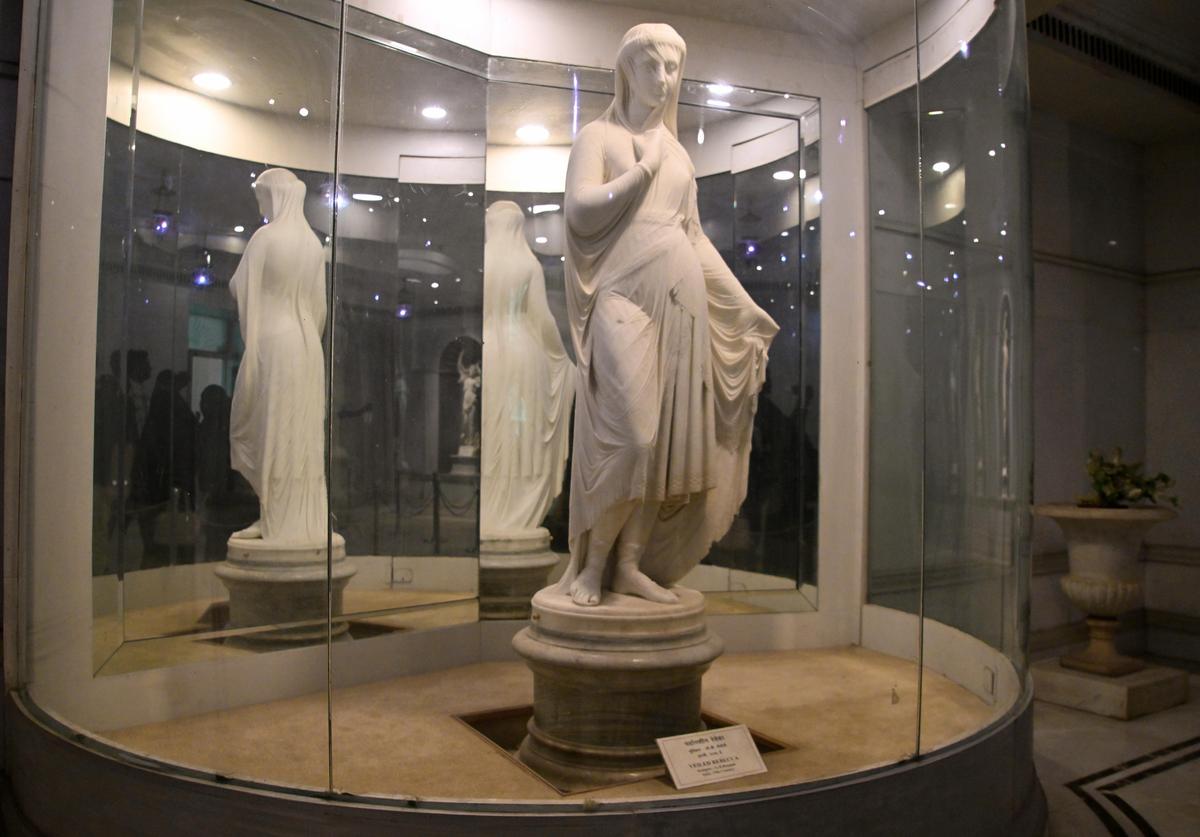
Beyond paintings, the European collection is rich in sculptures, including the ethereal Veiled Rebecca. This masterpiece, sculpted by Giovanni Maria Benzoni from a single block of marble, is renowned for its astonishing illusionistic detail. The translucent veil appears to cling to the figure like wet fabric, revealing the delicate contours and folds of Rebecca’s form with an almost tangible realism. This particular sculpture, along with other marble works depicting the cycles of Nature and the seasons, offers a poignant glimpse into the artistic sensibilities of the 19th century.

The Mechanical Marvel: The Iconic Musical Clock
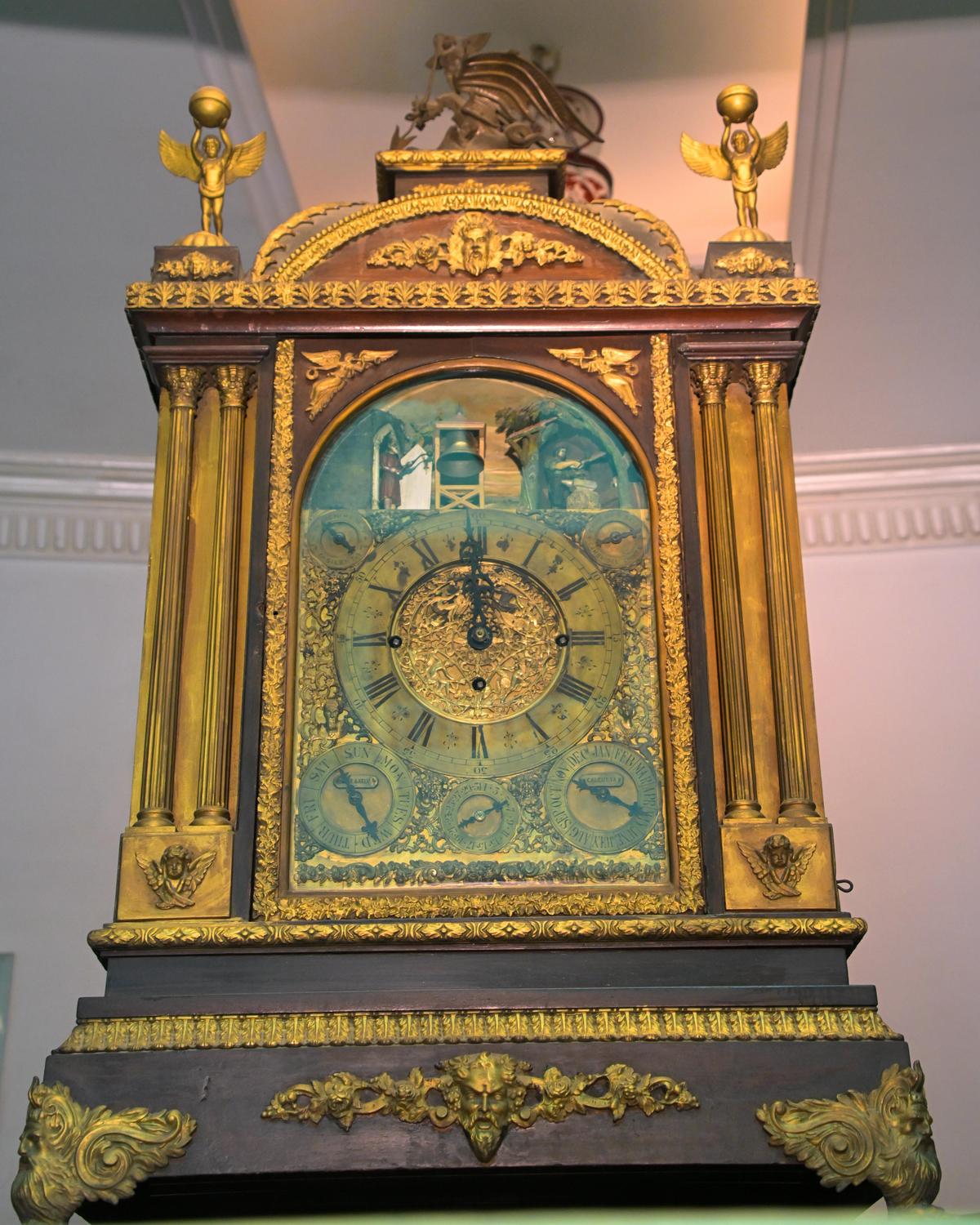
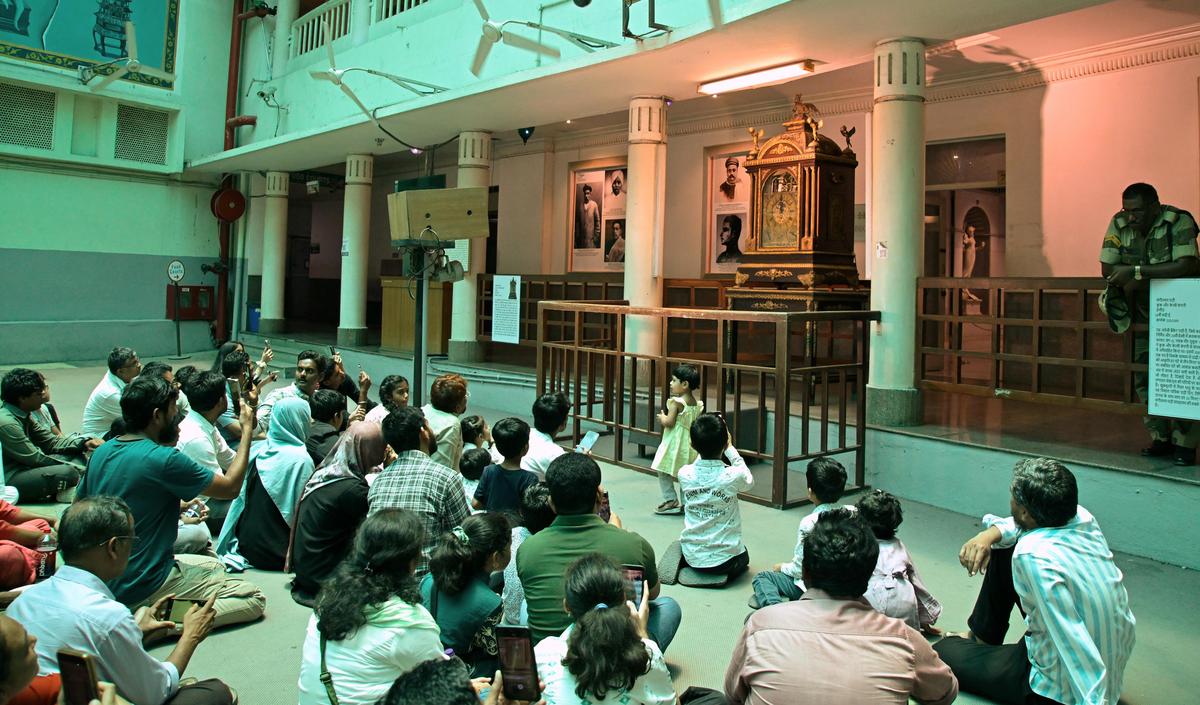
Perhaps the most captivating and universally adored exhibit at the Salar Jung Museum is its iconic English bracket clock. Housed on the ground floor portico, this magnificent timepiece, acquired by Salar Jung III from the renowned clockmakers Cooke & Kelvey, draws crowds with its daily performance. As the hour strikes, a small door opens to reveal a miniature automaton – a toy soldier – who emerges to strike a gong, marking the passage of time with a delightful mechanical precision. The clock, a marvel of engineering, is comprised of over 350 intricate parts. Its central mechanism keeps time flawlessly, while a secondary automaton precisely marks each passing second. Remarkably, this complex mechanism has required only a single repair in its long history, a testament to its exceptional craftsmanship. The anticipation and applause that greet its hourly chime underscore its enduring appeal to visitors of all ages.
The Royal Touch: Ivory and Jade Collections
The Salar Jung Museum’s Ivory Collection offers a glimpse into a material that once signified royalty and opulence. Showcasing Indian, Japanese, and Western traditions, the gallery displays a diverse range of carving styles. Visitors can admire intricately carved miniature chessboards, a layered chatai (mat), a bed lamp, and a ceremonial fly whisk known as a chaur sahib, all crafted from fine ivory strips. Mythological panels depicting scenes from the Ramayana and the Dashavatara series further highlight the rich heritage of ivory craftsmanship patronized by royalty. Among the most historically significant pieces are ornate throne chairs, believed to have been gifted by Louis XVI to Tipu Sultan, which arrived in Hyderabad after Salar Jung III’s passing, representing some of his final acquisitions.
Equally mesmerizing is the Jade Gallery, which features artifacts that speak of imperial grandeur and exquisite artistry. A particularly striking exhibit is a fruit knife belonging to Noor Jehan, the Mughal empress, its jade blade adorned with a dagger-like handle encrusted with precious stones. The gallery also showcases finely carved jade wine cups attributed to Mughal emperors, alongside armbands and amulets inscribed with verses from the Quran. Royal swords and daggers, inlaid with precious and semi-precious stones, further enhance the collection’s allure. A notable highlight is Shah Jahan’s jade archer’s ring, bearing his engraved name, a testament to the personal adornments of the Mughal elite.
Ancient Roots and Far-Eastern Wonders
The museum’s commitment to showcasing the breadth of human history extends to its ancient artifacts. Here, visitors can encounter some of the oldest historically significant pieces in the collection, including a Buddha sculpture and a stupa relic dating back to the second and first centuries BC. The stone sculpture, a magnificent four-and-a-half-foot piece, hails from Nilakundapalli (Nagarjunakonda) in Telangana, while the stupa relic originates from Bharhut in Madhya Pradesh, offering a tangible connection to India’s ancient past.
The Far-Eastern Collection transports visitors to the artistic traditions of Japan and China. A standout exhibit is a piece of Japanese embroidery crafted from sheer silk, featuring a tree-and-bird motif that is identical on both sides, with no visible knots – a testament to extraordinary skill. The gallery also houses an extensive collection of blue-and-white porcelain, featuring over 40 jars and vases from the Ming and Qing dynasties, alongside dishes adorned with intricate lotus and dragon motifs. The Japanese collection is further enriched by displays of enamels, woodcuts, and watercolor paintings, offering a comprehensive overview of the region’s artistic heritage.
The Enigmatic Duality: The Double Statue
A particularly intriguing exhibit resides in the European gallery: a double statue of Mephistopheles and Margaretta from Goethe’s Faust. This 19th-century French sculpture, whose artist remains unknown, employs a clever use of mirrors to reveal both figures simultaneously, masterfully illustrating the duality of good and evil. Mephistopheles is depicted as a smirking demon with distinctive heeled boots, while Margaretta is portrayed as a demure, prayerful woman with her gaze cast downwards. This artistic interpretation offers a profound commentary on human nature and morality, presented through a unique visual device.
Supporting Data and Visitor Experience
The Salar Jung Museum is a popular destination for both local residents and international tourists. On weekdays, the museum attracts an average of 1,500 to 2,000 visitors. This figure sees a significant surge of approximately 10% during weekends and public holidays, underscoring its enduring appeal as a cultural landmark. The museum’s layout, with its central, eastern, and western blocks, while comprehensive, can sometimes lead to visitor fatigue. Recognizing this, benches are strategically placed in corridors, offering moments of rest and reflection amidst the grandeur of the exhibits.
For those seeking a more interactive experience, a kiosk on the ground floor offers a unique opportunity for a virtual selfie with the museum’s illustrious founders – Salar Jung I, II, or III – allowing visitors to create a personalized memento of their journey through history.
Official Response and Future Outlook
On the occasion of its Diamond Jubilee, museum officials expressed their commitment to preserving and enhancing the visitor experience. "The Salar Jung Museum is not just a collection of artifacts; it is a living testament to the vision of Nawab Mir Yousuf Ali Khan and a bridge connecting diverse cultures and eras," stated a museum spokesperson. "As we celebrate 75 years, our focus remains on ensuring that these invaluable treasures are accessible, well-preserved, and continue to inspire generations to come. We are exploring new technological integrations to further enrich the visitor engagement and are dedicated to continuous conservation efforts."
The museum’s enduring legacy and its commitment to educational outreach suggest a bright future. As it continues to evolve, the Salar Jung Museum is poised to remain a vital cultural institution, offering a captivating portal into the world’s artistic and historical tapestry for many years to come.
Implications and Enduring Significance
The Salar Jung Museum’s Diamond Jubilee is more than just an anniversary; it’s a celebration of the enduring power of art and history to transcend boundaries and connect humanity. The sheer scale and diversity of its collection offer profound implications for understanding global cultural exchange, the evolution of artistic techniques, and the historical narratives that shape our present. By housing such a vast and meticulously curated repository, the museum serves as a crucial educational resource, fostering an appreciation for art, culture, and history among a diverse audience. Its continued success highlights the importance of private patronage in the preservation of cultural heritage and underscores the vital role such institutions play in enriching the intellectual and aesthetic landscape of society. The Salar Jung Museum stands as a beacon, inviting all to step back in time and marvel at the accumulated brilliance of human endeavor.
